Evidence
What the evidence shows
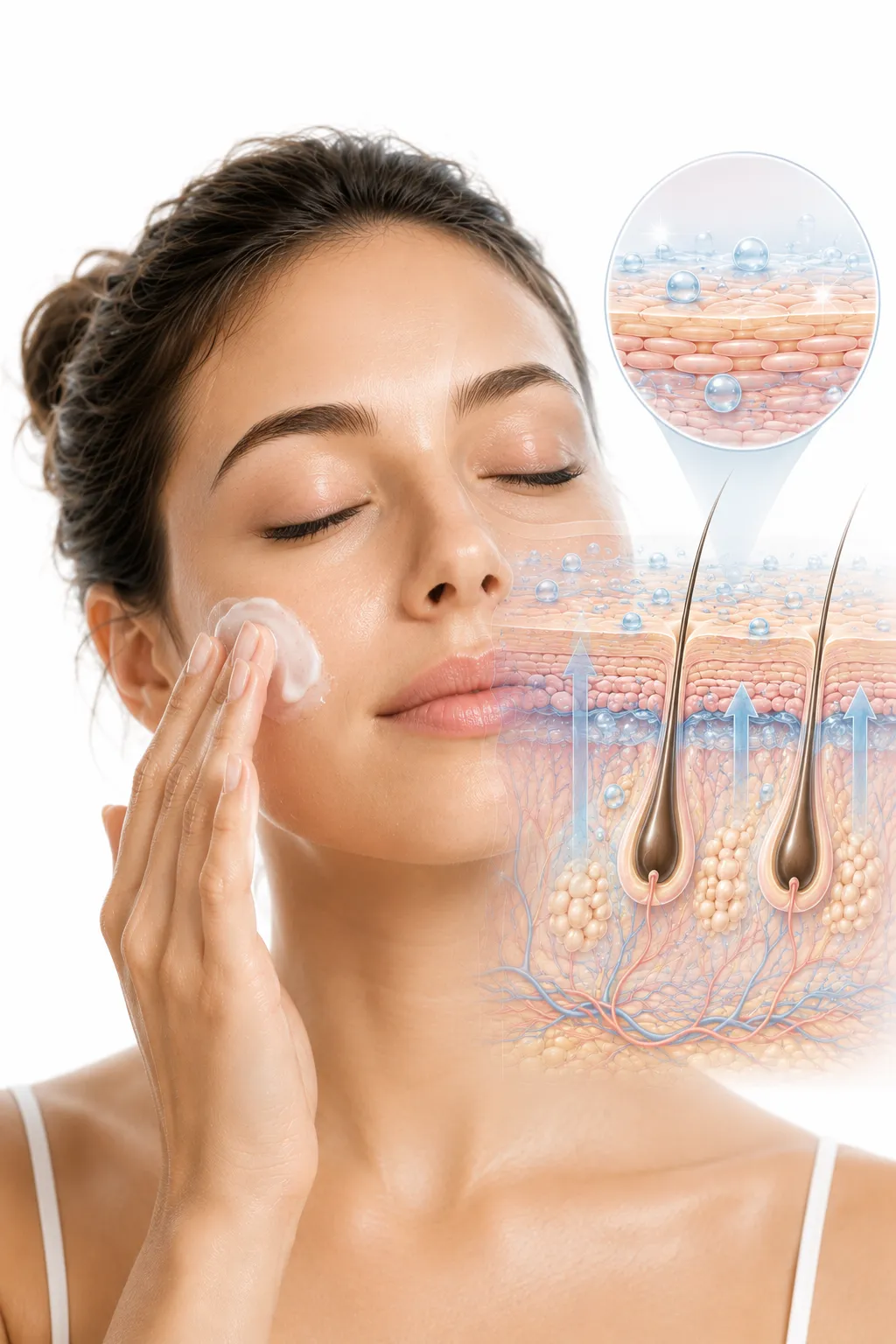
Dry skin shifts toward normal when the barrier is repaired. Once the barrier is strong enough to retain moisture, the skin doesn't need the constant heavy intervention that dry skin requires.
Use this section to decide
Does this advice apply to me?
Find the concern or goal closest to yours, then use the fit signal to decide how much weight to give this guide.If your goal is
Key PrincipleUsually relevant- Fit signal
- Often useful
Barrier repair + hydration
If your goal is
TimeframeUse caution- Fit signal
- Limited evidence
4-8 weeks
If your goal is
Key IngredientsUsually relevant- Fit signal
- Often useful
Ceramides, squalane
If your goal is
GoalUse caution- Fit signal
- Limited evidence
Balance, not transformation
Research notes already in this guide
- Barrier repair is proven to improve dry skin significantly.
- Consistent use of ceramides is shown to strengthen the barrier.
- Hydration from the inside (water intake) supports overall skin health.
- Time and consistency are the most important factors in change.
Expected results
Results and timeframe
Significant improvement takes 4-8 weeks of consistent care.
Be patient and appreciate progress along the way.
Practical use
How to use it
Focus on barrier repair
Use ceramide-rich products to strengthen the barrier.
Be consistent
Apply products morning and evening without skipping.
Be patient
Significant improvement takes 4-8 weeks of consistent care.
Celebrate progress
Balance is a journey - appreciate improvements along the way.
Safety
Side effects and cautions
- Expecting to become oily-skinned
The goal is balanced, not oily - dry skin will always be drier than other types.
- Switching to lightweight moisturizers too quickly
Gradually reduce heaviness as the barrier strengthens.
- Skipping moisturizer once skin feels better
Consistent care is needed to maintain improvement.
Fit
Who should be careful
- Those seeking a quick fix
Worth noting
Small details that can change the answer
- Barrier Role. Dry skin has a compromised barrier that can't retain moisture.
- Timeframe. Barrier repair takes 4-8 weeks of consistent care.
- Ceramide Importance. Ceramides are essential for barrier repair.
- Expectations. You may not become fully normal, but you can achieve significant improvement.
Dry skin can shift toward normal with consistent barrier repair.
The goal is balanced, comfortable skin - not oily skin.
Use creamy cleansers, hydrating serums, and rich moisturizers.
Definition
What is "normal" for skin?
Normal skin is balanced - not too oily, not too dry. It feels comfortable without heavy product intervention, doesn't flake, and isn't constantly tight. For dry skin, normal means reaching a comfortable, functional state.
- Comfortable without heavy moisturizing
- Minimal tightness or flaking
- Good barrier function
- Resilient to environmental changes
- Lower product dependency
Routine Flow
A routine for shifting to normal skin
- 1Creamy, non-stripping cleanser
Massage gently, rinse with lukewarm water.
- 2Hydrating serum (hyaluronic acid)
Apply to damp skin for best absorption.
- 3Rich barrier-supporting moisturizer
Apply generously, especially on dry areas.
- 4Facial oil (optional)
A few drops to seal in moisture.
Questions
Frequently asked questions
Can I permanently change my skin from dry to normal?
You can significantly improve it, but genetics may always make it drier than other types.
Will I ever stop needing moisturizer?
You'll likely always need some moisturizer, but perhaps less heavy products.
How long does it take to shift skin type?
Significant change usually takes 4-8 weeks of consistent care.
What's the first sign my skin is shifting?
You'll notice less tightness and discomfort, even without heavy moisturizer.
References
Sources
The notes below are drawn from the evidence already cited in this guide. They are not a complete bibliography.
- Barrier repair is proven to improve dry skin significantly.
- Consistent use of ceramides is shown to strengthen the barrier.
- Hydration from the inside (water intake) supports overall skin health.
- Time and consistency are the most important factors in change.