Evidence
What the evidence shows
Perioral pigmentation often has multiple causes - sun exposure, inflammation, and hormonal factors. Addressing all three with a gentle, targeted routine is the most effective approach.
Skin Sensitivity
Perioral skin requires gentler treatment than other facial areas.Treatment Evidence
Ingredients effective for general hyperpigmentation work here too.Clinical Consensus
Dermatologists emphasize gentleness for perioral treatment.
Use this section to decide
Does this advice apply to me?
Find the concern or goal closest to yours, then use the fit signal to decide how much weight to give this guide.If your goal is
AreaUse caution- Fit signal
- Limited evidence
Around the mouth (thin, sensitive)
If your goal is
Key IngredientsUsually relevant- Fit signal
- Often useful
Vitamin C, niacinamide, retinoids
If your goal is
Essential StepUsually relevant- Fit signal
- Often useful
Sunscreen on upper lip
If your goal is
Evidence LevelUsually relevant- Fit signal
- Often useful
Good
Explanation
How it works
Identify the cause
Is it sun-related, hormonal, or post-inflammatory? This guides treatment.
Apply gentle brighteners
Vitamin C or niacinamide can be used daily on this sensitive area.
Add a gentle retinoid
Start with a low-strength retinol 2-3 times per week.
Protect with sunscreen
Apply SPF 30+ to the perioral area daily - it's often missed.
Practical use
How to use it
Treat gently
Use gentle formulations and introduce products slowly.
Don't miss sunscreen
Apply SPF 30+ to the perioral area every day.
Be patient
Perioral pigmentation takes time to fade - often 8-16 weeks.
Safety
Side effects and cautions
- Using aggressive exfoliants around the mouth
The thin perioral skin is easily irritated - gentle is better.
- Skipping sunscreen on the upper lip area
The upper lip is often missed when applying sunscreen.
- Ignoring potential hormonal causes
If the pigmentation is symmetrical, consider hormonal evaluation.
Fit
Who should be careful
- Those seeking quick results
Worth noting
Small details that can change the answer
- Skin Thickness. Perioral skin is thinner than the rest of the face.
- Oil Glands. The area around the mouth has fewer oil glands, making it drier.
- Friction Factor. Facial expressions and eating create friction that can cause inflammation.
- Hormonal Trigger. Melasma often appears as symmetrical pigmentation around the mouth.
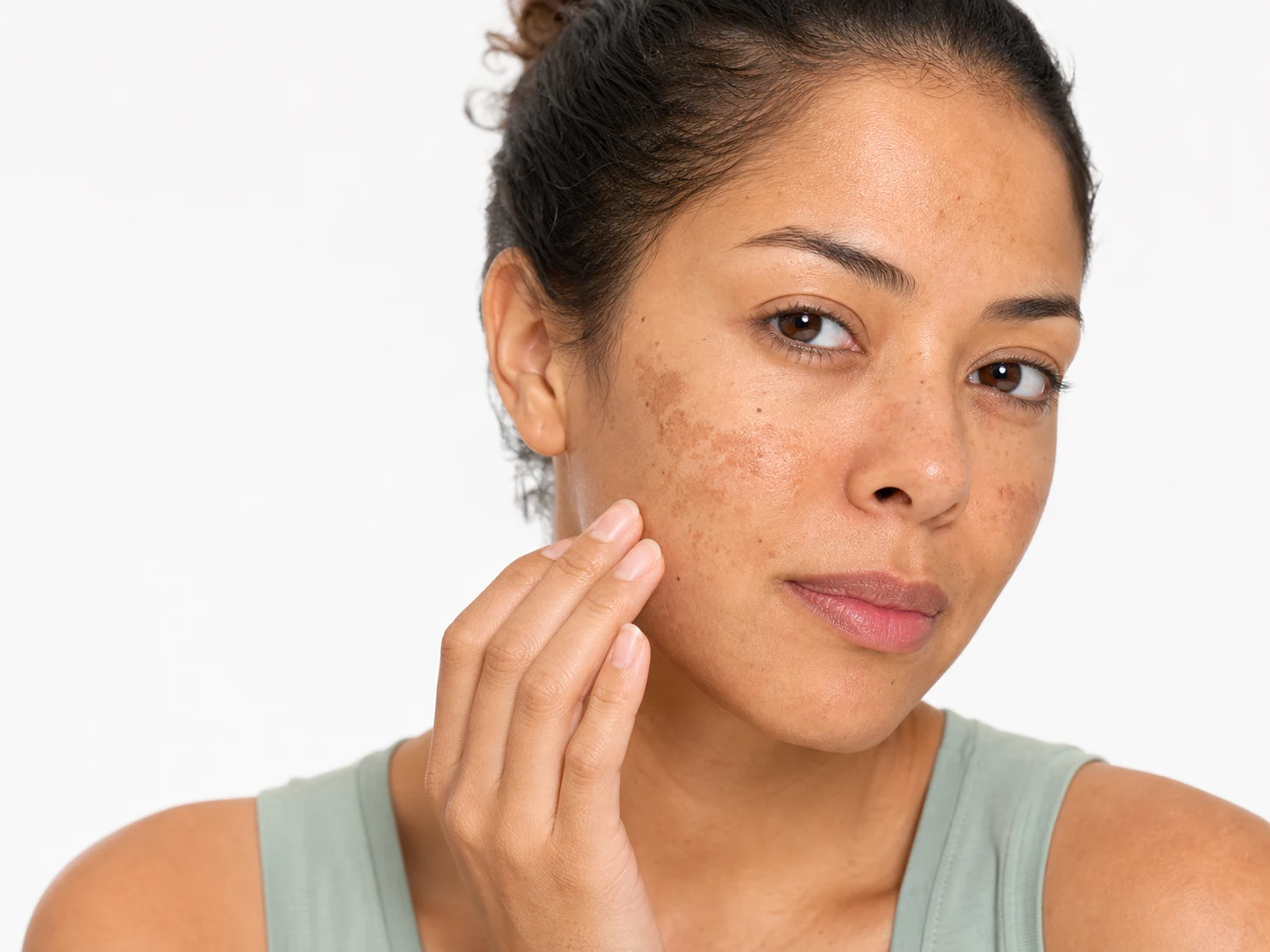
Perioral hyperpigmentation affects the thin, sensitive skin around the mouth.
It can have multiple causes: sun, hormones, and inflammation.
Treat with gentle brighteners, retinoids, and daily sunscreen.
The upper lip is often missed when applying sunscreen - don't forget it.
Patience is essential - perioral pigmentation fades slowly.
Definition
What is perioral hyperpigmentation?
Perioral hyperpigmentation refers to darkening of the skin around the mouth, including the upper lip, lower lip area, and corners of the mouth. It can be caused by sun exposure, inflammation, hormonal changes, or a combination of factors.
- Darkening around the upper lip or chin
- Often symmetrical in melasma cases
- Can be triggered by hormonal changes
- Aggravated by sun exposure and friction
Benefits
Additional tips for perioral pigmentation
These extra strategies can help with pigmentation around the mouth.
- Apply sunscreen to the upper lip area specifically - it's often neglected.
- Use lip balm with SPF to protect the lip margin.
- Avoid products that irritate the area - irritation worsens pigmentation.
- Consider a separate, gentle formulation specifically for this sensitive area.
Community Experience
Common experiences with perioral hyperpigmentation
User experiences are subjective and not a substitute for professional care.
Many people find perioral pigmentation improves with consistent niacinamide and sunscreen use.
positiveHormonal pigmentation around the mouth is often slower to respond and requires patience.
neutralAggressive treatments often worsen perioral pigmentation, underscoring the need for gentleness.
negativeQuestions
Frequently asked questions
Why do I have hyperpigmentation around my mouth specifically?
It could be due to sun exposure, hormonal factors (melasma), inflammation, or a combination.
Can hyperpigmentation around the mouth be hormonal?
Yes - melasma often appears symmetrically on the upper lip and around the mouth.
Is perioral hyperpigmentation harder to treat?
It can be because the skin is thinner and more sensitive, requiring gentler treatment.
Can I use the same products on perioral skin as the rest of my face?
Yes, but be more cautious - this area is more sensitive and prone to irritation.