Evidence
What the evidence shows
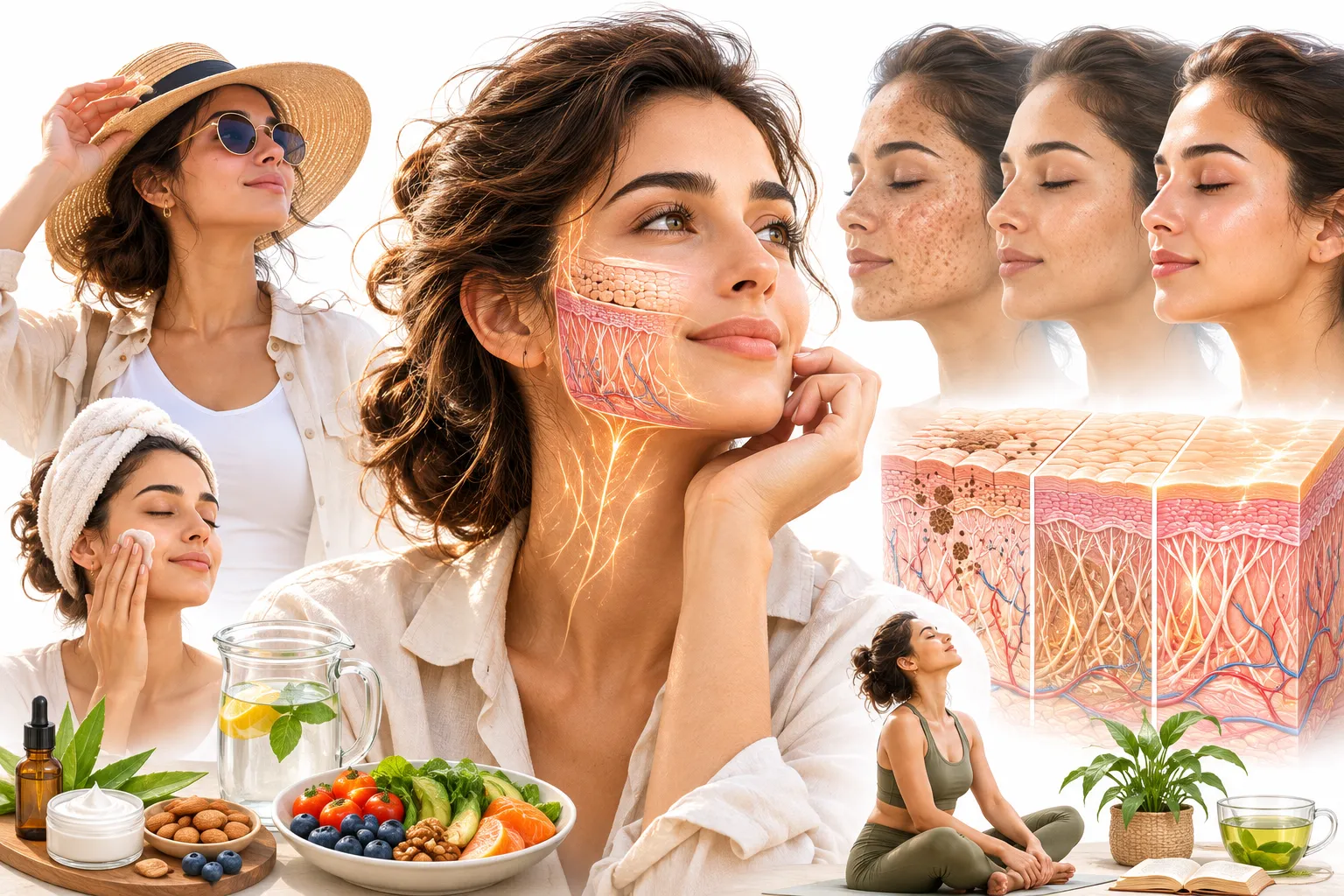
Natural approaches to repairing sun-damaged skin work best as a complement to, rather than a replacement for, proven treatments. They support the body's inherent repair mechanisms.
Vitamin C
Vitamin CDiet
DietAloe vera
Aloe vera
Use this section to decide
Does this advice apply to me?
Find the concern or goal closest to yours, then use the fit signal to decide how much weight to give this guide.If your goal is
CoreUsually relevant- Fit signal
- Often useful
Antioxidants
If your goal is
Key SupplementUsually relevant- Fit signal
- Often useful
Vitamin C
If your goal is
ImportantUse caution- Fit signal
- Limited evidence
Sunscreen
If your goal is
PatienceUse caution- Fit signal
- Limited evidence
Months to see results
Research notes already in this guide
- There is good evidence for the benefits of topical vitamin C.
- Research on diet and skin health is ongoing but promising.
- The evidence for aloe vera and green tea is more limited but suggestive.
Practical use
How to use it
Eat an antioxidant-rich diet
Include fruits, vegetables, nuts, and fatty fish in your diet.
Use natural serums
Apply a vitamin C serum in the morning and other natural extracts in the evening.
Protect your skin
Always use sunscreen to protect your repair efforts.
Safety
Side effects and cautions
- Thinking natural treatments are a replacement for sunscreen
Natural treatments are supportive, not a substitute for sun protection.
- Using natural ingredients in a way that irritates the skin
Even natural ingredients can cause irritation.
- Expecting immediate results
Natural approaches take time and consistency to show results.
Fit
Who should be careful
- Those with severe sun damage who need clinical treatments
Worth noting
Small details that can change the answer
- Vitamin C. Topical vitamin C is a powerful antioxidant that helps protect the skin from UV damage.
- Omega-3s. Omega-3 fatty acids support skin barrier function and reduce inflammation.
- Green Tea. Green tea is rich in polyphenols that have antioxidant and anti-inflammatory properties.
- Aloe Vera. Aloe vera has anti-inflammatory properties and may help with skin healing.
Natural approaches to sun damage repair are supportive, not curative.
A diet rich in antioxidants and omega-3s supports skin repair.
Topical vitamin C is one of the most effective natural ingredients for skin health.
Lifestyle factors like sleep and hydration are essential.
Sunscreen is a non-negotiable part of any repair strategy.
Definition
A holistic approach to natural skin repair
A holistic approach to repairing sun-damaged skin naturally involves dietary support, topical applications, and lifestyle factors. It is not a single intervention but a collection of habits that support the body's innate repair capacity.
- Dietary support: Antioxidant-rich foods and omega-3 fatty acids.
- Topical applications: Vitamin C, green tea extract, and aloe vera.
- Lifestyle factors: Hydration, sleep, and stress management.
- Sun protection: The foundation of any repair strategy.
Benefits
The benefits of a natural approach to skin repair
A natural approach to skin repair offers several benefits. It is generally safer and less likely to cause irritation than some clinical treatments. It also supports overall health and well-being, not just skin health. It can also be more affordable and accessible.
- Less likely to cause irritation than some clinical treatments
- Supports overall health and well-being
- Can be more affordable and accessible
- Works with the body's own repair mechanisms
Explanation
How natural compounds support skin repair
Many natural compounds have been studied for their potential to support skin repair. Antioxidants neutralize free radicals, which are unstable molecules that damage cells. Anti-inflammatory agents reduce inflammation, which can hinder repair. Some compounds also support the skin's barrier function, helping it retain moisture and function properly.
Questions
Frequently asked questions
Can I repair sun-damaged skin with diet alone?
Diet is an important part of the picture, but it's not sufficient on its own. Topical treatments and sun protection are also needed.
Are natural treatments as effective as clinical treatments?
They are generally less effective, but they are also safer and more affordable for most people.
Is there a natural alternative to sunscreen?
No. Sunscreen is the only way to protect the skin from UV damage.
How long does a natural approach take to work?
It can take months to see noticeable results, and it requires consistency.
References
Sources
The notes below are drawn from the evidence already cited in this guide. They are not a complete bibliography.
- There is good evidence for the benefits of topical vitamin C.
- Research on diet and skin health is ongoing but promising.
- The evidence for aloe vera and green tea is more limited but suggestive.