Evidence
What the evidence shows
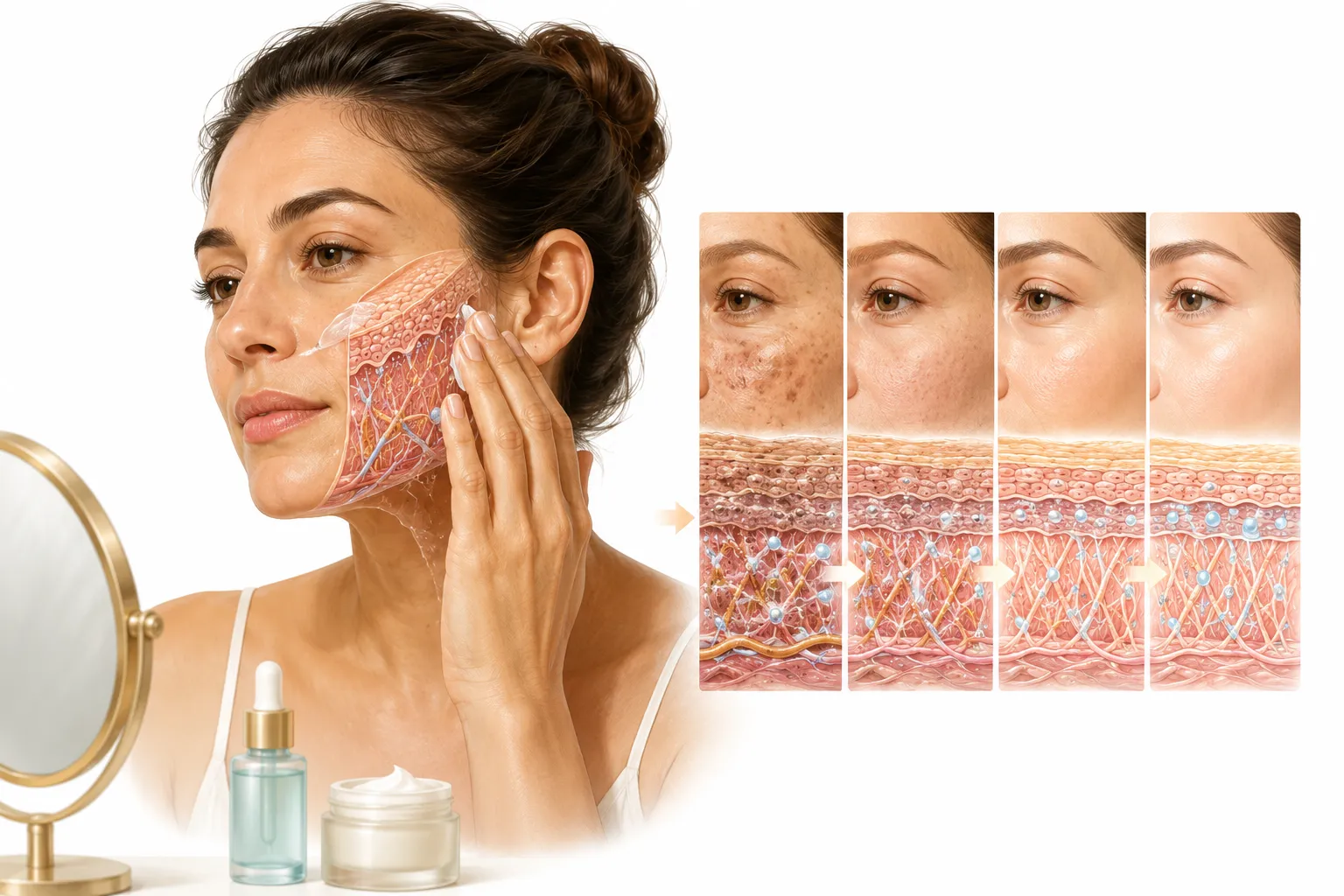
The most effective approach to repairing sun-damaged skin is a multi-layered strategy that combines protection, stimulation, and exfoliation.
Retinoids
RetinoidsVitamin C
Vitamin CChemical peels
Chemical peels
Use this section to decide
Does this advice apply to me?
Find the concern or goal closest to yours, then use the fit signal to decide how much weight to give this guide.If your goal is
ProtectionUsually relevant- Fit signal
- Often useful
SPF 30+ daily
If your goal is
StimulationUsually relevant- Fit signal
- Often useful
Topical retinoids
If your goal is
SupportUse caution- Fit signal
- Limited evidence
Vitamin C serum
If your goal is
PatienceUse caution- Fit signal
- Limited evidence
Results in 3-6 months
Research notes already in this guide
- Numerous studies have shown that topical retinoids are effective for photoaging.
- Research supports the use of vitamin C for photoprotection and repair.
- Clinical trials have demonstrated the efficacy of chemical peels and laser therapy.
Explanation
How it works
Protection
Sunscreen blocks UV radiation, preventing further damage.
Retinoids
Retinoids bind to retinoic acid receptors in the skin, stimulating collagen production and cell turnover.
Vitamin C
Vitamin C neutralizes free radicals and supports collagen synthesis.
Exfoliation
Chemical exfoliants remove dead skin cells, revealing brighter, smoother skin.
Expected results
Results and timeframe
Chemical exfoliation can improve the texture and tone of sun-damaged skin.
In-office treatments can provide more dramatic results.
Practical use
How to use it
Start with daily sun protection
Apply SPF 30 or higher every day, even on cloudy days.
Introduce a topical retinoid
Start with a low-strength retinol and build up to a stronger retinoid if needed.
Add a vitamin C serum
Use a vitamin C serum in the morning to support your sunscreen and neutralize free radicals.
Safety
Side effects and cautions
- Skipping sunscreen while using repair products
Without protection, repair products will not be effective.
- Using too many active ingredients at once
Introduce active ingredients slowly and one at a time to avoid irritation.
- Expecting overnight results
Repairing sun-damaged skin takes time and consistency.
Fit
Who should be careful
- Those with severe sun damage who may require in-office treatments
Worth noting
Small details that can change the answer
- Retinoids. Topical retinoids are the most evidence-backed topical treatment for photoaging.
- Vitamin C. L-ascorbic acid is the most potent and best-studied form of vitamin C for skin repair.
- Chemical Peels. Chemical peels can improve pigmentation and texture in sun-damaged skin.
- Laser Therapy. Laser treatments can be effective for more advanced signs of photoaging.
The first step in repairing sun-damaged skin is daily sun protection.
Topical retinoids are the most evidence-backed treatment for photoaging.
Vitamin C is a powerful antioxidant that can support skin repair.
Definition
A comprehensive approach to repairing sun-damaged skin
The repair of sun-damaged skin involves a combination of protection, stimulation, and exfoliation. The most effective approach is a multi-layered strategy that addresses the different aspects of photoaging.
- Protection: Daily sunscreen is non-negotiable.
- Stimulation: Use topical retinoids to boost collagen and cell turnover.
- Exfoliation: Use chemical exfoliants to improve texture and tone.
- Support: Use antioxidants to neutralize free radicals.
- Advanced: Consider in-office treatments for more dramatic results.
Benefits
The benefits of repairing sun-damaged skin
Repairing sun-damaged skin is beneficial for both health and appearance. It can reduce the risk of skin cancer, improve the skin's texture and tone, and give the skin a more youthful, resilient appearance.
- Reduces the risk of skin cancer
- Improves the appearance of fine lines and wrinkles
- Fades pigmentation and age spots
- Restores the skin's elasticity and firmness
- Enhances the skin's overall health and resilience
Questions
Frequently asked questions
Can I repair sun-damaged skin at home?
Yes, you can make significant progress with over-the-counter products and a consistent routine.
How long does it take to repair sun-damaged skin?
It varies, but you may start to see improvements in a few months with consistent use of the right products.
Can I repair sun-damaged skin naturally?
Some natural ingredients may help, but they are generally less effective than scientifically-developed treatments.
What is the best treatment for sun-damaged skin?
There is no single best treatment; a combination of approaches is usually most effective.
References
Sources
The notes below are drawn from the evidence already cited in this guide. They are not a complete bibliography.
- Numerous studies have shown that topical retinoids are effective for photoaging.
- Research supports the use of vitamin C for photoprotection and repair.
- Clinical trials have demonstrated the efficacy of chemical peels and laser therapy.