Evidence
What the evidence shows
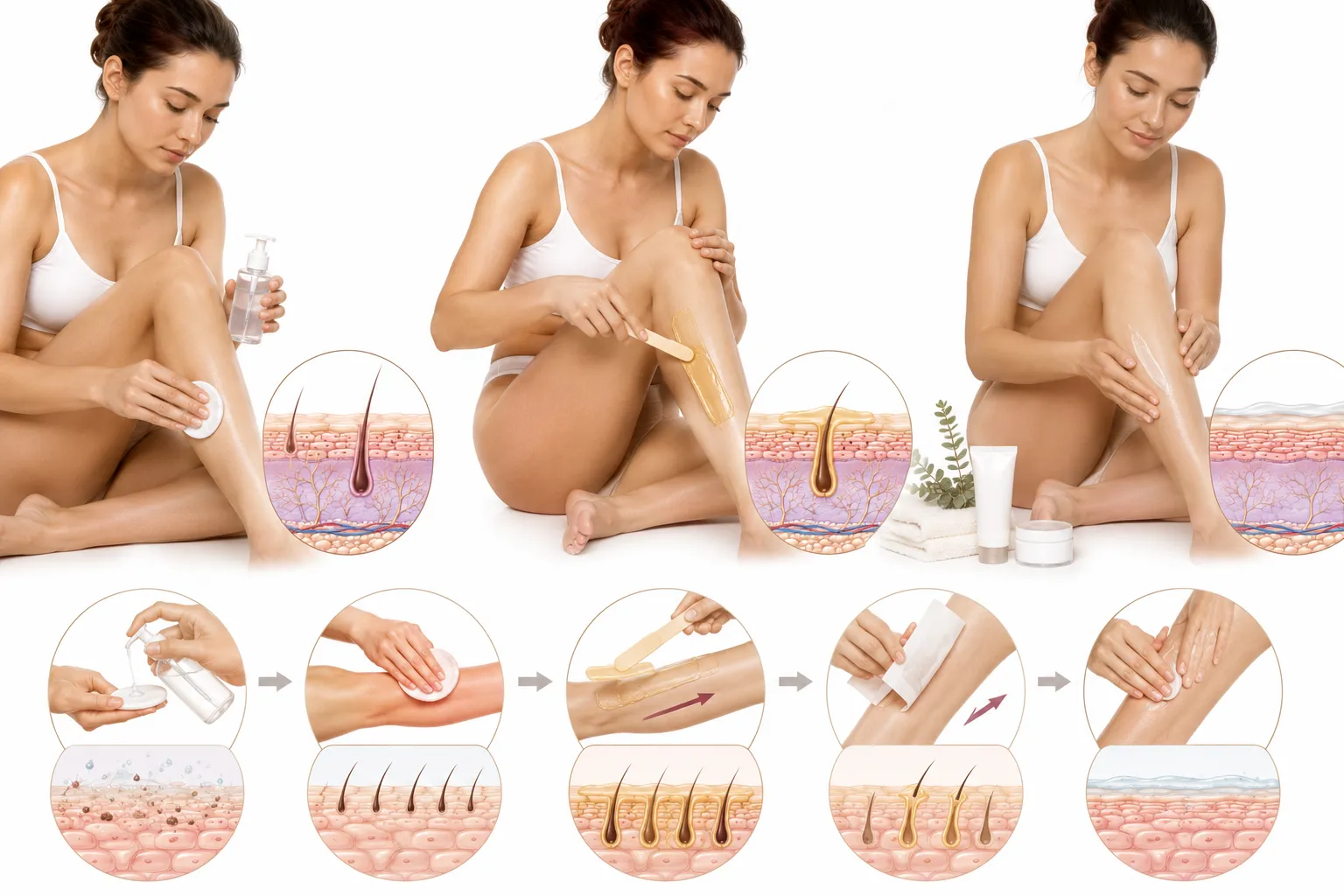
The key to waxing sensitive skin is minimizing irritation at every stage - from preparation through waxing to aftercare. It's not about eliminating irritation entirely, but reducing it to a manageable level.
Use this section to decide
Does this advice apply to me?
Find the concern or goal closest to yours, then use the fit signal to decide how much weight to give this guide.If your goal is
Key PrincipleUsually relevant- Fit signal
- Often useful
Prepare, test, soothe
If your goal is
Best WaxUsually relevant- Fit signal
- Often useful
Hard wax
If your goal is
ImportantDepends- Fit signal
- Possible fit
Patch test first
If your goal is
Avoid IfDepends- Fit signal
- Possible fit
Using retinoids
Practical use
How to use it
Patch test first
Test on a small area to check for adverse reactions.
Use hard wax for sensitive areas
Hard wax is gentler than soft wax.
Avoid waxing if using retinoids
Stop retinoids 3-5 days before waxing to avoid skin lifting.
Apply soothing aftercare
Use aloe, a cooling compress, or a gentle calming serum after waxing.
Safety
Side effects and cautions
- Exfoliating on the day of waxing
Exfoliate 1-2 days before, not on the same day.
- Waxing over broken skin or a rash
Wait until the skin is completely healed.
- Skipping the patch test on sensitive skin
Always test a small area first to check for reactions.
- Redness
Common · Cool compress and soothing product - usually subsides in 24 hours
- Bumps (folliculitis)
Occasional · Keep area clean, avoid further irritation
- Skin lifting (removed skin)
Rare · Stop waxing, keep area clean, consult a professional
- Allergic reaction
Rare · Stop waxing and consult a healthcare provider
Fit
Who should be careful
- Those with severe sensitivity or skin conditions
Worth noting
Small details that can change the answer
- Hard Wax Advantage. Hard wax is gentler and better for sensitive skin than soft wax.
- Hair Length. Hair should be 1/4 to 1/2 inch long for effective waxing.
- Temperature Impact. Overheating wax can cause burns - test temperature on your wrist.
- Retinoid Warning. Stop using retinoids 3-5 days before waxing to avoid lifting skin.
Preparation is key - exfoliate 1-2 days before, not on the day.
Always patch test on a small area first.
Hard wax is gentler and better for sensitive skin.
Avoid waxing if you've recently used retinoids.
Soothing aftercare - cool compress and calming products - is essential.
Definition
Why sensitive skin reacts to waxing
Waxing causes temporary trauma to the skin - hair is pulled from the root, and the top layer of dead skin cells is often removed. Sensitive skin, with its thinner barrier and more reactive nerve endings, responds more strongly.
- Mechanical trauma from hair removal
- Removal of the top layer of dead skin cells
- Heat from the wax itself
- Potential reaction to wax ingredients
- Inflammation from the immune response
Benefits
Choosing the right wax for sensitive skin
The type of wax matters significantly for sensitive skin.
- Hard wax: Bonds to hair, not skin - gentler
- Soft wax: Bonds to both hair and skin - more irritating
- Sugar wax: A natural alternative that's often well-tolerated
- Always choose a wax formulated for sensitive skin
Dos Donts
Sensitive skin waxing do's and don'ts
Do
Prevents ingrown hairs
Better wax adhesion
Identifies reactions early
Calms the skin
Avoid
Can cause more irritation
Can worsen the condition
Risk of burns
Skin may lift with the wax
Questions
Frequently asked questions
Can I wax sensitive skin at home?
Yes - but be extra careful with preparation, technique, and patch testing.
What's the best wax for sensitive skin?
Hard wax is generally gentler than soft wax.
How soon after waxing can I use skincare products?
Wait 24-48 hours before using active ingredients like acids or retinoids.
What if I get redness after waxing?
Some redness is normal - it should subside within 24 hours. If it persists, soothe with a cool compress.