Evidence
What the evidence shows
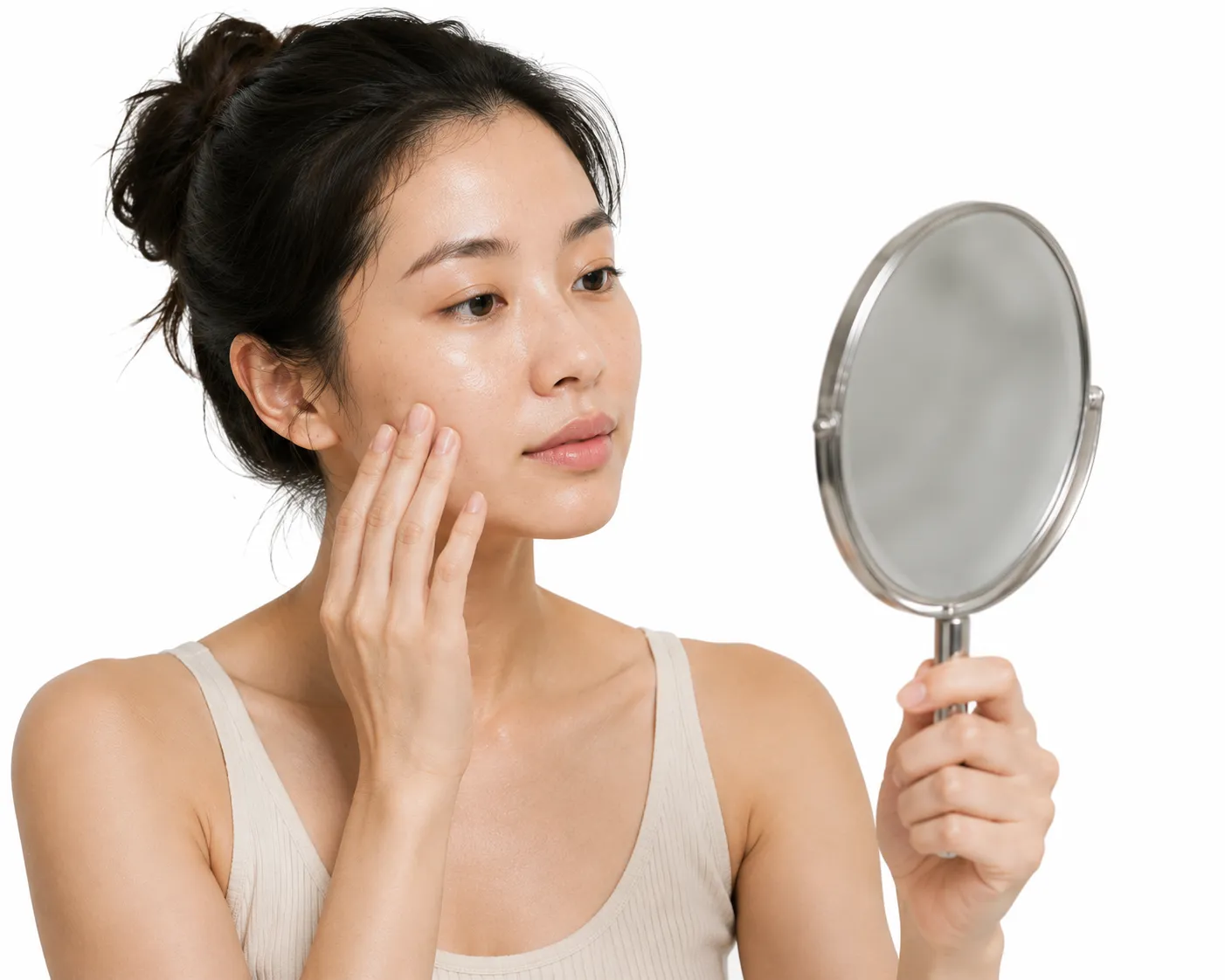
The most reliable at-home method is simple observation of bare, product-free skin, since makeup, sunscreen, and moisturizer can all mask or distort your skin's natural behavior.
Shine everywhere?
Likely oily skin.Tight or flaky?
Likely dry skin.Shiny T-zone, dry cheeks?
Likely combination skin.Redness or reactivity?
Likely sensitive skin.
Use this section to decide
Does this advice apply to me?
Find the concern or goal closest to yours, then use the fit signal to decide how much weight to give this guide.If your goal is
MethodUse caution- Fit signal
- Limited evidence
Bare-face test
If your goal is
Time neededUse caution- Fit signal
- Limited evidence
~1 hour
If your goal is
EquipmentUsually relevant- Fit signal
- Often useful
None
If your goal is
EvidenceUsually relevant- Fit signal
- Often useful
Good
Practical use
How to use it
Cleanse and wait
Cleanse thoroughly and wait about an hour with no products applied.
Observe by zone
Check the forehead, nose, cheeks, and chin separately for shine, tightness, or flaking.
Confirm with a blotting sheet if unsure
Press a clean tissue to different areas to check oil transfer as a secondary check.
Safety
Side effects and cautions
- Testing while wearing makeup or leftover product
Always start from a clean, bare face for an accurate read.
- Drawing conclusions from a single test
Repeat the test over a few days, especially if results seem inconsistent.
- Ignoring seasonal or hormonal context
Reassess periodically, since skin type can shift over time.
Fit
Who should be careful
- Diagnosing underlying skin conditions
Worth noting
Small details that can change the answer
- Bare-Face Test. Waiting about an hour after cleansing allows oil and hydration levels to become more visible for accurate assessment.
- Blotting Sheets. Blotting sheet tests can offer a secondary, more precise indicator of oil levels by area.
- T-Zone. The T-zone (forehead, nose, chin) generally has more oil glands, which is why it's the first place oiliness shows up.
- Reassessment. Skin type can shift with age, season, and hormones, so periodic reassessment is worthwhile.
The bare-face test is a simple, reliable way to identify skin type at home.
Wait about an hour after cleansing before observing your skin.
Check the T-zone and cheeks separately to spot combination skin.
Blotting sheets can offer a secondary confirmation of oil levels.
Reassess periodically, since skin type can shift with age and season.
The bare-face test, step by step
- Cleanse your face with a gentle cleanser
- Pat dry and apply no products afterward
- Wait about 60 minutes without touching your face
- Observe shine, tightness, or flaking across different zones
- Note any redness or reactivity that develops
What your results likely mean
- Shine across the whole face - likely oily skin
- Tightness or visible flaking - likely dry skin
- Shine in the T-zone, drier cheeks - likely combination skin
- Redness or reactivity - likely sensitive skin (possibly overlapping another type)
- Few noticeable traits - likely normal skin
Tips for a more accurate result
A few small adjustments can make the bare-face test more reliable.
- Avoid testing right after exercise or a hot shower
- Test at a similar time of day for consistency
- Repeat the test over a few days if results seem unclear
Questions
Frequently asked questions
How long should I wait before checking my skin type?
About an hour after cleansing, with no products applied, gives a reasonably accurate picture.
What is the blotting sheet test?
Pressing a clean tissue against different areas of your face and observing how much oil transfers, used as a secondary indicator of oiliness by zone.
Can I have combination and sensitive skin at the same time?
Yes, sensitivity can overlap with any of the other skin type categories, including combination skin.
How often should I retest my skin type?
Roughly once a season, or after major life changes like pregnancy or a house move, is a reasonable guideline.