Evidence
What the evidence shows
The confusion about heat rash contagiousness comes from its appearance - it looks like other rashes that can be contagious, including certain viral rashes and fungal infections. But the mechanism is completely different.
Use this section to decide
Does this advice apply to me?
Find the concern or goal closest to yours, then use the fit signal to decide how much weight to give this guide.If your goal is
Contagious?Usually relevant- Fit signal
- Often useful
No
If your goal is
Can it spread?Use caution- Fit signal
- Limited evidence
To yourself only
If your goal is
Secondary infectionsDepends- Fit signal
- Possible fit
May be contagious
If your goal is
Do you need to isolate?Usually relevant- Fit signal
- Often useful
No
Practical use
How to use it
Treat the rash appropriately
Focus on cooling and drying - the standard heat rash treatment. You don't need to disinfect or isolate.
Don't scratch
Scratching can lead to secondary infections. Keep the area cool and calm to reduce itching.
Monitor for changes
If the rash changes in character - becomes painful, swollen, or develops discharge - it may indicate a secondary infection that requires medical attention.
Safety
Side effects and cautions
- Avoiding other people because of heat rash
Heat rash is not contagious. You don't need to isolate yourself or avoid contact with others.
- Using antibacterial treatments on heat rash
Heat rash isn't caused by bacteria, and antibacterial products may irritate the skin further.
- Assuming any rash that looks like heat rash isn't contagious
While heat rash itself isn't contagious, other rashes that look similar might be. If you're unsure, consult a healthcare provider.
Fit
Who should be careful
- Anyone with a secondary infection that may be contagious
Worth noting
Small details that can change the answer
- Not Infectious. Heat rash is a mechanical blockage, not an infection.
- No Pathogen. There's no virus, bacteria, or fungus that causes heat rash.
- Individual Condition. Heat rash is specific to each person's own sweat ducts.
- Secondary Infection Risk. The rash itself isn't contagious, but scratching can lead to infections that might be.
Heat rash is not contagious and cannot be spread to others.
It's caused by blocked sweat ducts, not an infection.
The appearance of heat rash can be misleading - it looks similar to some contagious rashes.
Secondary infections from scratching can be contagious, but the rash itself isn't.
You don't need to isolate or use antibacterial treatments for uncomplicated heat rash.
Definition
Understanding heat rash contagiousness
The simple answer is that heat rash is not contagious. It's a condition that arises from your own skin's response to heat and humidity, not from an outside agent. The medical term - miliaria - describes a blockage of the eccrine sweat ducts, and blockages don't spread from person to person.
- Heat rash is caused by blocked sweat ducts, not infection
- No pathogen is involved in the development of heat rash
- You cannot transmit it to others through any form of contact
Explanation
Why heat rash looks like it could be contagious
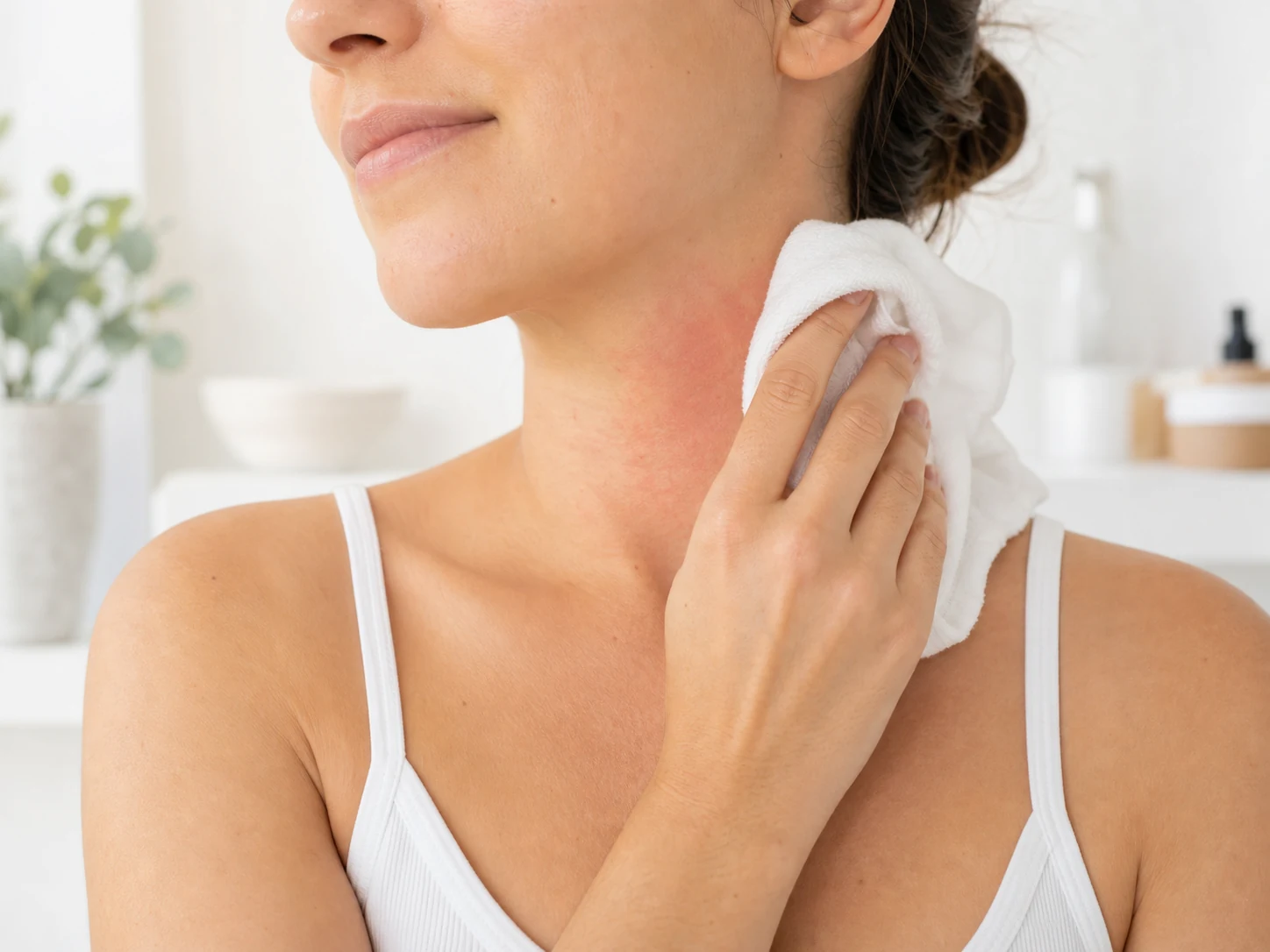
Heat rash often looks red and bumpy - the kind of appearance we associate with contagious conditions like measles, chickenpox, or various viral rashes. This visual similarity is the main reason people worry about contagiousness. But the cause is entirely different. Heat rash is the skin's reaction to trapped sweat, not to an invading pathogen. The bumps are the result of inflammation, not infection.
Benefits
What this means for you
Understanding that heat rash is not contagious can help you manage it without unnecessary worry:
- You don't need to isolate yourself from others
- You don't need to worry about spreading it to children or at-risk individuals
- You can focus on cooling and drying rather than disinfection
- You can avoid unnecessary and potentially harmful antibacterial treatments
Risks
When heat rash might lead to something contagious
While heat rash itself is not contagious, scratching the affected area can break the skin and allow bacteria to enter. This can lead to a secondary infection - impetigo or cellulitis are possible complications - and those infections can be contagious.
- Secondary bacterial infections can develop from scratching
- These infections can be transmitted to others through contact
- Signs of infection include increased pain, swelling, warmth, or discharge
- If you suspect a secondary infection, seek medical advice
Questions
Frequently asked questions
Can heat rash spread to other parts of your body?
Heat rash can appear in multiple areas if those areas are exposed to heat and sweating, but this isn't "spreading" in the contagious sense - it's simply developing in other appropriate conditions.
Can I be around children if I have heat rash?
Yes. Heat rash is not contagious, and you don't need to avoid children or anyone else.
Is there a type of heat rash that is contagious?
No. All forms of heat rash (miliaria crystallina, rubra, profunda) are caused by blocked sweat ducts and are not contagious.
How can I tell if my rash is heat rash or something contagious?
If the rash appeared after exposure to heat and sweating, and responds to cooling and drying, it's likely heat rash. If you're unsure, a healthcare provider can make the distinction.