Evidence
What the evidence shows
The itchiness of heat rash is actually a good sign - it means your nerve endings are working and your body is responding to the blockage. The challenge is that scratching breaks the skin and can lead to infection, which is where the real problems start.
Use this section to decide
Does this advice apply to me?
Find the concern or goal closest to yours, then use the fit signal to decide how much weight to give this guide.If your goal is
Itch levelUse caution- Fit signal
- Limited evidence
Moderate to severe
If your goal is
SensationUse caution- Fit signal
- Limited evidence
Prickling, stinging
If your goal is
Best reliefUsually relevant- Fit signal
- Often useful
Cooling
If your goal is
Risk of scratchingUse caution- Fit signal
- Limited evidence
Infection
Explanation
How it works
Sweat duct blocks
Dead skin cells, sweat, and friction combine to block the sweat duct.
Sweat trapped beneath skin
The blockage traps sweat beneath the skin, preventing it from evaporating.
Inflammation triggered
The trapped sweat leaks into surrounding tissue, triggering inflammation.
Nerve endings stimulated
Inflammatory chemicals stimulate nerve endings, causing the sensation of itching.
Practical use
How to use it
Cool the skin immediately
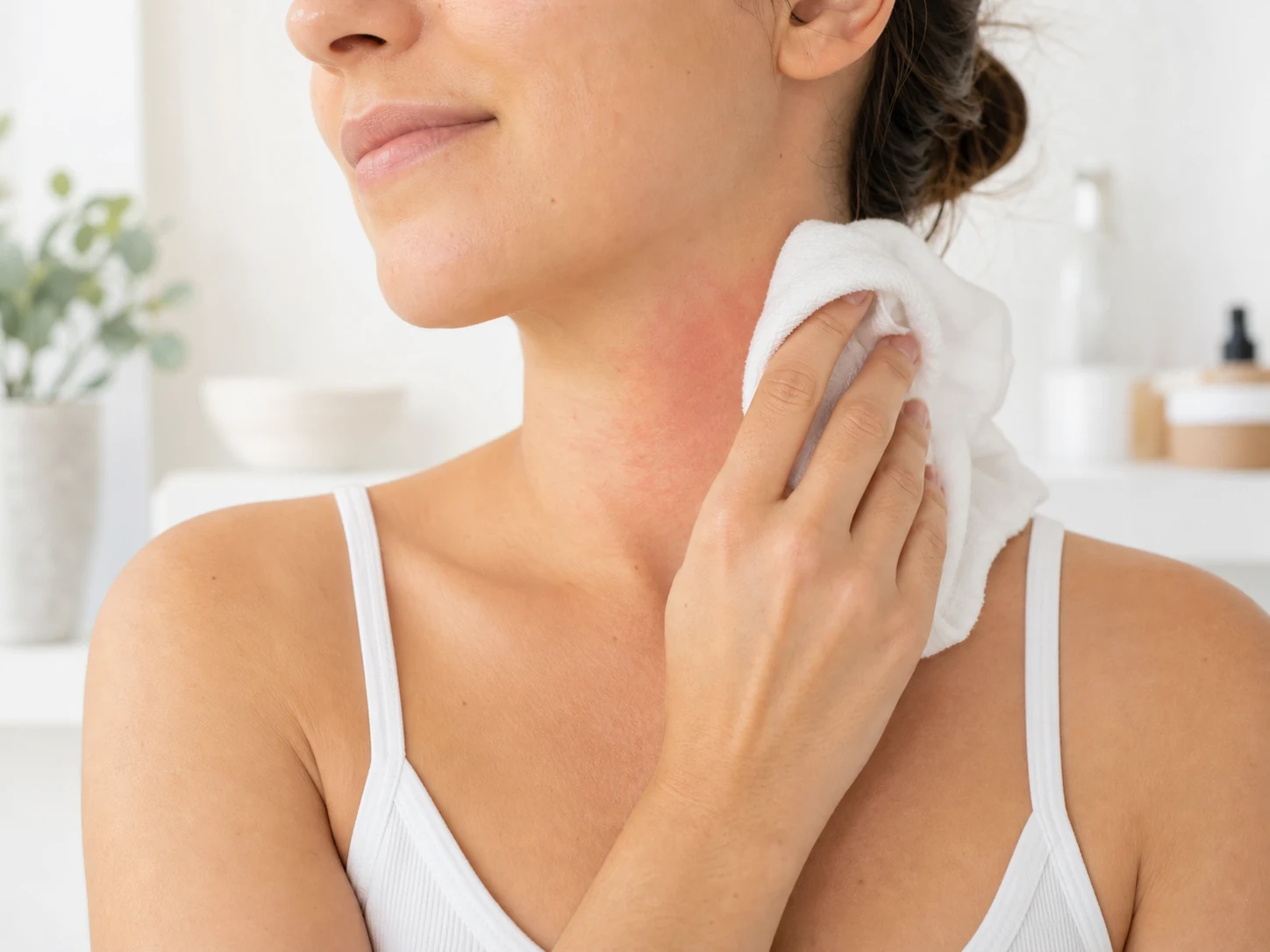
Apply cool compresses or take a cool shower to reduce inflammation and soothe nerve endings.
Use soothing products
Apply calamine lotion or a mild hydrocortisone cream to reduce itching. Avoid scratching at all costs.
Stay cool and dry
Continue to avoid heat and sweating to prevent further irritation. If the itching doesn't improve, consult a doctor.
Safety
Side effects and cautions
- Scratching heat rash
Scratching breaks the skin and can lead to infection. Use cooling compresses and soothing lotions instead.
- Applying hot compresses
Heat worsens the inflammation and itching. Always use cool or room-temperature compresses.
- Using harsh anti-itch products
Products with alcohol, menthol, or camphor can irritate heat rash further. Stick with gentle, soothing options.
- Break in the skin from scratching
Common · Keep clean to prevent infection
- Signs of infection (pain, swelling, discharge)
Uncommon · See a doctor promptly
- Worsening despite cooling measures
Occasional · Consult a healthcare provider
Fit
Who should be careful
- Mild cases (miliaria crystallina) where itching is minimal
Worth noting
Small details that can change the answer
- Prickly Heat. The common name "prickly heat" comes from this characteristic sensation.
- Varies by Type. Miliaria rubra itches intensely; miliaria crystallina typically doesn't.
- Worse with Heat. Itching is usually worse when you're hot or sweating.
- Temperature Sensitive. The itch tends to intensify as your skin warms and subside as it cools.
Heat rash is often intensely itchy, particularly the miliaria rubra form.
Itching is caused by trapped sweat irritating nerve endings.
Scratching can lead to secondary infections.
Cooling the skin is the most effective way to reduce itching.
Mild hydrocortisone cream can help if itching is severe and persistent.
Definition
Understanding heat rash itchiness
Heat rash is often called "prickly heat" precisely because of the sensation it produces - a prickling, stinging, or itching feeling. This occurs when trapped sweat leaks into the tissue around a blocked sweat duct, triggering an inflammatory response. The inflammatory chemicals stimulate nerve endings, producing the sensation of itching.
- The medical term for the itchy form is miliaria rubra
- Miliaria crystallina (outer layer) usually doesn't itch
- Miliaria profunda (deep) can cause a different type of discomfort
Explanation
Why heat rash itches so much
The itchiness of heat rash is a direct result of the inflammatory process. When sweat is trapped beneath the skin, it triggers the release of histamines and other inflammatory mediators. These chemicals stimulate the nerve endings in the skin, sending a signal to the brain that something is irritating the area. The result is a sensation that ranges from mild prickling to intense, maddening itching.
Questions
Frequently asked questions
Does heat rash always itch?
Not always. Miliaria crystallina (the mildest form) usually doesn't itch, while miliaria rubra often itches intensely.
Is heat rash itchy or painful?
Heat rash is primarily itchy and prickly. In severe cases, it may also be painful or tender to the touch.
Can I use antihistamines for heat rash itching?
Oral antihistamines may provide some relief, but cooling the skin is usually more effective. Always consult a healthcare provider about medication.
Does scratching heat rash make it worse?
Yes, scratching can break the skin, allowing bacteria to enter and causing a secondary infection that is much more serious than the original heat rash.