Evidence
What the evidence shows
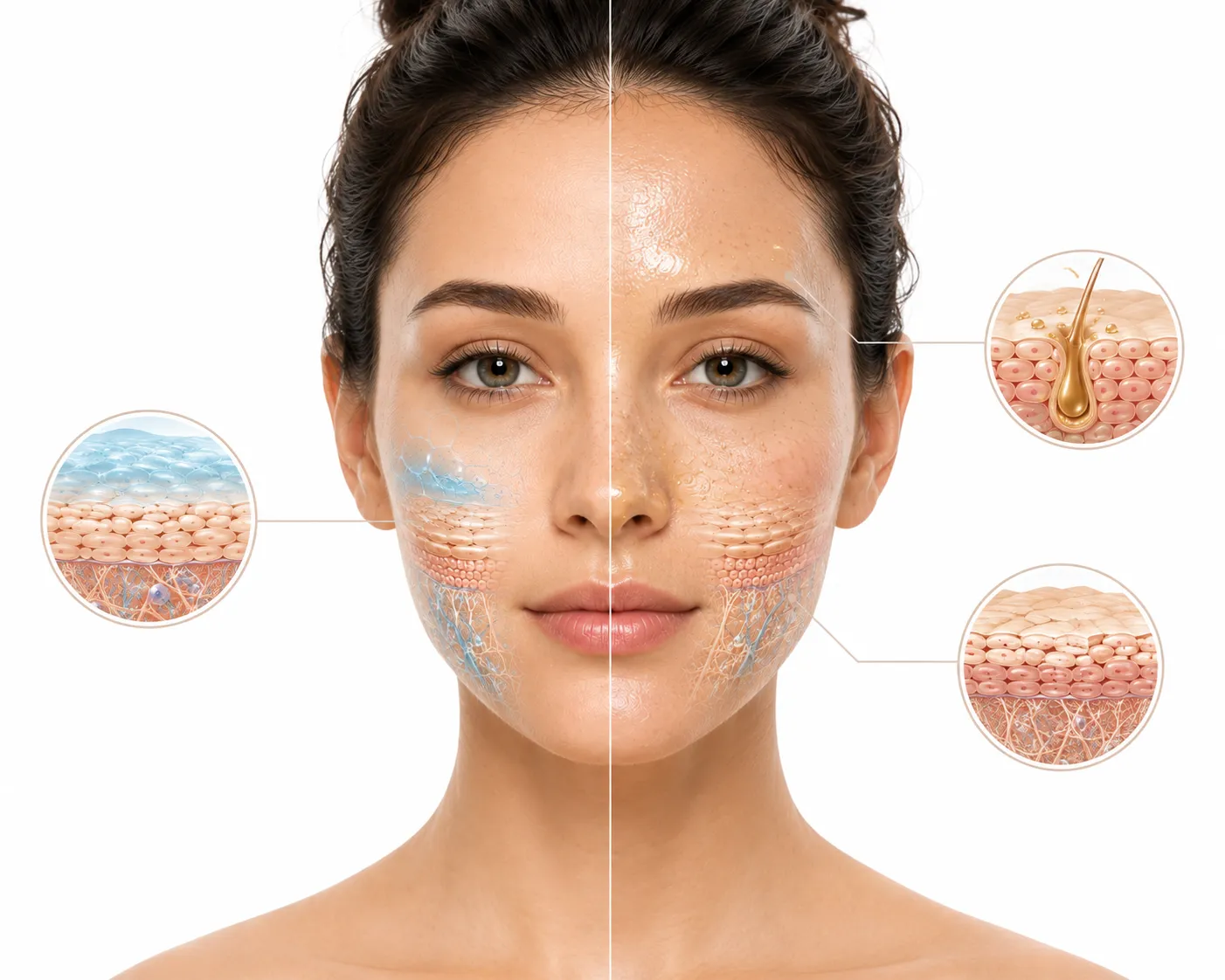
The key difference is the distribution of sebum. Normal skin has even sebum production; combination skin has uneven production, with more oil in the T-zone and less on the cheeks.
My entire face feels balanced - not too oily or dry
You likely have normal skin.My T-zone is oily, but my cheeks are dry or normal
You likely have combination skin.I have an oily T-zone and the rest of my face is balanced
You may have normal skin with a slightly oilier T-zone, but not true combination skin.
Use this section to decide
Does this advice apply to me?
Find the concern or goal closest to yours, then use the fit signal to decide how much weight to give this guide.If your goal is
Normal skinUsually relevant- Fit signal
- Often useful
Balanced across the face
If your goal is
Combination skinUse caution- Fit signal
- Limited evidence
Oily T-zone, dry cheeks
If your goal is
Key differenceUse caution- Fit signal
- Limited evidence
Sebum distribution
If your goal is
ManagementUsually relevant- Fit signal
- Often useful
Normal: simple routine; Combination: targeted care
Practical use
How to use it
Determine your skin type
If you have an oily T-zone and dry cheeks, you likely have combination skin. If it's balanced, you have normal skin.
Adjust your routine accordingly
Normal skin: simple 3-step routine. Combination skin: targeted products for different zones.
Observe and adapt
Pay attention to how your skin feels and adjust your routine as needed.
Safety
Side effects and cautions
- Treating combination skin as if it's normal
Combination skin needs different care for the T-zone and cheeks.
- Using the same moisturizer on the entire face
Use lighter products on the T-zone and richer ones on the cheeks.
- Assuming normal skin means "no care needed"
Normal skin still needs a consistent routine for maintenance.
Fit
Who should be careful
- Those looking for a simple yes/no answer (it's no)
Worth noting
Small details that can change the answer
- Normal Skin. Normal skin has balanced sebum production across the entire face.
- Combination Skin. Combination skin has an oily T-zone and drier cheeks.
- Overlap. Some people have normal skin with a slightly oilier T-zone, but this isn't true combination skin.
- Management. Combination skin often requires a more varied skincare routine.
Normal skin and combination skin are different skin types.
Normal skin is balanced across the entire face.
Combination skin has an oily T-zone and dry cheeks.
Normal skin needs a simple routine; combination skin needs targeted care.
Both require consistent care for healthy skin.
Definition
What is normal skin?
Normal skin is characterized by balanced sebum production, even texture, and a lack of severe concerns. It has small pores, good elasticity, and generally behaves itself. It's not too oily or dry.
- Balanced sebum production across the face
- Small to medium pores
- Even texture and good elasticity
- Minimal concerns (acne, dryness, sensitivity)
Definition
What is combination skin?
Combination skin is characterized by an oily T-zone (forehead, nose, chin) and drier cheeks. The T-zone produces excess sebum, leading to shine and congestion, while the cheeks can feel dry, tight, or flaky. It requires different care for different areas.
- Oily T-zone (forehead, nose, chin)
- Dry to normal cheeks
- Varied pore size (larger in T-zone)
- Requires different products for different areas
Explanation
The key differences
The key difference between normal and combination skin is the distribution of sebum. Normal skin has even sebum production across the entire face. Combination skin has uneven production, with excess oil in the T-zone and dryness on the cheeks. Some people have normal skin with a slightly oilier T-zone, but this isn't true combination skin.
Myth Reality
Common myths about normal and combination skin
They're different - normal skin is balanced; combination skin has uneven oil production.
Combination skin has distinct oily and dry zones, not just one with occasional patches.
Normal skin needs basic care; combination skin needs targeted care for different zones.
Questions
Frequently asked questions
Can normal skin become combination?
Yes, skin type can change with age, hormones, or environmental factors.
Can I have normal skin with a slightly oily T-zone?
Yes, this is sometimes called "normal with a touch of combination," but it's not true combination skin.
Which skin type is more common?
Combination skin is one of the most common skin types.
Does combination skin need different products?
Yes, it often benefits from using different products on the T-zone and cheeks.