Evidence
What the evidence shows
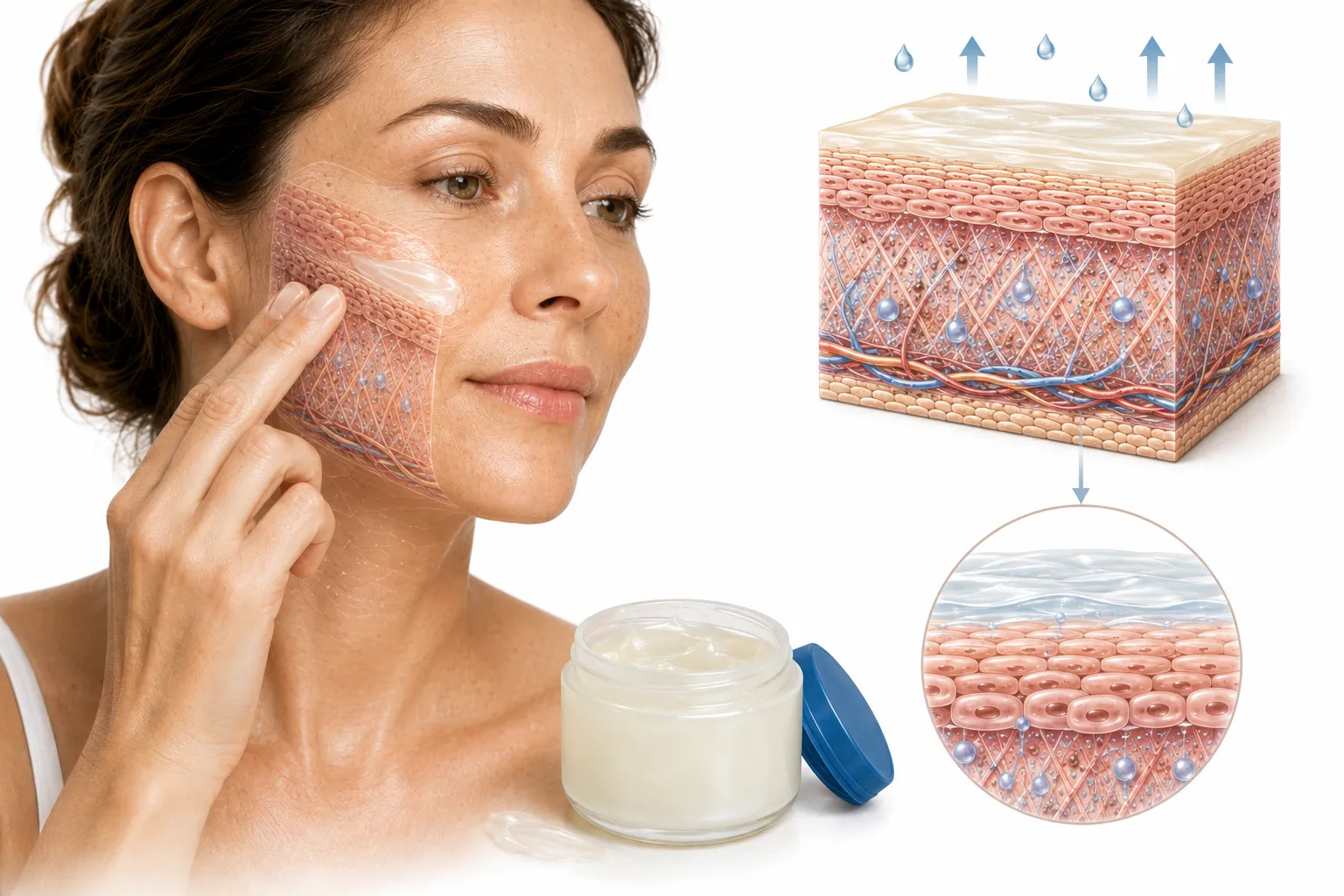
Vaseline's usefulness for sun damage comes entirely from what it prevents, moisture loss, not from anything it actively does to reverse existing damage.
Fades sun spots?
NoHelps dry, peeling skin?
YesCan replace sunscreen?
No
Use this section to decide
Does this advice apply to me?
Find the concern or goal closest to yours, then use the fit signal to decide how much weight to give this guide.If your goal is
Main benefitUsually relevant- Fit signal
- Often useful
Moisture retention
If your goal is
Pigment or collagen effectUse caution- Fit signal
- Limited evidence
None
If your goal is
UV protectionUse caution- Fit signal
- Limited evidence
Negligible
If your goal is
Best usedUse caution- Fit signal
- Limited evidence
On dry, peeling skin
Practical use
How to use it
Use it on dry or peeling patches
Apply after sun exposure to ease discomfort and lock in moisture.
Layer it after active ingredients
Apply over treatment serums at night to help seal them in.
Pair it with real sun protection
Use a broad-spectrum sunscreen daily, since Vaseline offers none on its own.
Safety
Side effects and cautions
- Expecting Vaseline to fade sun spots or wrinkles
It supports the barrier and locks in moisture but has no effect on pigment or collagen.
- Using it as sun protection
Vaseline provides negligible UV protection; a proper broad-spectrum sunscreen is essential.
- Applying a thick layer to oily, acne-prone skin
Use it selectively on dry or peeling areas rather than as an all-over product for this skin type.
Fit
Who should be careful
- Anyone seeking pigment or collagen repair
Worth noting
Small details that can change the answer
- Occlusive Mechanism. Vaseline forms a physical barrier on the skin's surface that slows water loss.
- No Active Ingredients. It contains no ingredients that affect pigment production or collagen.
- Useful for Peeling Skin. Its moisture-sealing effect can ease discomfort on dry, flaking, sun-exposed skin.
- Not a Sunscreen. Vaseline provides negligible UV protection and should never be used as sun protection.
Vaseline supports a compromised skin barrier by sealing in moisture.
It contains no active ingredients and does not repair pigmentation or collagen loss.
It's most useful on dry, peeling, sun-exposed skin rather than as a treatment.
It provides no meaningful UV protection and should never replace sunscreen.
It works best alongside active repair ingredients, not instead of them.
Explanation
What Vaseline actually does for sun-damaged skin
Vaseline's occlusive properties trap existing moisture in the skin rather than adding anything new. For sun-damaged skin with a compromised barrier, this can reduce transepidermal water loss and support a more comfortable recovery, particularly on dry or peeling areas.
Benefits
Where Vaseline genuinely helps
For sun-exposed or sun-damaged skin, Vaseline's realistic benefits include:
- Reducing moisture loss from a compromised barrier
- Easing discomfort on dry, peeling, sun-exposed skin
- Providing a protective layer over irritated areas
- Layering well over other treatment products at night
Risks
Where its usefulness ends
Vaseline's simplicity is also its limitation for anyone hoping it will address sun damage directly.
- No effect on pigmentation or collagen loss
- Provides essentially no UV protection
- Can feel heavy or occlusive on oily or acne-prone skin
Dos Donts
Using Vaseline well on sun-damaged skin
Do
Helps lock in moisture and ease discomfort.
Seals in active ingredients and supports the barrier.
Avoid
It offers no meaningful UV protection.
It contains no active repair ingredients.
Questions
Frequently asked questions
Can Vaseline heal sunburn?
It can ease dryness and discomfort by locking in moisture, but it doesn't treat the underlying burn itself.
Does Vaseline fade sun spots?
No, it contains no ingredients that affect pigmentation.
Is Vaseline safe to use on sun-damaged skin daily?
Yes, for most people, though those with oily or acne-prone skin may prefer to use it selectively.
Can Vaseline be used as sunscreen?
No, it offers negligible UV protection and should not be used as a substitute for sunscreen.