Evidence
What the evidence shows
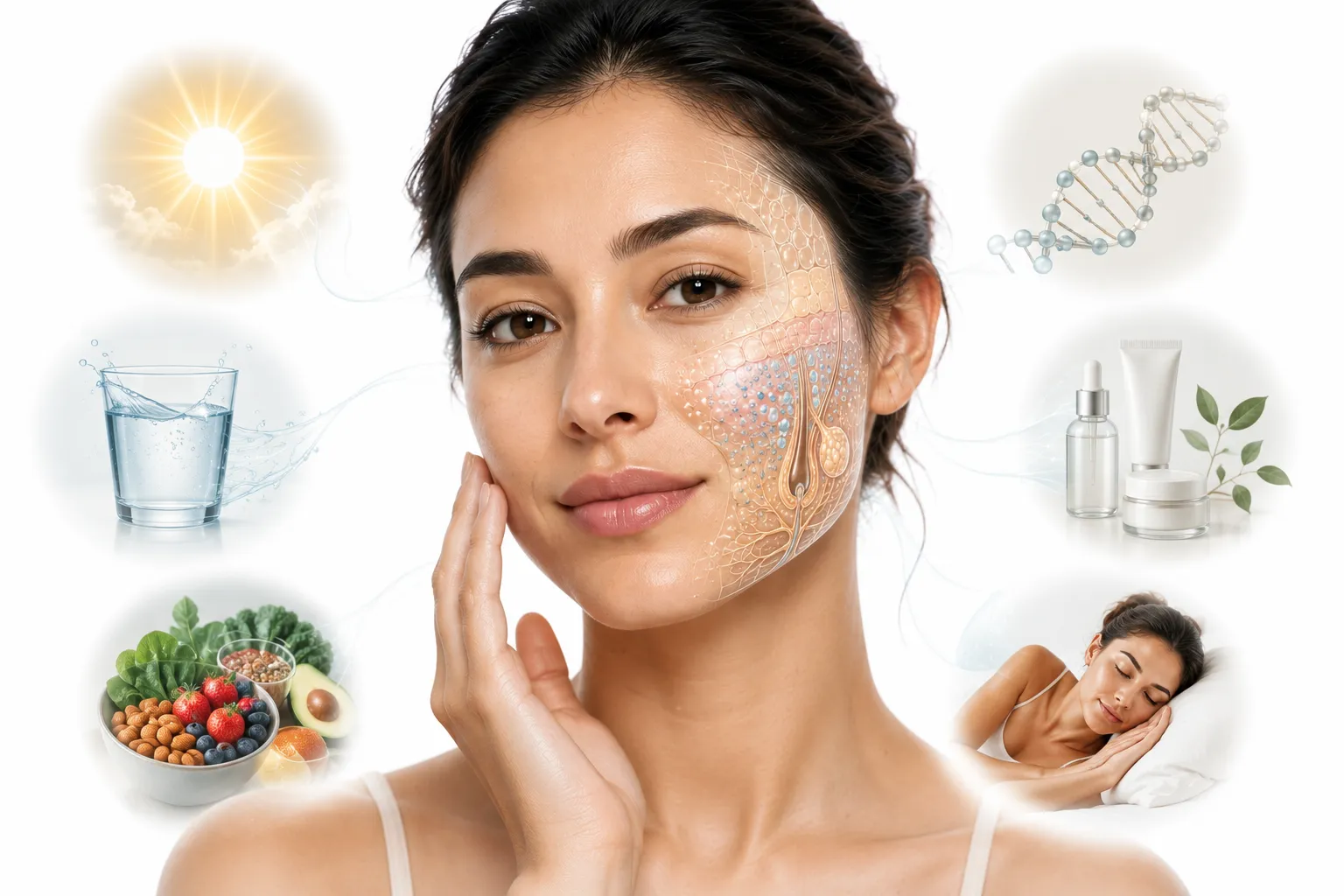
Normal skin is not a fixed state. Even if you are born with a tendency toward balance, your skin's "normalcy" is maintained by environmental factors, lifestyle, and how well your barrier adapts to change.
Use this section to decide
Does this advice apply to me?
Find the concern or goal closest to yours, then use the fit signal to decide how much weight to give this guide.If your goal is
PrimaryUsually relevant- Fit signal
- Often useful
Genetics
If your goal is
SecondaryUse caution- Fit signal
- Limited evidence
Environment
If your goal is
MaintenanceUsually relevant- Fit signal
- Often useful
Routine
If your goal is
ChangeabilityUse caution- Fit signal
- Limited evidence
Moderate
Practical use
How to use it
Start with a gentle cleanser
Choose a non-foaming or mild foaming cleanser that doesn't leave your skin feeling tight.
Moisturize daily
A lightweight moisturizer with ceramides or squalane is ideal for maintaining normal skin's natural balance.
Introduce actives carefully
You can use acids, Vitamin C, and retinol, but introduce them slowly and monitor for any changes.
Safety
Side effects and cautions
- Assuming you can ignore moisturizer entirely
Even normal skin needs hydration and barrier support. Skipping moisturizer can lead to dryness over time.
- Treating normal skin like it's a problem to solve
Normal skin doesn't need fixing. A simple, balanced routine is plenty.
- Over-exfoliating because you "can handle it"
Normal skin can still be damaged by over-exfoliation. Stick to a moderate schedule.
Fit
Who should be careful
- Those dealing with persistent skin issues
Helpful context
What else is worth knowing
What we know about skin types
Twin studies suggest that skin type is significantly heritable - up to 60% of variation can be explained by genes.
This supports the idea that genetics are the primary determinant.
Environmental factors like climate, diet, and skincare can shift skin type temporarily.
This is why "normal" skin can sometimes behave differently.
Professional perspective
Clinical observationMany patients who describe themselves as having "normal" skin actually have well-managed combination skin.
AdviceEven normal skin benefits from daily SPF and a balanced moisturizer.
Worth noting
Small details that can change the answer
- Sebum. Normal skin produces about 1-2 grams of sebum per day, maintaining a protective layer without appearing greasy.
- Genetics. Genetics are the primary determinant of skin type, accounting for up to 60% of your skin's characteristics.
- Hydration. Normal skin typically has a hydration level of 20-30% in the stratum corneum - the ideal range for comfort and function.
- Barrier. The barrier of normal skin has an optimal balance of ceramides, cholesterol, and fatty acids in a 1:1:1 ratio.
Normal skin is primarily caused by genetics, which determine sebum production and hydration balance.
A healthy barrier is the key to maintaining normal skin.
Environmental factors like climate and skincare can shift the balance.
Normal skin is more about balance than being problem-free.
Even normal skin benefits from consistent gentle care.
Explanation
The genetics of normal skin
Why some people win the skin lottery.
Genes determine the baseline activity of your sebaceous glands, your skin's natural hydration level, and your barrier's structural integrity. If your parents have normal skin, you have a higher chance of having it too - though environmental factors can shift things in either direction.
Definition
What is the "balance" in normal skin?
Normal skin is about equilibrium.
The balance refers to the ratio of oil (sebum) to water (moisture) in the skin. In normal skin, this ratio is roughly 1:1 - enough oil to protect and lubricate, enough water to stay hydrated and plump. This balance is maintained by a healthy barrier that keeps water in and irritants out.
What normal skin means for your routine
Normal skin is a low-maintenance starting point.
- You can tolerate a wider range of products compared to drier or oilier skin types.
- You may not need heavy-duty moisturizers or oil-control products.
- Your skin is generally forgiving of occasional product missteps.
- You have flexibility to use a variety of active ingredients.
How to maintain a normal skin type
Even normal skin needs some support.
- Use a gentle cleanser that doesn't strip your skin.
- Moisturize consistently to keep your barrier happy.
- Don't over-exfoliate - once or twice a week is plenty.
- Protect your skin with SPF daily to maintain its health long-term.
Questions
Frequently asked questions
Is normal skin genetic?
Yes, genetics are the primary determinant. However, lifestyle and environmental factors can influence it.
Can you change your skin type to normal?
You can manage your skin to improve balance, but you cannot permanently change your genetic skin type.
Is normal skin the most common skin type?
No, it's actually one of the rarer types. Many people with "normal" skin actually have well-managed dry or combination skin.
Can normal skin become oily or dry?
Yes, changes in climate, hormones, or routine can temporarily shift your skin from normal to oily or dry.