Evidence
What the evidence shows
Sensitive skin is less a fixed trait and more a description of how easily the skin's barrier is disturbed, which is why it can improve or worsen depending on products, environment, and overall skin health.
No single clinical definition
Sensitivity is described broadly rather than with one fixed test.Barrier link well supported
The connection between barrier health and reactivity is widely recognized.
Use this section to decide
Does this advice apply to me?
Find the concern or goal closest to yours, then use the fit signal to decide how much weight to give this guide.If your goal is
Core traitDepends- Fit signal
- Possible fit
Easily triggered reactivity
If your goal is
Common linkUse caution- Fit signal
- Limited evidence
Weakened barrier
If your goal is
DurationUse caution- Fit signal
- Limited evidence
Can be temporary or lasting
If your goal is
Top triggerDepends- Fit signal
- Possible fit
Fragrance
Expected results
Results and timeframe
Supporting the skin barrier and simplifying the routine are usually the first steps toward improvement.
Practical use
How to use it
Identify your triggers
Keep track of which products or conditions coincide with reactions.
Simplify your routine
Strip back to a gentle cleanser and moisturizer while skin settles.
Reintroduce gradually
Add one product back at a time to see how skin responds.
Safety
Side effects and cautions
- Treating sensitivity as a fixed, unchangeable label
Recognize it can shift with barrier health, products, and environment.
- Piling on new products to fix reactivity
Simplify the routine first and reintroduce products slowly.
- Ignoring fragrance as a possible trigger
Check ingredient lists for fragrance, a frequent source of irritation.
Fit
Who should be careful
- Diagnosing specific allergies or medical skin conditions
Worth noting
Small details that can change the answer
- Barrier Link. Sensitivity is closely tied to how well the outer skin barrier is functioning.
- Not Always Permanent. Sensitivity can be a lasting trait or a temporary state brought on by harsh products or environment.
- Common Triggers. Fragrance, alcohol-based products, and strong actives are frequent triggers.
- Wide Range. Sensitivity exists on a spectrum, from mild occasional reactivity to persistent discomfort.
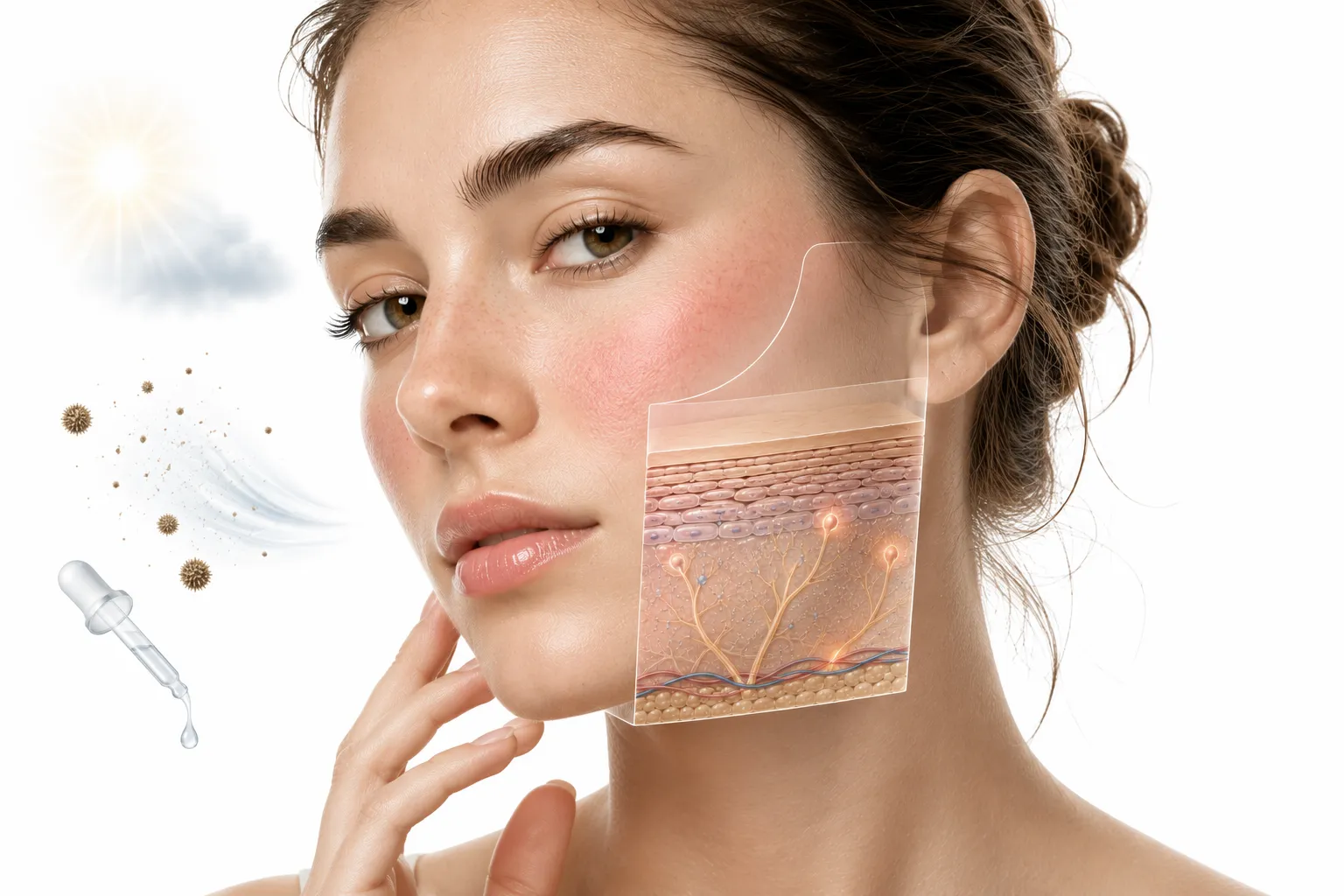
Sensitive skin describes a heightened reaction to triggers like products, fragrance, or weather.
It's usually connected to a compromised skin barrier that lets irritants reach living skin more easily.
Sensitivity can be a lasting trait or a temporary state caused by harsh routines or environment.
Common triggers include fragrance, strong actives, and extreme temperatures.
Definition
Defining sensitive skin
Sensitive skin refers to skin that reacts more readily than average to potential irritants, showing signs like redness, stinging, itching, or a feeling of tightness in response to triggers that milder skin types tolerate without incident.
- Heightened reactivity to products or environment
- Often linked to a weaker skin barrier
- Can be genetic, acquired, or temporary
Explanation
Why the skin barrier matters so much
The skin barrier is the outermost layer that normally keeps moisture in and irritants out. When it's compromised, even mild ingredients can penetrate further than intended, triggering the redness and discomfort associated with sensitivity.
Science
What research says about sensitivity
Sensitive skin doesn't have one single, universally agreed-upon clinical definition, which is part of why it's studied and discussed in fairly broad terms.
- Skin barrier
- The outermost layer of skin that regulates moisture loss and blocks irritants.
- Reactivity
- How readily the skin responds with symptoms like redness or stinging when exposed to a trigger.
Avoid
Common sensitivity triggers
Fragrance is one of the most common irritant triggers for sensitive skin
Can further weaken an already compromised barrier
Can aggravate an already reactive barrier
Dos Donts
Living with sensitive skin
Do
Helps catch a reaction before it affects the whole face.
Fewer variables make it easier to identify triggers.
Avoid
Makes it hard to pinpoint the source of a reaction.
Many actives can be tolerated once the barrier is supported.
Questions
Frequently asked questions
Is sensitive skin a permanent skin type?
It can be, but sensitivity can also be temporary and improve once the skin barrier is supported.
What triggers sensitive skin reactions most often?
Fragrance, strong actives, and extreme weather are among the most common triggers.
Can sensitive skin use active ingredients at all?
Often yes, once introduced gradually and the barrier is in better condition.
How is sensitive skin different from an allergy?
Sensitivity is a broader reactivity, while an allergy is a specific immune response to a particular substance.