Evidence
What the evidence shows
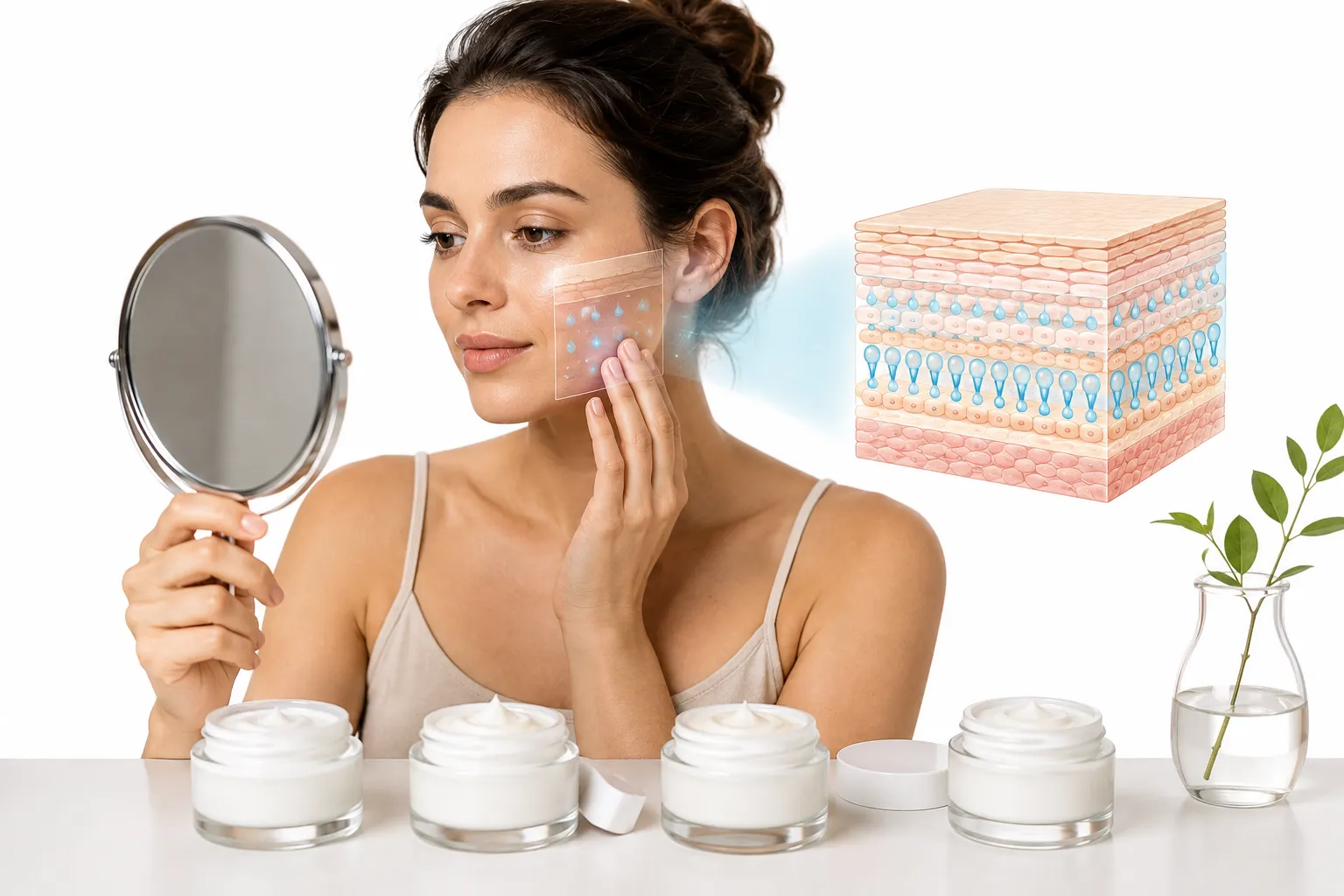
The best barrier repair creams don't just add moisture - they physically replenish the exact structural lipids the skin has lost, mimicking the skin's own composition.
Use this section to decide
Does this advice apply to me?
Find the concern or goal closest to yours, then use the fit signal to decide how much weight to give this guide.If your goal is
Key ingredientsUsually relevant- Fit signal
- Often useful
Ceramides, cholesterol, fatty acids
If your goal is
Best textureUse caution- Fit signal
- Limited evidence
Rich cream or balm
If your goal is
AvoidUse caution- Fit signal
- Limited evidence
Fragrance, active ingredients
If your goal is
ApplicationUse caution- Fit signal
- Limited evidence
Damp skin, generous amount
Expected results
Results and timeframe
Barrier repair is a process that takes time - consistent use for 4-6 weeks shows significant improvement.
Practical use
How to use it
Cleanse gently
Use a fragrance-free, sulfate-free cleanser to prepare the skin without further damage.
Apply to damp skin
Immediately pat your face dry, leaving it slightly damp, then apply the cream.
Use generously and consistently
Apply a thick layer (or a generous amount) every morning and evening, especially if your barrier is compromised.
Safety
Side effects and cautions
- Using a barrier cream on dry skin
Apply to damp skin immediately after washing to trap moisture in the skin.
- Using a barrier cream with active ingredients
Avoid using barrier creams with retinol, acids, or vitamin C; they can defeat the purpose.
- Using too little product
Barrier repair creams are meant to be applied generously, especially if your skin is severely compromised.
Fit
Who should be careful
- Very oily, non-reactive skin that doesn't need rich occlusion
Helpful context
What else is worth knowing
What to look for in a barrier repair cream
These three ingredients are the foundation of an effective repair cream.
The "mortar" holding your skin cells together
Essential for forming a functional barrier
Helps maintain the barrier's flexibility
Reduces inflammation and supports barrier function
Worth noting
Small details that can change the answer
- Lipid Ratio. The ideal skin barrier has a 1:1:1 ratio of ceramides, cholesterol, and free fatty acids.
- Ceramide Decline. Ceramide levels in the skin decline with age; a 40-year-old has about 40% fewer ceramides than a 20-year-old.
- Water Loss. A compromised barrier can lose up to 10 times more water per hour than a healthy barrier.
- Eczema Connection. Atopic dermatitis (eczema) is characterized by a genetic deficiency in filaggrin, leading to a weak barrier and low ceramide levels.
The best barrier repair creams contain a mix of ceramides, cholesterol, and fatty acids in a 1:1:1 ratio.
Apply to damp skin to maximize hydration absorption and barrier repair.
Avoid barrier creams with irritating active ingredients; repair is a dedicated step.
A compromised barrier is the root cause of many skin issues, making repair a priority for sensitive skin.
Definition
What is a barrier repair cream?
A barrier repair cream is a specialized moisturizer formulated with a physiological lipid mixture designed to replenish the skin's barrier. Unlike standard moisturizers that primarily hydrate or soften, barrier repair creams actively deliver ceramides, cholesterol, and fatty acids to restore the structure of the stratum corneum.
- Contains ceramides, cholesterol, and fatty acids
- Often includes soothing agents like niacinamide or panthenol
- Has a rich, protective texture
- Typically fragrance-free and free of irritating actives
Science
The science of barrier repair
The skin's barrier is a mixture of lipids and proteins. The lipids form a lamellar structure of multiple bilayers, like pages in a book, that are both hydrophobic and hydrophilic, keeping water from escaping. When you apply a repair cream, the lipids integrate into the existing structure, filling the gaps and restoring the lamellar order. This requires the right lipid ratio; a single lipid type, like just ceramides, is less effective than a proper multi-lipid formulation.
- Lamellar Bilayers
- Multiple lipid layers (roughly 10-20) that form the main water barrier, arranged like pages of a book.
- Physiological Lipids
- Lipids naturally found in the skin, specifically ceramides, cholesterol, and fatty acids.
Benefits
What a barrier repair cream does for your skin
Consistent use of the right barrier repair cream can transform the skin's health and resilience.
- Reduces transepidermal water loss, making skin less dry and flaky
- Reduces sensitivity and reactivity over time
- Reduces redness and inflammation in conditions like eczema and rosacea
- Allows the skin to tolerate other skincare products more easily
- Improves the overall texture and appearance of the skin
Ingredient Comparison
Barrier repair creams vs. standard moisturizers
Barrier repair cream
bestBest for: Damaged, sensitive, eczema-prone skinReplenishes skin's lost lipids · Addresses the cause of sensitivity · Clinically proven to restore barrier function
Limitations: Can be heavy · May feel greasy · Often more expensiveStandard moisturizer
goodBest for: Hydrating normal, non-sensitive skinLighter texture · Often more affordable · Good for daily maintenance
Limitations: May not repair a compromised barrier · Often contains fragrances or extrasQuestions
Frequently asked questions
Can I use a barrier repair cream every day?
Yes, barrier repair creams are designed for daily use, especially for sensitive or compromised skin.
Is a barrier repair cream the same as a moisturizer?
It's a type of moisturizer, but it's specifically formulated to repair the skin's structural lipids, whereas a moisturizer hydrates and softens.
Can I put retinol on top of a barrier repair cream?
Yes, using a barrier cream after retinol can reduce irritation, but you should ideally wait 20-30 minutes between applications.
How long does it take to repair a skin barrier?
It typically takes 4-6 weeks of consistent use to see significant improvement, though you may notice a reduction in irritation within a week.