Evidence
What the evidence shows
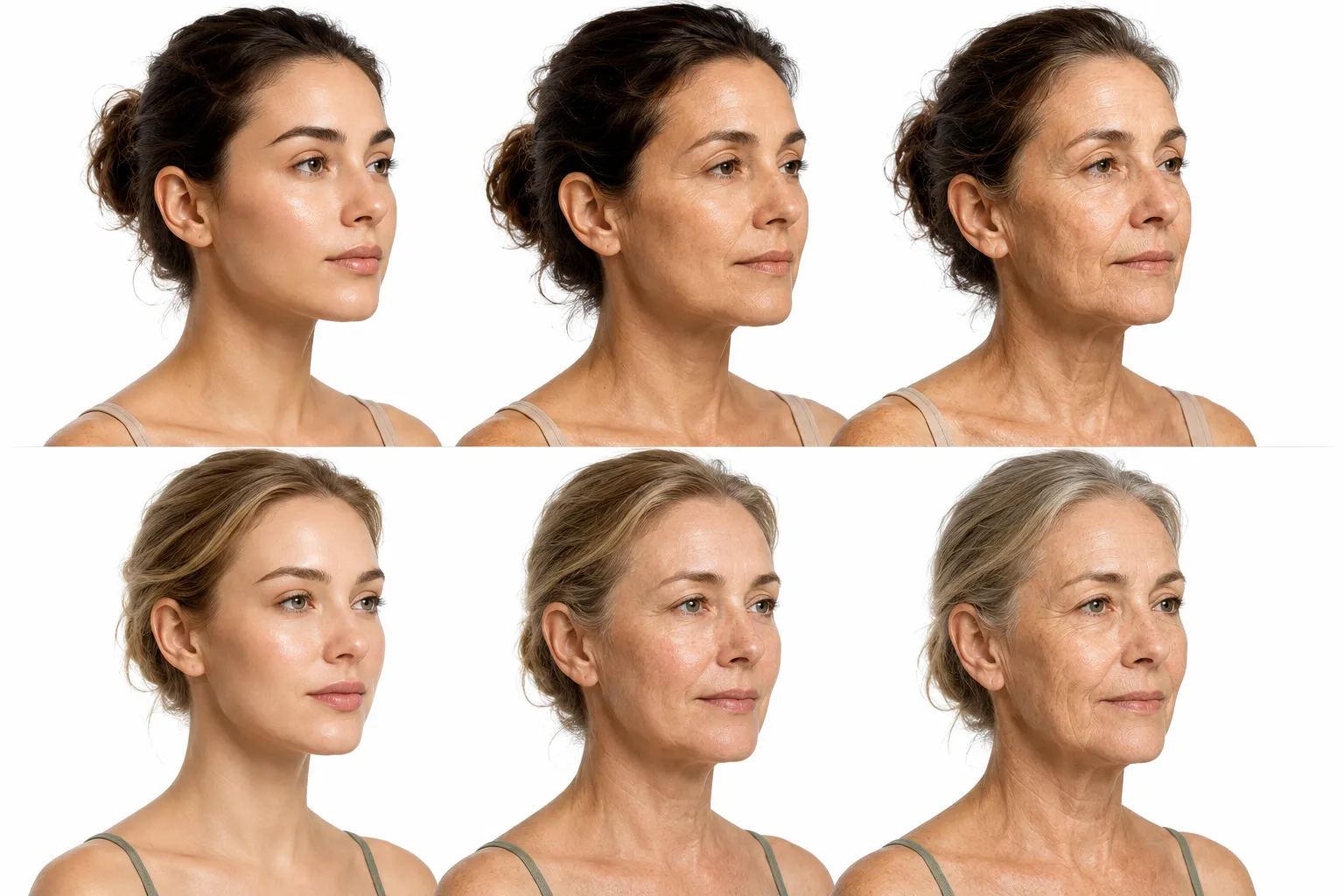
The same sebum that makes oily skin frustrating in your twenties is doing quiet, long-term work keeping the skin barrier lubricated and slower to show fine lines later on.
Use this section to decide
Does this advice apply to me?
Find the concern or goal closest to yours, then use the fit signal to decide how much weight to give this guide.If your goal is
Fastest to show agingDepends- Fit signal
- Possible fit
Dry skin
If your goal is
Slowest to show agingUsually relevant- Fit signal
- Often useful
Oily skin
If your goal is
Top external factorDepends- Fit signal
- Possible fit
Sun exposure
If your goal is
Preventable?Usually relevant- Fit signal
- Often useful
Largely yes
Expected results
Results and timeframe
Dry skin tends to show visible signs of aging earlier due to lower natural oil and moisture retention.
Oily skin's natural lipid layer tends to delay the visible appearance of wrinkles.
Oil production naturally declines with age, so skin often becomes drier over time regardless of original type.
Practical use
How to use it
Identify your skin type honestly
Understanding whether you lean dry, oily, or combination helps you choose the right preventive routine.
Prioritize daily sun protection
Broad-spectrum SPF is the single most effective step for slowing visible aging across all skin types.
Support your barrier consistently
Use a moisturizer suited to your skin type daily, even oily skin benefits from lightweight hydration.
Safety
Side effects and cautions
- Skipping moisturizer because you have oily skin
Even oily skin benefits from lightweight hydration to support the barrier long-term.
- Assuming skin type alone determines aging speed
Sun protection and lifestyle habits usually have a bigger cumulative impact.
- Starting anti-aging routines only after signs appear
Preventive habits like daily SPF matter most before visible aging begins.
Fit
Who should be careful
- Predicting individual aging outcomes with certainty, since lifestyle plays a large role
Helpful context
What else is worth knowing
Aging tendency by skin type
Tends to show fine lines and dullness earliest.
Ages at a moderate pace.
Mixed aging pattern across zones.
Tends to show visible wrinkles later.
Oil production naturally declines, increasing dryness-related aging signs.
What to prioritize by decade
20s
Focus on sun protection and establishing a consistent basic routine.
30s
Introduce barrier-supporting ingredients and continue daily SPF.
40s+
Prioritize hydration and barrier repair as natural oil production declines.
What the evidence suggests
Cumulative UV exposure is widely regarded as the leading driver of visible extrinsic skin aging.
This holds true across skin types, though drier skin tends to show effects earlier.
Worth noting
Small details that can change the answer
- Barrier. Natural oil helps form a protective layer that slows water loss from the skin's surface.
- Elasticity. Drier skin often shows reduced elasticity earlier due to lower lipid and moisture content.
- Sun exposure. UV exposure is considered the leading external cause of visible skin aging, regardless of skin type.
- Hormones. Oil production naturally declines with age for most people, which is why skin often becomes drier later in life.
Sun exposure is generally a bigger factor in aging speed than skin type alone.
Consistent sun protection and barrier support matter more than skin type for long-term skin aging.
Explanation
Why dry skin tends to age faster
Less oil means less built-in moisture defense.
Dry skin produces less sebum, the skin's natural oil, which normally helps seal in moisture and support the outer barrier. With less of that natural protection, dry skin tends to lose water more readily, leading to earlier fine lines and a less plump appearance.
Aging tendencies by skin type
| Factor | Skin Type | Aging Tendency |
|---|---|---|
| Dry | Tends to show fine lines and dullness earliest | |
| Normal | Ages at a moderate, fairly typical pace | |
| Combination | Mixed pattern, often dry-leaning zones age first | |
| Oily | Tends to show visible wrinkles later |
What actually accelerates visible aging
- Cumulative, unprotected sun exposure
- Smoking and long-term pollution exposure
- Chronic dehydration and low humidity environments
- Natural decline in oil and collagen production with age
- Repeated, unmanaged stress affecting skin repair
Common myths about skin type and aging
Myth
Oily skin never shows signs of aging.
Reality
It tends to show visible wrinkles later, but is still subject to sun damage and natural aging.
Myth
Skin type is the biggest factor in how fast you age.
Reality
Sun exposure and lifestyle habits generally matter more than skin type alone.
Questions
Frequently asked questions
Does oily skin age slower than dry skin?
Generally yes, oily skin's natural lipid layer tends to delay the visible appearance of fine lines and wrinkles compared to dry skin.
Can dry skin be prevented from aging faster?
Consistent moisturizing, barrier support, and daily sun protection can meaningfully slow visible aging in dry skin.
Is combination skin better or worse for aging?
It tends to show a mixed pattern, with drier zones often showing signs of aging before oilier zones.
Does skin type matter more than sun exposure for aging?
No, cumulative sun exposure is generally considered the bigger driver of visible skin aging.