A gentle place to begin
A few first stops if “What...” questions still feel new.
Questions that begin with “What…”
Names, definitions, and the quiet literacy of knowing what is in the bottle.
124 calm answers for the moments you hover over a bottle, or a habit, and wonder what comes next.

Popular guides
What
Melasma in pregnancy is so common that it affects more than half of pregnant women, yet many are caught off guard when brown patches start appearing on their cheeks and forehead.
Pregnancy brings all kinds of skin changes, and melasma - sometimes called the "mask of pregnancy" - is one of the most common. It can be unsettling to see your face change, but knowing what to expect and why it's happening can take some of the worry out of it.

What
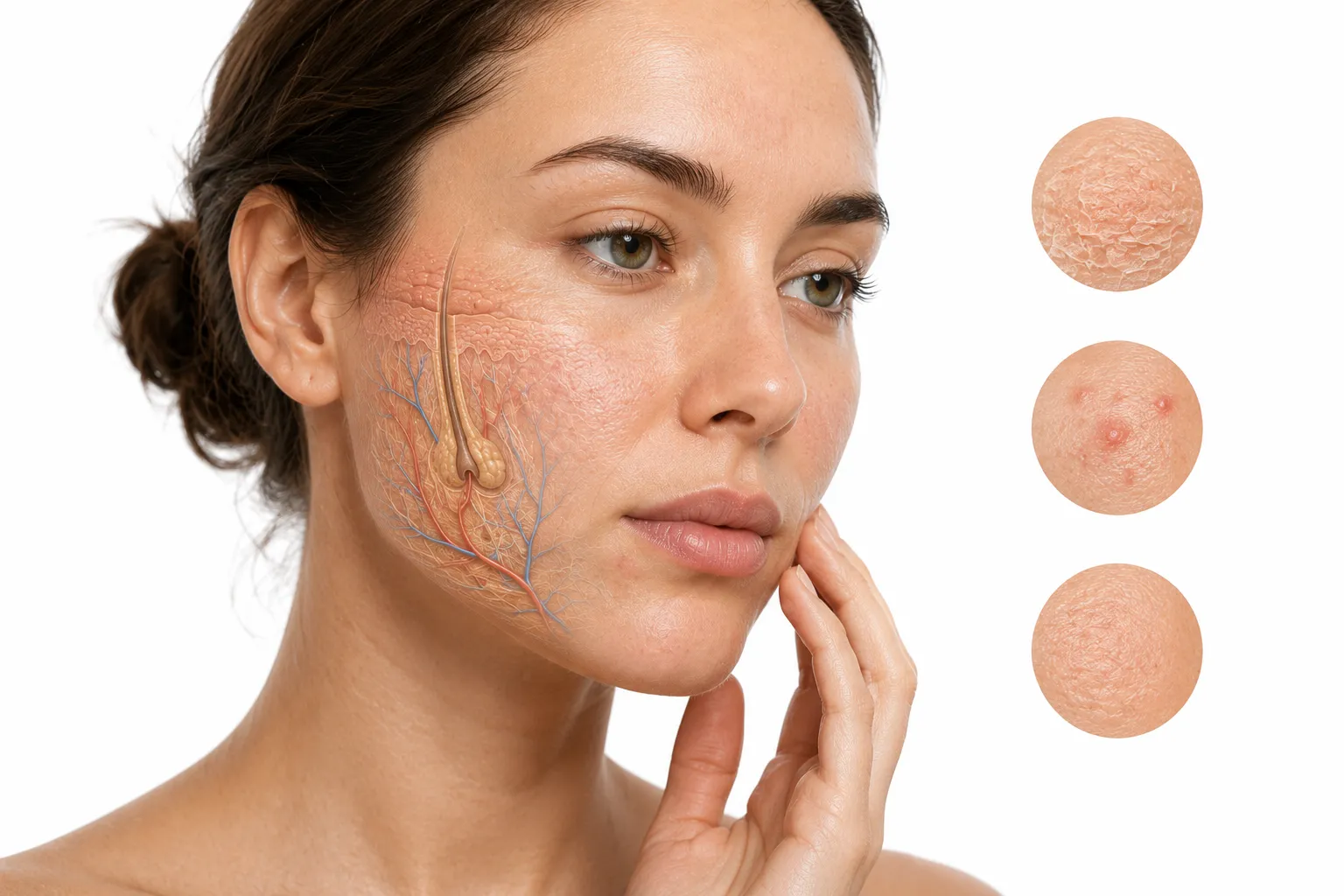
It does not peel like acids or dazzle like retinoids. It quietly helps the skin behave better.
What
But normal skin is not immune to problems; it just suffers different ones than oily or dry skin.

What
So the beauty and skincare world quietly agreed on a shortcut: squeeze that whole spectrum into seven workable buckets.

What
But dry skin has its defenders, and they have a point: it comes with some distinct advantages that you don't hear about nearly as often.
What
Niacinamide seems to have about five jobs - and it does all of them without causing the irritation that often accompanies multitasking ingredients.
Niacinamide serum is like the Swiss Army knife of skincare - it does a bit of everything, and it does it all surprisingly well. From fading dark spots to calming inflammation, this vitamin B3 derivative earns its place in countless routines.
What
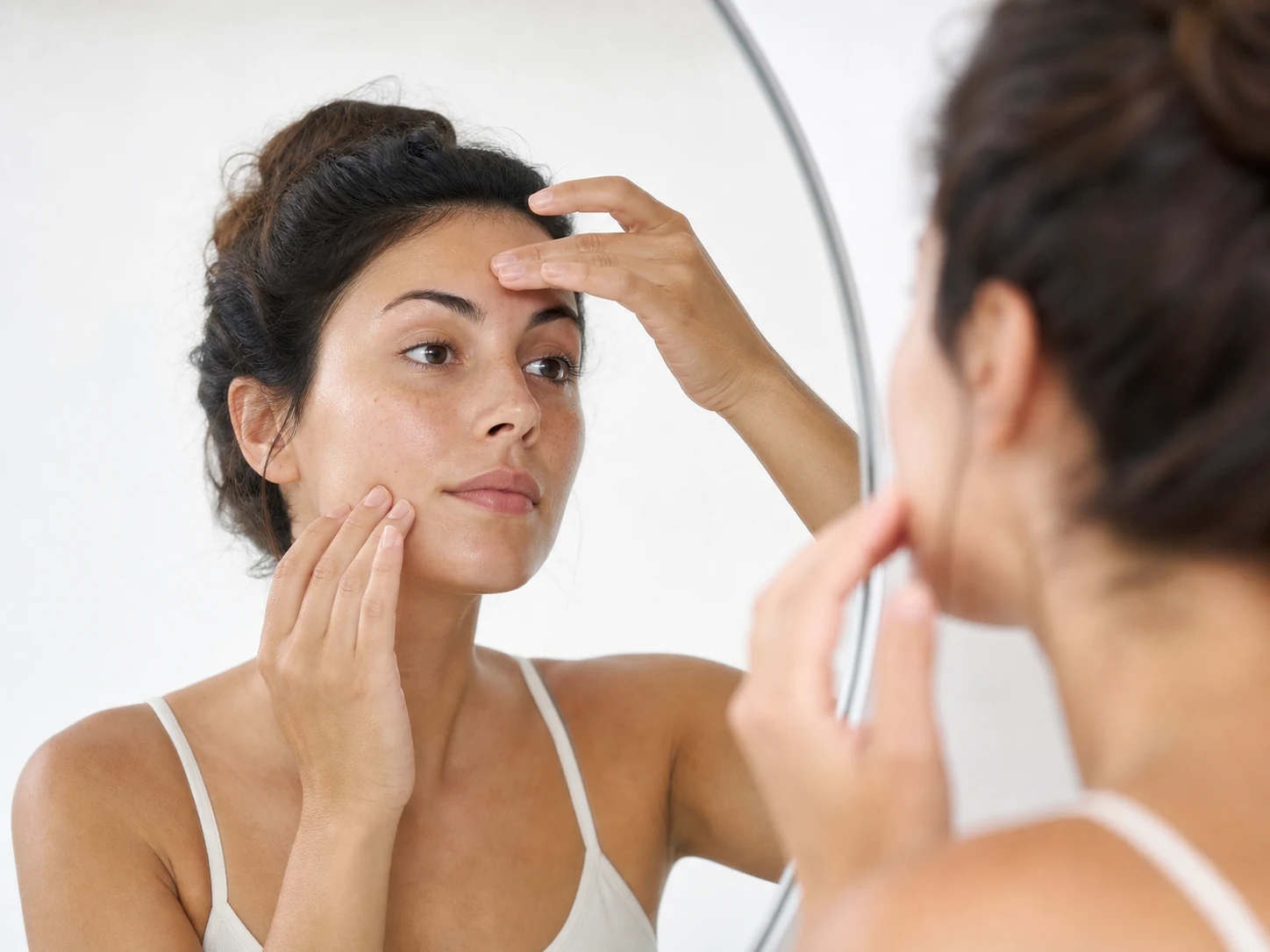
What makes niacinamide so versatile? And are all its benefits backed by real science?
What
And yet almost every skincare aisle is organized around them, as if your face were a fixed and permanent category rather than a fairly moody organ that changes with the seasons.
What
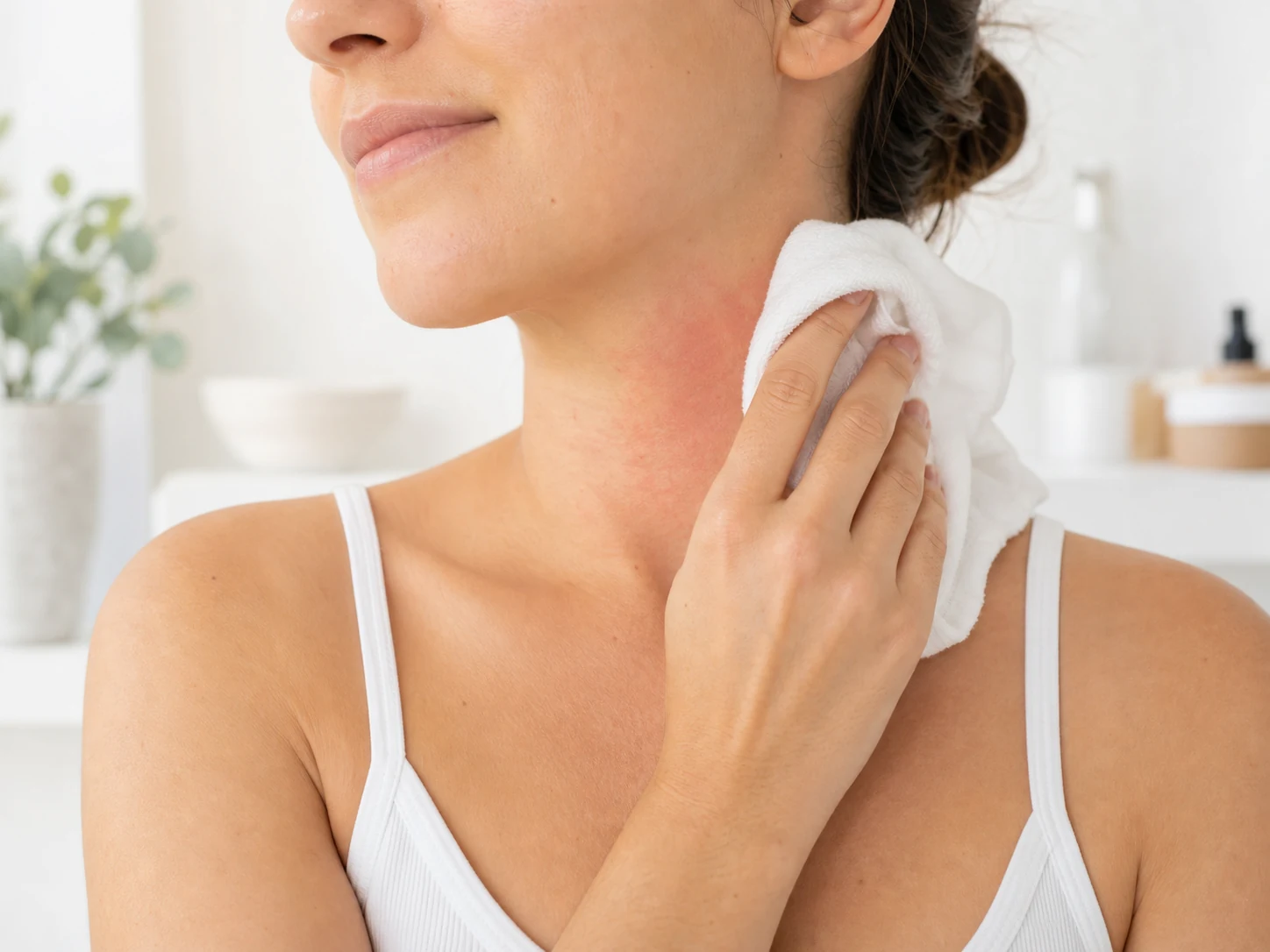
But not all millet grains are the same - and neither are heat rash bumps, which vary dramatically in appearance, sensation, and severity.
What
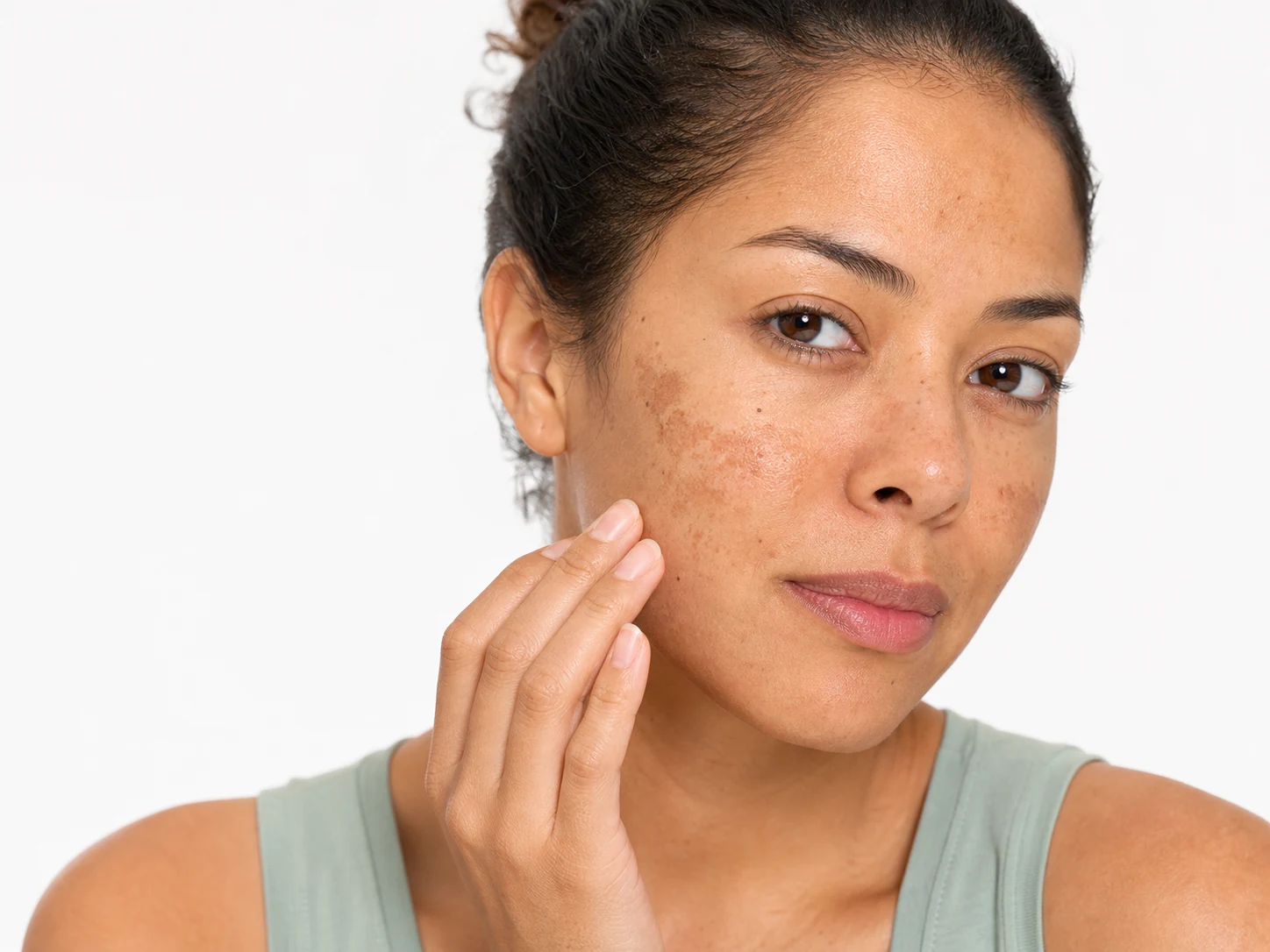
The surprising thing is that the same word covers conditions that are caused by completely different factors and require completely different treatments.
What
Niacinamide's disadvantages are usually the result of misuse rather than the ingredient itself.
For all its benefits, niacinamide isn't without drawbacks. Understanding the potential disadvantages helps you use it wisely and avoid disappointment.
What
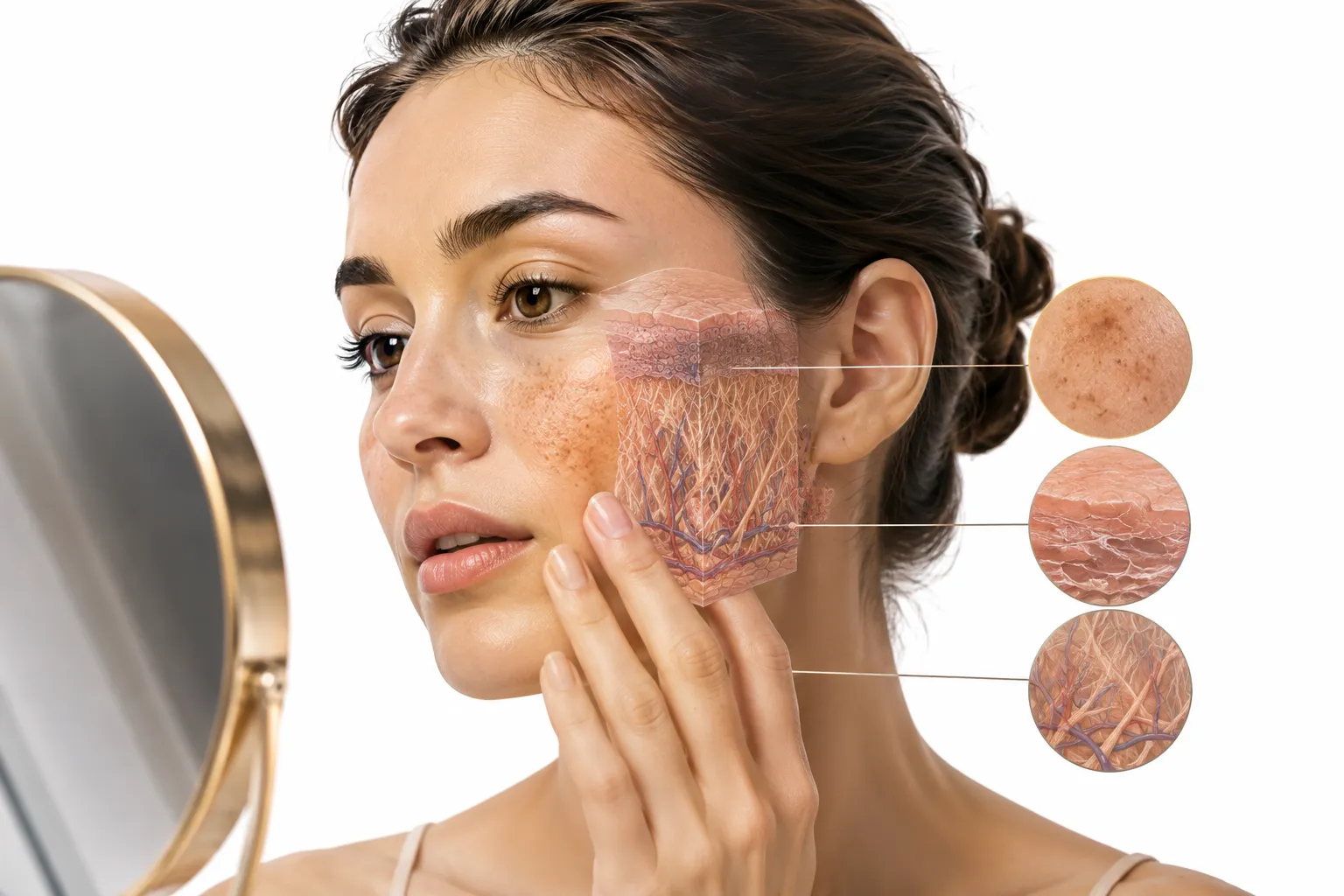
The surprising thing is that the early signs of sun damage aren't dramatic; they're almost forgettable, which is exactly why they go unnoticed for so long.
Start with the popular ones above, or scroll the full set when you are in a browsing mood.
What
Melasma in pregnancy is so common that it affects more than half of pregnant women, yet many are caught off guard when brown patches start appearing on their cheeks and forehead.
Pregnancy brings all kinds of skin changes, and melasma - sometimes called the "mask of pregnancy" - is one of the most common. It can be unsettling to see your face change, but knowing what to expect and why it's happening can take some of the worry out of it.
What
It does not peel like acids or dazzle like retinoids. It quietly helps the skin behave better.
What
But normal skin is not immune to problems; it just suffers different ones than oily or dry skin.
What
So the beauty and skincare world quietly agreed on a shortcut: squeeze that whole spectrum into seven workable buckets.
What
But dry skin has its defenders, and they have a point: it comes with some distinct advantages that you don't hear about nearly as often.
Dry skin gets a bad rap, but it does have a few unexpected advantages. It tends to be less prone to certain types of breakouts, and it often ages in a way that some people actually prefer. In the spirit of fairness, let's give dry skin its moment.
What
Niacinamide seems to have about five jobs - and it does all of them without causing the irritation that often accompanies multitasking ingredients.
What
What makes niacinamide so versatile? And are all its benefits backed by real science?
What
And yet almost every skincare aisle is organized around them, as if your face were a fixed and permanent category rather than a fairly moody organ that changes with the seasons.
Dermatology generally sorts skin into a handful of broad categories - oily, dry, combination, sensitive, and normal - based on how much oil the skin produces and how it reacts to the world. None of them are a diagnosis. They are just a starting point.
What
But not all millet grains are the same - and neither are heat rash bumps, which vary dramatically in appearance, sensation, and severity.
Heat rash isn't a one-size-fits-all condition. The four distinct types of miliaria each tell a different story about what's happening inside the sweat ducts. Understanding the differences helps in identifying and treating them effectively.
What
The surprising thing is that the same word covers conditions that are caused by completely different factors and require completely different treatments.
What
Niacinamide's disadvantages are usually the result of misuse rather than the ingredient itself.
What
The surprising thing is that the early signs of sun damage aren't dramatic; they're almost forgettable, which is exactly why they go unnoticed for so long.
What
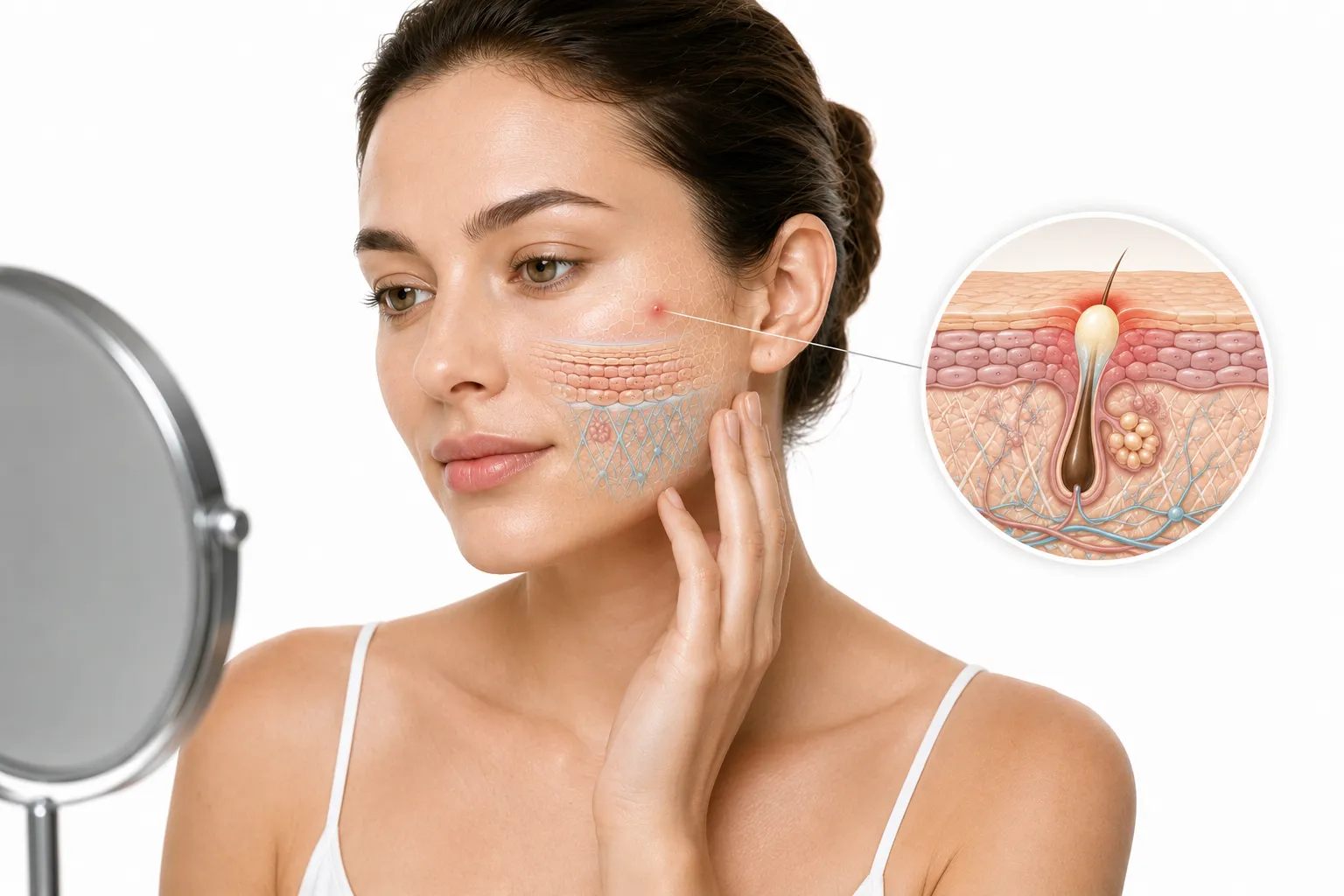
Normal skin, it turns out, has a fairly precise set of measurable characteristics.
Break normal skin down into its component parts, oil production, moisture retention, pore size, texture, sensitivity, and a fairly consistent picture emerges of what "balanced" actually means structurally.
What
Some people react to it - and knowing what to look for can save you a lot of frustration.
What
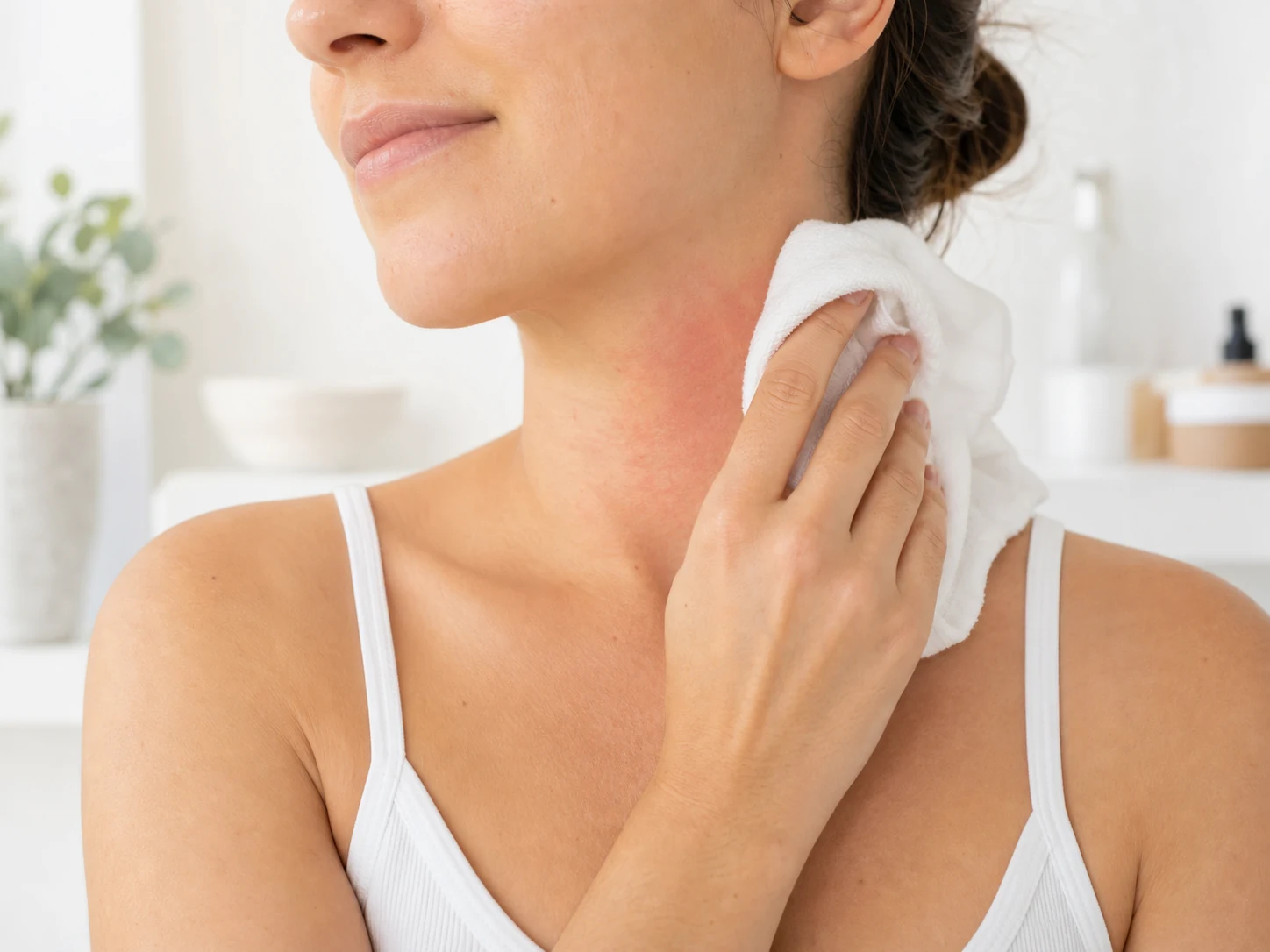
Before the first bump appears, a distinctive prickling sensation announces that something has gone wrong with your skin's cooling system.
Heat rash announces itself with a distinctive set of sensations: prickling, itching, and a feeling of warmth that's separate from the heat that caused it. Recognizing these signs early can make treatment far more effective.
What
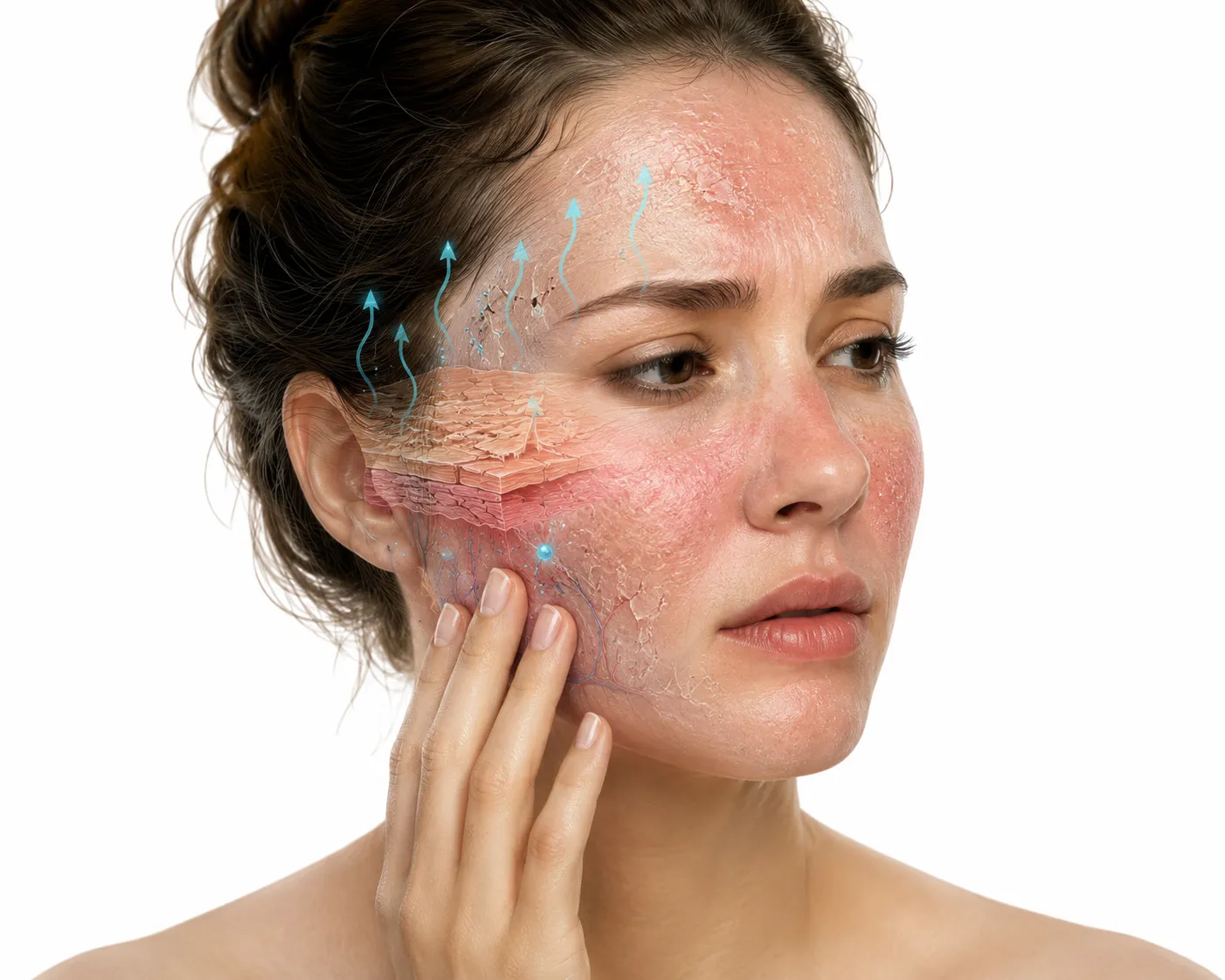
Learning to recognize that particular cluster of signs is often more useful than fixating on any single symptom in isolation.

What
But your skin has its own set of signals, and they're often more subtle than the calcified showerhead.
Your skin can tell you a lot about your water quality if you know how to listen. The signs of hard water damage are often subtle, but once you know what to look for, they become hard to miss.
What
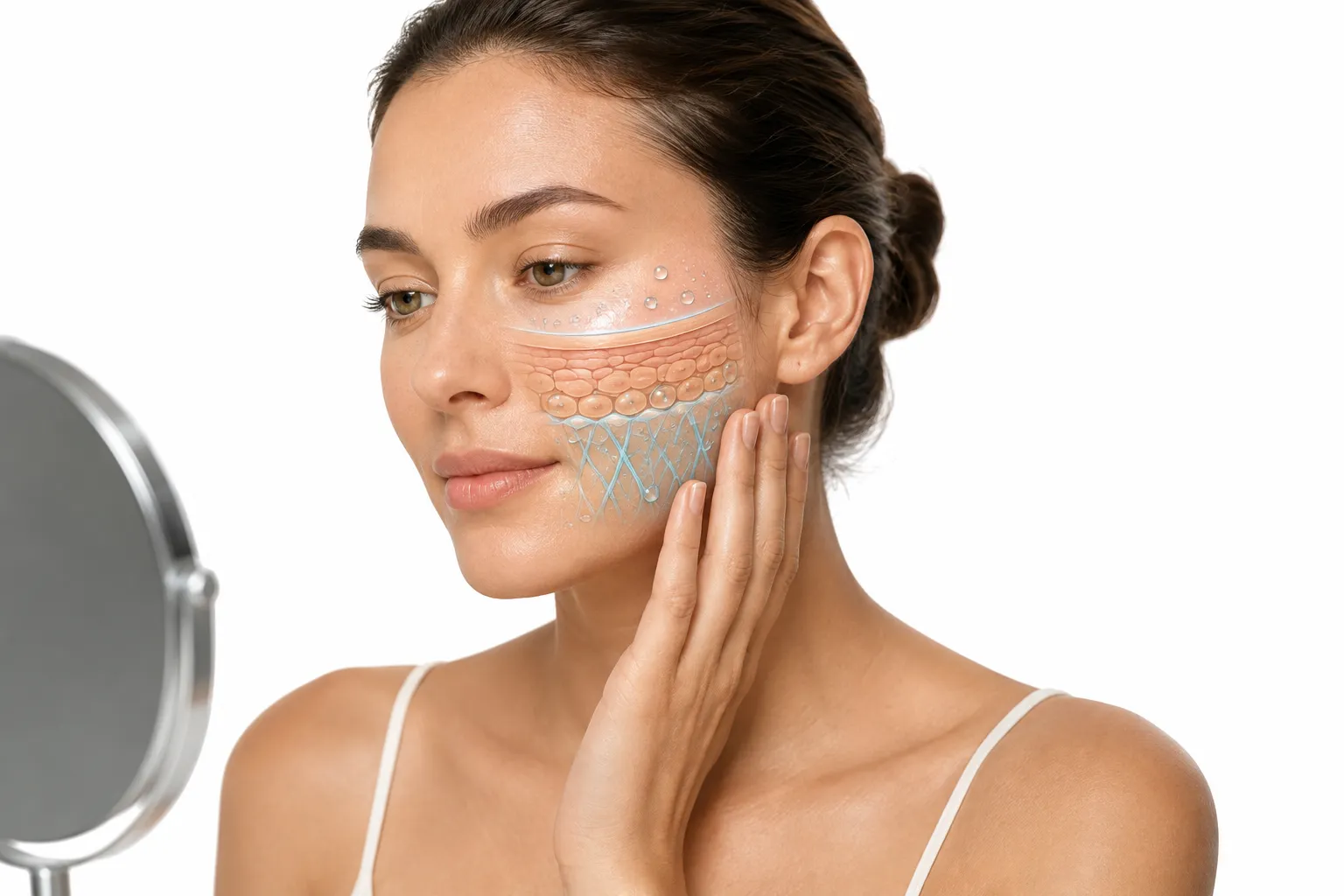
That makes it one of the harder skin types to positively confirm, since it's defined more by what doesn't happen than by what does.
What
The tricky thing about normal skin is that when it goes wrong, the signs are quiet, easy to miss, easy to dismiss as "just a bad skin day."
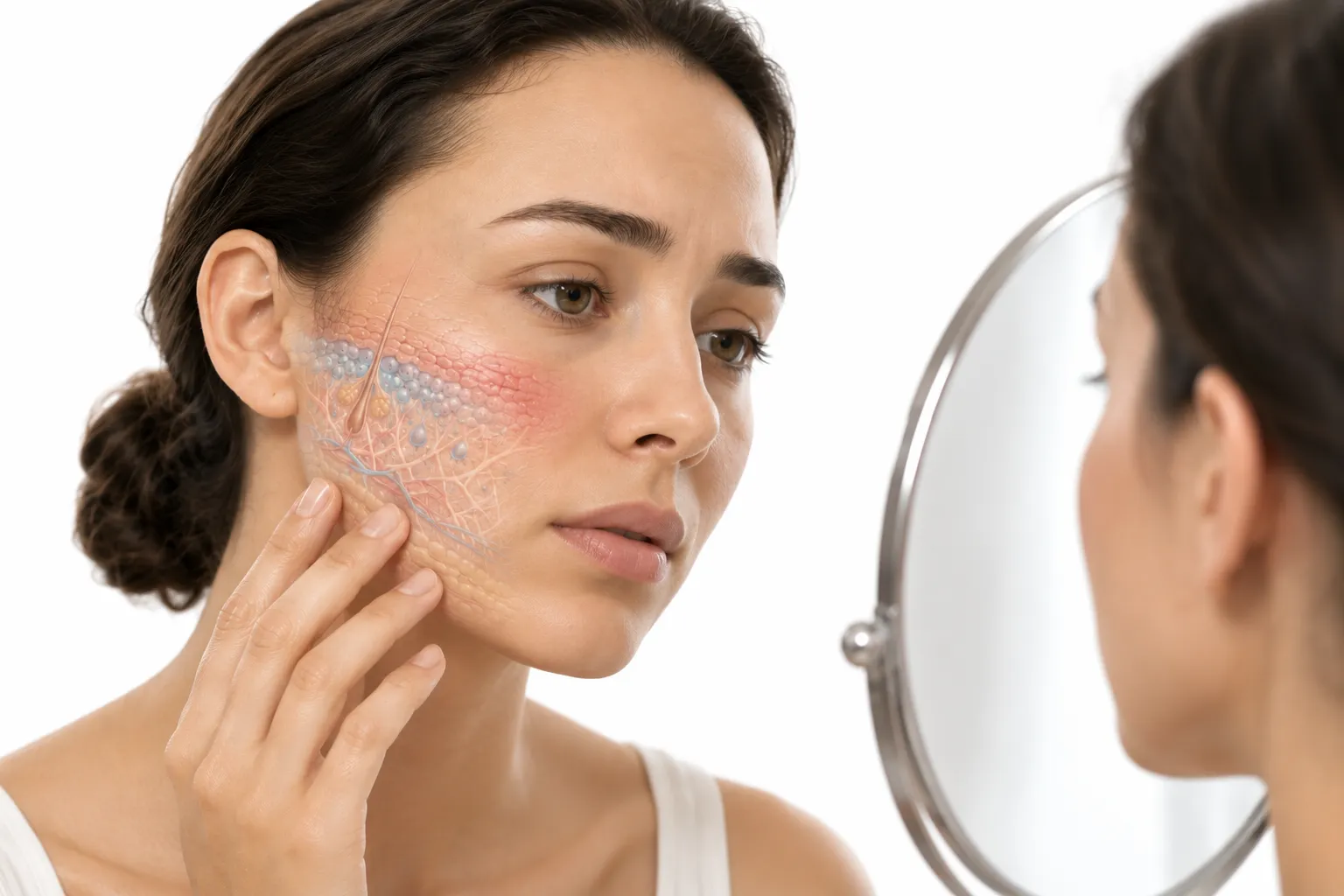
What
The signs of unhealthy normal skin are often more subtle than the dramatic flare-ups of other skin types.

What
When it comes to dry skin, two B vitamins step up as the soloists: B3 and B5.
Vitamin B3 (niacinamide) is the B vitamin that helps most with dry skin. It strengthens the skin barrier, stimulates ceramide production, and reduces moisture loss. Vitamin B5 (panthenol) is also helpful - it acts as a humectant and has soothing, moisturizing properties. These two are the standout B vitamins for dry skin.
What
But even the most sociable person has a few limits.
Niacinamide is one of the most compatible ingredients in skincare. The list of things that don't mix with it is short, but understanding the exceptions matters.

What
It's also the thinnest and most delicate skin on your body, which means it's more sensitive and more prone to dryness than the skin on your arms or legs.

What
It's no wonder that legs are one of the most common places to get dry skin. The wonder is that the dryness is so often preventable.

What
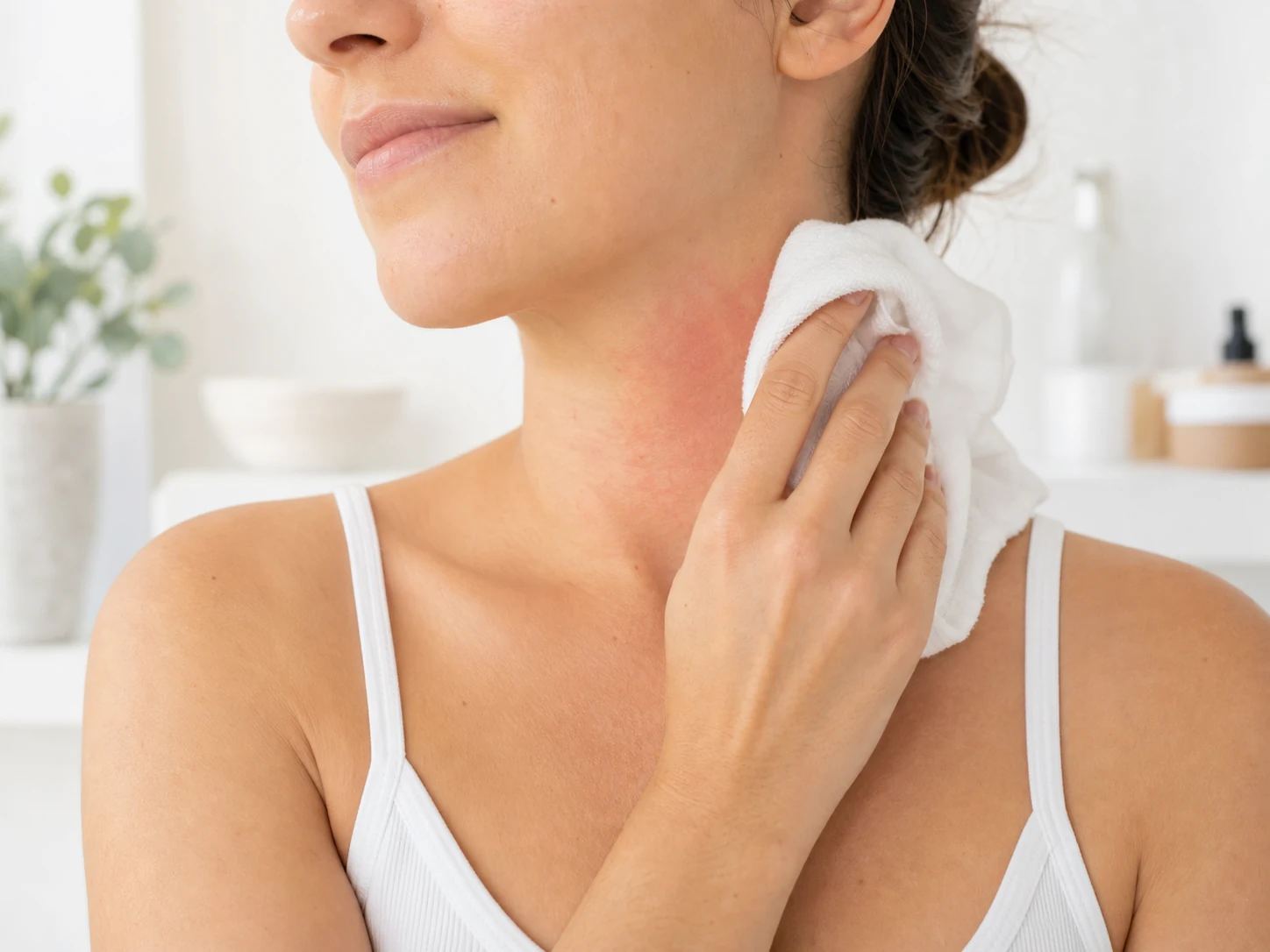
The real question is why the skin is letting water out in the first place.
Dry skin is not simply about missing moisture - it's a sign that the skin's barrier is struggling to do its job. The causes are more varied and interesting than just "not enough moisturizer."
What
But when those tubes get blocked - which happens more often than you might expect - the system backs up and trouble begins.
What
The surprising thing is that the same mechanism - overactive melanocytes - can be triggered by so many different things.

What
But the causes of melasma are actually quite clear. They're not a mystery; they're a matter of biology.
What
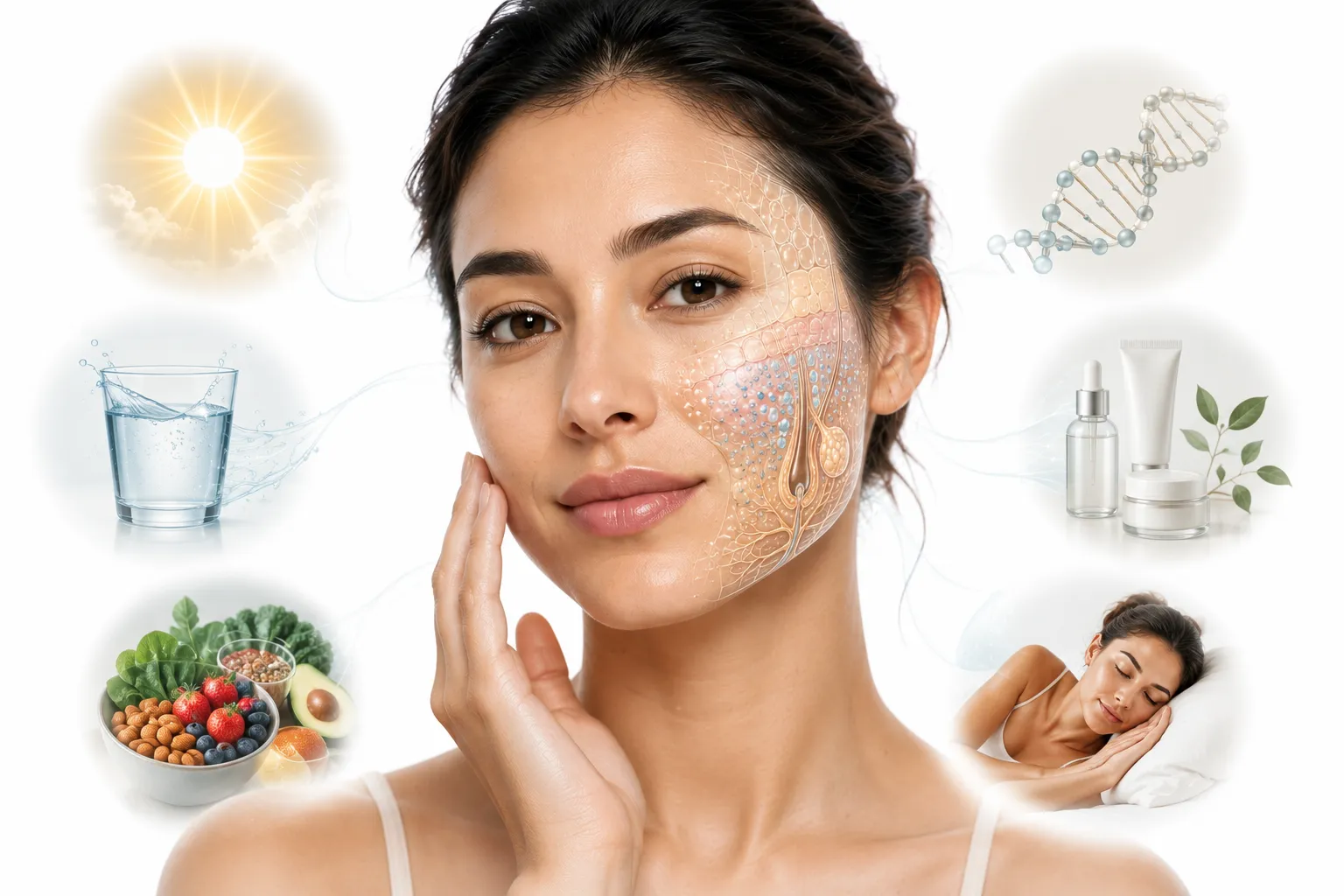
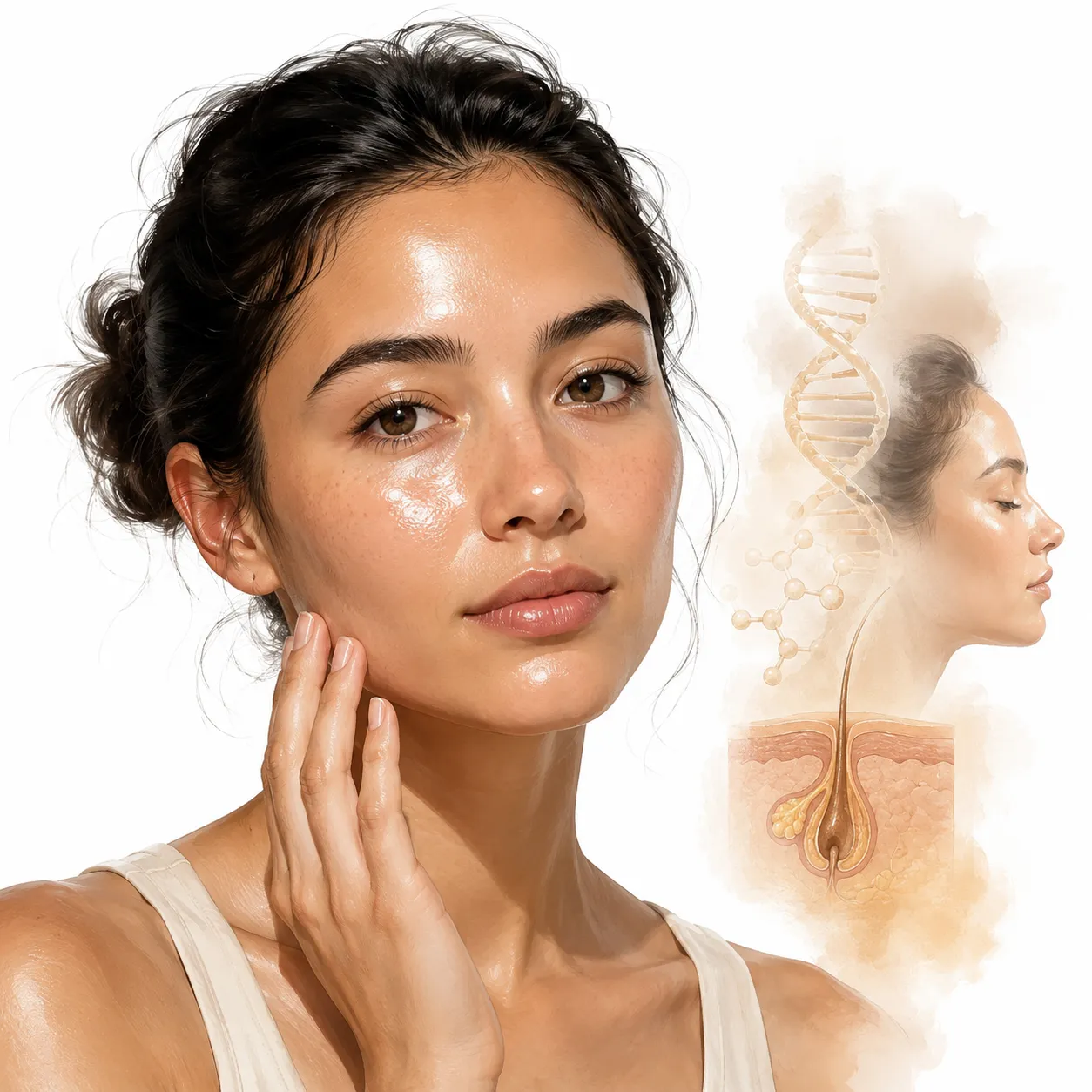
But what makes a person "normal" in the context of their skin? It's not just luck, though luck certainly plays a part.
Normal skin is often described as the "ideal" type, but it doesn't happen by accident. It's the result of a particular genetic hand and a careful balance that your skin has learned to maintain.
What
The causes of oily skin in females are more complex than just "being a teenager," involving a delicate hormonal dance that continues through perimenopause and beyond.

What
But why does testosterone have such a dramatic effect on sebum production, and why does it persist long past the teenage years?
What
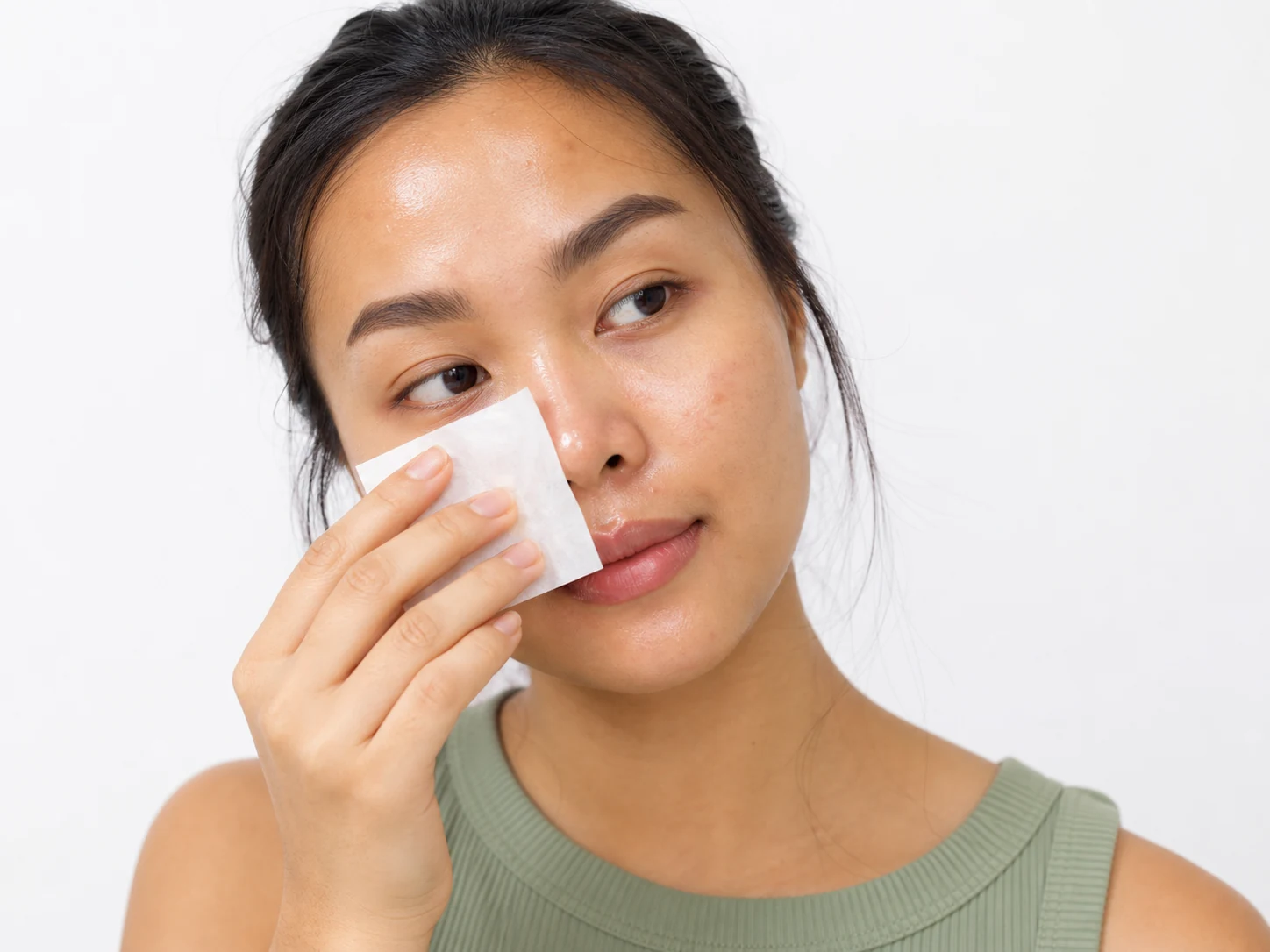
Two people can eat identically and wash their faces identically, yet one will shine by noon and the other won't.
What
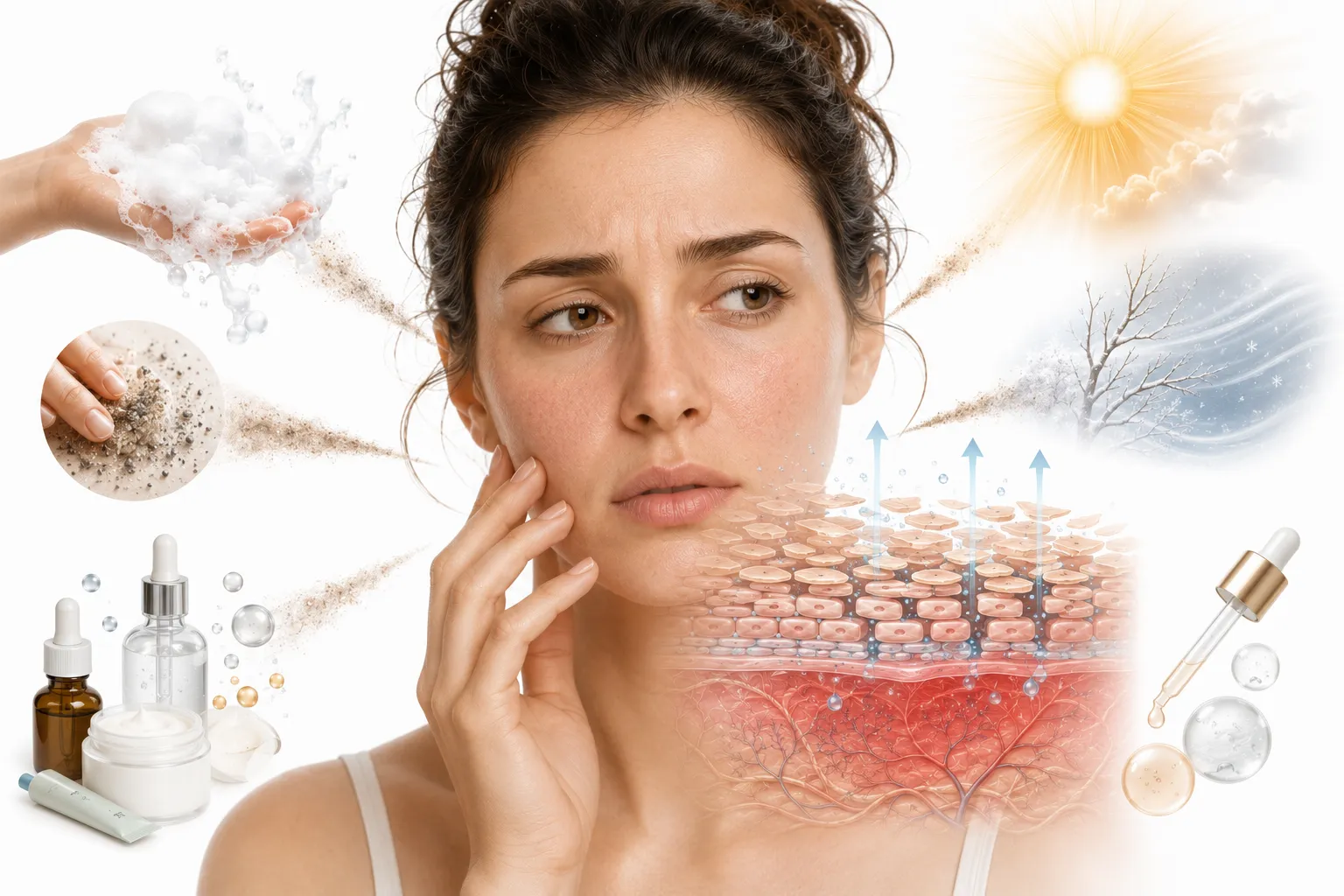
But what actually damages it? And why does it feel like everything we do seems to hurt it?
The skin barrier is your body's first line of defense, but it's also surprisingly vulnerable. The things that damage it are often the very things we think are helping.

What
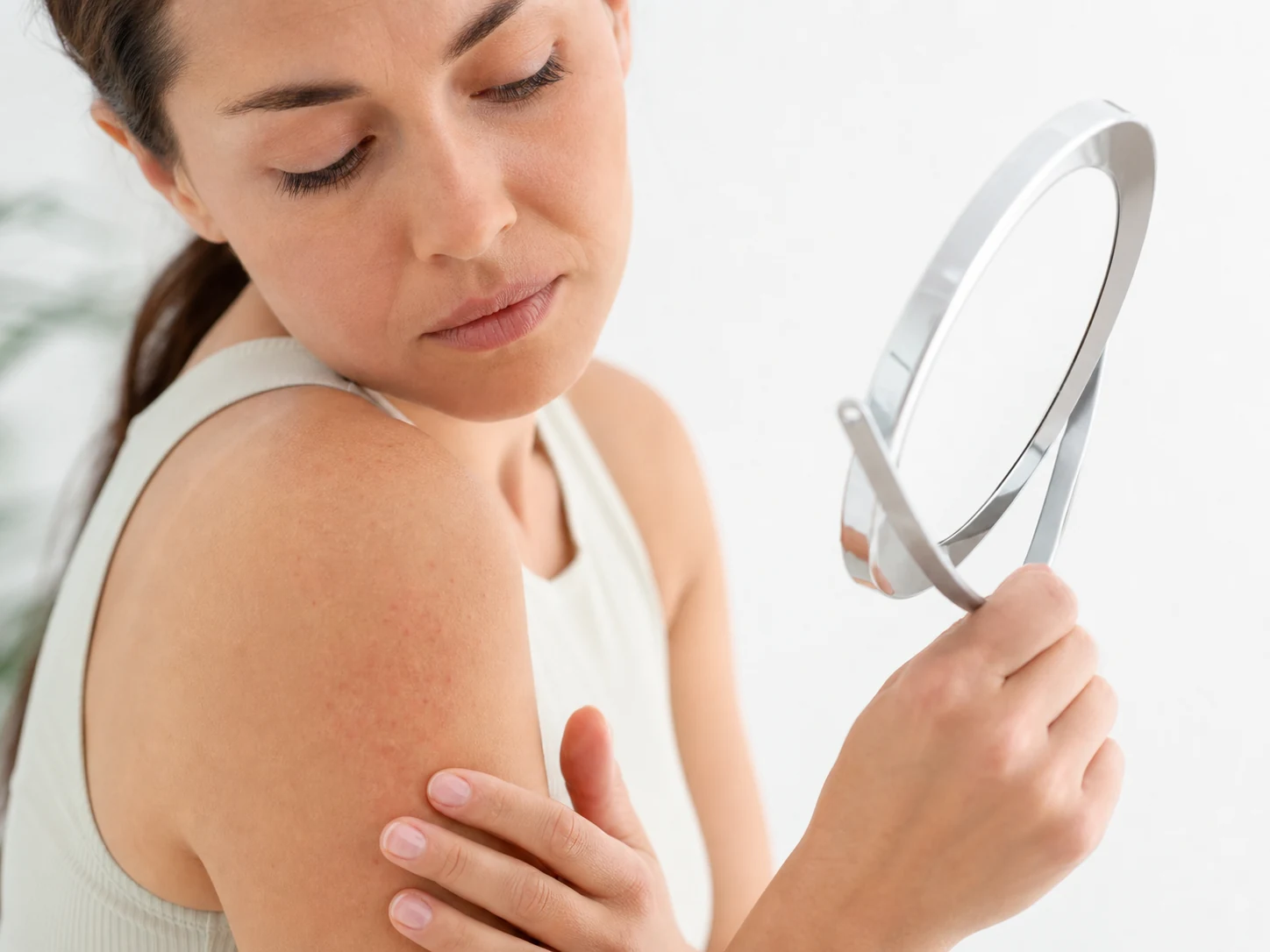
But while rust is purely chemical, skin damage is a biological process where UV radiation triggers an inflammatory response that gradually degrades the skin's support structure.
What
Heat rash is a common culprit, but several other skin conditions can produce almost identical bumps, leaving people treating the wrong thing.

What
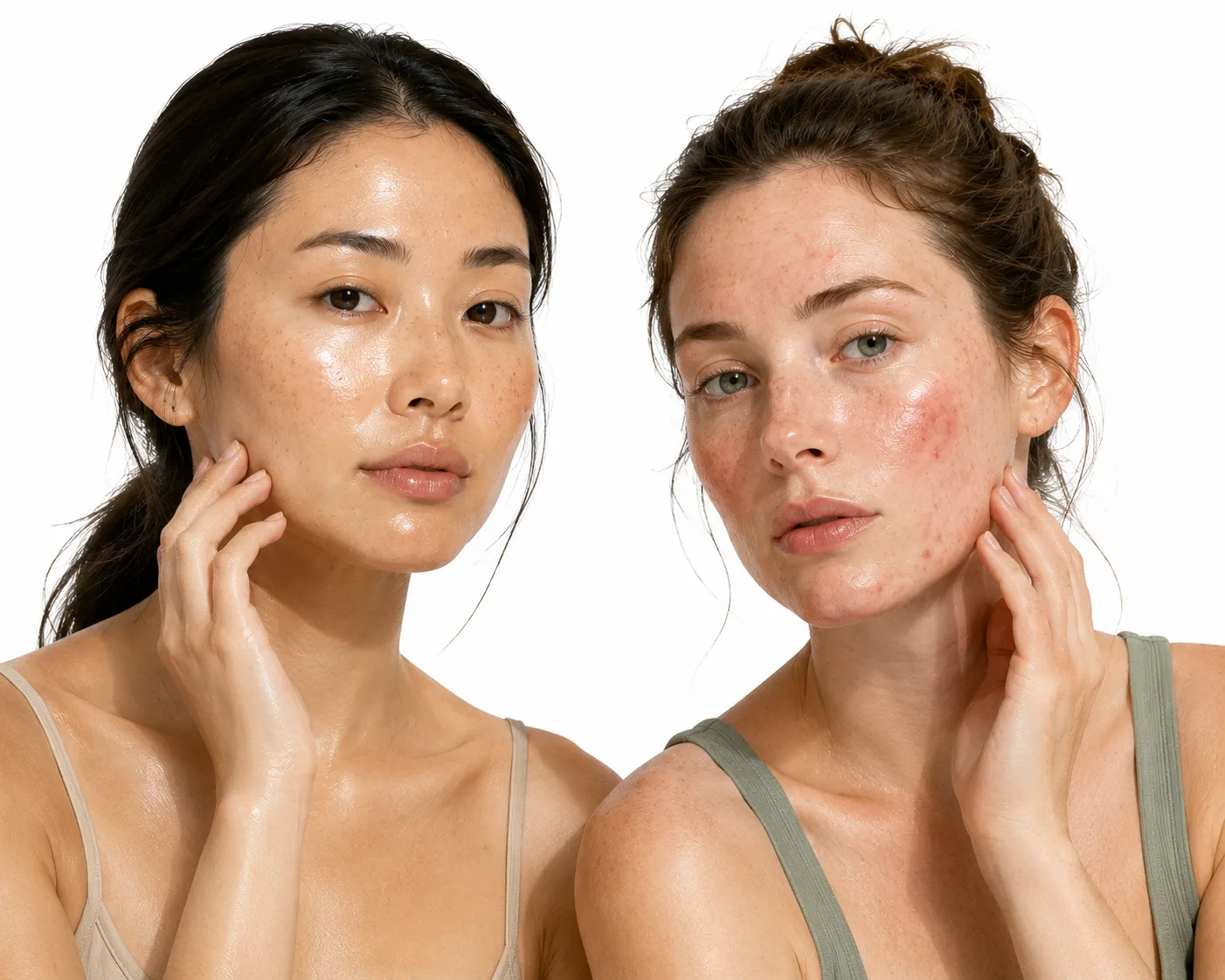
Each of the four main skin types leaves a distinct visual signature that makes identification surprisingly straightforward.
You can't always tell what your skin type is from how it feels, but you can often tell from how it looks. Each skin type leaves a visual signature that's surprisingly consistent.
What
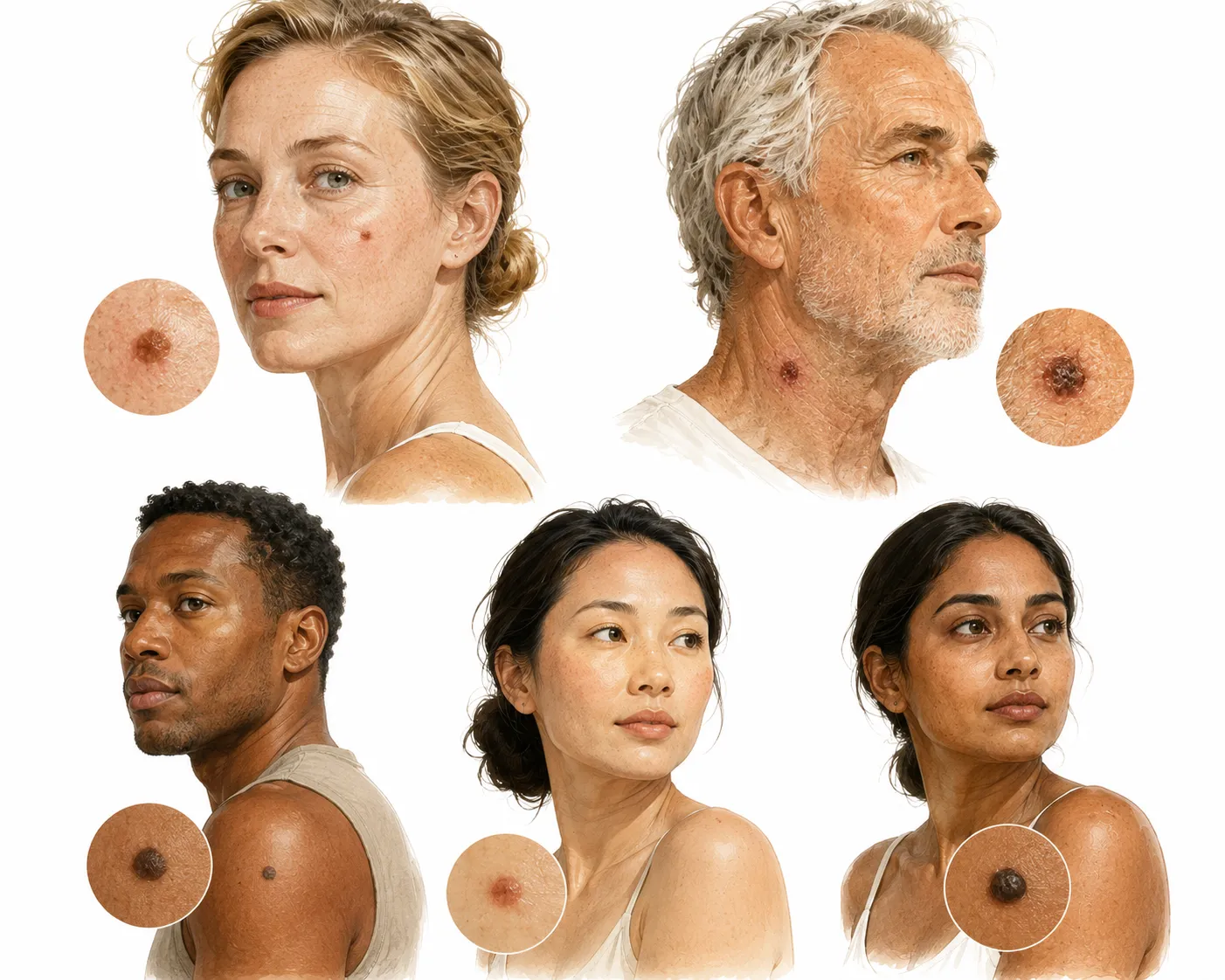
The types of skin cancer look different from each other - and knowing the difference can help you spot them earlier.
Skin cancer is one of the most common cancers in the world - and also one of the most visible. Knowing what to look for can make a life-saving difference.
What
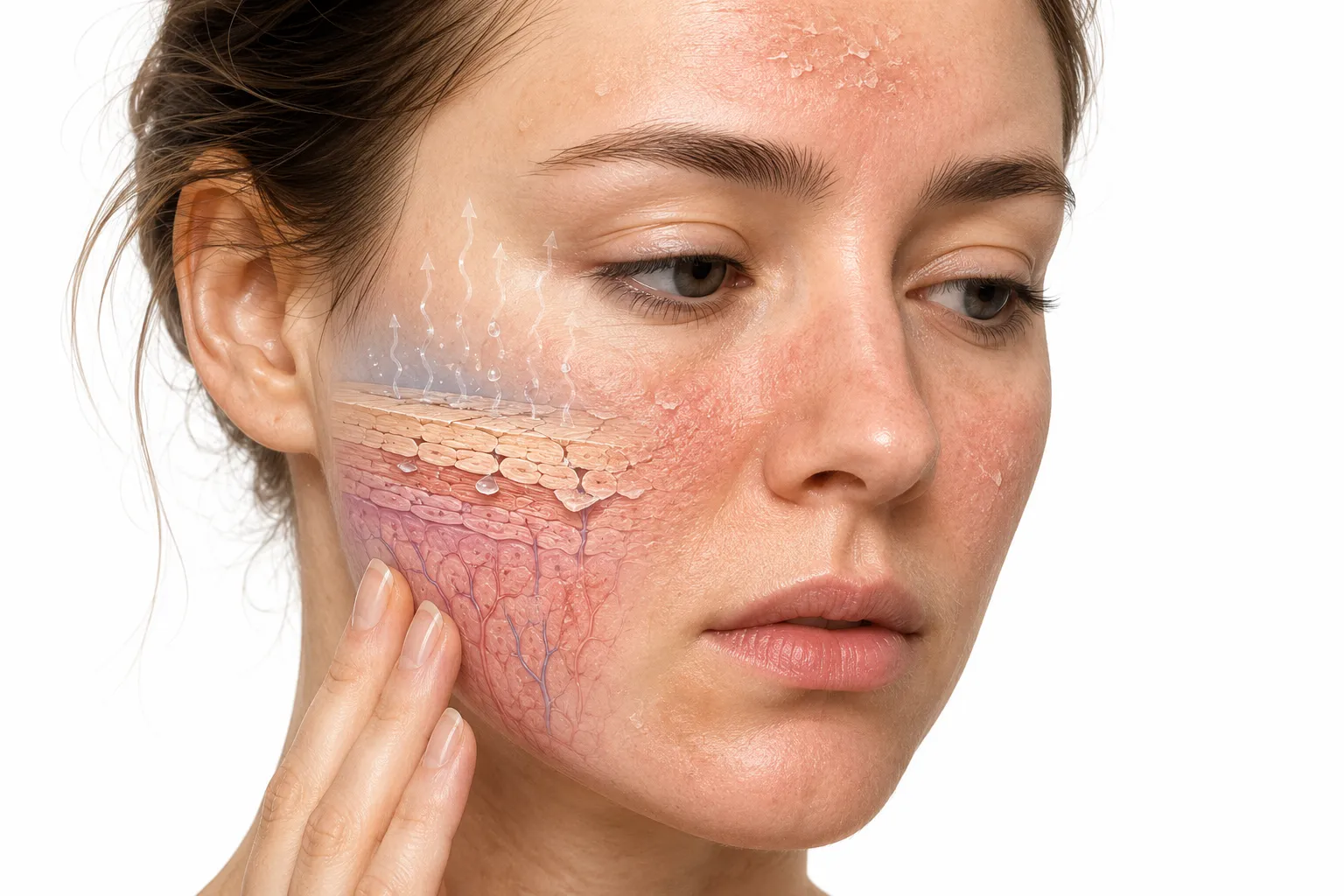
It tends to look less like a specific rash and more like a general loss of the skin's usual clarity and evenness.
What
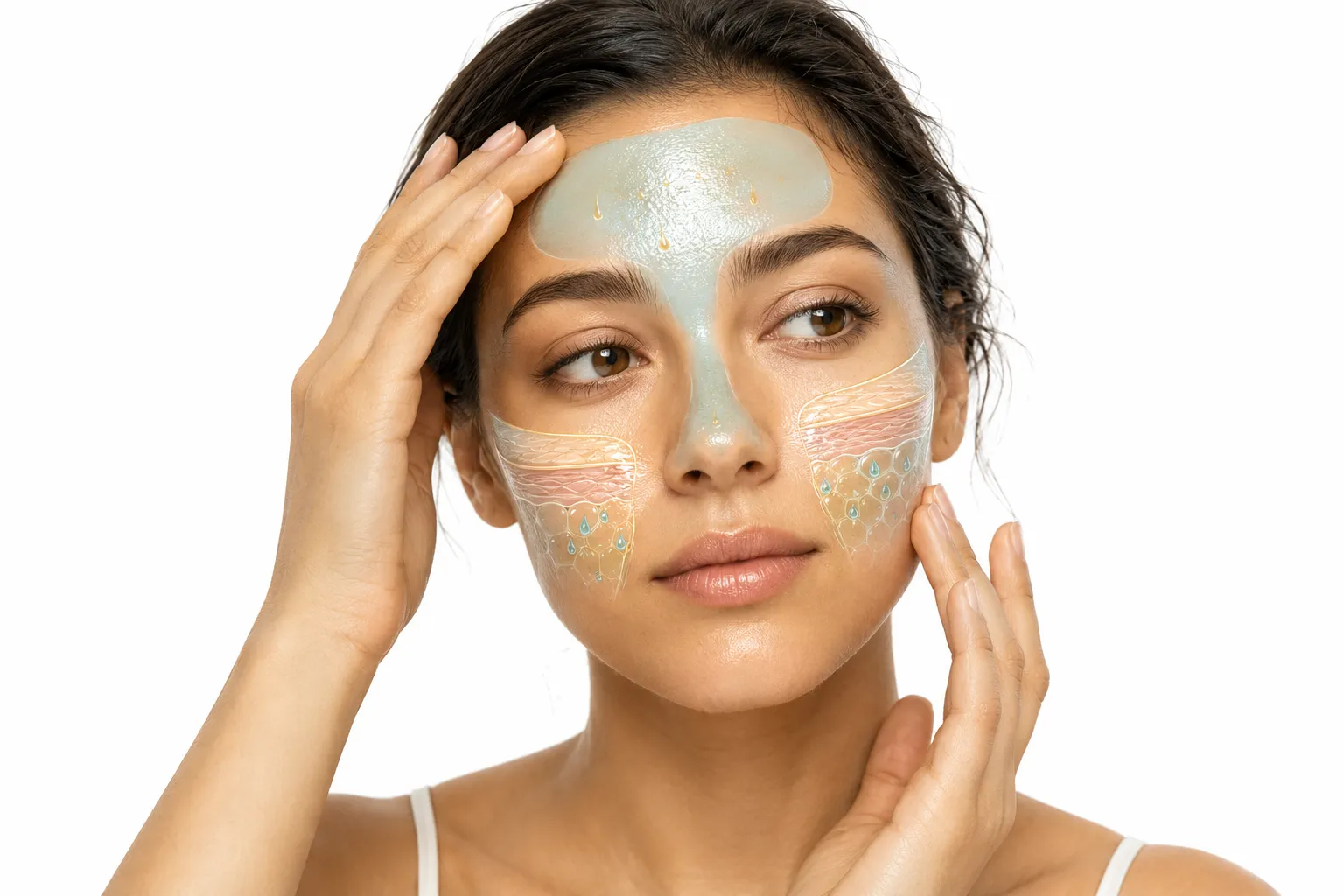
The sensory experience of combination skin is as distinctive as its appearance. It's not just what you see; it's what you feel.
What
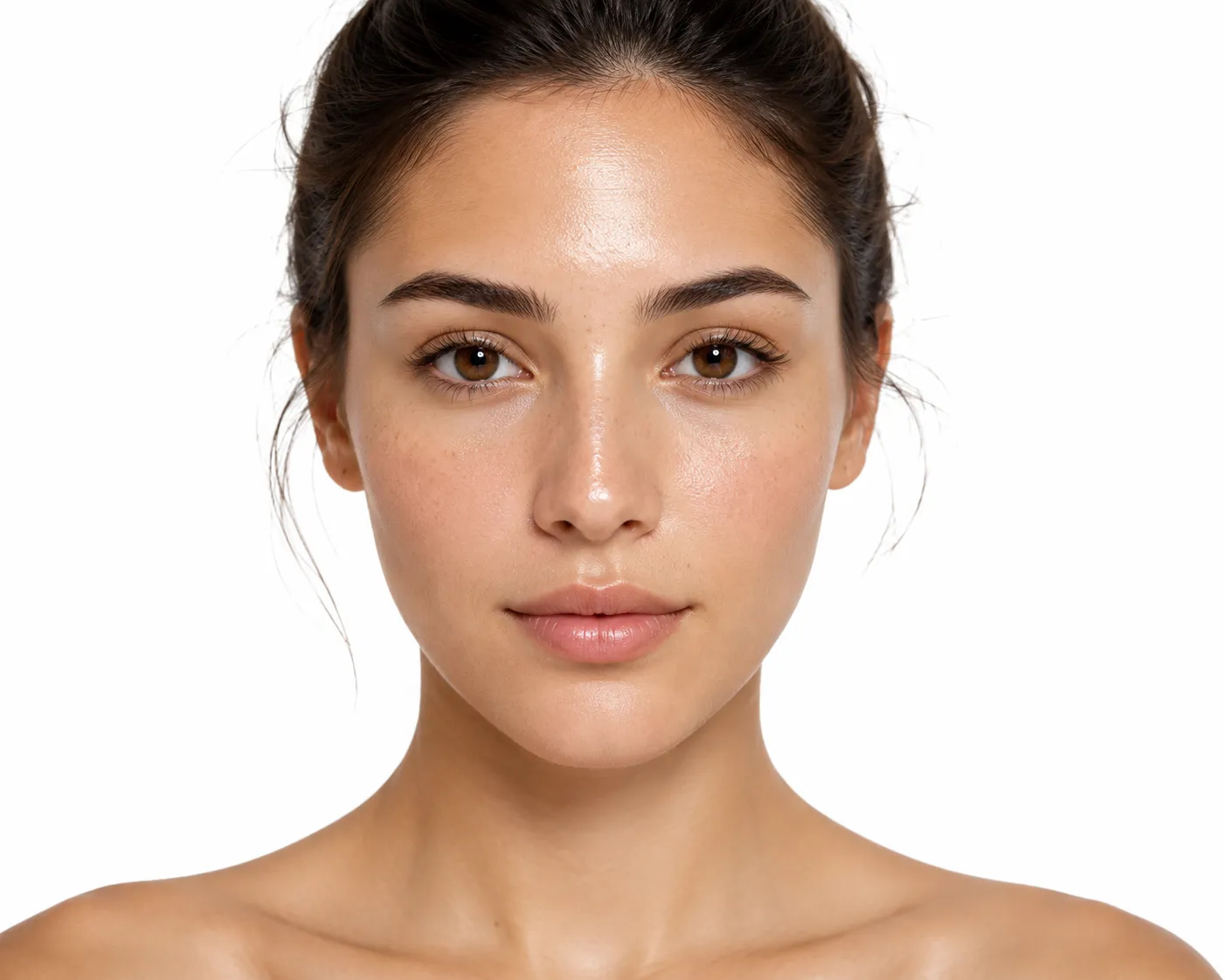
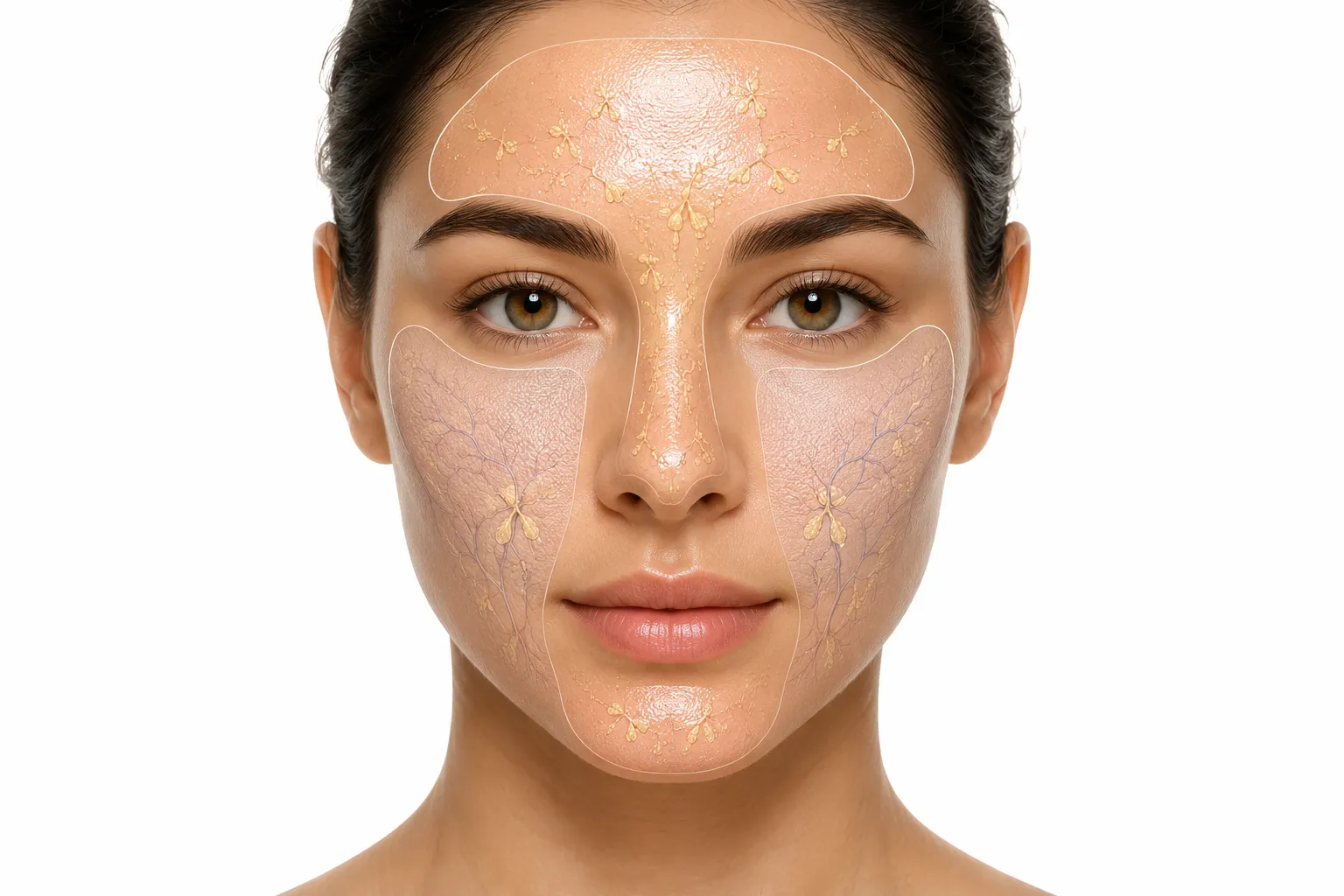
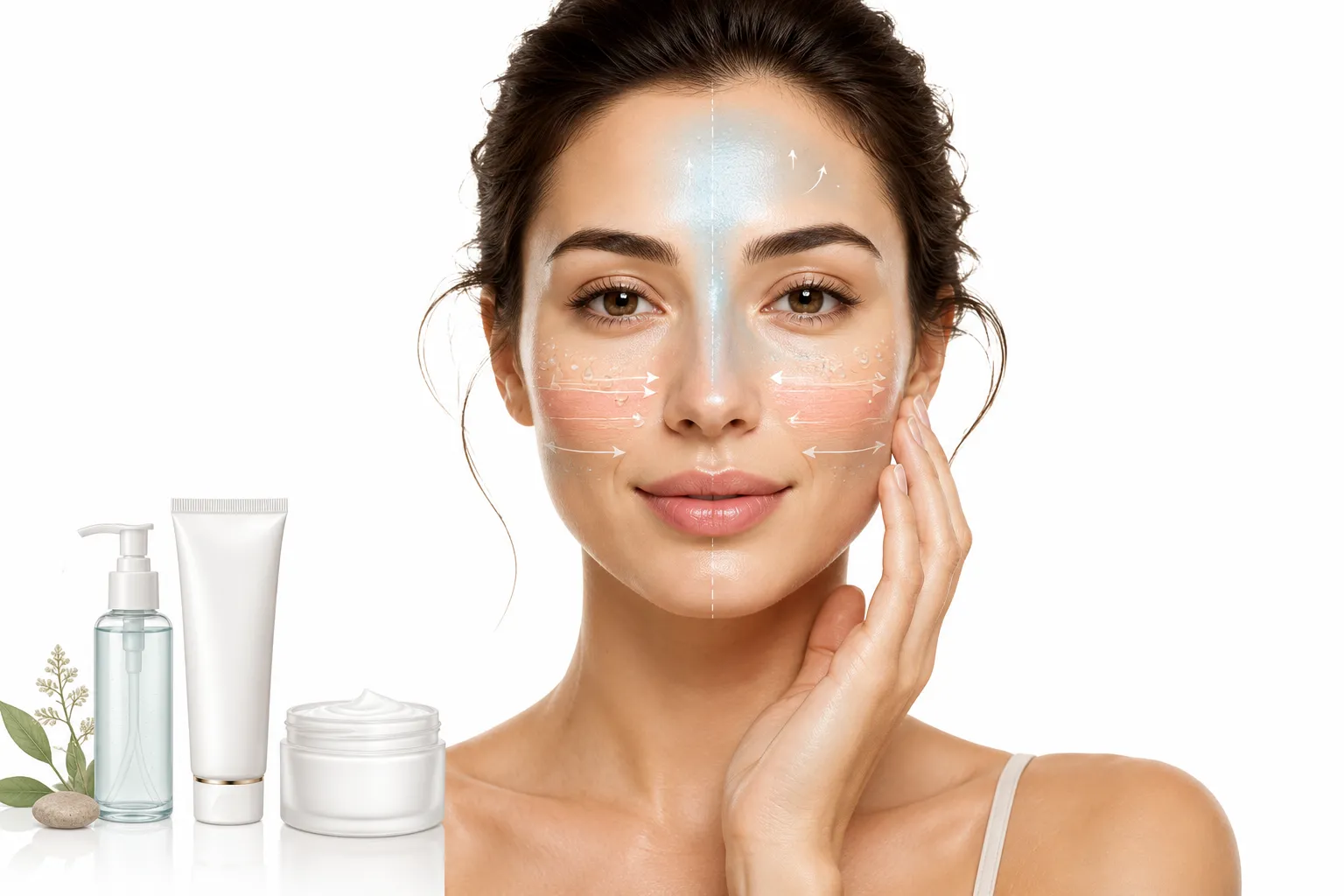
The visual signs of combination skin are quite specific: it's not just oily skin in some areas, but a distinct pattern of oiliness in the middle and dryness on the edges.
What
Combination skin is the most common skin type, but it's also the most frequently mismanaged because people treat it as either oily or dry.
Combination skin is arguably the most common skin type, yet it's often misunderstood. It's not simply "somewhere in between" oily and dry - it's both at the same time, in different places.
What
What combination skin actually needs isn't a single miracle product but a thoughtful approach that treats different areas differently.

What
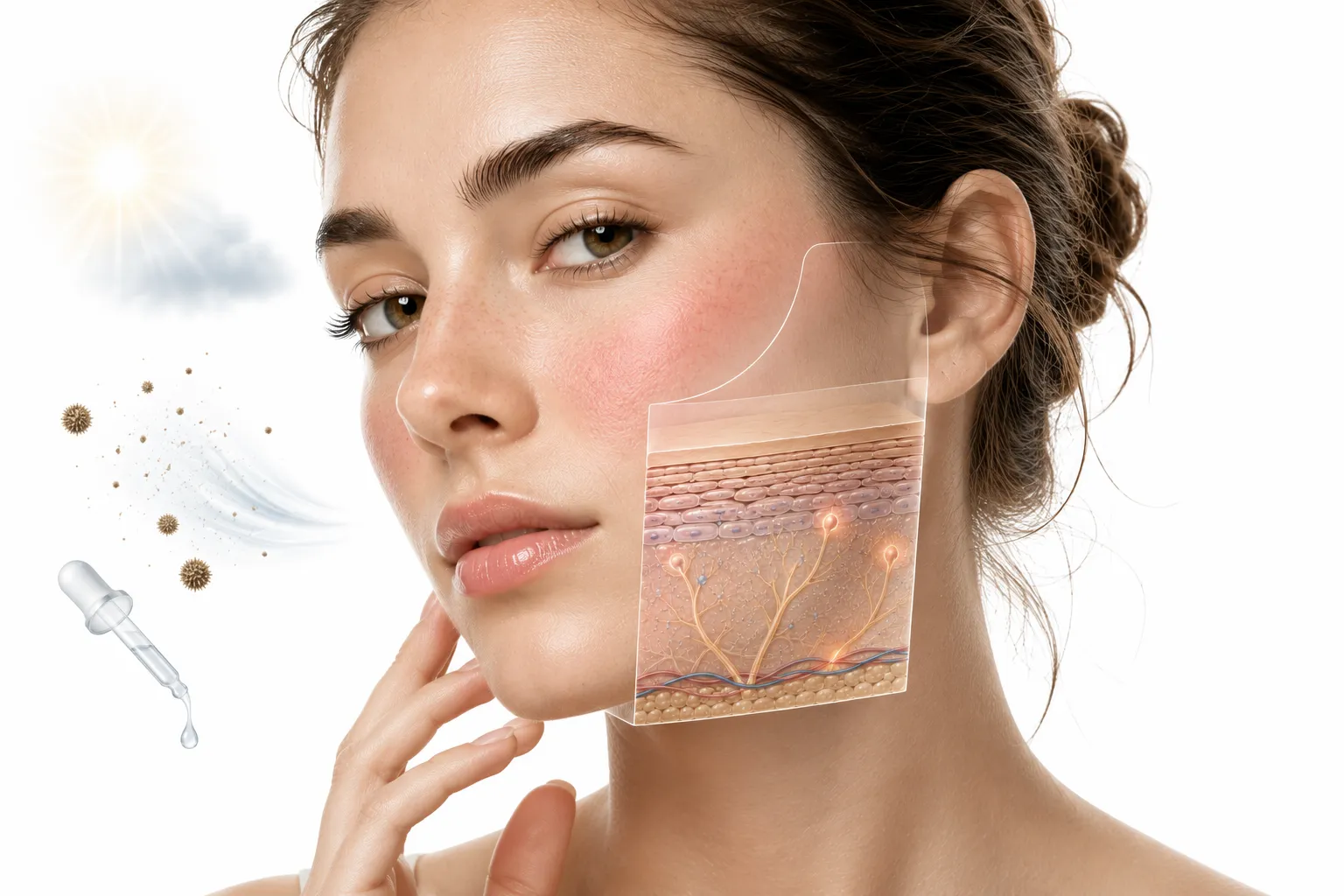
Dry skin is really a skin type with its own quiet signature: a slightly duller finish, a fine crepe-like texture, and a tightness that shows up long before any actual flakes do.
Dry skin has a look all its own, somewhere between matte and papery, and it tends to announce itself in specific, recognizable ways. Here's what to actually look for on your own face.

What
But water isn't always neutral, and hard water isn't really a cleanser at all - it's a carrier. And what it's carrying might be causing more trouble than you think.

What
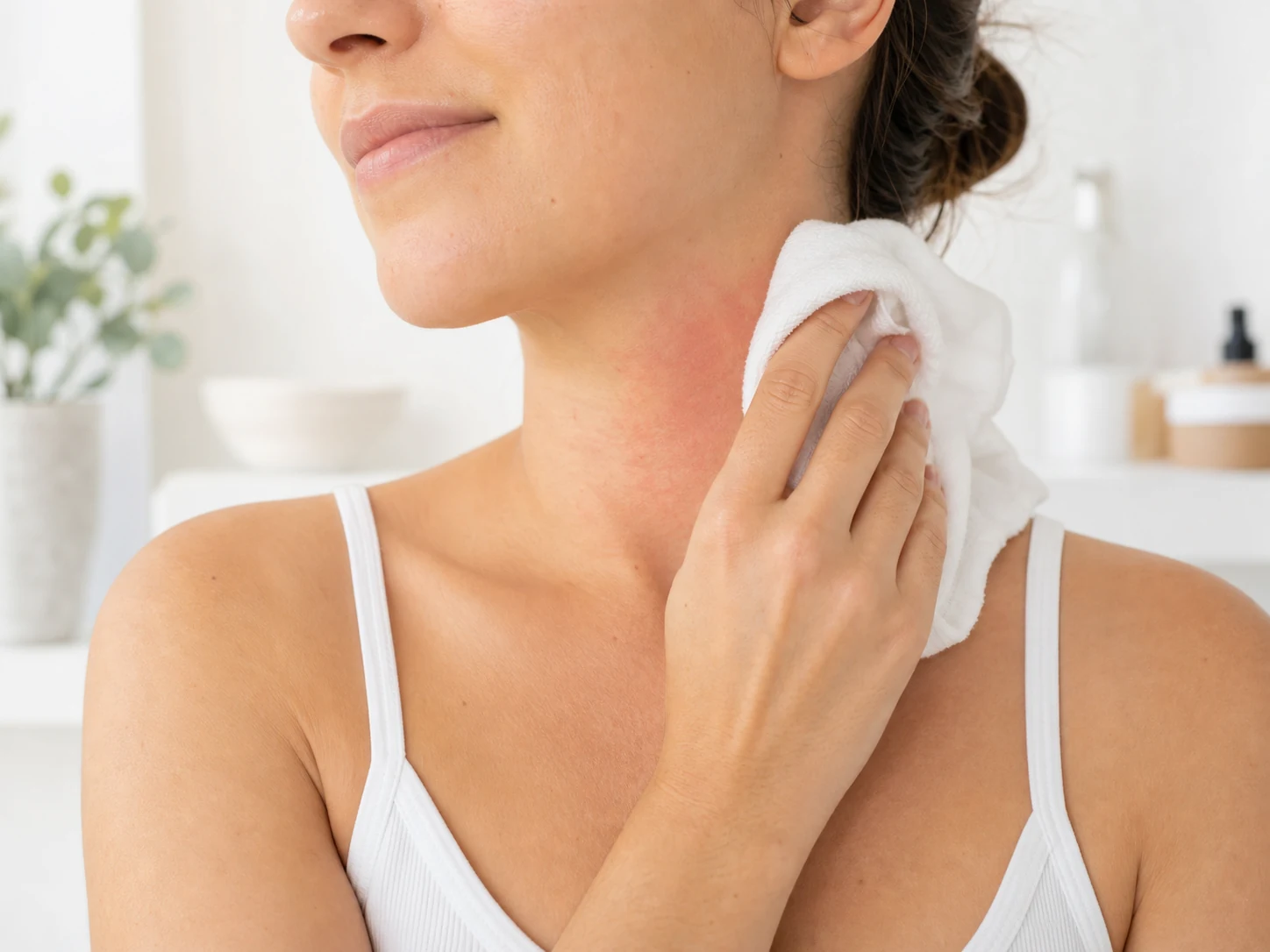
But what if it's the water you're washing with that's leaving its mark? Hard water-damaged skin has a particular look and feel that's distinct from other types of dryness.
Hard water doesn't always announce itself loudly - the signs can be subtle and easily mistaken for other skin issues. But once you know what to look for, the visual and sensory clues become much easier to spot.
What
But heat rash is surprisingly varied in appearance - it can look like tiny blisters, angry red bumps, or even almost invisible flesh-colored spots.
What
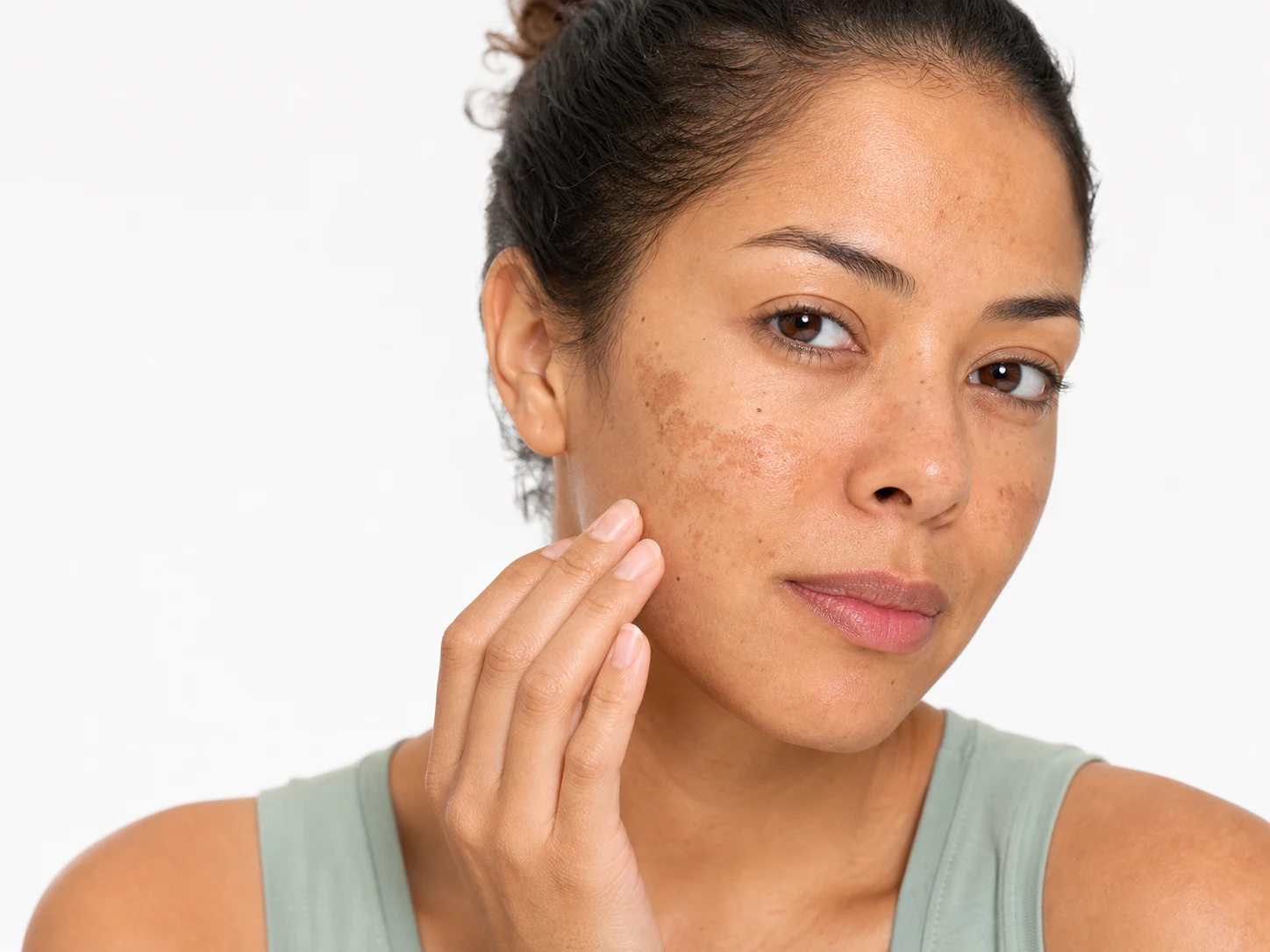
The surprising thing is that different types of hyperpigmentation look different, and recognizing those differences is the key to understanding how to treat them.
What
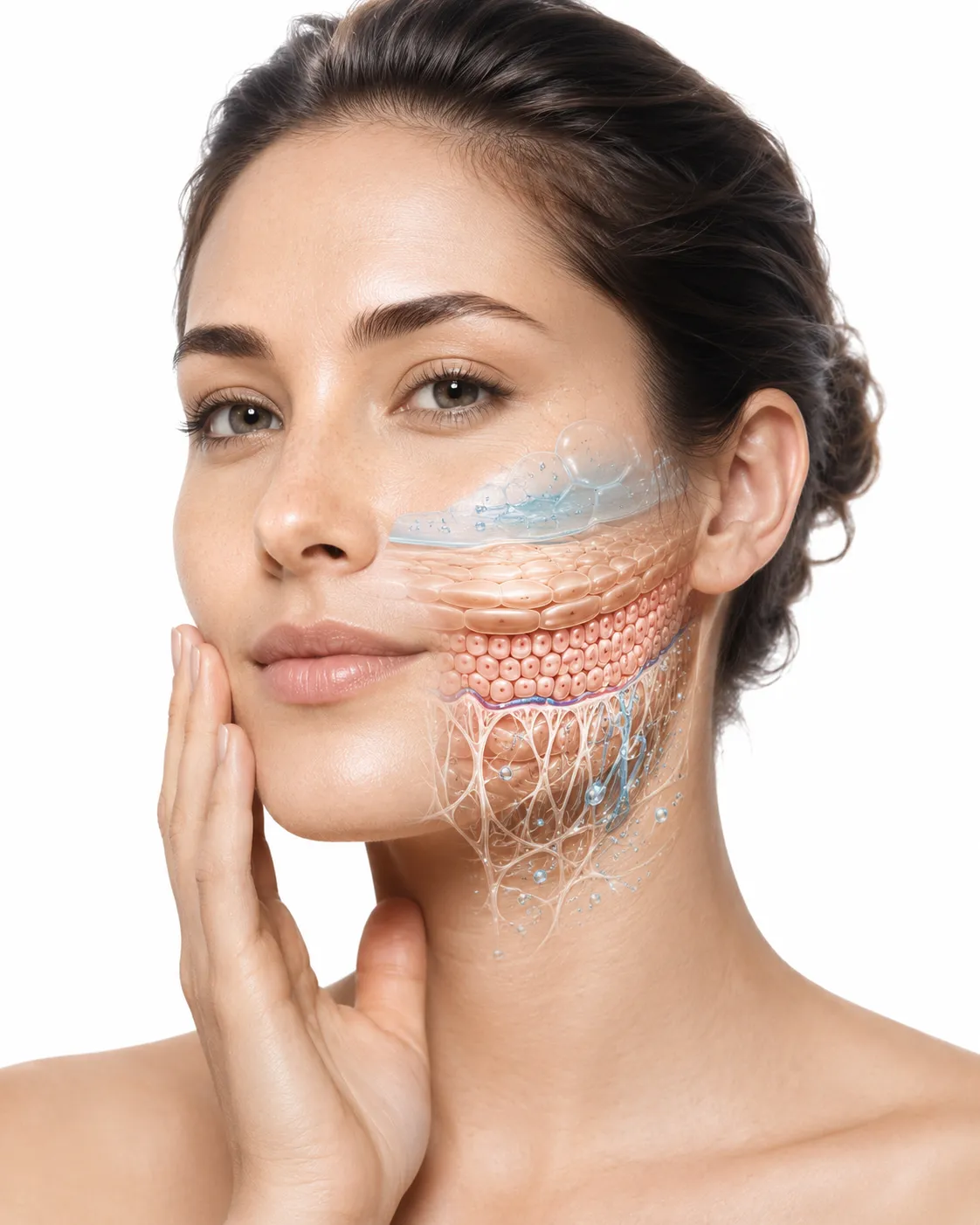
Normal skin's defining feature is often simply the absence of a recurring complaint.
What
It turns out sensitivity isn't really about how skin looks at all, but about how quickly and strongly it reacts to things that other skin barely notices.
"Sensitive skin" gets used as a catch-all for almost any complaint, but it describes something fairly specific: a lower threshold for irritation, usually tied to a barrier that isn't holding up its end of the bargain.

What
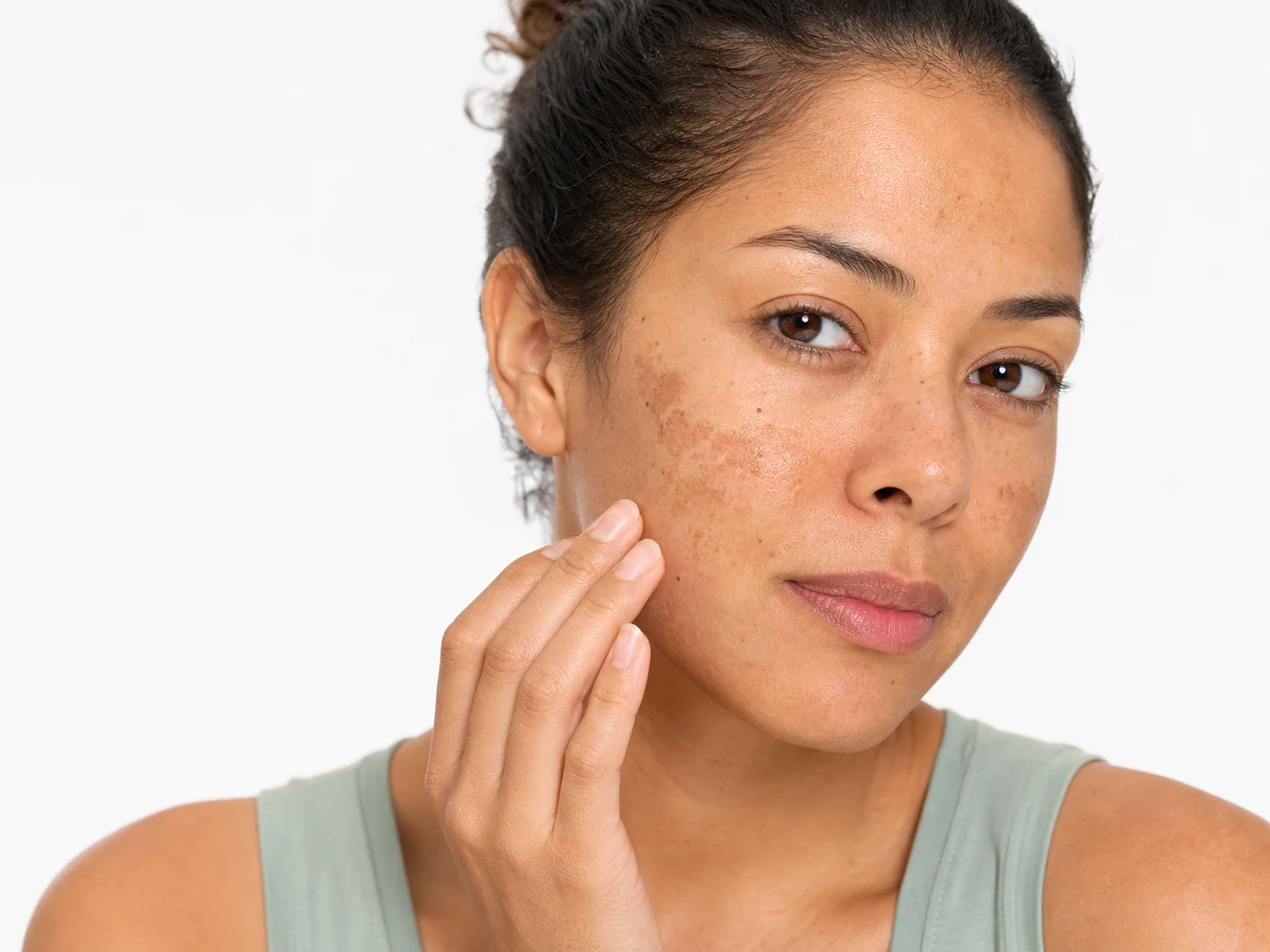
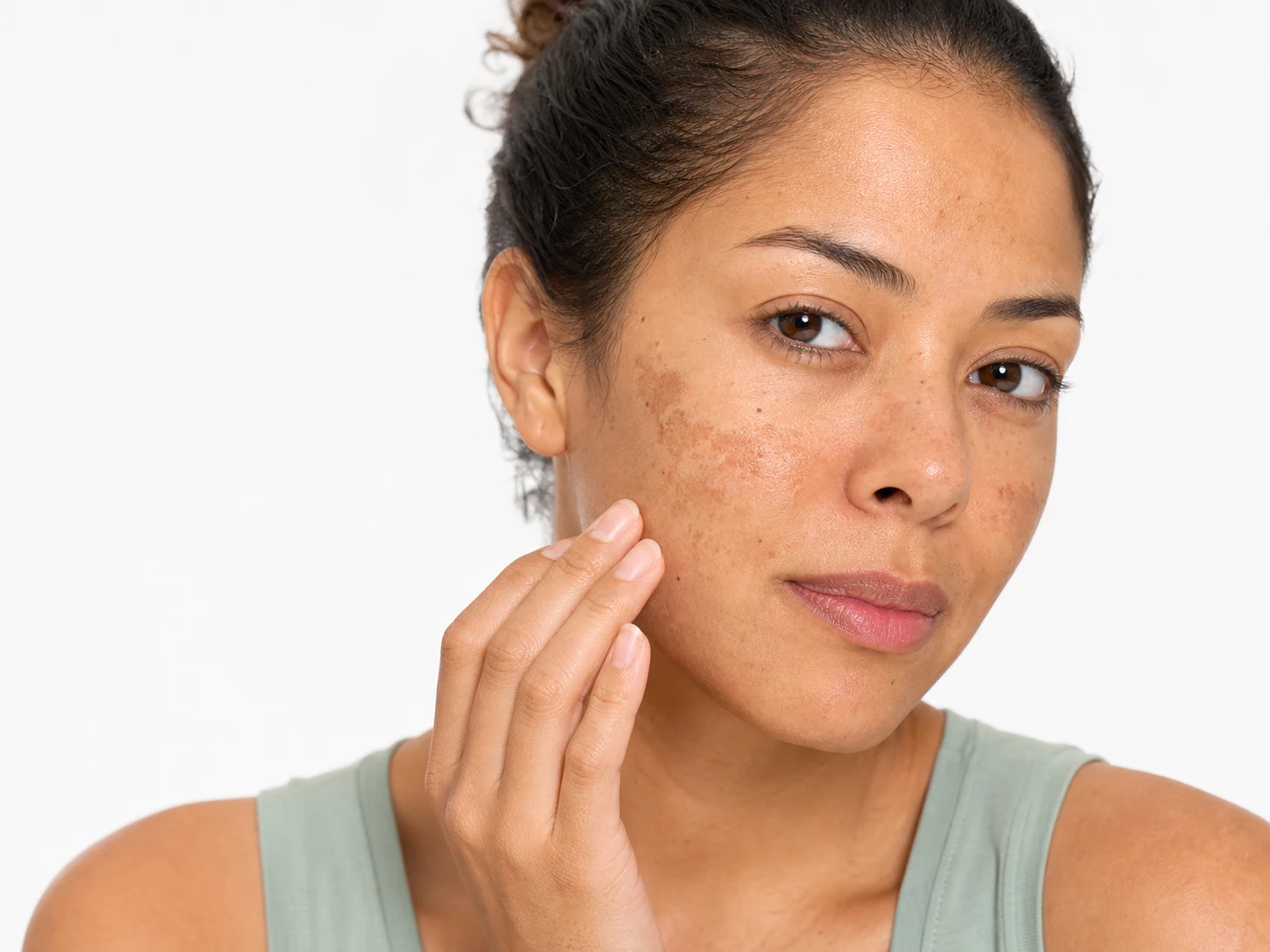
That symmetry is one of the biggest visual giveaways, and it's also the detail most people notice last, mistaking their reflection for uneven tanning rather than a distinct condition.
Melasma has a fairly distinctive appearance once you know what to look for, but it's also commonly mistaken for sun spots, post-acne marks, or simple uneven tone. Here's what actually sets it apart, and why its particular look is a direct clue to what's causing it.

What
It doesn't appear in isolated spots or follow the pattern of sun damage - instead, it washes across the face in soft, uneven patches that often mirror each other on both sides.
What
Niacinamide and zinc are definitely the latter.
What
It does four essential things for skin: it controls oil, supports the barrier, fades dark spots, and calms inflammation.
Niacinamide is one of the most versatile skincare ingredients. It regulates oil, fades dark spots, strengthens the barrier, and calms inflammation. It's the ingredient that does a little bit of everything - and does most of it well.
What
And what it does to your skin is one of the best-documented stories in skincare.
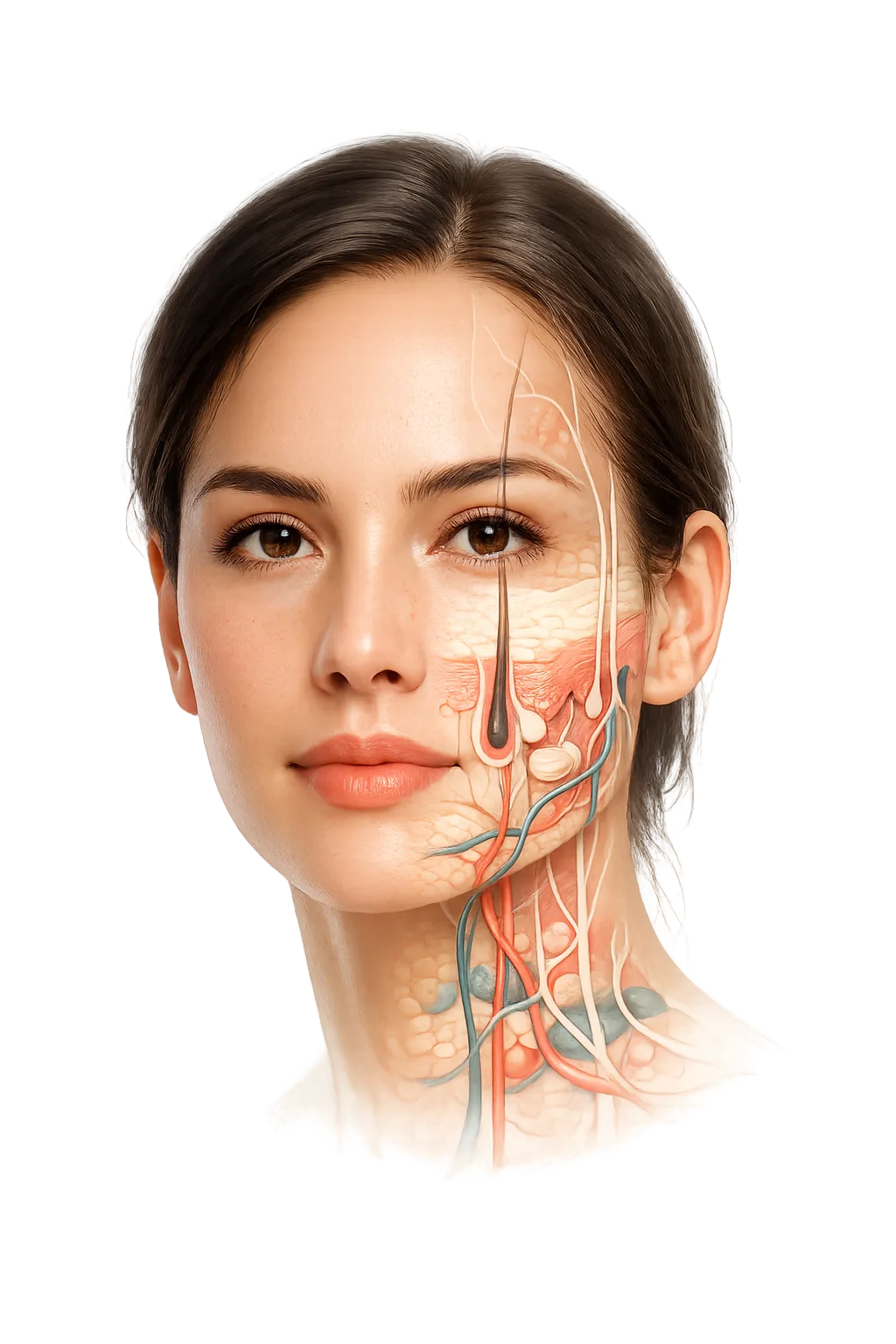
What
But "normal" doesn't mean flawless or poreless; it means the skin's oil, moisture, and sensitivity levels are all sitting in a fairly even middle ground.
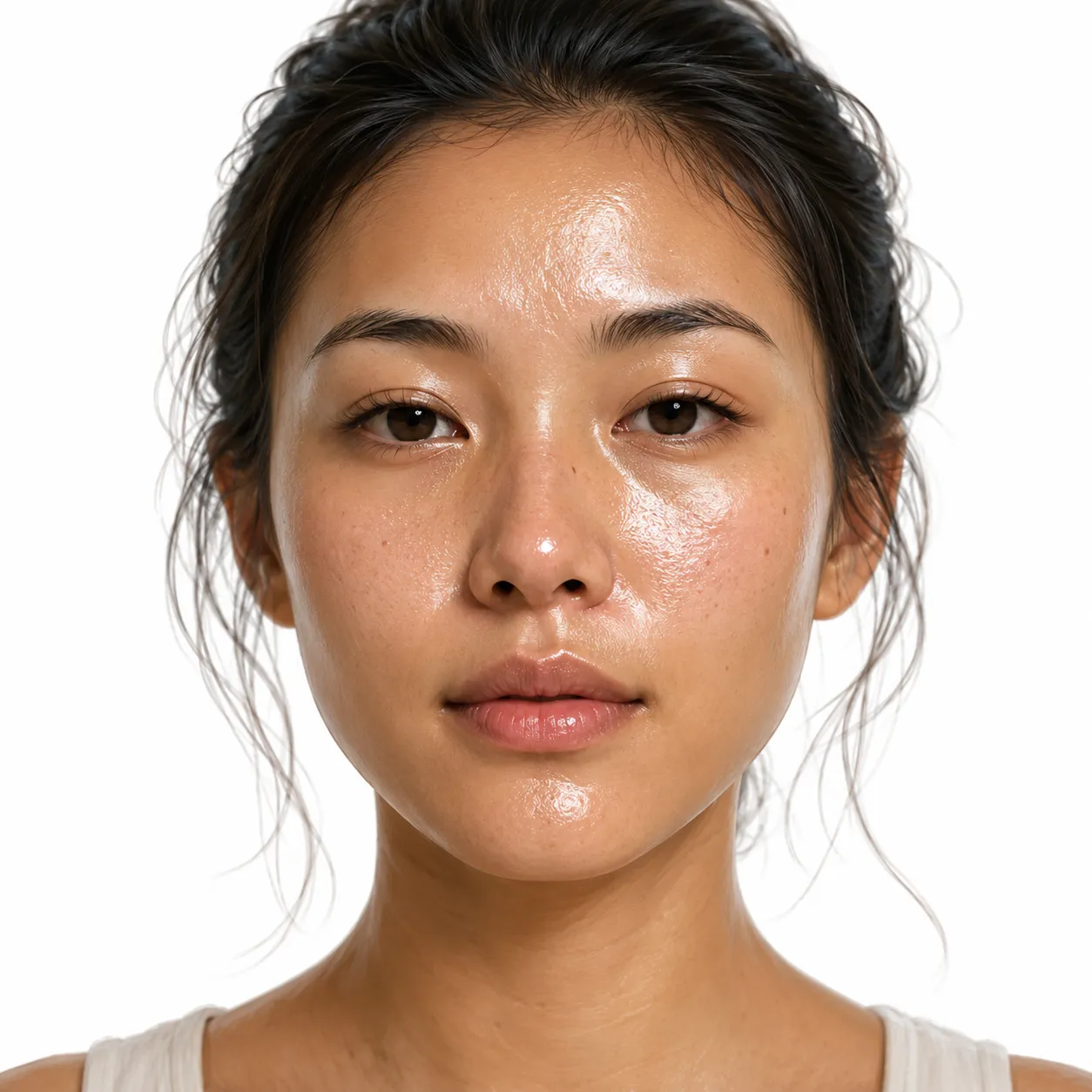
What
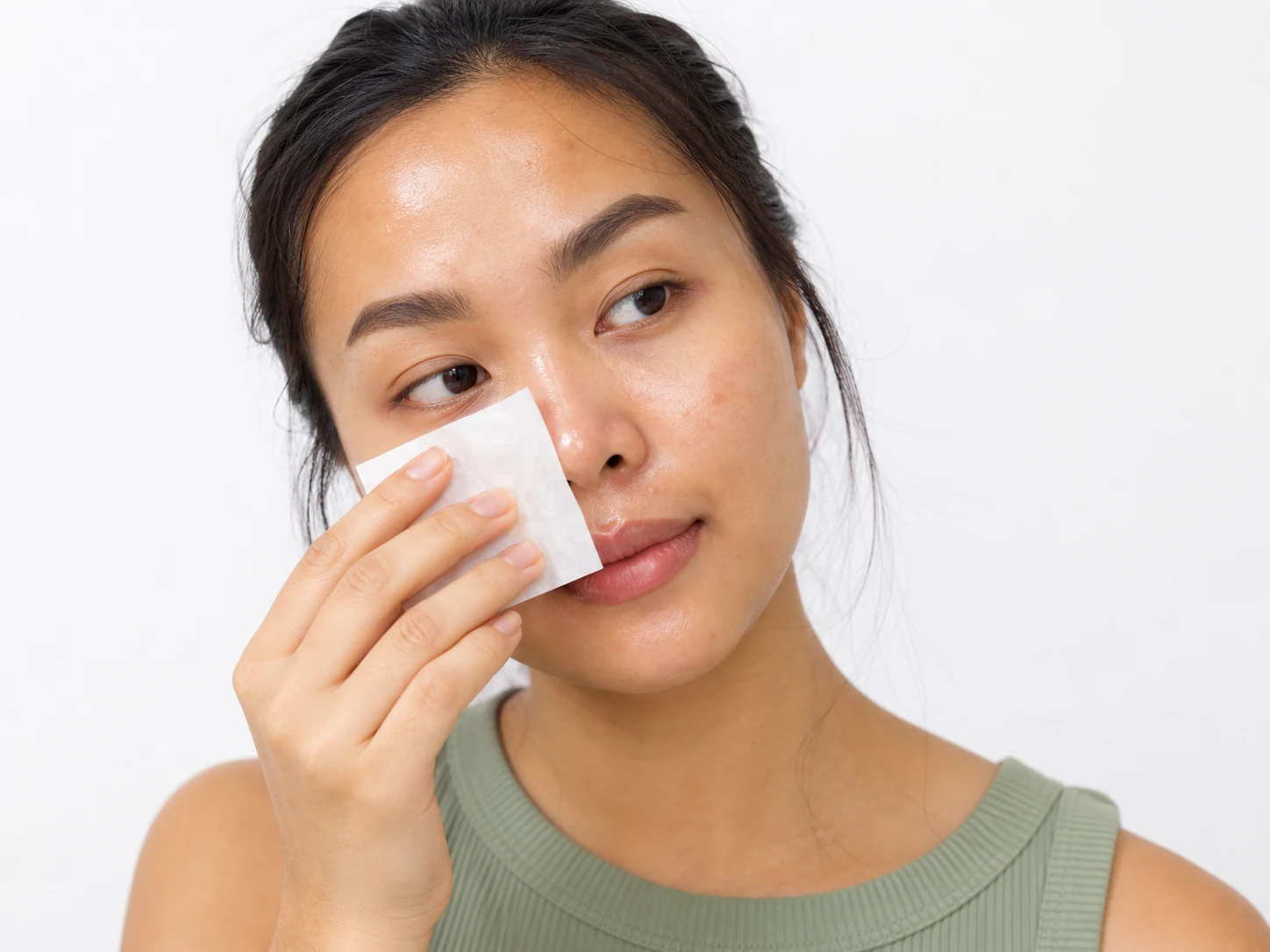
True oily skin has a more consistent set of features: a persistent shine that returns within hours of cleansing, pores that are visibly larger, and a texture that's just a bit thicker than average.
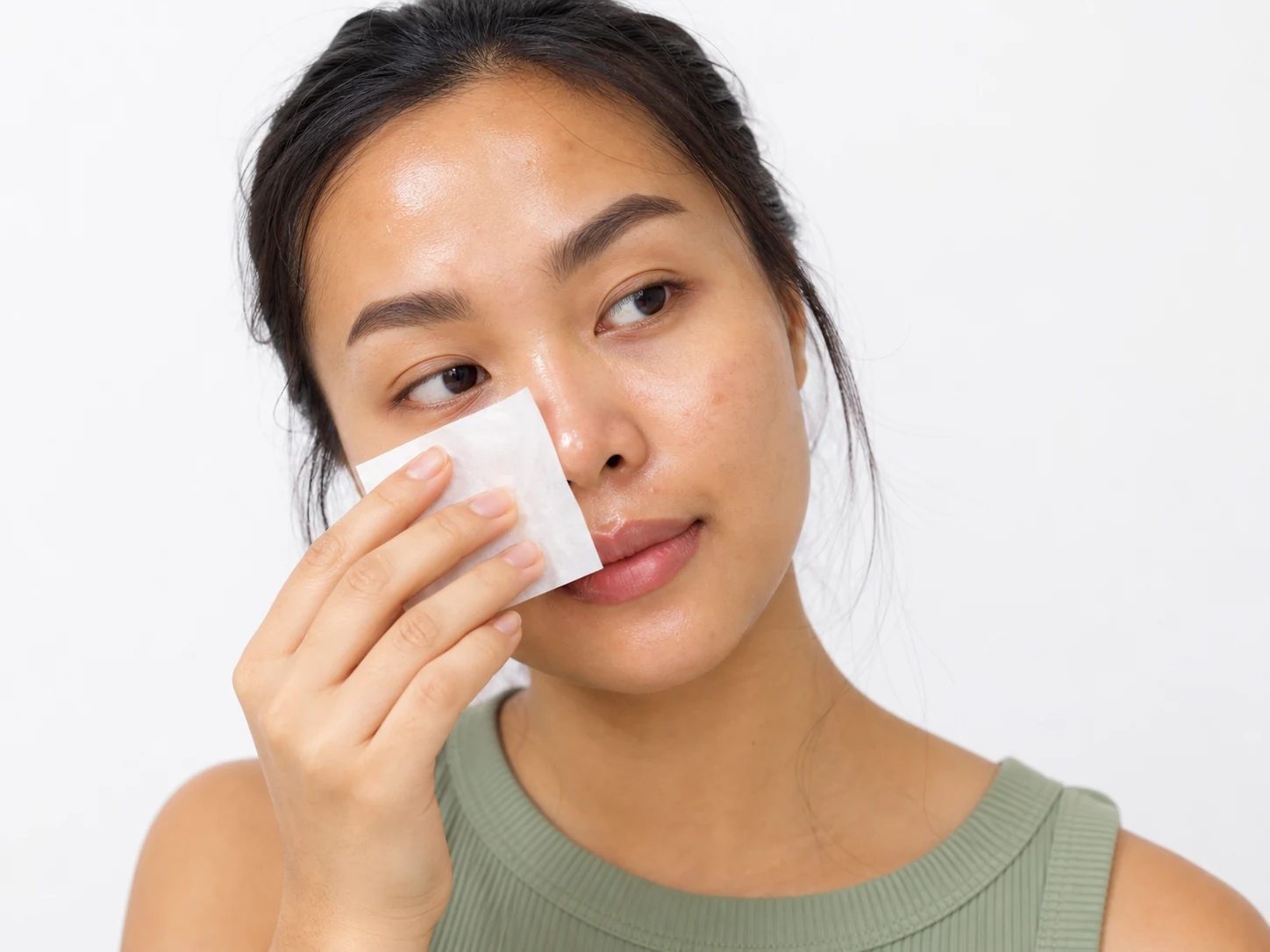
What
That approach usually backfires, since oily skin that's stripped of too much oil often responds by producing even more of it.
The instinct with oily skin is to strip away every trace of shine, but oily skin actually does better with a more balanced approach that still includes hydration, not just oil control.
What
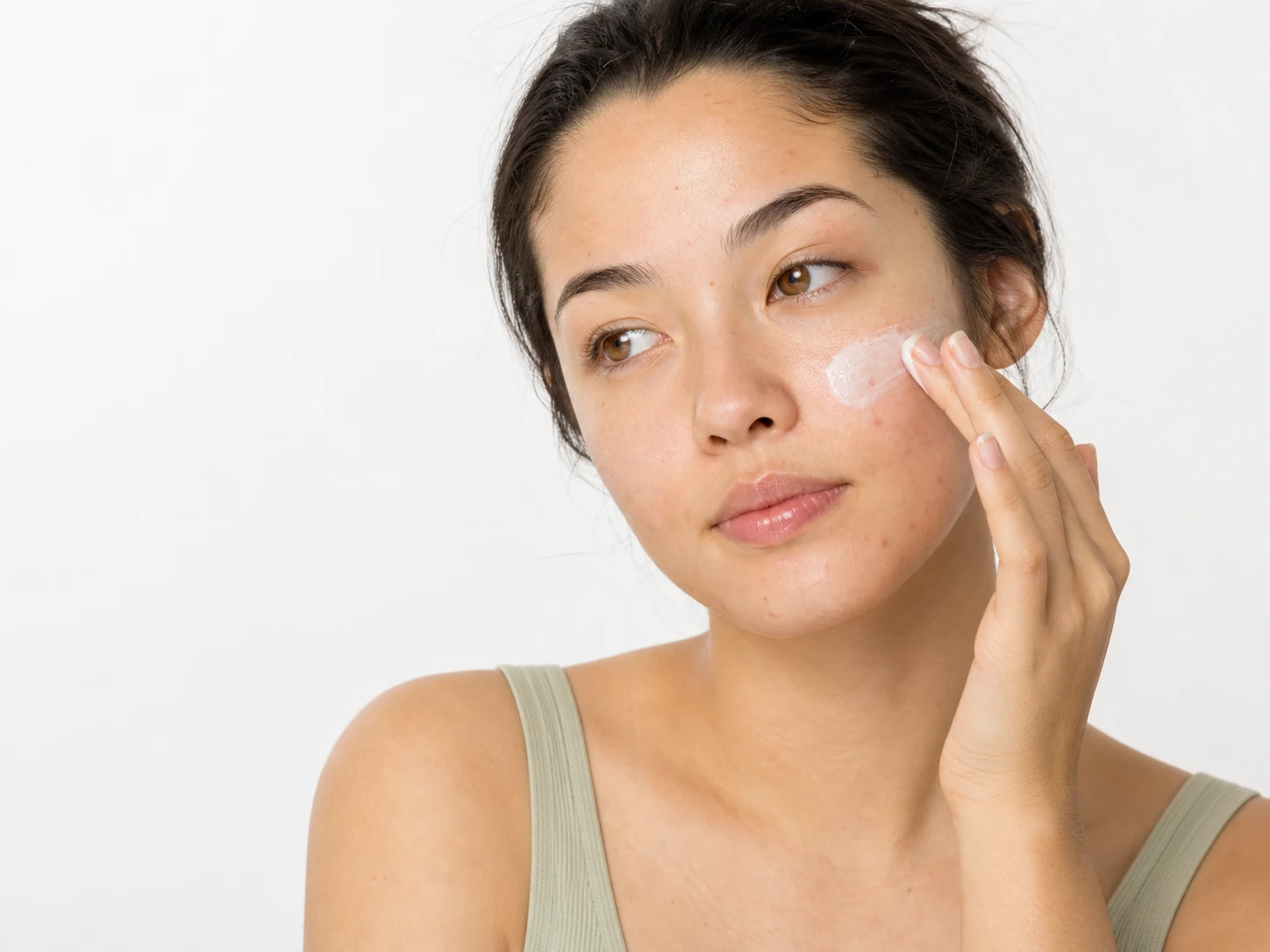
Unlike oily or dry skin, which tend to show a fairly consistent look day to day, sensitive skin often reveals itself only in the moment of reacting, a sudden flush, a patch of redness, an unexpected sting.
What
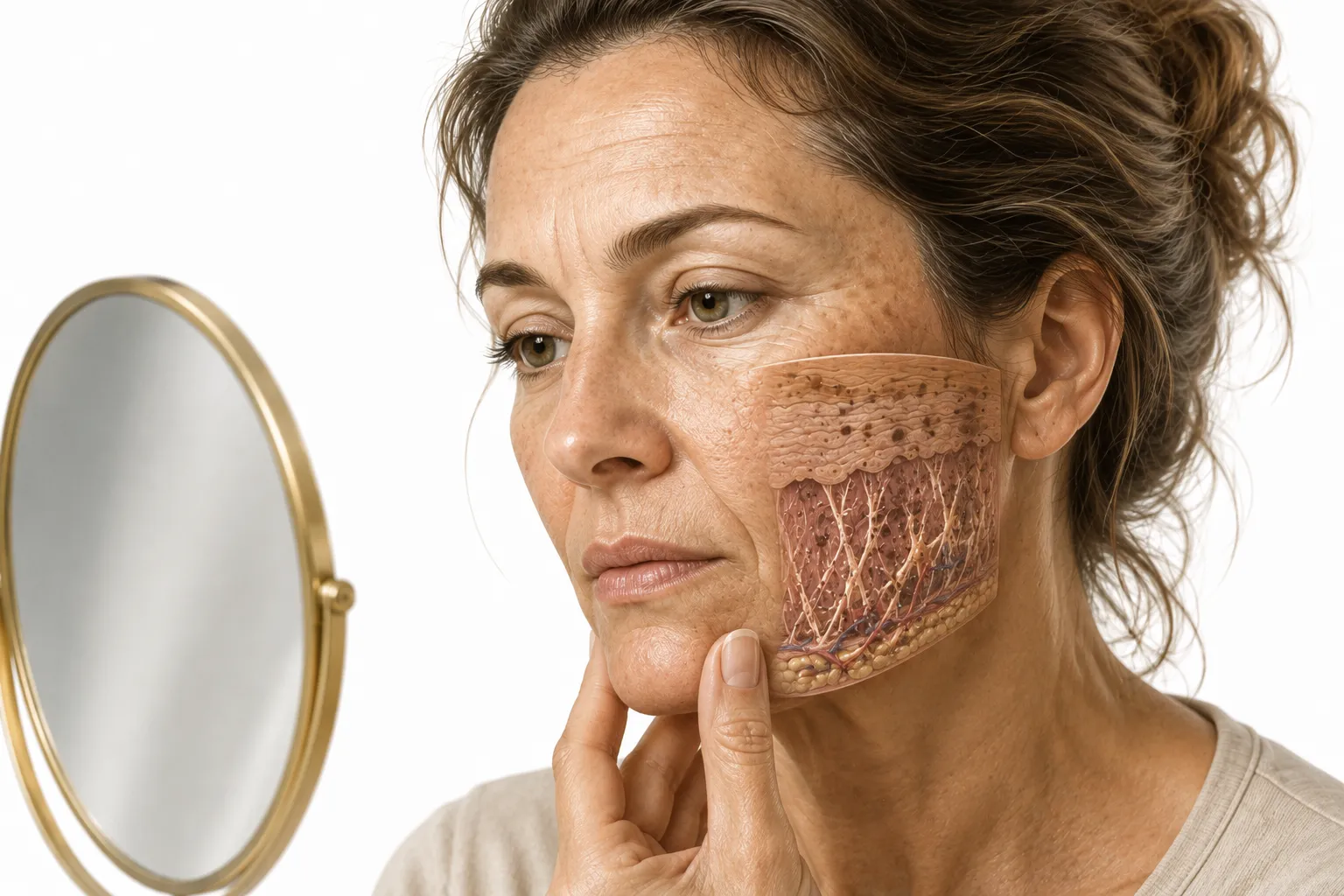
The tricky part is that these signs emerge so slowly that they can seem like an inevitable part of aging rather than a specific form of damage.

What
The skin barrier is built from the inside out - and what you eat provides the raw materials for that construction.
What
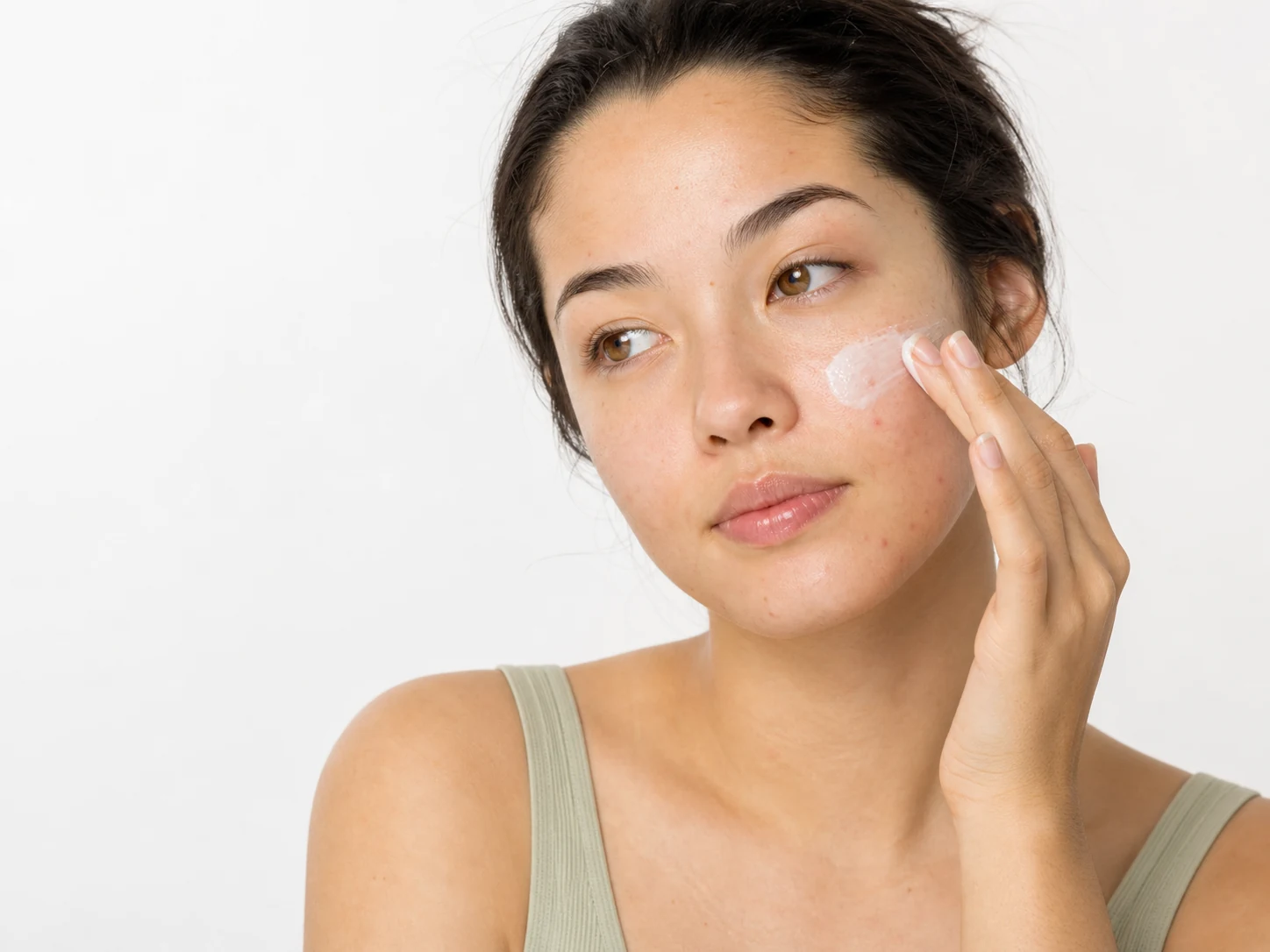
But with niacinamide, the results are cumulative and sometimes surprising.
Niacinamide is one of the few skincare ingredients that most people can use every day without issue. But the results you get depend on concentration, formulation, and your individual skin.
What
But there's a well-established playbook for managing it. The challenge isn't what to do - it's doing it consistently.

What
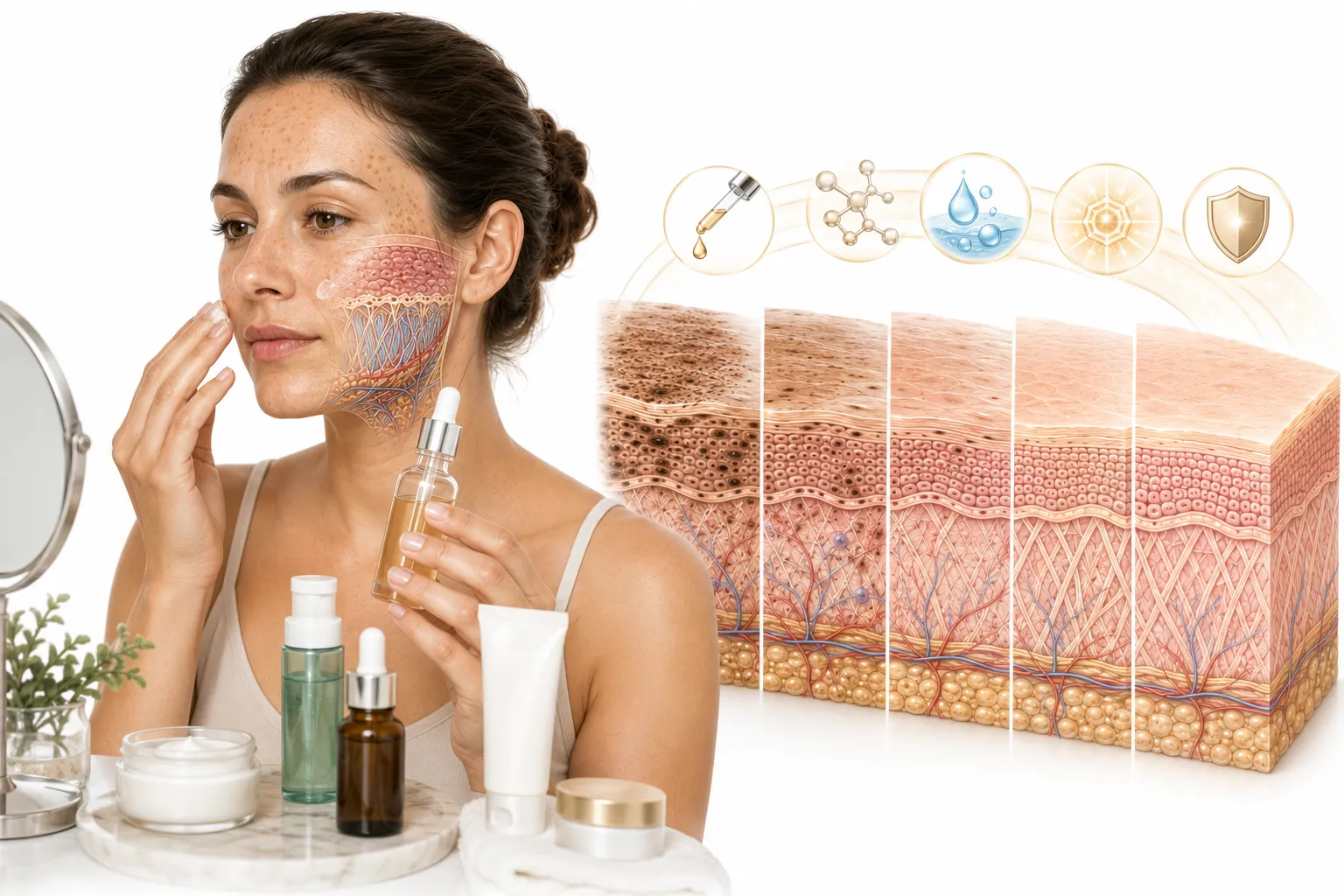
But dry skin doesn't just need more product, it needs the right combination of ingredients working together, ones that draw water in, seal it inside, and repair the barrier that let it escape in the first place.
What
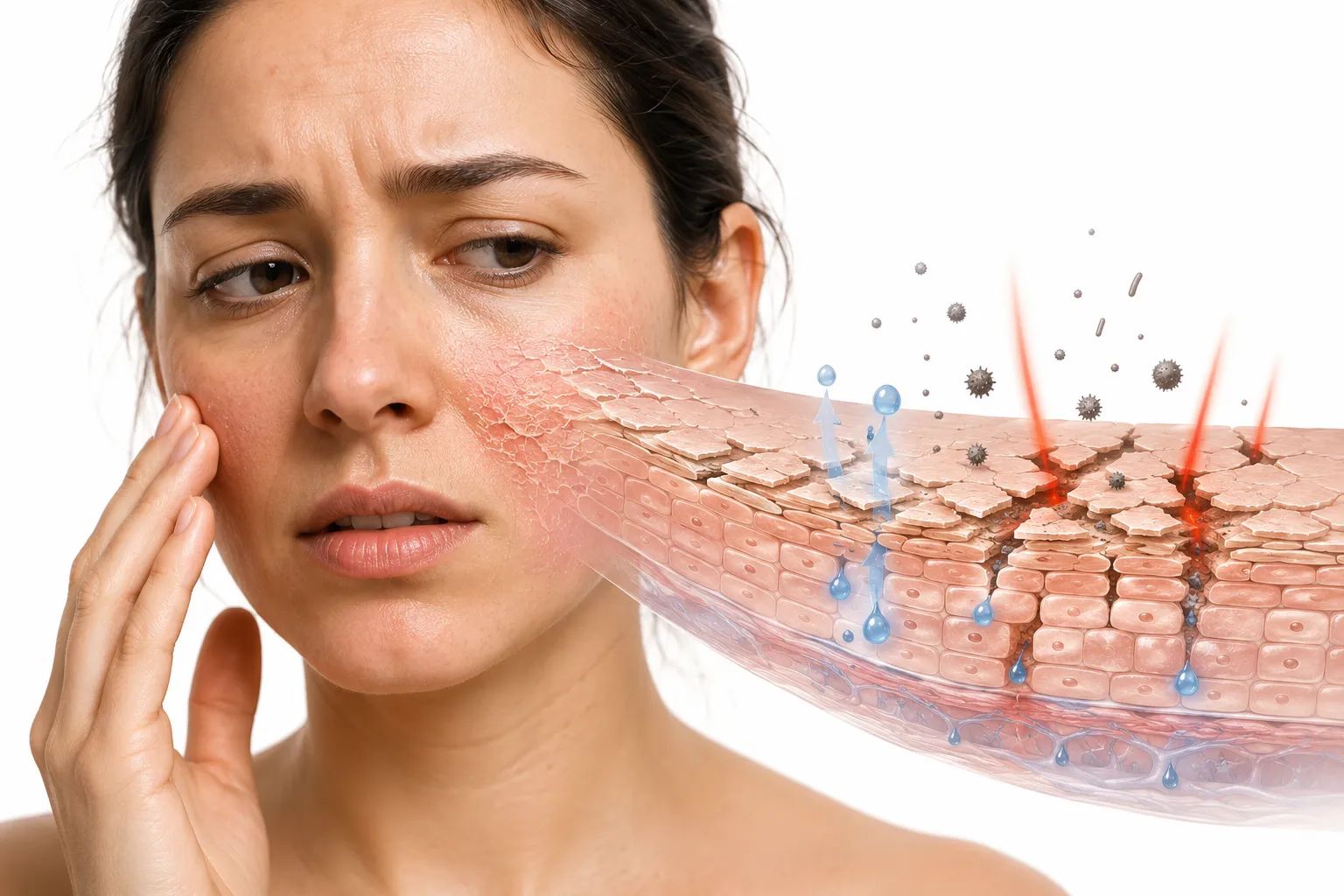
Which is why no single ingredient can "fix" it - the discoloration, the rough texture, and the collagen loss are three separate repair jobs wearing one name.
Sun damage isn't one problem, it's a stack of them - broken collagen, stray pigment, a roughened surface - and no single ingredient undoes all of it. Here's which actives address which layer, and how to combine them without wrecking your barrier.
What
The moment it's damaged, though, that invisibility disappears fast, replaced by stinging, redness, and a face that reacts to products it used to tolerate without complaint.
The skin barrier does a quiet but essential job, keeping moisture in and irritants out, and when it stops doing that job properly, the skin tends to let you know fairly quickly.

What
It's a microscopic fortress that orchestrates how water moves, how bacteria are welcomed or repelled, and how your complexion appears from dawn to dusk.
What
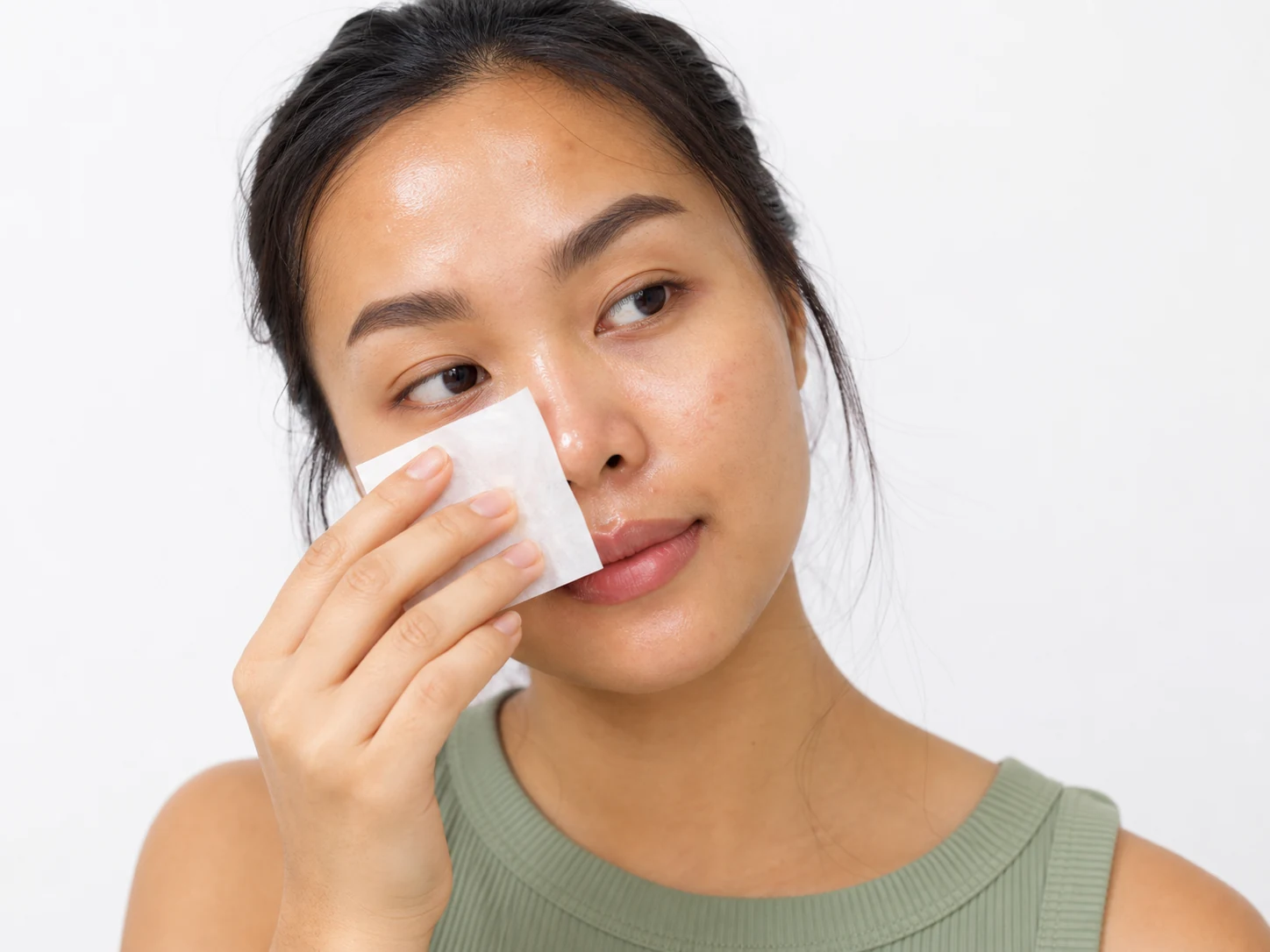
Most people think it's about dirty skin or bad diet, but the reality is far more biological - it's about how your hair follicles respond to hormones and bacteria, and it's often completely out of your control.
What
It depends entirely on what you're trying to do. A hammer is better for nails. A wrench is better for bolts.
What
The good news is that you're not the only one who's spelled it wrong. The even better news is that whatever you're looking for, it's probably niacinamide - and it's one of the best ingredients in skincare.
"Cinamide" isn't actually an ingredient - it's a common misspelling of niacinamide. But what you're really asking is what niacinamide is used for. And the answer is: a lot.
What
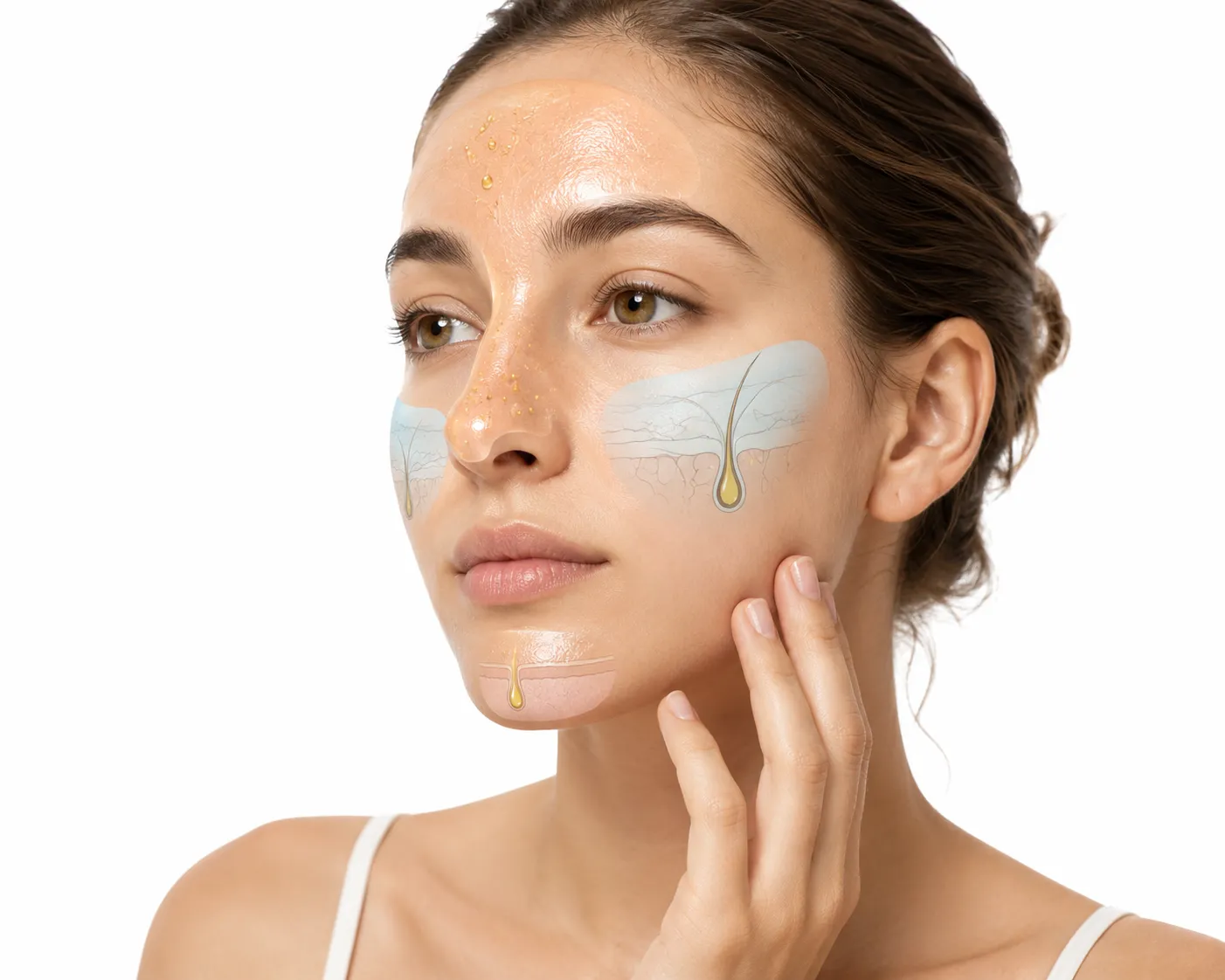
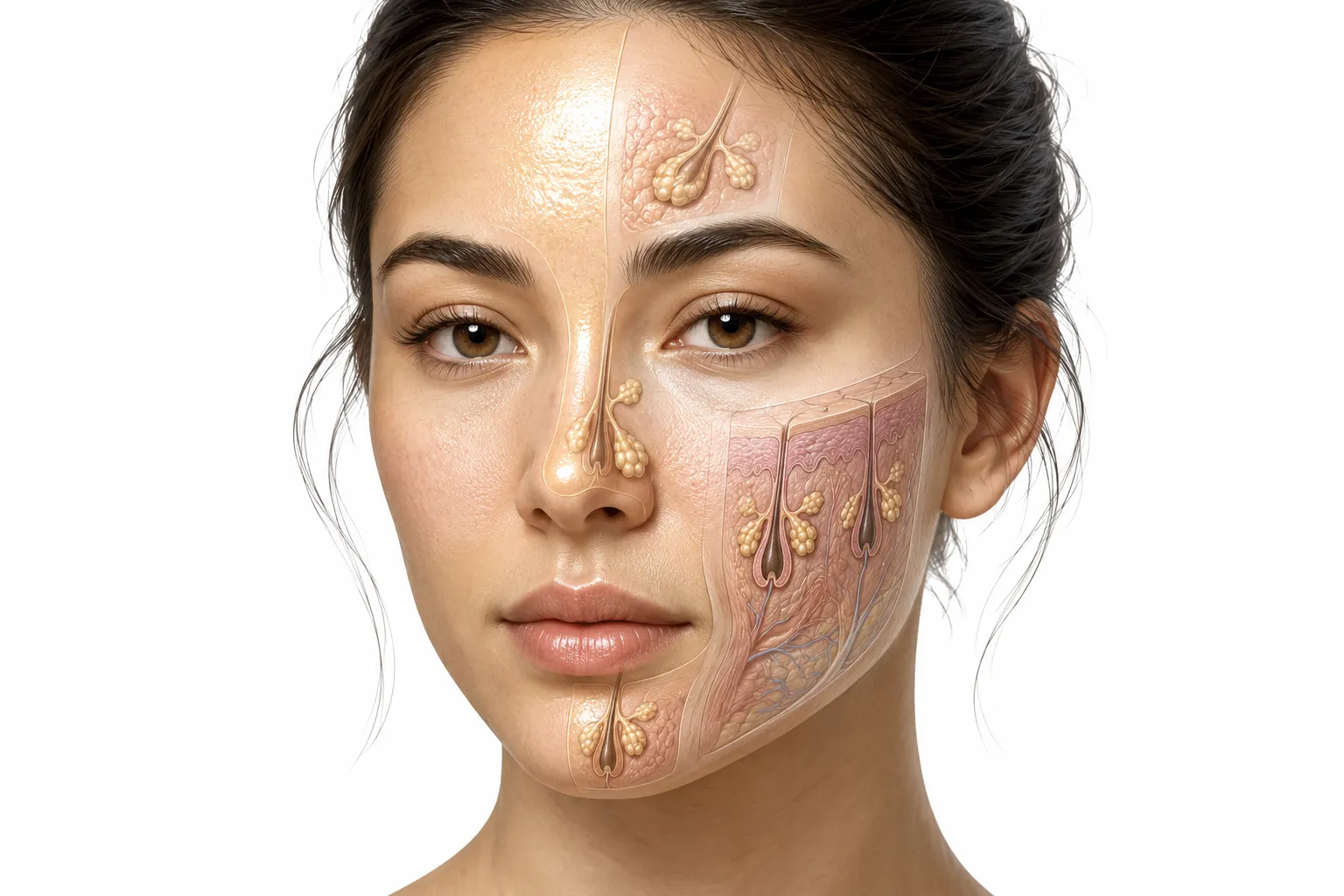
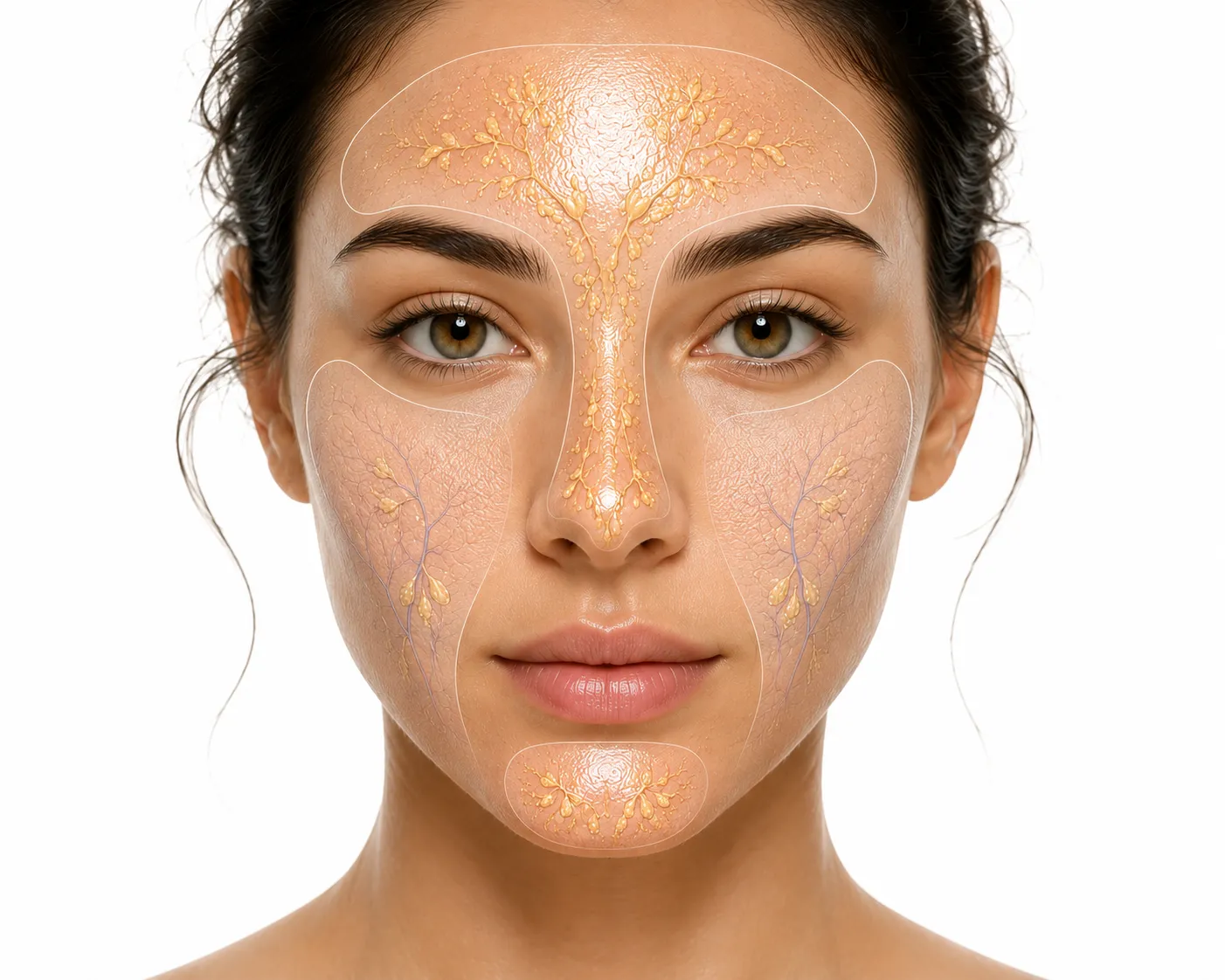
Combination skin type exists specifically because a large share of people show genuinely different oil levels depending on which part of the face you're looking at.
What
That's because it isn't really one skin type at all, it's two, an oilier T-zone paired with cheeks that behave more like dry or normal skin, all on the same face.
Combination skin is less a single skin type than two skin types sharing the same face, oilier in the T-zone, drier or more balanced everywhere else, which makes it one of the trickier types to shop and care for.

What
It might be what's not on your dinner plate. Persistent dry skin can be a surprisingly reliable signal that you're missing certain nutrients your skin needs to hold itself together.

What
But dry skin brushing has been around for centuries and has a devoted following, from ancient Ayurvedic practice to modern spa treatments, all claiming it does far more than just remove dead skin cells.
Dry skin brushing is exactly what it sounds like: taking a firm, natural-bristle brush and sweeping it across dry skin, typically before a shower. It sounds almost too simple to do anything, but proponents swear by it for everything from smoother skin to improved energy.

What
But not all water is the same. What you're washing with might be slowly leaving a film of minerals behind on your skin.
What
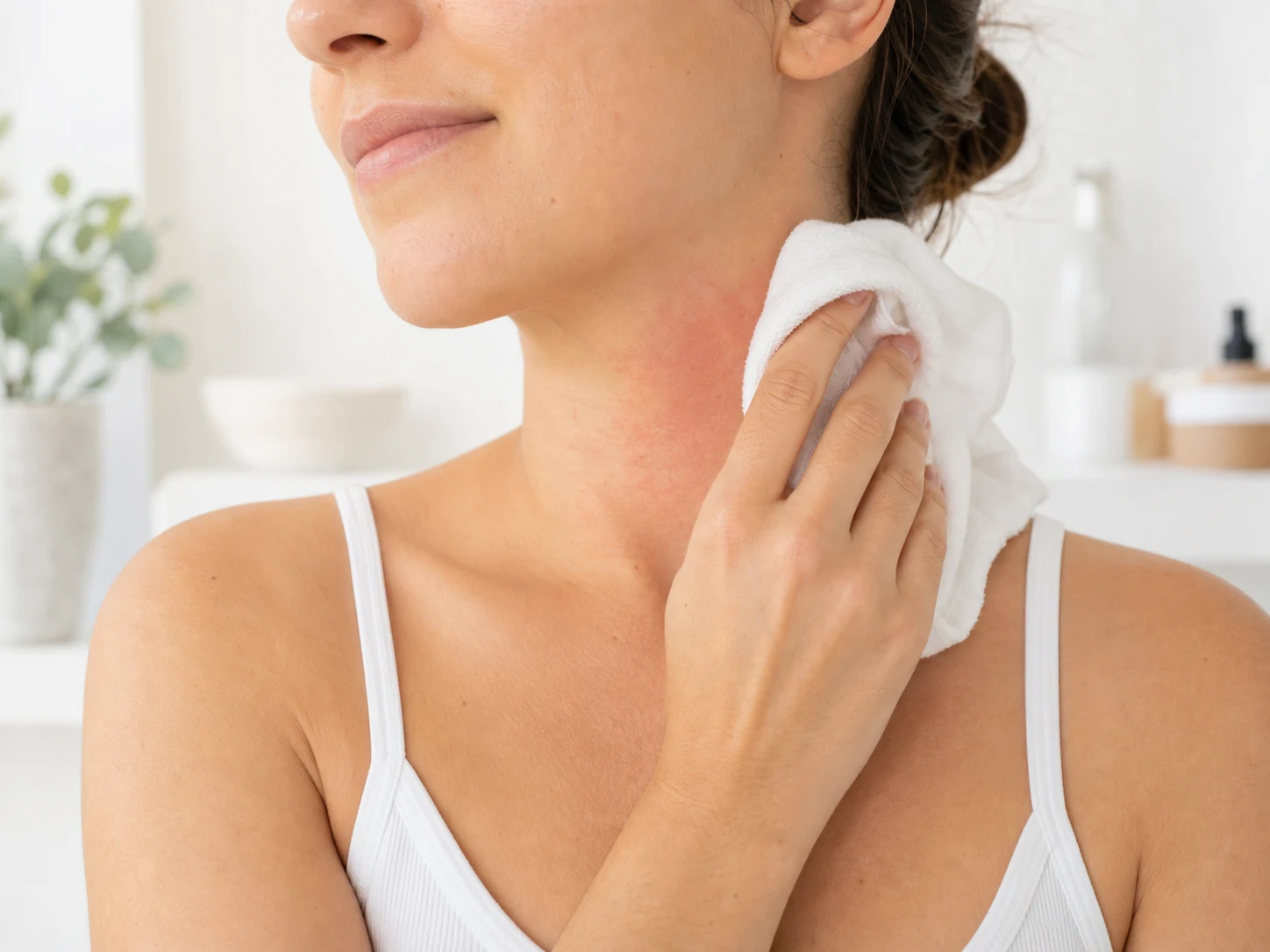
But when that cooling system gets backed up, the result is a scattering of tiny red bumps that are annoying enough to ruin a perfectly good summer day.
What
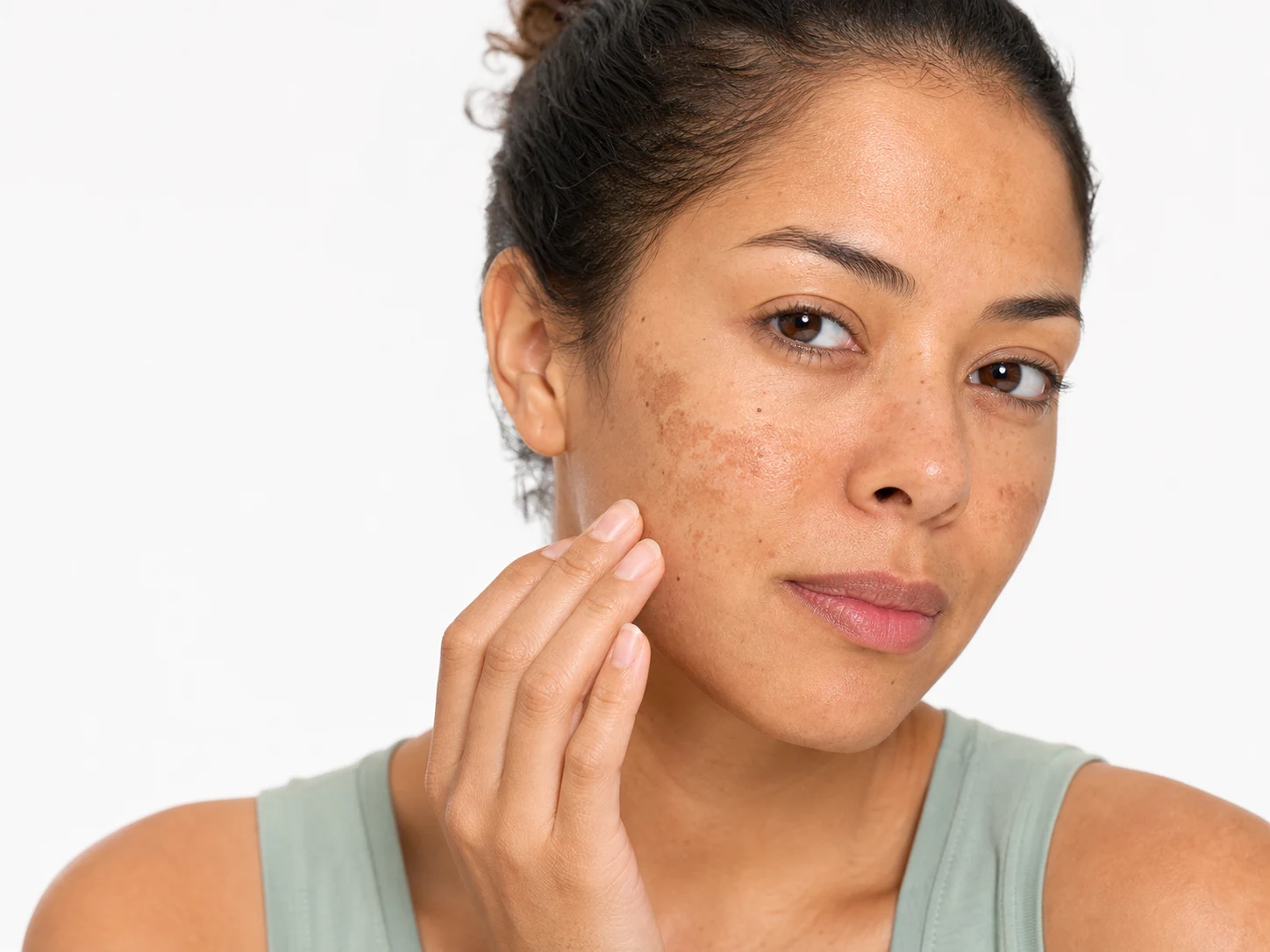
The surprising thing is that hyperpigmentation is actually a normal skin response gone wrong - it's the skin's way of protecting itself, but sometimes the protection becomes a problem.

What
Melasma is one of those times. It's your skin's melanocytes going rogue, making pigment without your permission.
Melasma doesn't just change the color of your skin - it changes how you feel about it. Those patches of darker skin are a sign that your skin's pigment-producing cells have gone into overdrive, and understanding why is key to knowing what to do about it.

What
But why the face? Why not your arm or your back, which get just as much sun?
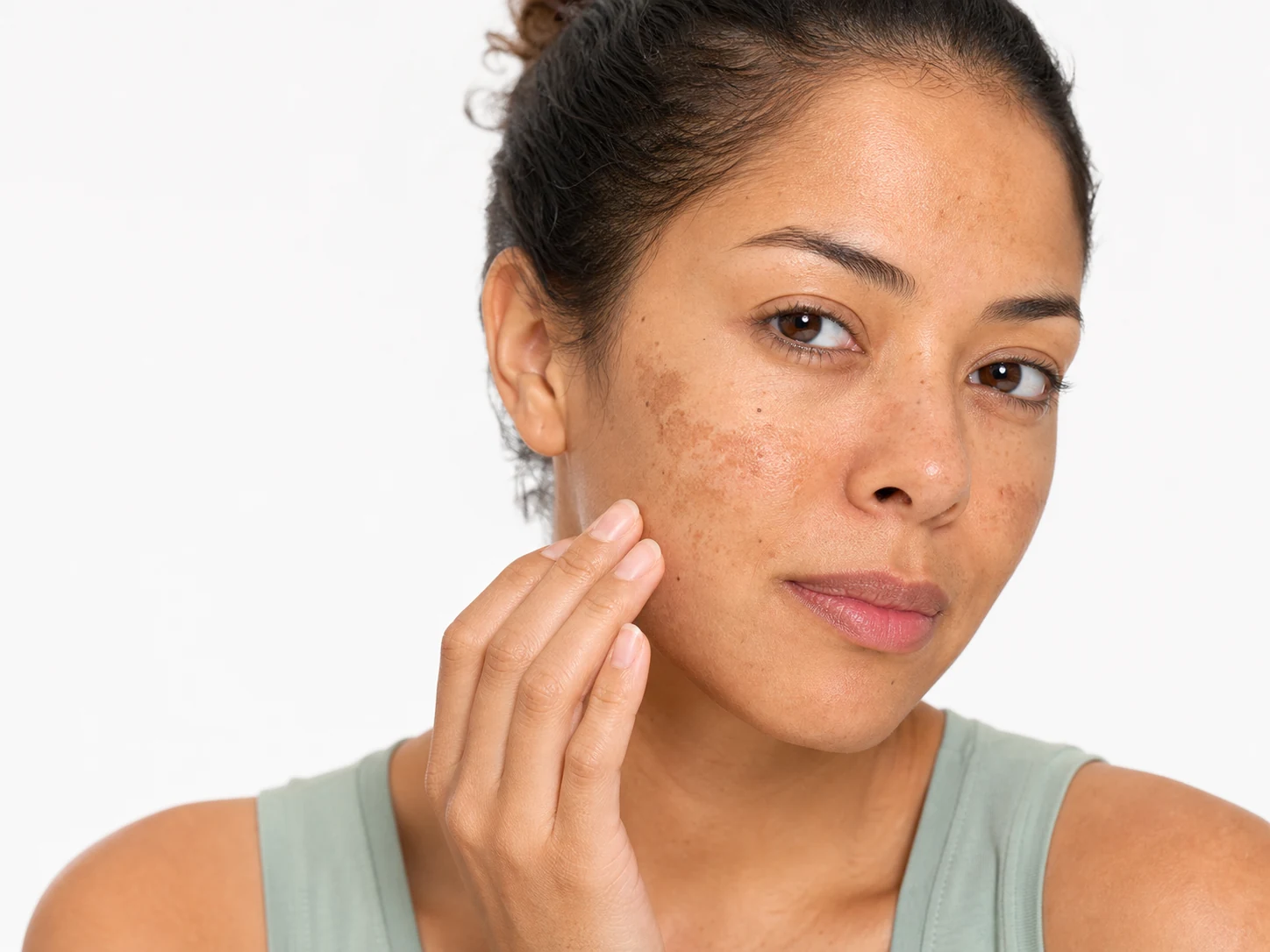
The face is the most common - and most distressing - location for melasma. Those brown patches on your cheeks, across your forehead, or above your lip aren't just cosmetic inconveniences; they're a specific condition with specific triggers and treatments.

What
It's one of the most common skin conditions in the world, yet most people have never heard of it until they get it themselves.
What
Applied to the skin, this same vitamin does something remarkable: it improves almost everything about how skin looks and functions.
What
With niacinamide, the answer is yes - it's genuinely good for multiple skin concerns, not because it's a cure-all, but because it addresses fundamental skin biology.
Niacinamide isn't a one-trick pony. It's good for a surprisingly long list of skin concerns, from oily skin and acne to hyperpigmentation and barrier repair. Here's what it can help with - and what it can't.
What
It's absolutely real, and it's a lot more interesting than just being the skin that doesn't cause trouble. Normal skin type has distinct characteristics that make it uniquely manageable.
What
The thing is, normal skin doesn't mean perfect skin. It's about balance, which actually makes it a lot easier to care for than you might think.
What
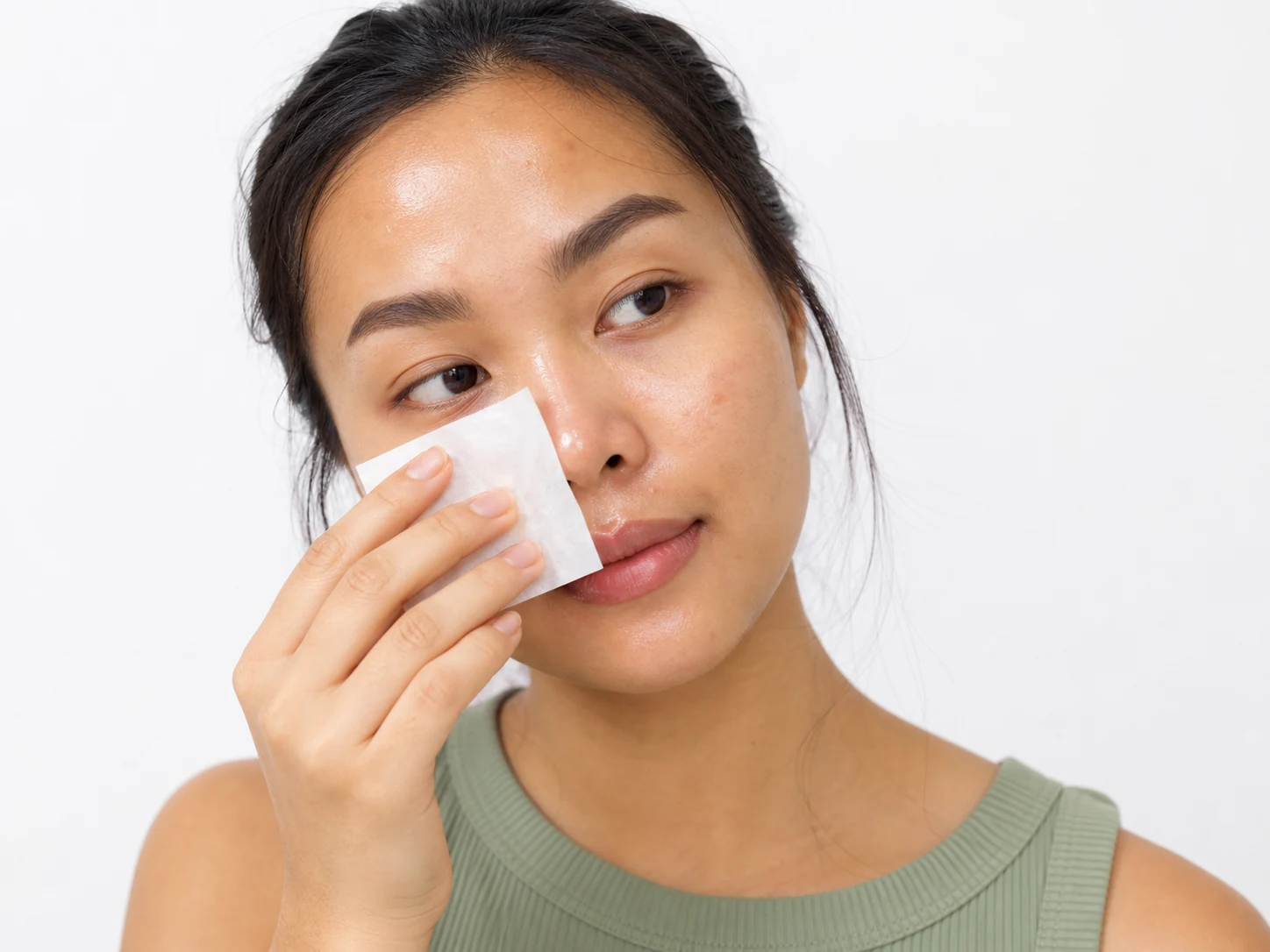
This isn't a contradiction or a skincare failure - it's combination skin, and it's more common than any other type.
What
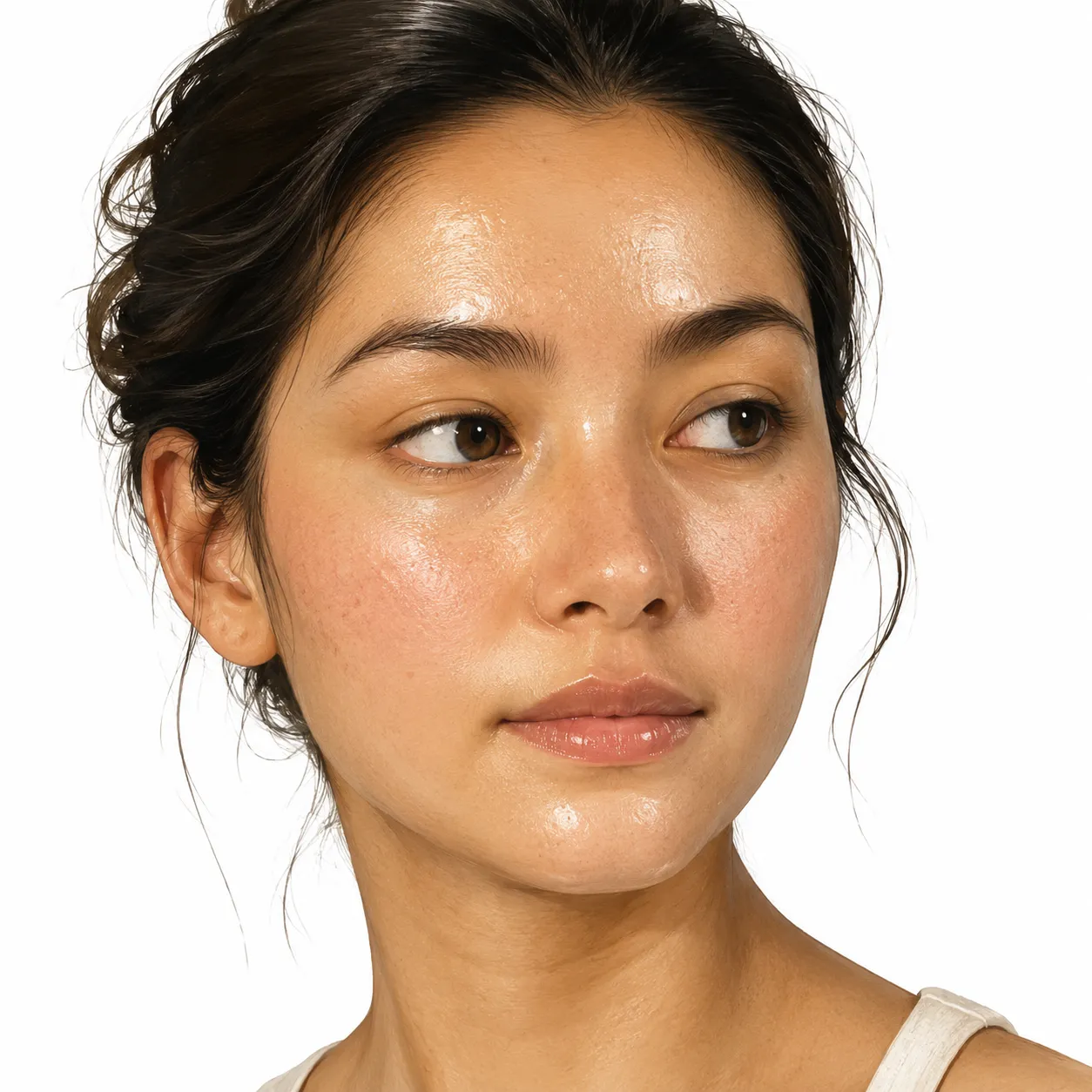
But here's the thing: sebum isn't the enemy. Oily skin is simply skin that produces more of its natural protective oil than average, and when you understand why that happens, you can work with it rather than against it.
Oily skin is exactly what it sounds like: skin that produces more oil - specifically, more sebum - than it actually needs to keep its barrier healthy. This leads to a characteristic shine, enlarged pores, and a tendency toward breakouts and congestion.
What
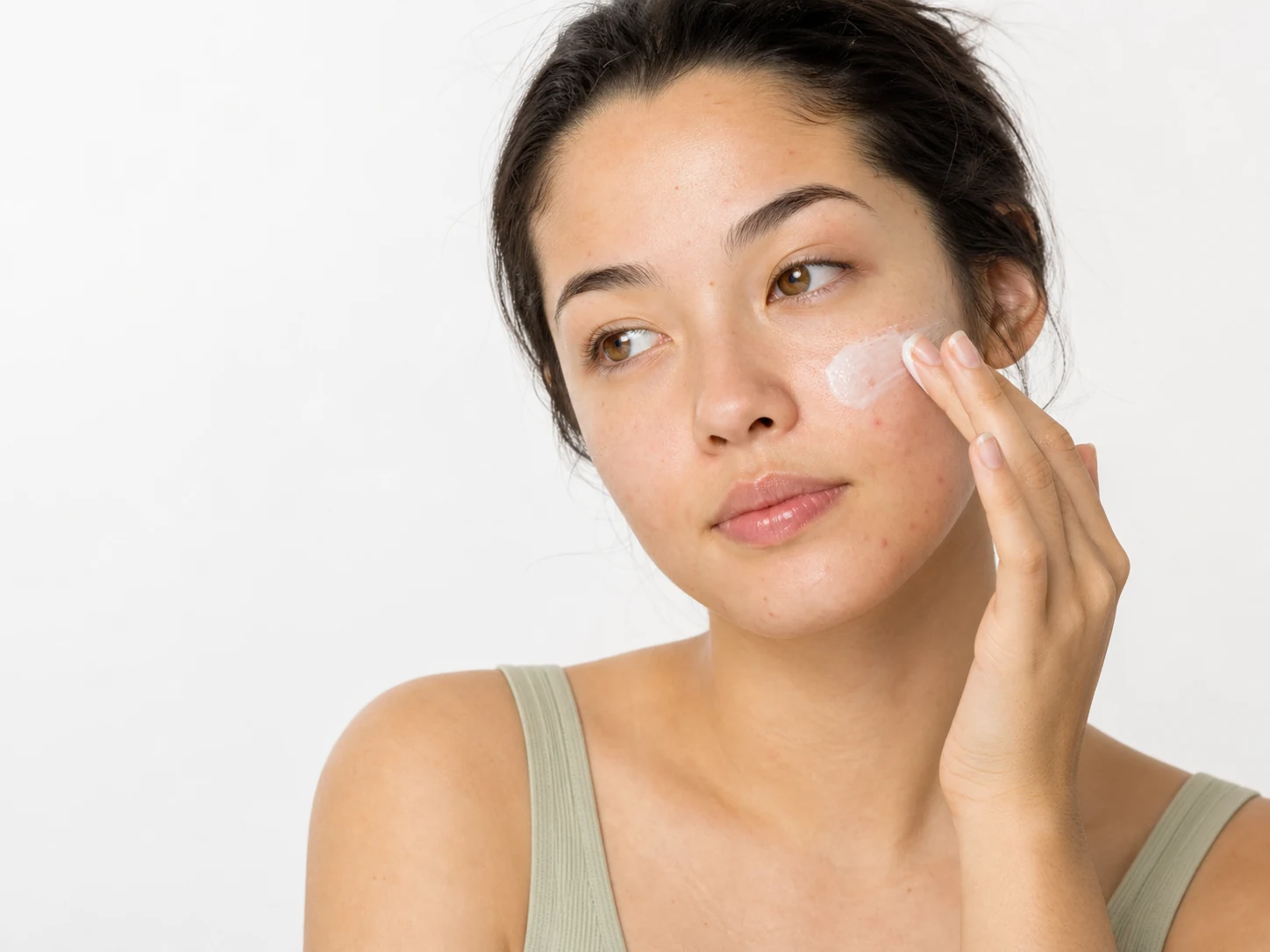
The surprising thing is that PIH is actually the skin's attempt to protect itself - it's an overprotective response that lingers long after the threat is gone.
What
The interesting part is that sensitive skin isn't always a permanent state - it can be triggered, managed, and sometimes even improved over time.
What
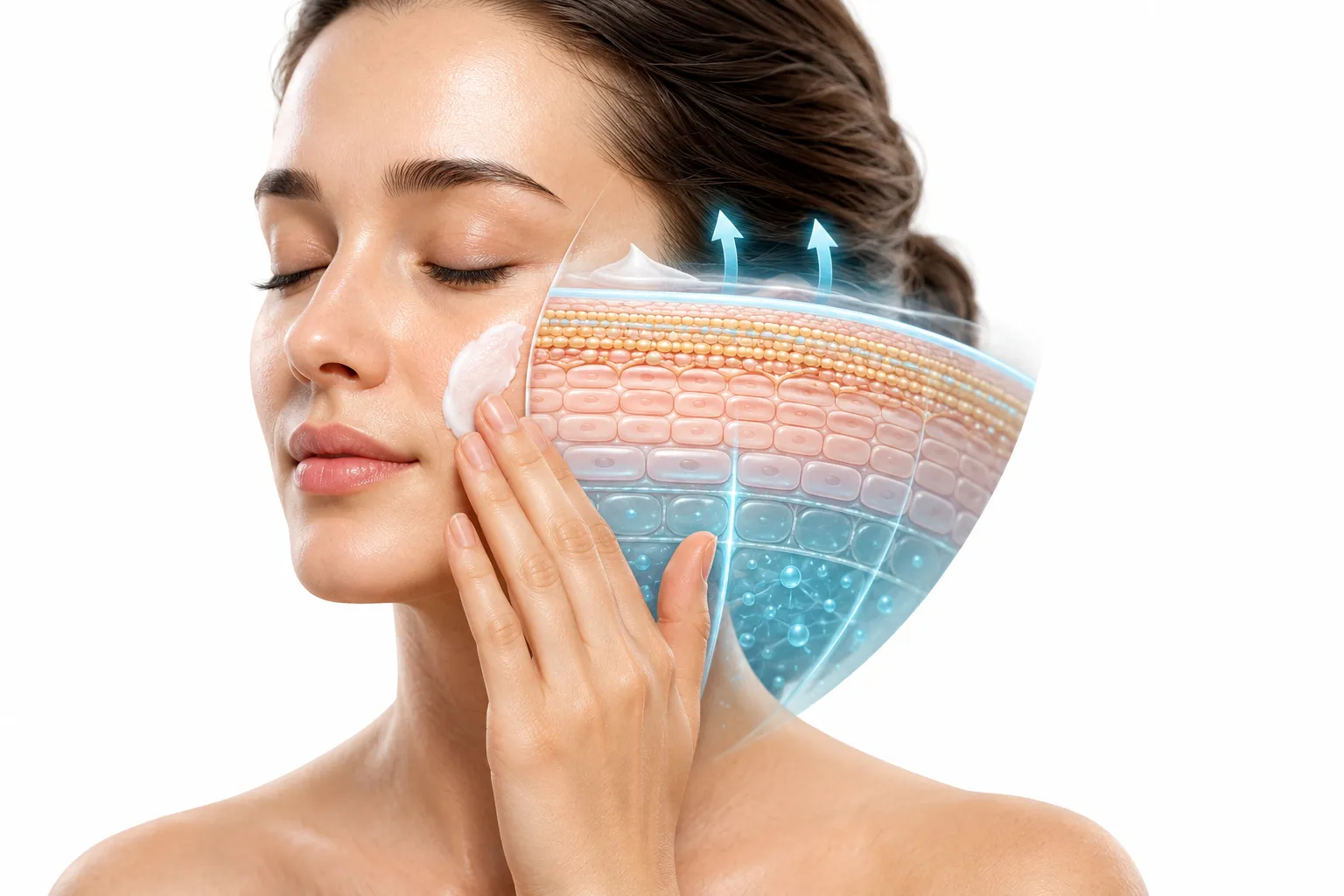
Skin barrier cream does something different: it's formulated to actually become part of the skin's structure, helping rebuild the protective layer that's supposed to be there in the first place.
What
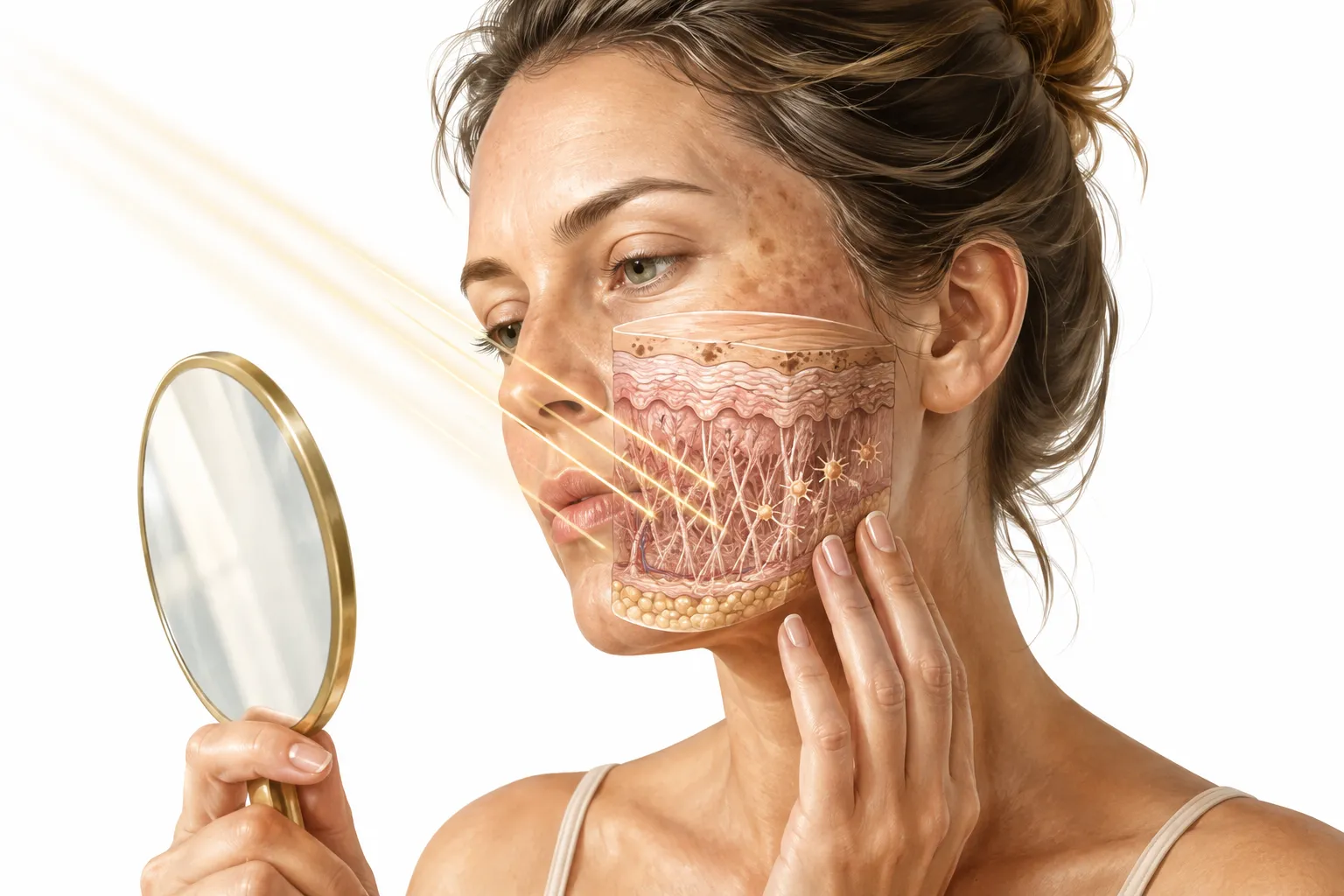
But unlike a photograph, your skin has a repair system that tries to fix the damage, but it's a slow, imperfect process that eventually gets overwhelmed.
Sun-damaged skin isn't just a sunburn that fades in a few days. It's the cumulative effect of years of UV exposure on the skin's structure, a process dermatologists call photoaging. It's a slow, invisible accumulation of damage that eventually appears as wrinkles, uneven tone, and texture changes - the biological cost of time spent in the sun.
What
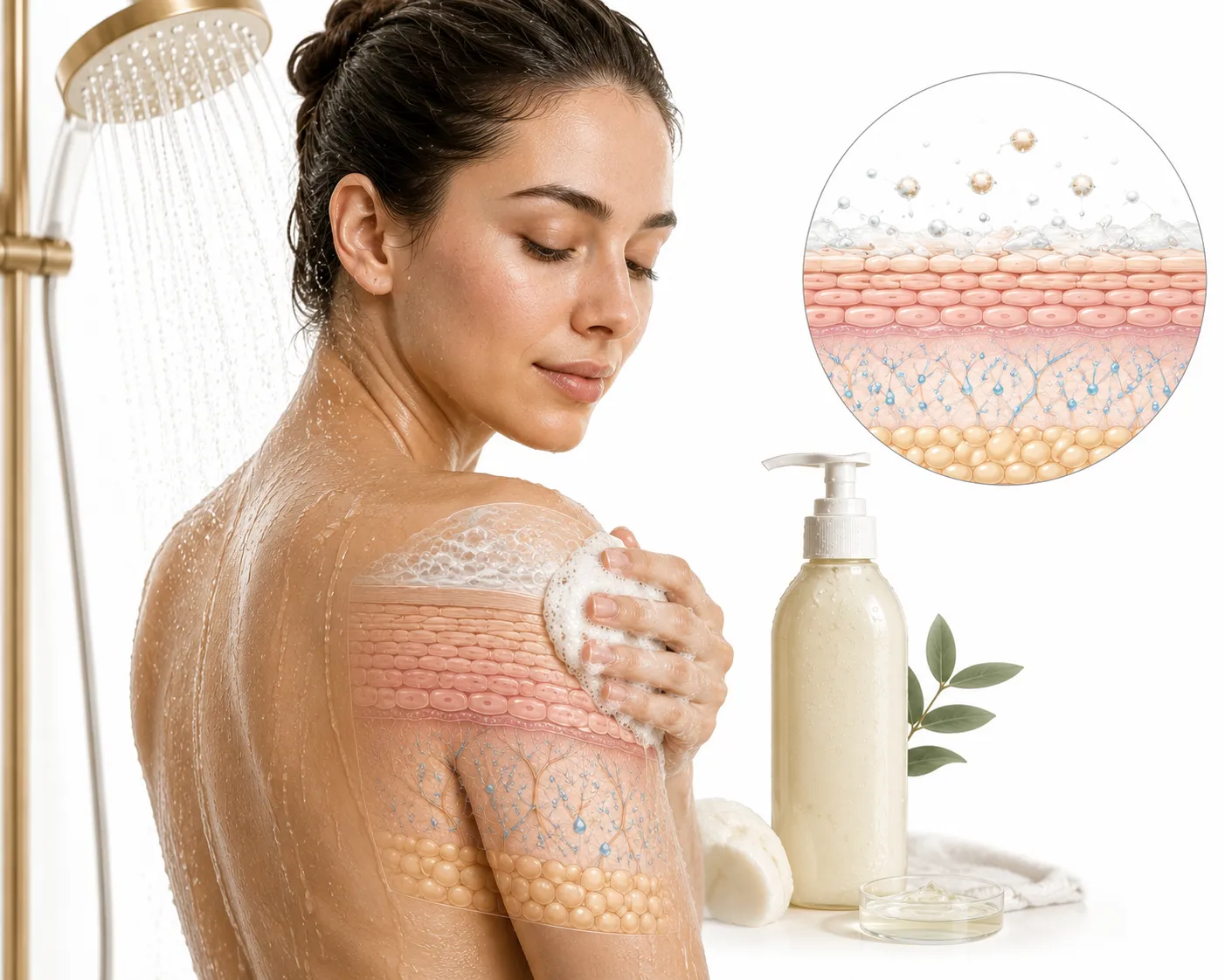
Most body washes claim to be gentle, but many of them still contain fragrances, sulfates, and other ingredients that can leave sensitive skin feeling raw rather than clean.
What
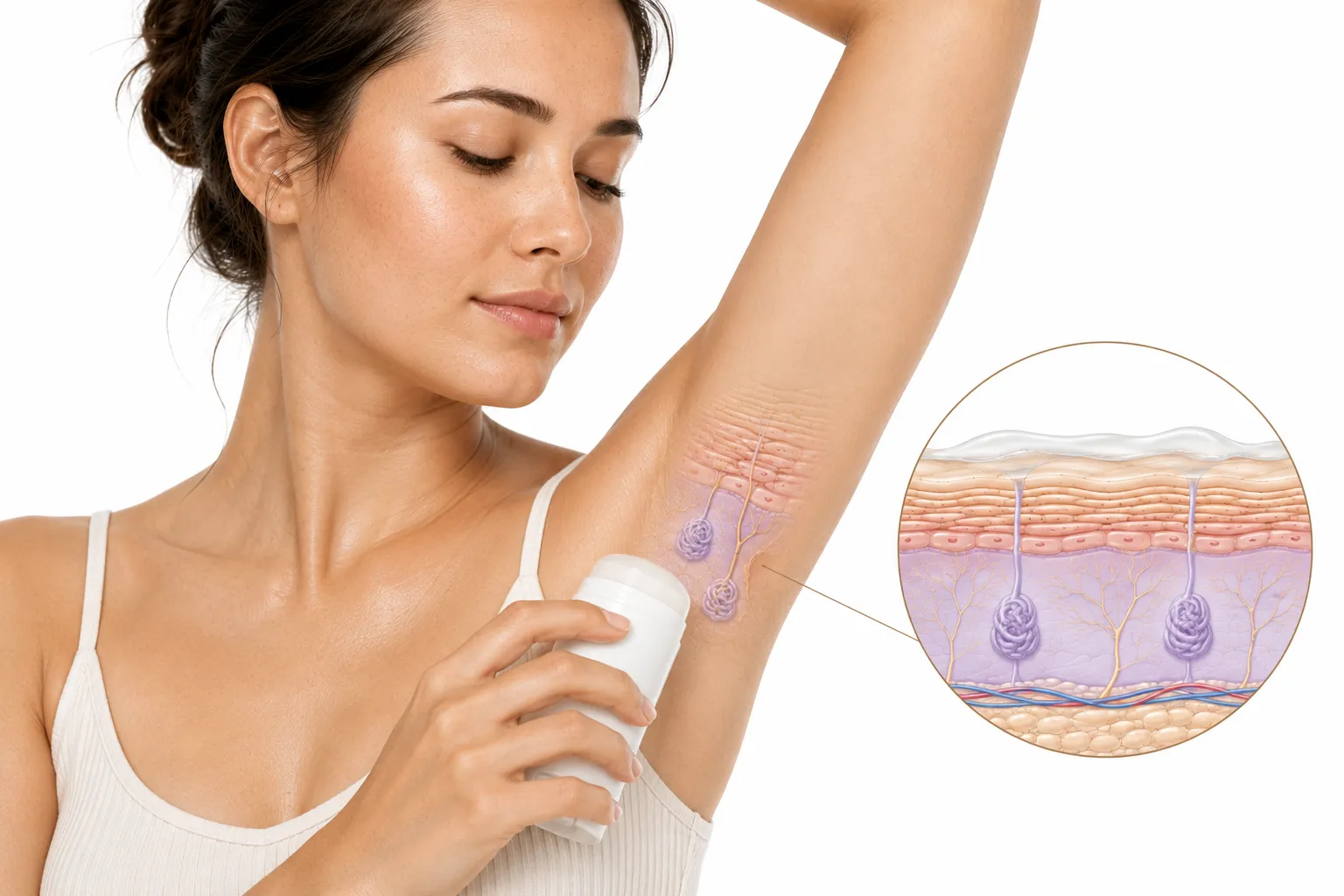
What makes a deodorant comfortable for some and unbearable for others comes down to just a few key ingredients.
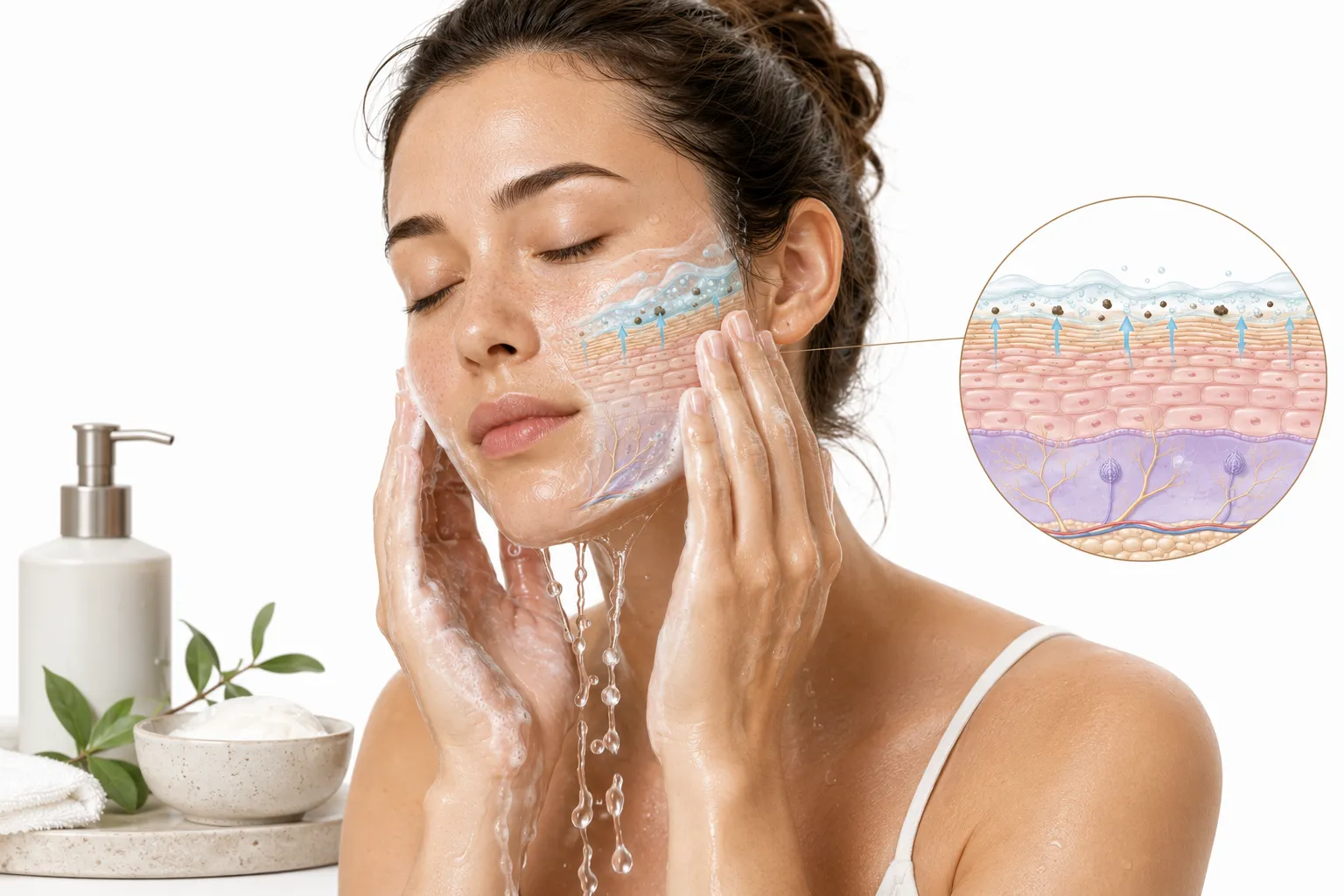
What
For sensitive skin, that feeling of tightness after washing isn't a sign of effectiveness - it's a sign of damage.
Cleansing sensitive skin is a delicate balance. Wash too gently and you don't remove what needs removing; wash too thoroughly and you destroy the very barrier you're trying to protect. The best face walk finds the middle ground.
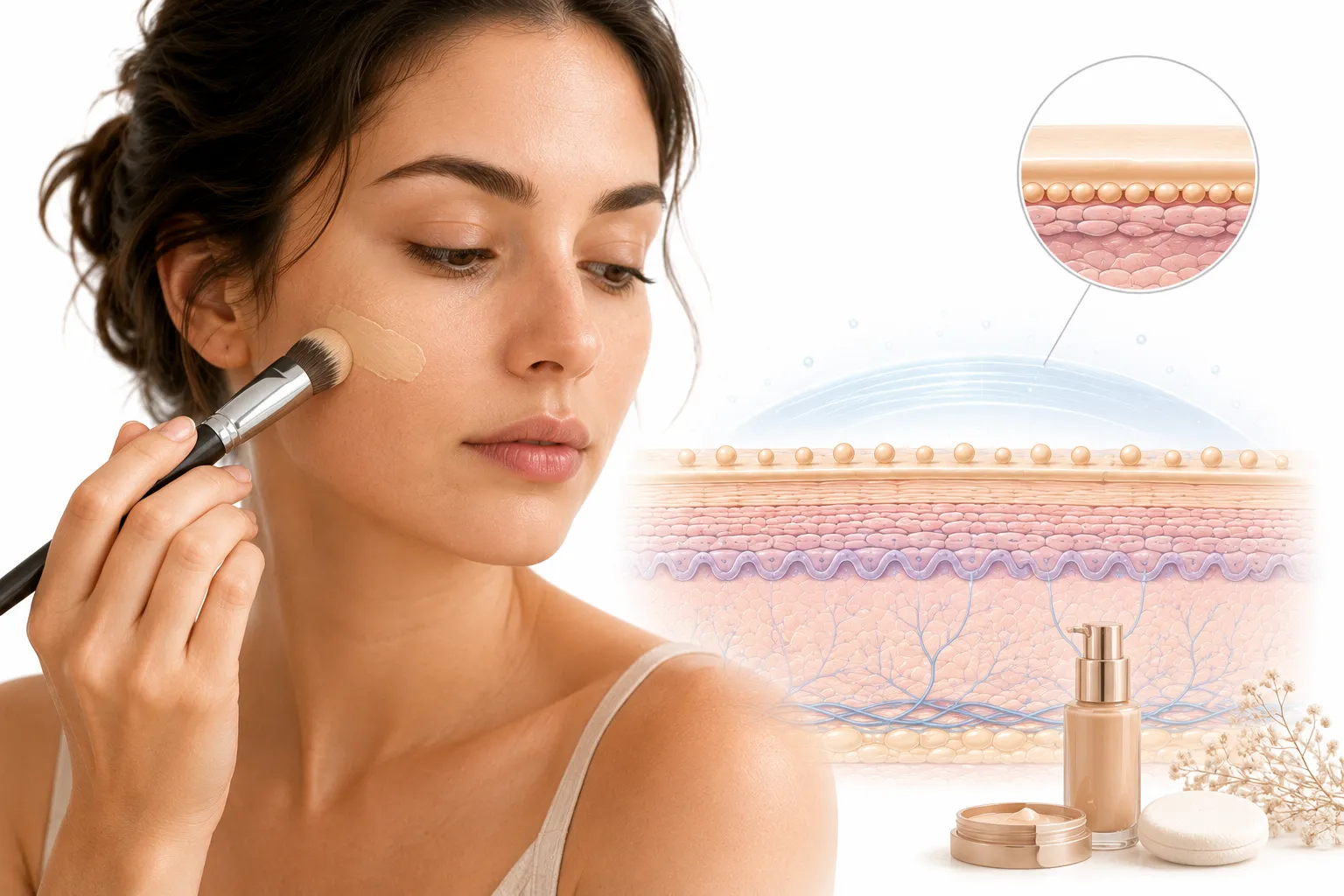
What
The ingredient that gives foundation its staying power is often the same one that causes breakouts in sensitive skin.
Foundation sits on your face for hours, making it a high-stakes product for sensitive skin. The wrong formula can trigger redness, breakouts, or stinging - but the right one can provide coverage without consequence.

What
That low-level itch you can't quite place might not be a skin condition at all; it might be what you're washing your clothes with.
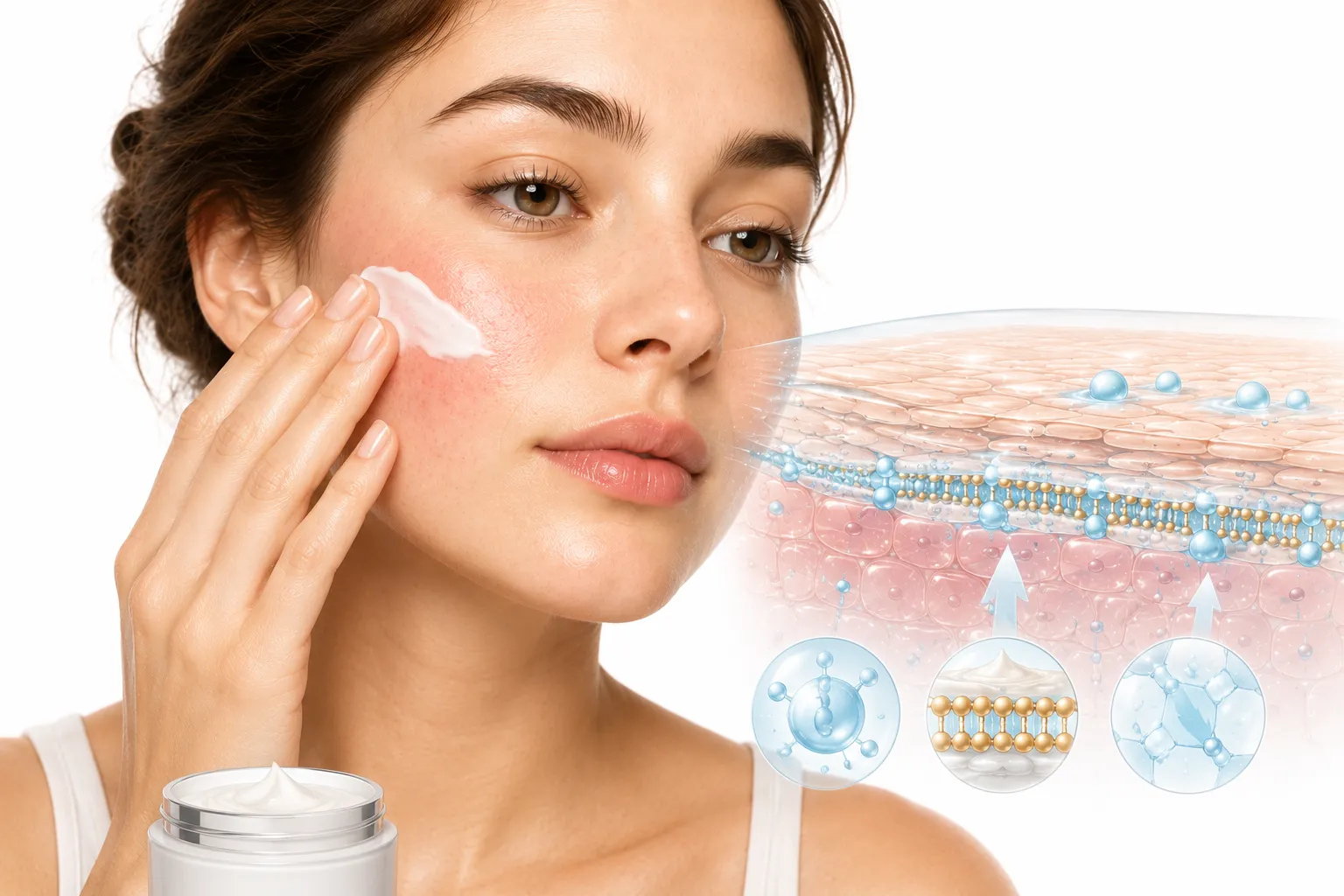
What
The weird thing is, sensitive skin isn't necessarily dry skin, but it's almost always skin with a compromised moisture barrier.
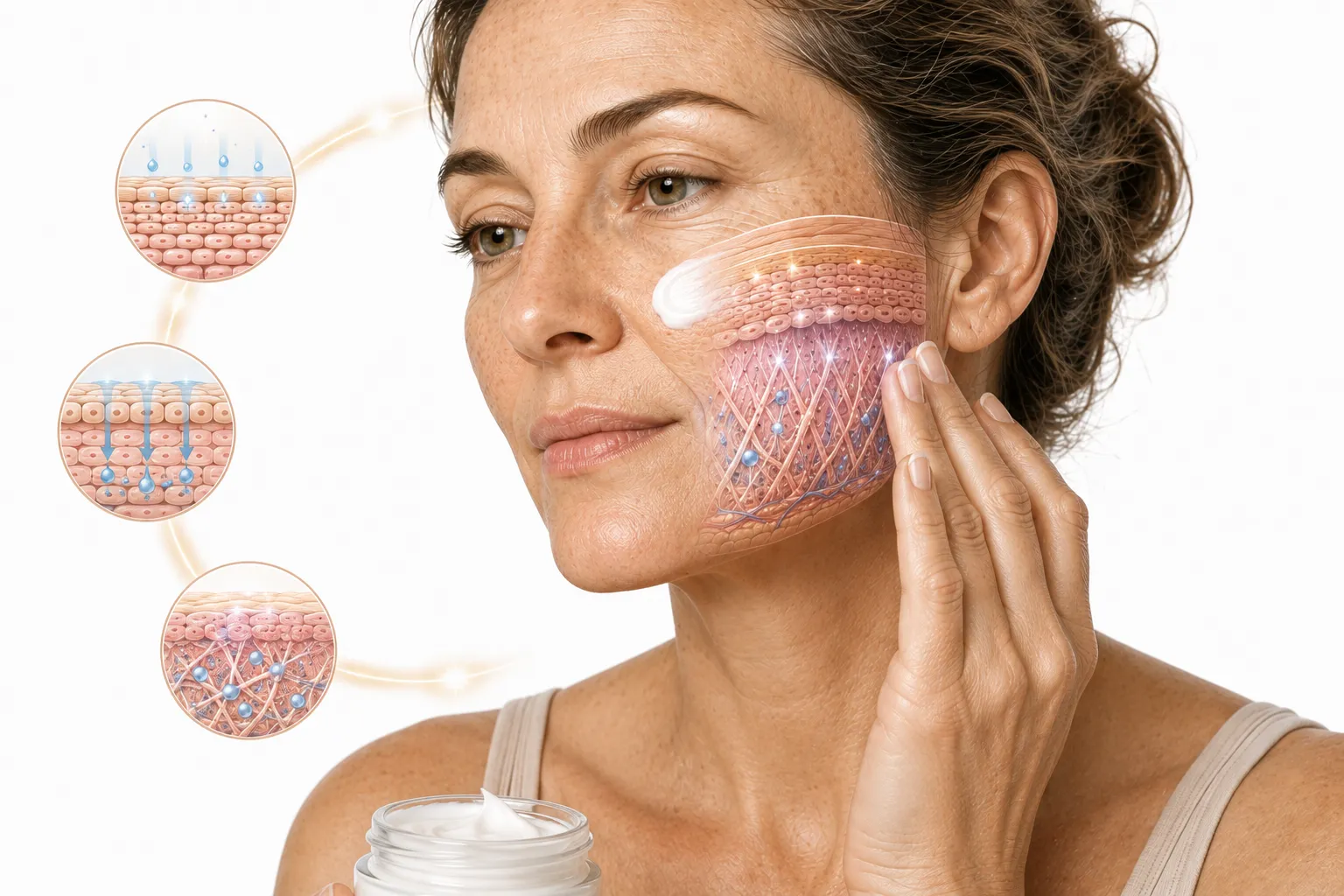
What
The key is finding the right moisturizer that repairs the damage while providing deep hydration.
What
The best serum for you is the one that matches your skin type, your concerns, and your budget - not the one with the most hype.
There's no single best niacinamide serum - there's the best one for your skin. The ideal serum depends on your skin type, your budget, and your specific concerns. Here's how to find yours.
What
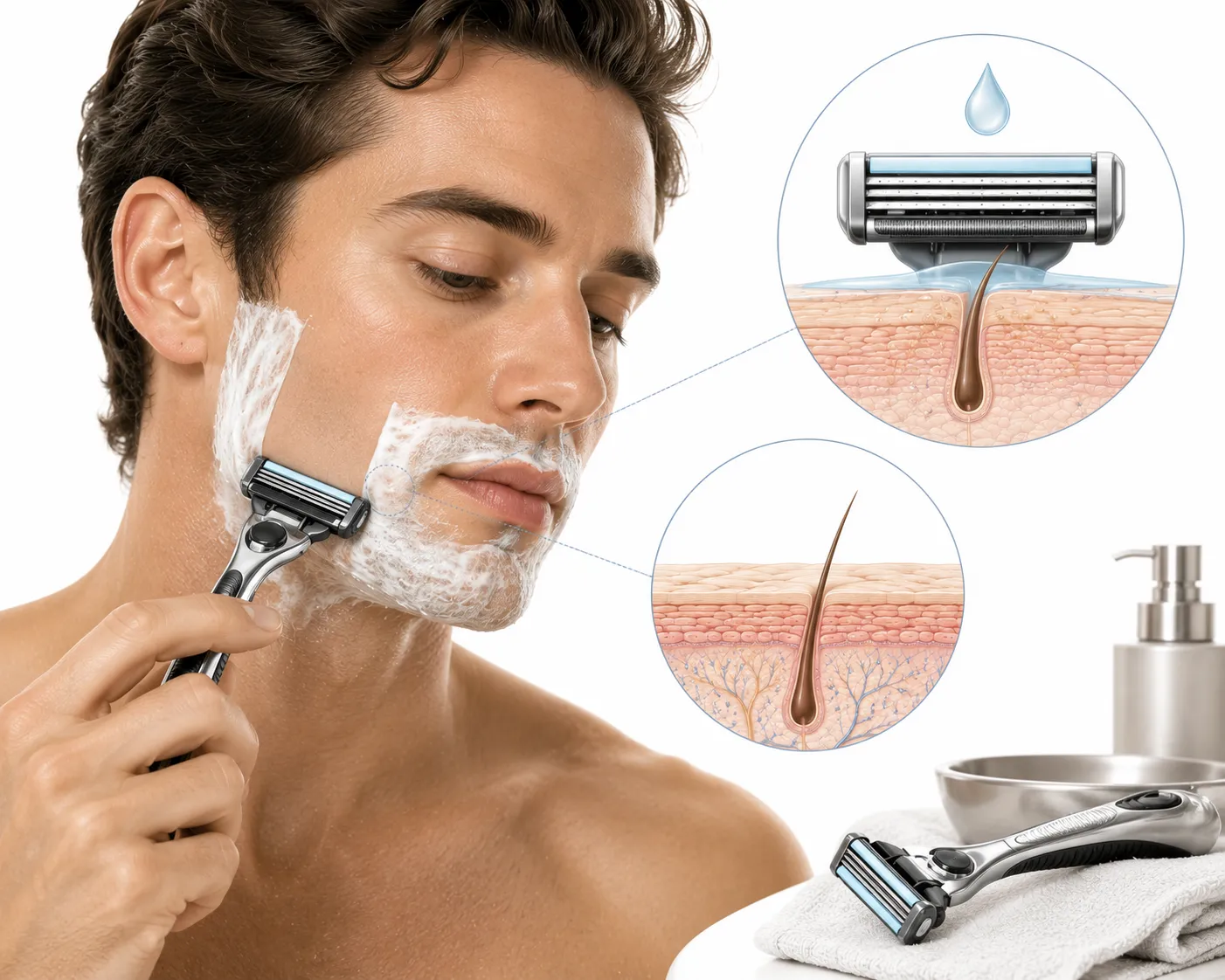
The tug-and-cut action of a multi-blade razor, where one blade pulls the hair up and a second cuts it below the skin line, is a direct path to razor bumps.
What
But sensitive skin and retinol are not mutually exclusive. The reaction comes from how fast the retinol works, not the retinol itself.
Retinol is widely considered the gold standard for anti-aging, but it's also a notorious irritant. The good news is that sensitive skin can absolutely use retinol - you just need the right formulation and a gradual introduction.
What
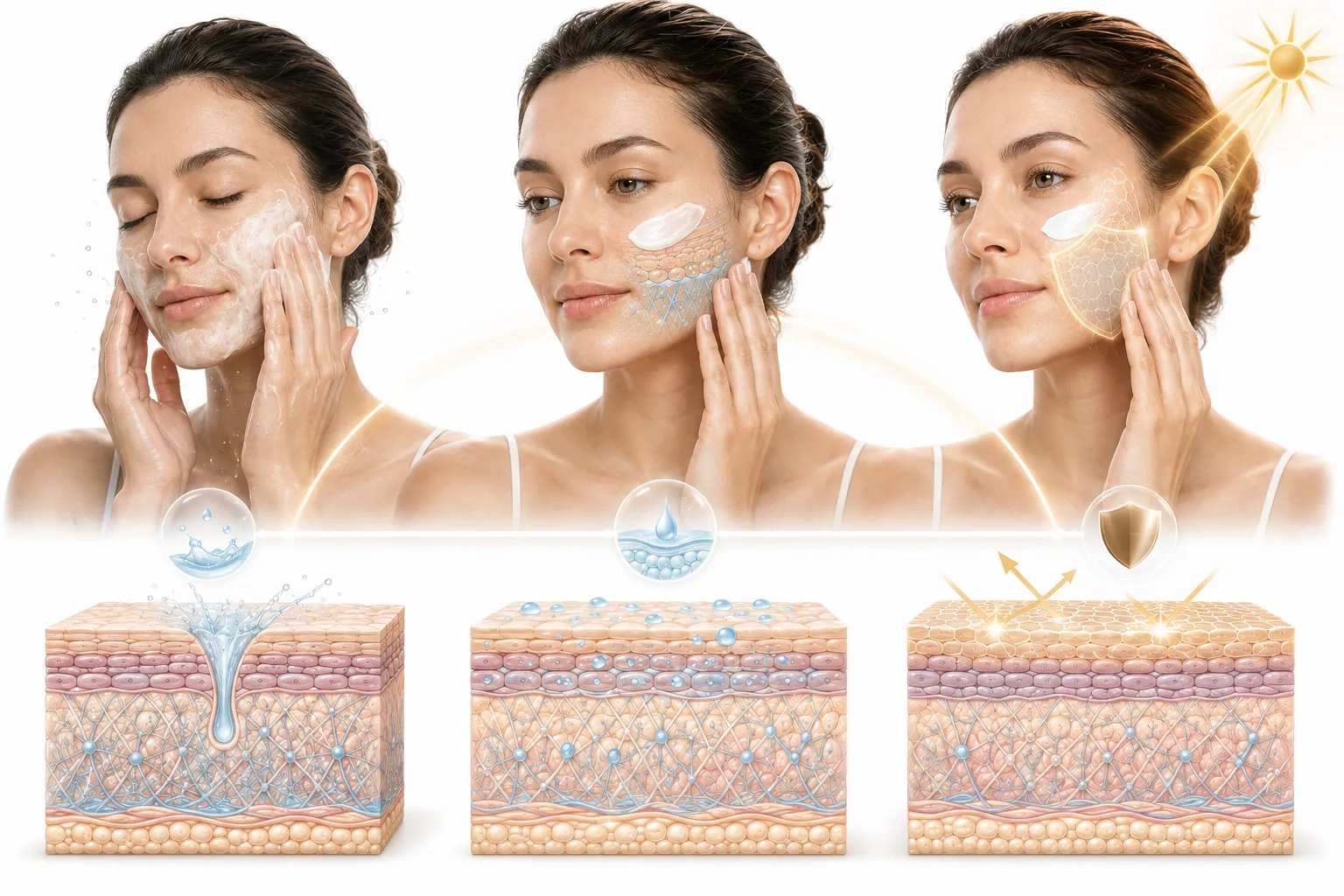
When that mortar dissolves, everything falls apart: water escapes, irritants enter, and sensitive skin becomes a self-fulfilling prophecy.
What
The biggest one is the temptation to do too much. Normal skin doesn't need heavy correction; it just needs consistent maintenance.
Normal skin is often considered the "easy" skin type, but it can be tricky to know what routine to follow. The right approach is simple: support the skin's natural balance without adding complexity it doesn't need.
What
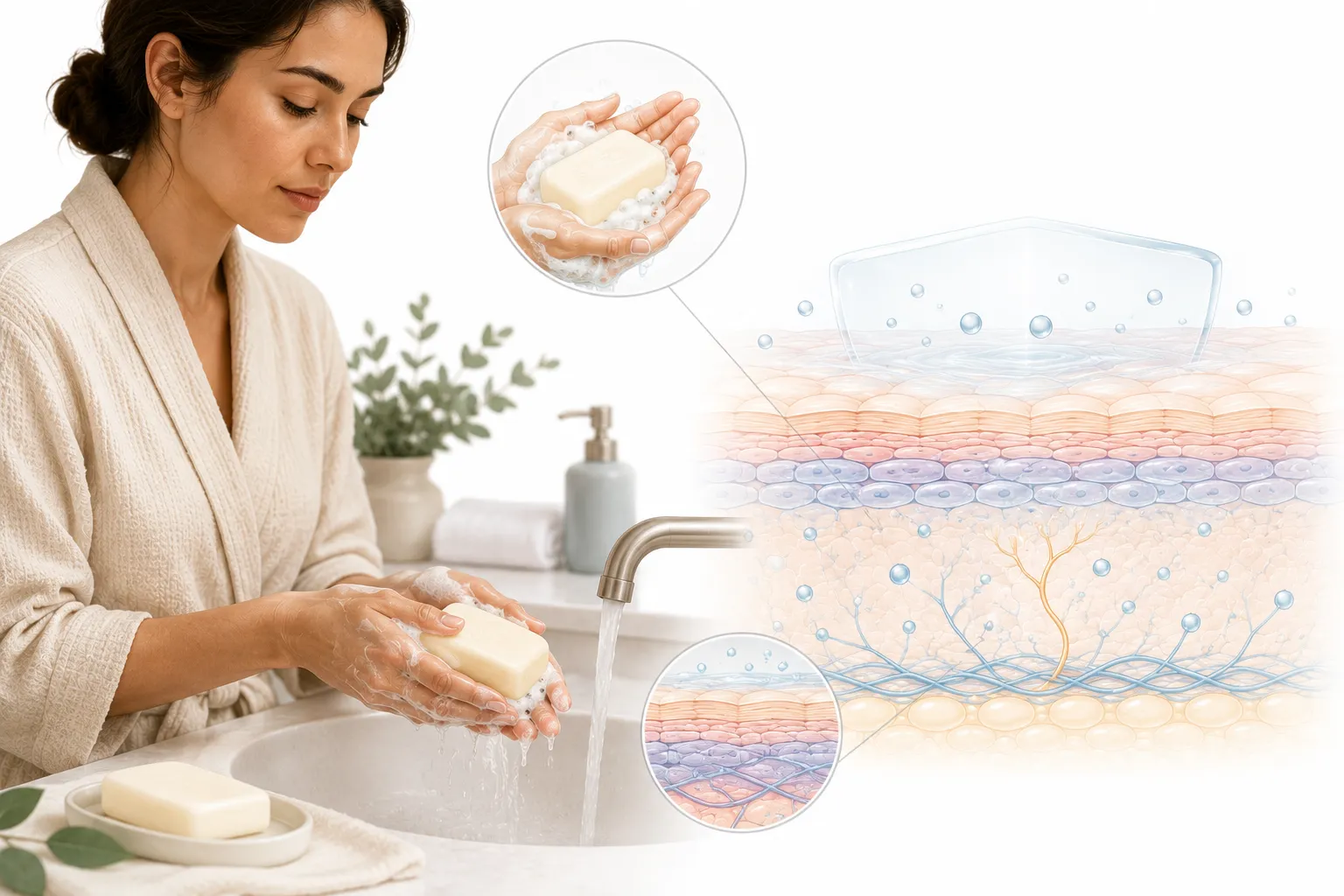
The alkaline pH of traditional soap can disrupt the skin barrier, turning a necessary cleaning step into a damaging one.

What
The problem might not be your moisturizer - it might be your water. Hard water leaves behind residues and disrupts your skin barrier, making it harder for any product to work effectively.
What
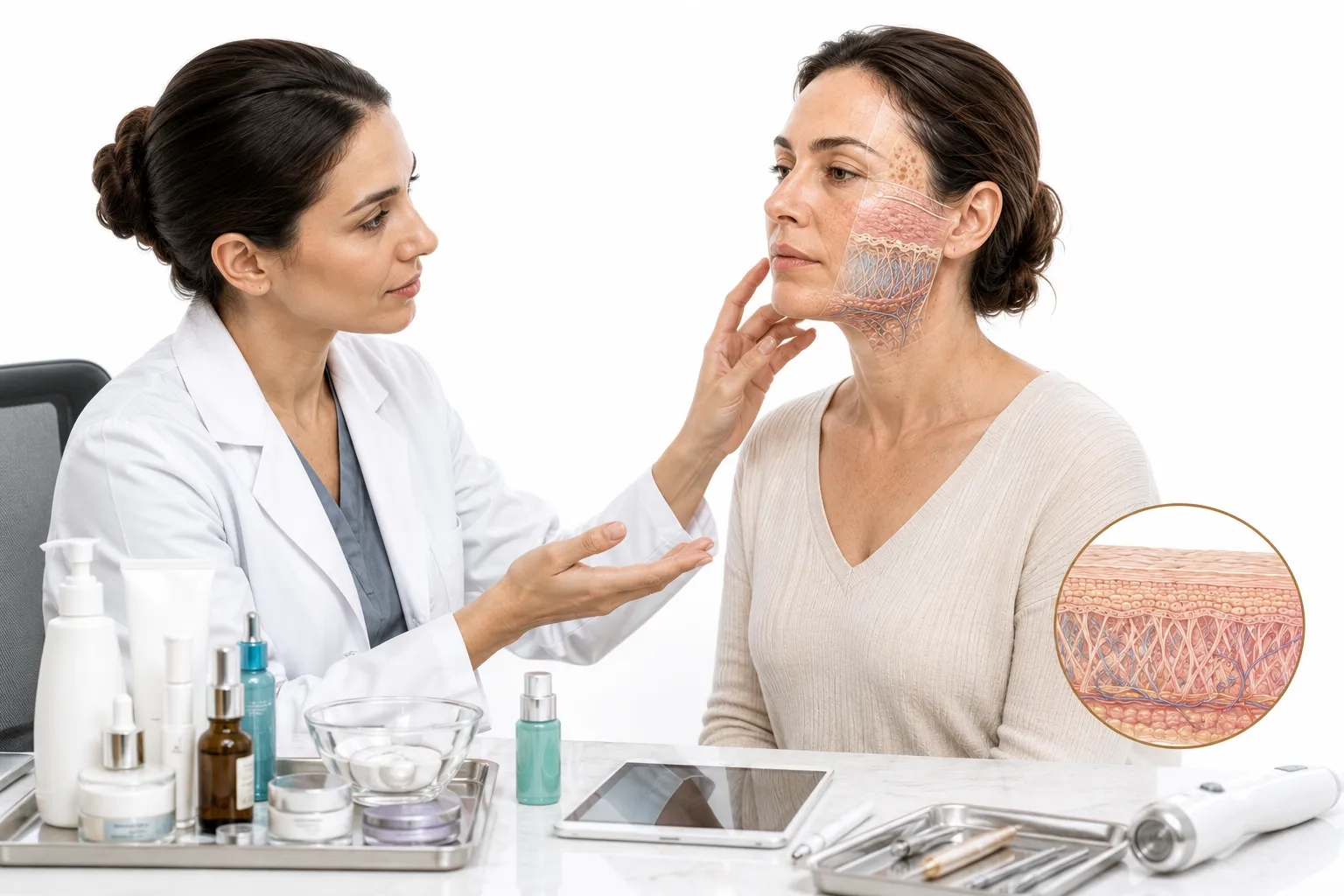
But unlike a house, your skin doesn't stop changing while you're working on it.
What
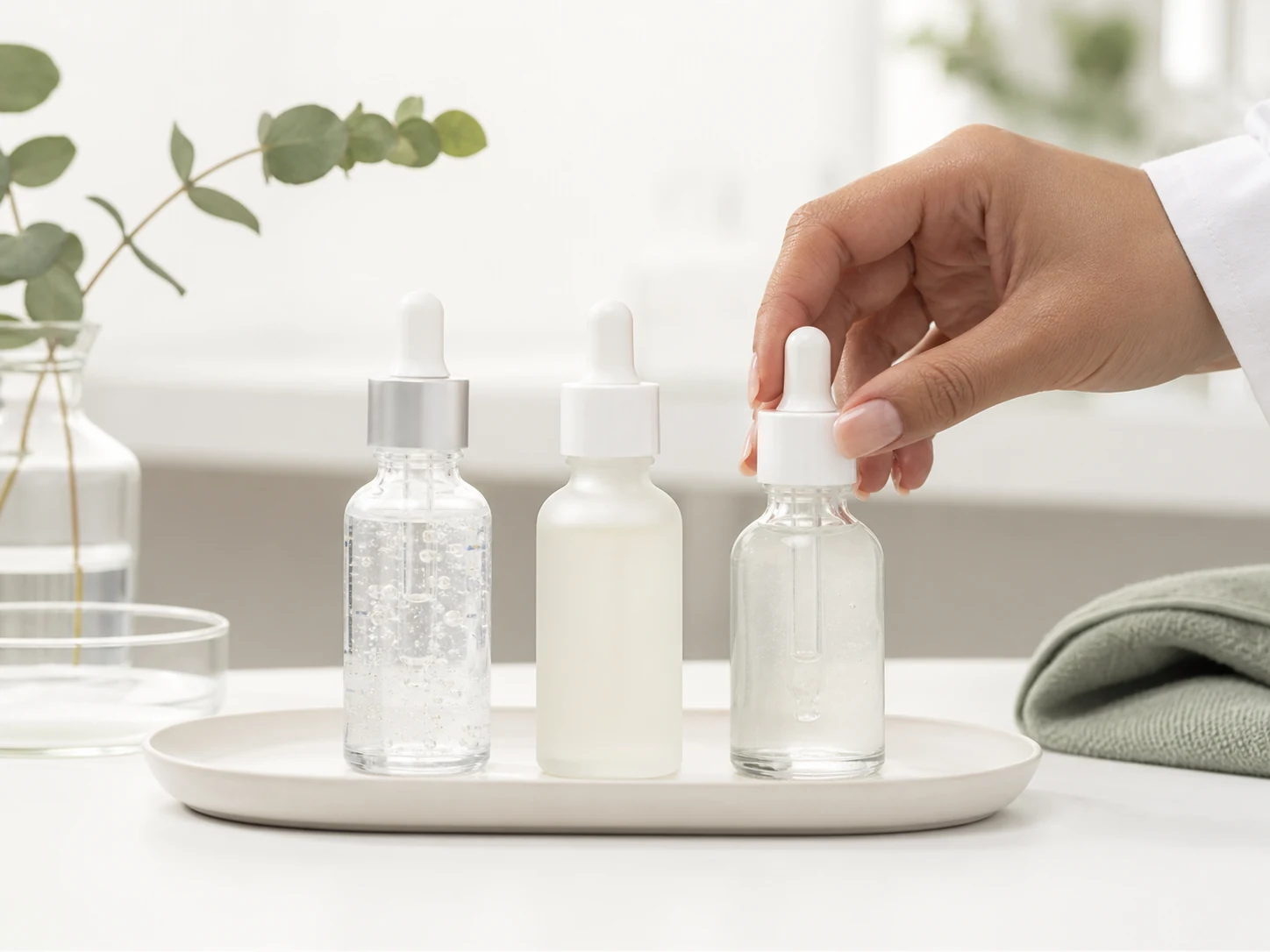
But if you listen to the reasoning behind each recommendation, you'll hear the same themes emerge.
There isn't one single serum that all dermatologists recommend. Instead, dermatologists look for certain qualities: appropriate concentration, gentle formulation, and good stability. Here's what they look for - and why.

What
"Melasma" sounds like something from a Greek myth - and in a way, it is.
The word "melasma" sounds vaguely medical and slightly mysterious, but its meaning is actually quite straightforward - and understanding what it means is the first step to understanding what it does to your skin.
What
The same ingredient that controls oil and fades dark spots is being used to support gum health.
What
But what is it actually for? And is it right for your skin?

What
That's because the one type that fits none of those categories - neutral skin - is so uncommon that brands barely bother targeting it.
Most people fall somewhere on the spectrum between oily and dry, but one skin type - neutral skin - is genuinely rare. Here's what it means to have perfectly balanced skin and why it's so uncommon.
What
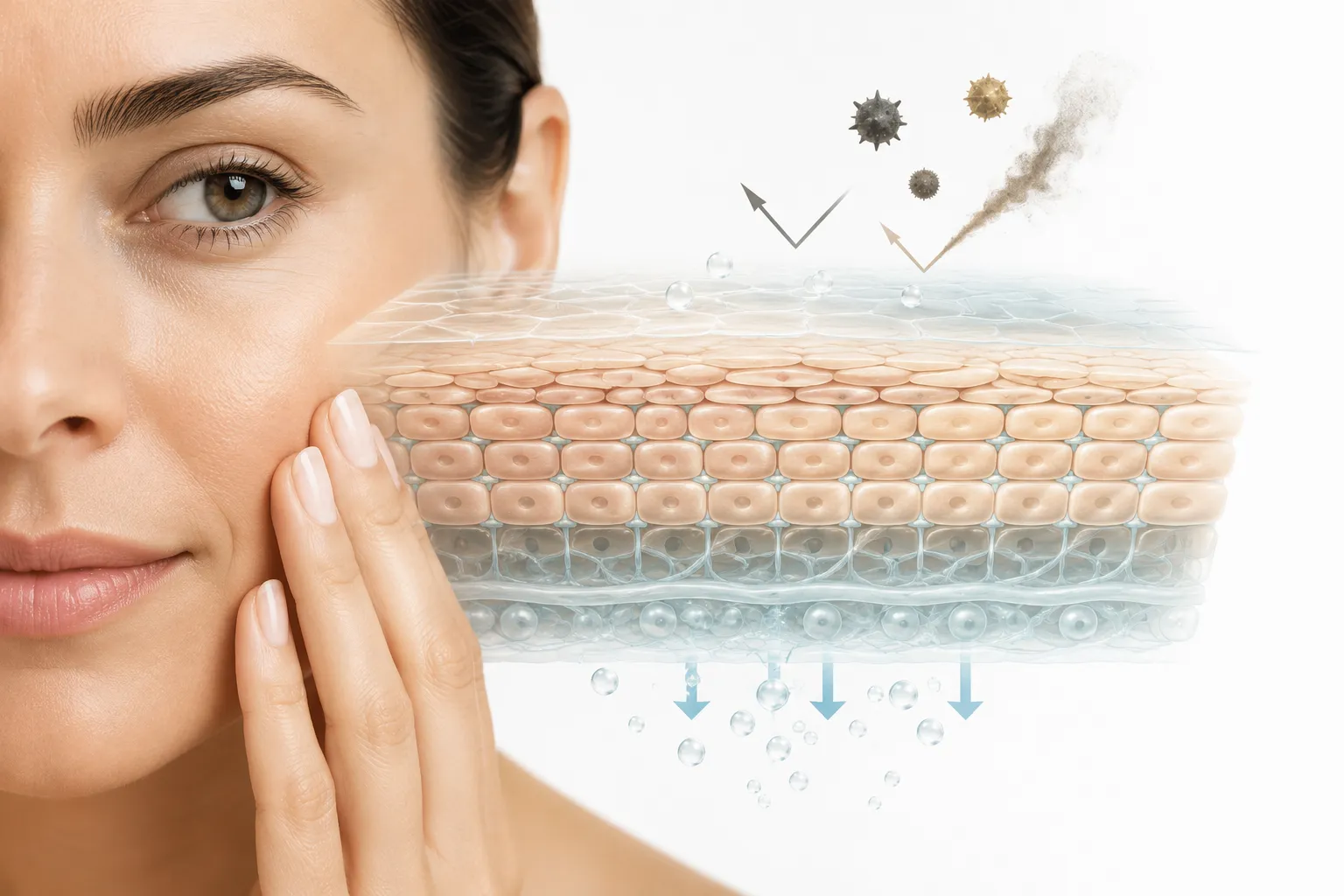
Your skin faces a similar threat every day, except it has a built-in solution that bread does not: the skin barrier.

What
Melasma isn't one of those. What melasma means is practically written into the word itself.
What
It does so many things well that it's hard to believe it's just one molecule.
What
Unlike an exfoliating acid, you don't feel a tingle or a peel. The effects are more subtle - and more structural.
Niacinamide serum is one of the most versatile products in skincare. But what does it actually do? The answer is surprisingly broad - and surprisingly well-documented.
What
The answer involves everything from invisible cellular changes to visible improvements that take weeks to emerge.
What
But even a universal donor has special strengths for certain recipients.
What
But the wrong bar, thick, fragranced, stripping, can leave already irritated skin more inflamed than it started, undoing whatever cooling and drying you were trying to achieve.
What
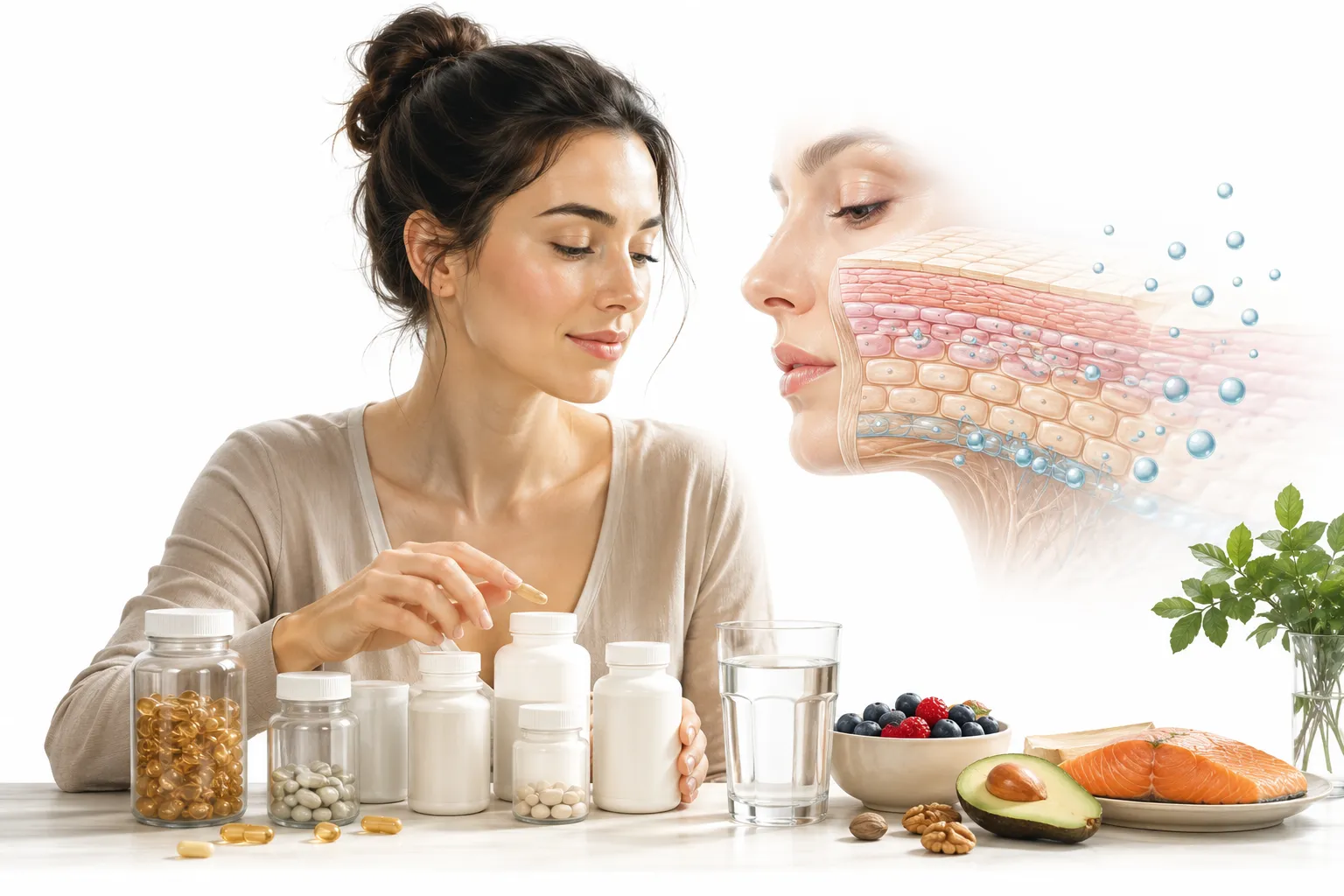
But what if you could support the barrier from the inside, through the simple act of swallowing a pill?
The skin barrier gets a lot of attention in topical skincare, but what you swallow matters too. A growing body of research suggests that certain supplements can genuinely strengthen your skin's protective layer from the inside out.

What
Think of it as a sleeping beast that wakes up when it's poked by specific factors. Once triggered, the pigment production starts.
What
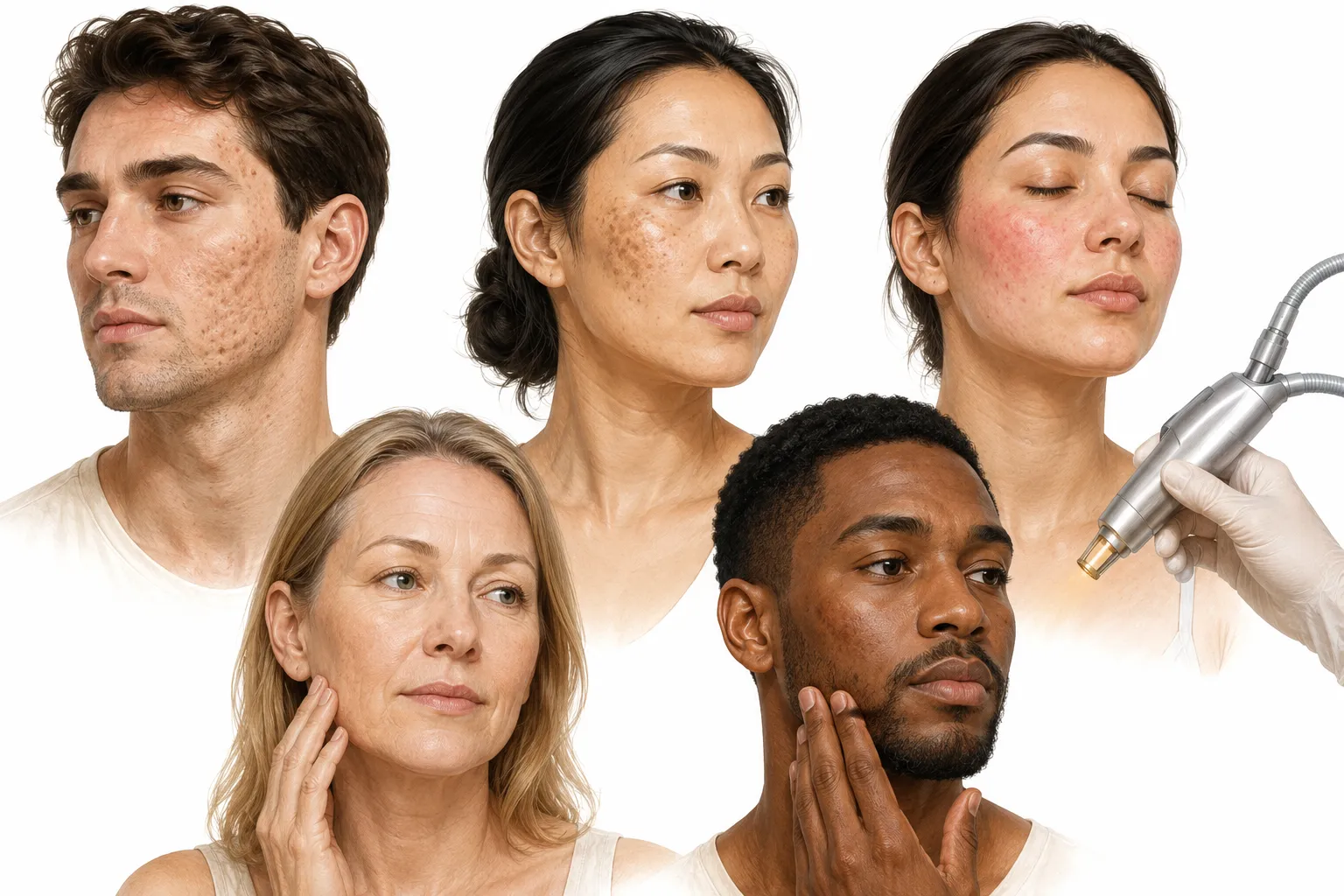
That's because the same laser that treats a visible blood vessel won't touch a scar, and a device that erases pigmentation might be useless for hair removal.
What
The strange part is that it makes a kind of intuitive sense - if your skin is doing something unusual, maybe it's missing something. But melasma isn't behaving like a deficiency condition at all.
The short answer, which doesn't take long to say but requires unpacking, is none. Melasma is not caused by a vitamin deficiency. It's caused by hormones and sunlight. But the question comes up often enough that it's worth exploring why it persists and what deficiency-based conditions actually do affect pigmentation.
What
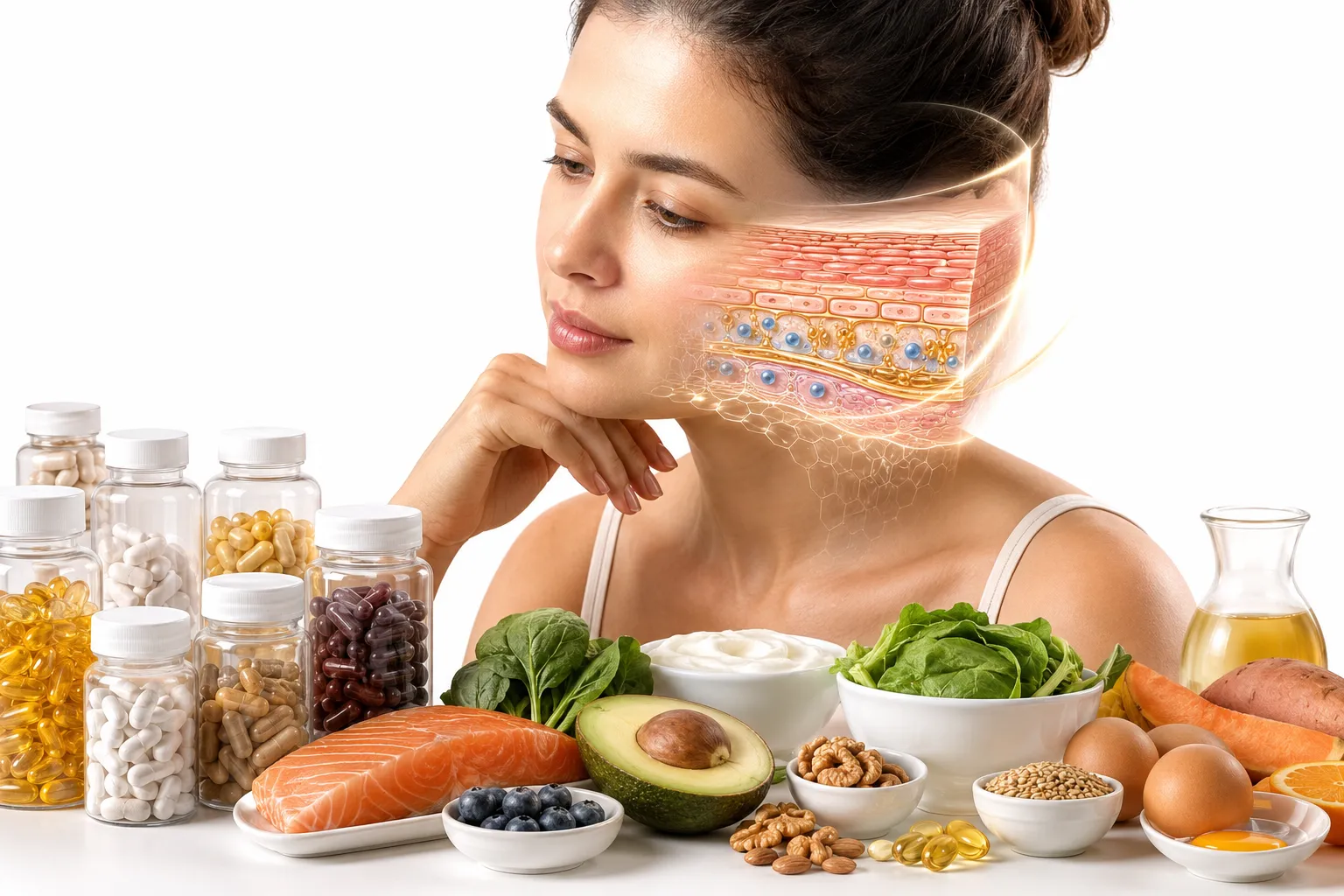
But those raw materials aren't optional: certain vitamins are absolutely required for the skin to rebuild a damaged barrier.
Vitamins aren't just things you eat - they're also powerful allies for your skin. Certain vitamins are genuinely essential for the skin's natural repair processes, making them key players in restoring a compromised barrier.

What
When the answer is melasma, the follow-up questions tend to be: "Is it dangerous?" and "What do I do about it?"
What
The same confusion happens constantly in skincare, where people treat a temporary condition as if it's a permanent trait.
What
Different areas of your face have different numbers of oil glands - and that distribution is determined largely by genetics.
A few gentle first stops if this corner of skincare still feels new.
A few first stops if “What...” questions still feel new.
Recently updated
Other kinds of questions wait just next door.
Can...
The polite pause before you try something new: will this get along with your skin?
Will...
What might change if you keep going: timelines, expectations, and honest outcomes.
Is...
Straight answers for claims, myths, and the questions that really want a yes or no.
Are...
When the question is about a whole category: ingredients, products, or the signs skin leaves behind.
Does...
Cause and effect: what a product or habit actually does once it meets skin.
Do...
Practical wondering about what skin needs, what routines ask for, and what to do next.