Evidence
What the evidence shows
The best foundation for normal skin is the one that looks like you're not wearing any - just better, healthier skin.
Want the most skin-like look?
Choose natural finishWant a bit more glow?
Choose satin finishWant a specific modern look?
Matte can workKeep it simple?
Natural is best
Use this section to decide
Does this advice apply to me?
Find the concern or goal closest to yours, then use the fit signal to decide how much weight to give this guide.If your goal is
Best finishUsually relevant- Fit signal
- Often useful
Natural or satin
If your goal is
CoverageUse caution- Fit signal
- Limited evidence
Light to medium
If your goal is
TexturesUse caution- Fit signal
- Limited evidence
Liquid, cream
If your goal is
AvoidDepends- Fit signal
- Possible fit
Extreme finishes
Practical use
How to use it
Choose a natural-finish foundation
Look for a liquid or cream foundation with natural finish claims.
Apply evenly across the face
Normal skin allows for simple, even application across all zones.
Follow with minimal powder if needed
A light dusting of translucent powder in the T-zone only if needed.
Safety
Side effects and cautions
- Using a very matte foundation to prevent "oiliness"
Normal skin doesn't have an oil problem - matte can look unnatural.
- Using heavy full-coverage foundation
Normal skin generally doesn't need heavy coverage.
- Choosing foundation based on "problem-solving" claims
Normal skin doesn't need corrective foundation ingredients.
Fit
Who should be careful
- Skin types with specific concerns
Worth noting
Small details that can change the answer
- Flexibility. Normal skin can adapt to most foundation formulas.
- Finish Choice. Natural finishes tend to look most skin-like on normal skin.
- Coverage Level. Light to medium coverage is usually sufficient for normal skin.
- Skin Health. Foundation shouldn't try to correct what doesn't need correcting.
Natural-finish foundations are best for normal skin.
Light to medium coverage is usually sufficient.
Avoid very matte or very dewy extremes.
Normal skin doesn't need corrective foundation ingredients.
Choose a foundation that enhances, not masks.
Definition
Understanding foundation finishes for normal skin
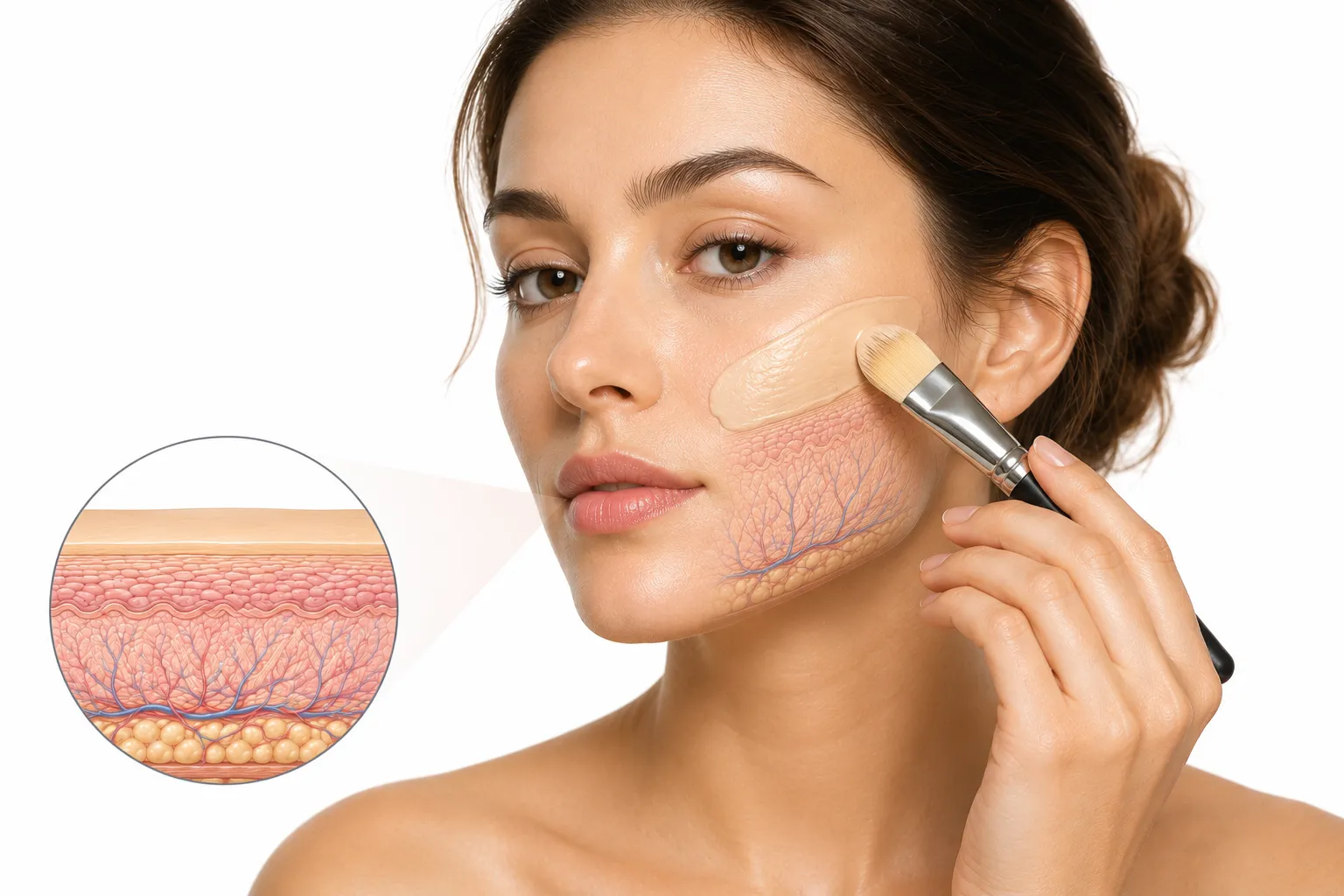
Foundation finishes range from matte to dewy. For normal skin, the middle ground tends to work best. Natural and satin finishes offer the most skin-like appearance, enhancing your skin's natural radiance without adding unwanted shine or flatness.
- Matte: oil-absorbing - often too flat on normal skin
- Natural/satin: skin-like, balanced finish - ideal for normal skin
- Dewy: hydrating - may look too shiny on normal skin
- Light to medium coverage: enough to even out tone
- Buildable: allows customization, good for normal skin
Explanation
Why natural finishes work best for normal skin
Normal skin already has good balance - it produces enough oil for natural radiance but not so much that it looks greasy. A natural-finish foundation complements this balance, providing coverage without altering the skin's natural appearance. It evens out skin tone and minimizes minor imperfections while allowing your skin's healthy texture to shine through.
Benefits
What to look for in a normal skin foundation
The ideal normal skin foundation is versatile and enhancing rather than corrective.
- Natural or satin finish that looks skin-like
- Light to medium coverage that evens tone without masking
- Buildable formula for flexibility
- No heavy oil-control or intense hydration ingredients
- Comfortable wear that doesn't feel heavy or drying
Foundation finishes for normal skin compared
| Factor |
|---|
Shopping Guide
What to look for in a normal skin foundation
This offers the most skin-like appearance for normal skin.
Normal skin typically doesn't need heavy coverage.
Liquid and cream foundations feel most natural on normal skin.
"Matte" and "dewy" may be unnecessary for normal skin.
Normal skin has the most flexibility - choose what you enjoy wearing.
Questions
Frequently asked questions
Can normal skin wear matte foundation?
Yes, but it may look unnaturally flat - a natural finish is generally more flattering.
Should normal skin use a primer?
It's optional - a primer can help with longevity but isn't necessary for normal skin.
How much coverage does normal skin need?
Light to medium coverage is usually sufficient for normal skin.
Can normal skin wear dewy foundation?
Yes, but it may look too shiny - a natural or satin finish is often more balanced.