Evidence
What the evidence shows
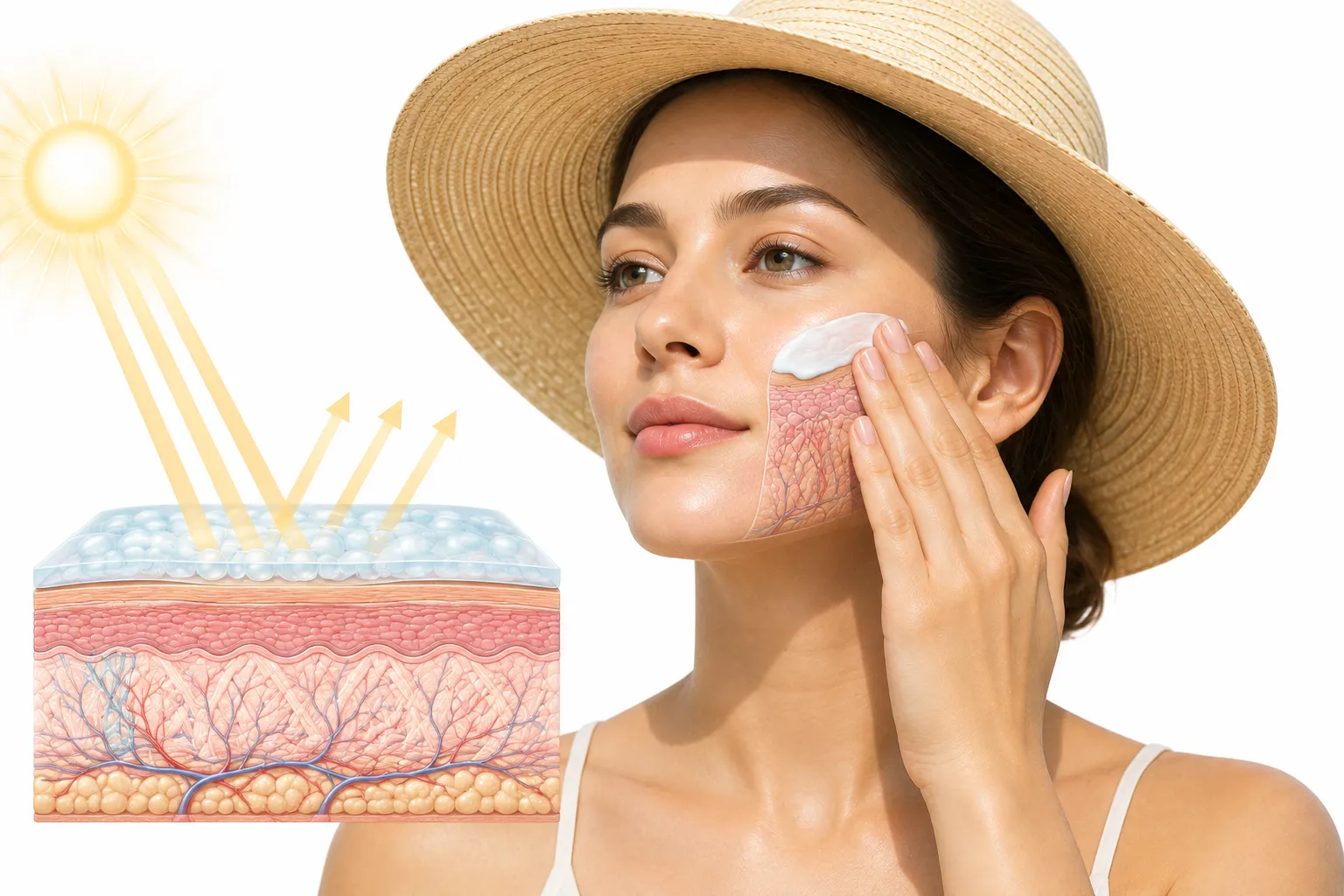
Normal skin doesn't need a sunscreen that corrects oiliness or dryness - it needs one that maintains balance while providing reliable protection.
Use this section to decide
Does this advice apply to me?
Find the concern or goal closest to yours, then use the fit signal to decide how much weight to give this guide.If your goal is
Best TextureUsually relevant- Fit signal
- Often useful
Lotion, cream, or fluid
If your goal is
SPFUsually relevant- Fit signal
- Often useful
30 minimum
If your goal is
Filter TypeUsually relevant- Fit signal
- Often useful
Any - choose preference
If your goal is
Key PrincipleUsually relevant- Fit signal
- Often useful
Wear daily
Research notes already in this guide
- Daily sunscreen use is proven to reduce skin cancer risk.
- Research shows sunscreen prevents photoaging in all skin types.
- Normal skin benefits from consistent daily protection.
- The best sunscreen is the one you'll use daily.
Practical use
How to use it
Choose a sunscreen you'll enjoy using
The best sunscreen is one you'll wear every day.
Apply daily
Make it a habit - apply every morning.
Apply enough
Use a generous amount for full protection.
Safety
Side effects and cautions
- Skipping sunscreen because you have "good" skin
All skin types need sun protection - normal skin isn't immune.
- Using too little sunscreen
Apply a generous amount - about a nickel-sized dollop for your face.
- Only using sunscreen on sunny days
UV radiation penetrates clouds - use sunscreen daily.
Fit
Who should be careful
- Those who need specific corrections (oil/dry)
Worth noting
Small details that can change the answer
- Versatility. Normal skin can use any sunscreen type.
- SPF. SPF 30 is sufficient for daily protection.
- Texture. Lotions, creams, and fluids all work well.
- Preference. Personal preference is the main deciding factor.
Normal skin can use almost any sunscreen - lotions, creams, and fluids all work.
Choose broad-spectrum SPF 30+ for daily protection.
Personal preference is the main deciding factor.
Apply daily, even on cloudy days.
The best sunscreen is the one you'll actually use.
Definition
What to look for in a sunscreen for normal skin
Normal skin has the flexibility to use almost any sunscreen, but these features make for the best choices.
- Broad-spectrum SPF 30+
- Lightweight, comfortable texture
- Absorbs well without residue
- Not too heavy or too light
- Personal preference for finish
Product Comparison
Sunscreen types for normal skin
Chemical sunscreens
Beginner friendlyBest for: Lightweight feel, no white castLightweight · Absorbs quickly · No white residue
Consider: May irritate sensitive skinMineral sunscreens
Beginner friendlyBest for: Sensitive normal skin, immediate protectionGentle · Broad-spectrum protection
Consider: Can feel heavier · May leave white castHybrid sunscreens
Beginner friendlyBest for: Balanced protection and feelBalances weight and protection · Often good textures
Consider: May be more expensiveBenefits
Why sunscreen is essential for normal skin
Even balanced skin needs protection from sun damage.
- Prevents UV damage and skin cancer risk
- Reduces photoaging (wrinkles, sunspots)
- Maintains even skin tone
- Protects the skin barrier
- Preserves your skin's natural balance
Questions
Frequently asked questions
Can normal skin use any sunscreen?
Almost any - normal skin is adaptable to most formulas.
Is SPF 30 enough for normal skin?
Yes - SPF 30 provides adequate daily protection.
Should I choose chemical or mineral sunscreen?
Either works - choose based on your personal preference.
Can I use moisturizer with SPF instead?
Yes - but ensure you apply enough for full protection.
References
Sources
The notes below are drawn from the evidence already cited in this guide. They are not a complete bibliography.
- Daily sunscreen use is proven to reduce skin cancer risk.
- Research shows sunscreen prevents photoaging in all skin types.
- Normal skin benefits from consistent daily protection.
- The best sunscreen is the one you'll use daily.