Evidence
What the evidence shows
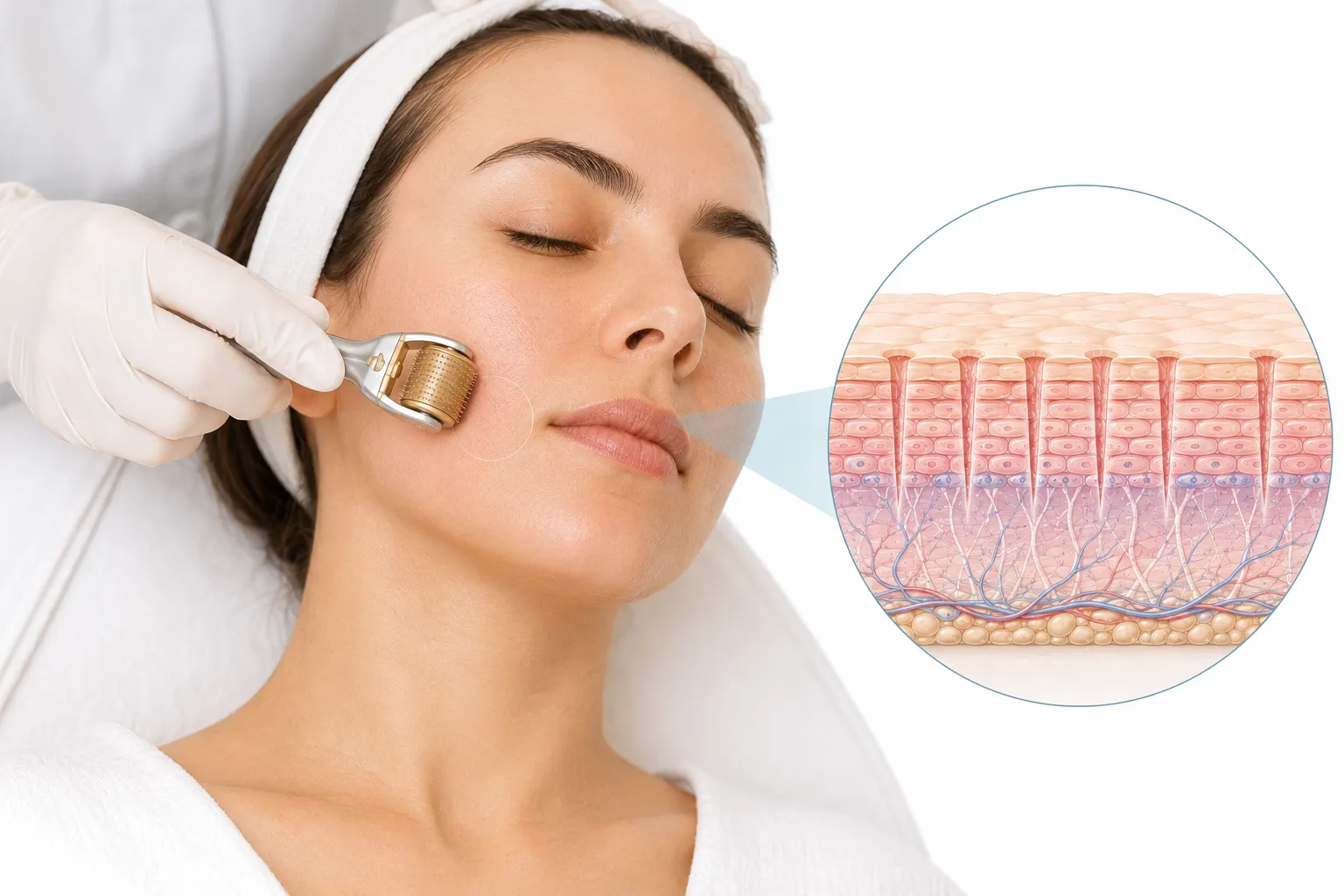
Microneedling's damage to the skin barrier is intentional and therapeutic - it's the trigger that sets off the repair and rejuvenation cascade. But it requires careful management of the post-treatment window when your skin is uniquely vulnerable.
Use this section to decide
Does this advice apply to me?
Find the concern or goal closest to yours, then use the fit signal to decide how much weight to give this guide.If your goal is
Barrier disruptionUse caution- Fit signal
- Limited evidence
Temporary and controlled
If your goal is
Recovery time (surface)Usually relevant- Fit signal
- Often useful
24-72 hours
If your goal is
Full barrier restorationDepends- Fit signal
- Possible fit
Several weeks
If your goal is
Risk if done incorrectlyUse caution- Fit signal
- Limited evidence
High
Explanation
How it works
Immediate barrier disruption
Needles create micro-channels through the stratum corneum, bypassing barrier function.
Healing response triggered
The body responds to injury with inflammation, new cell migration, and collagen production.
Barrier resealing begins
Within hours, the stratum corneum begins to reseal and the micro-channels close.
Long-term remodeling
Over weeks to months, new collagen and elastin are deposited, improving skin structure.
Expected results
Results and timeframe
The barrier begins resealing within hours, but full recovery takes time.
Strict aftercare is essential for optimal results.
Practical use
How to use it
Gentle cleanser
Use a mild, non-foaming cleanser for the first 24-48 hours.
Barrier-repair moisturizer
Apply a moisturizer with ceramides, panthenol, and squalane.
Mineral sunscreen (daytime)
Use a zinc or titanium-based SPF to protect healing skin.
Avoid actives
No acids, retinoids, or vitamin C for at least 5-7 days.
Safety
Side effects and cautions
- Not following proper aftercare
Barrier recovery requires gentle cleansing, moisturization, and sun protection.
- Using active ingredients too soon after treatment
Wait 5-7 days before reintroducing acids, retinoids, or vitamin C.
- Going to untrained practitioners
Only seek treatment from licensed, experienced professionals with proper equipment.
- Redness and swelling
Common (24-72 hours) · Use a cool compress and gentle moisturizer.
- Tightness and dryness
Common (2-5 days) · Apply a barrier-repair moisturizer frequently.
- Flaking or peeling
Occasional (3-5 days) · Use a gentle cleanser and moisturizer; do not pick.
- Hyperpigmentation
Rare (improper aftercare) · Strict sun protection is essential.
Fit
Who should be careful
- Anyone with active infections, severe acne, or eczema flare-ups
Worth noting
Small details that can change the answer
- Needle Depth Range. Professional treatments typically use 0.5-2.5mm needles, depending on the concern.
- Barrier Disruption Duration. The stratum corneum begins resealing within hours, with full closure within 24-72 hours.
- Controlled Damage. Microneedling creates 100-200 micro-channels per square centimeter.
- Collagen Induction. The barrier disruption triggers new collagen synthesis that continues for months.
Microneedling intentionally and temporarily damages the skin barrier to trigger repair.
This barrier disruption is therapeutic when performed correctly.
Improper technique, unsterile equipment, or poor aftercare can cause real harm.
Science
The science of microneedling and barrier disruption
Microneedling works by creating controlled micro-injuries in the skin. These injuries trigger the body's wound-healing response, which includes inflammation, proliferation (new cell growth), and remodeling (collagen production). The barrier disruption is an essential part of this process - it's the signal that sets off the cascade of repair and renewal.
- Stratum Corneum
- The outermost layer of the skin, composed of dead skin cells and lipids, serving as the primary barrier.
- Wound Healing Cascade
- The body's sequence of biological events in response to injury, including inflammation, tissue formation, and remodeling.
Risks
When microneedling can cause real barrier damage
Controlled damage is therapeutic; uncontrolled damage is harmful. Here's what can go wrong.
- Using needles too long for the intended treatment area or skin thickness
- Improper sterilization leading to infection, which compounds barrier damage
- Inadequate aftercare (skipping moisturizer, sun exposure, using active ingredients too soon)
- Performing the procedure on active acne, rosacea, or other inflammatory conditions
- At-home treatments with poor technique or unsterile equipment
Benefits
The therapeutic benefits of microneedling's barrier disruption
The temporary barrier disruption is the key that unlocks microneedling's regenerative benefits.
- Stimulates new collagen and elastin production
- Improves skin texture, tone, and firmness
- Reduces the appearance of scars and fine lines
- Enhances product absorption during the treatment window
- Promotes more resilient, healthy skin over time
Questions
Frequently asked questions
Is it safe to get microneedling if I have sensitive skin?
Sensitive skin can still undergo microneedling, but you may have a longer recovery time and should discuss your sensitivity with your provider.
Can I use retinol after microneedling?
No, avoid retinol and other active ingredients for at least 5-7 days after treatment.
How long does the barrier take to fully recover after microneedling?
Surface closure happens within 24-72 hours, but full barrier function may take several weeks to fully restore.
What happens if I don't follow aftercare after microneedling?
You risk infection, prolonged redness, hyperpigmentation, or scarring.