Evidence
What the evidence shows
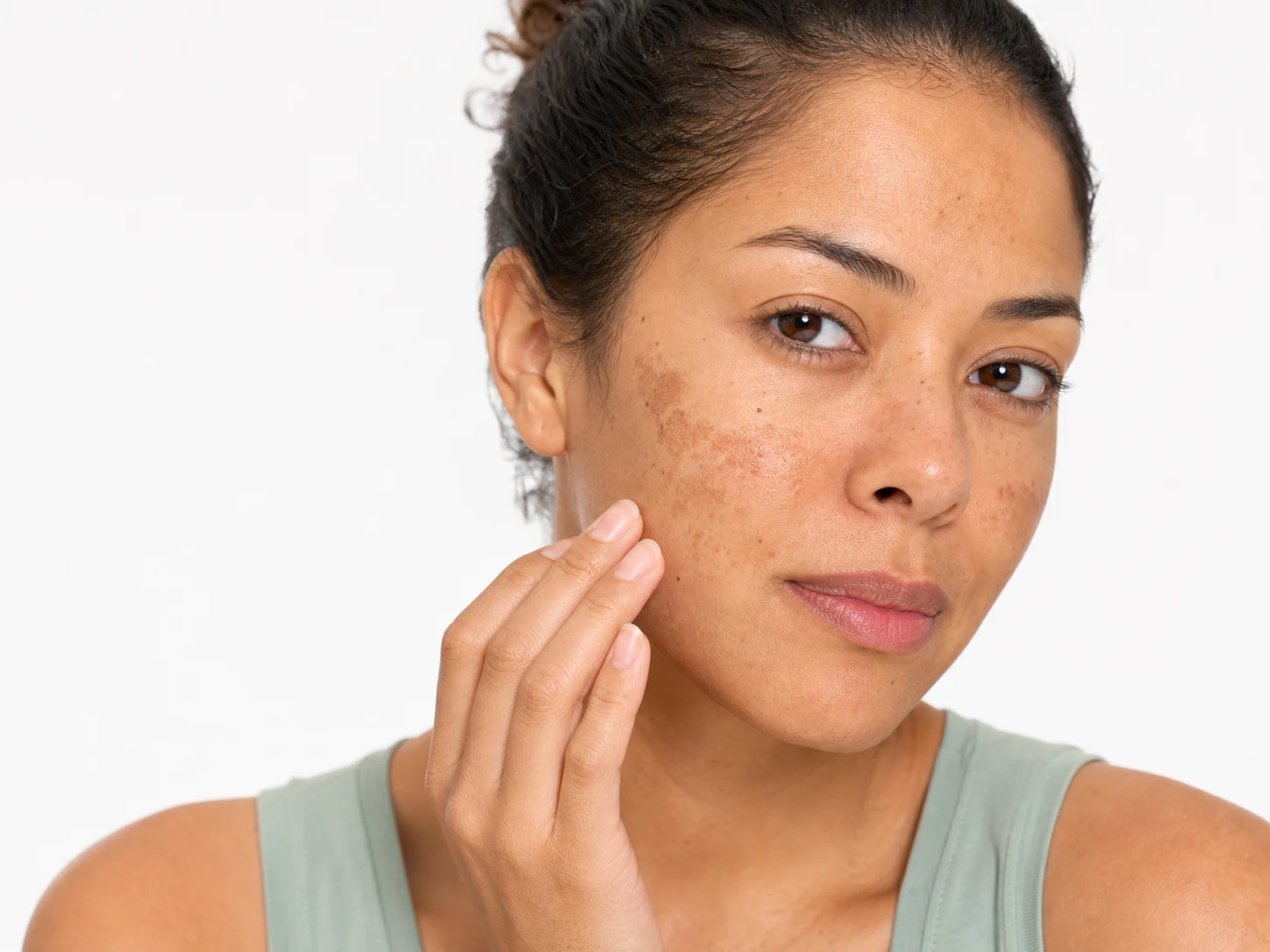
The danger isn't in the pigmentation itself - it's in what the pigmentation represents. Benign pigmentation is just extra melanin. Dangerous pigmentation is abnormal growth. The difference matters enormously.
Does the spot meet any ABCDE criteria?
See a dermatologist immediately.Is the spot new or changing?
Get it checked by a dermatologist.Is it just a flat, brown spot that hasn't changed?
It's likely harmless - monitor it.
Use this section to decide
Does this advice apply to me?
Find the concern or goal closest to yours, then use the fit signal to decide how much weight to give this guide.If your goal is
PIH, melasma, sun spotsUsually relevant- Fit signal
- Often useful
Harmless
If your goal is
Changing spotsDepends- Fit signal
- Possible fit
Get checked
If your goal is
ABCDE ruleUsually relevant- Fit signal
- Often useful
Use it
If your goal is
Regular checksUsually relevant- Fit signal
- Often useful
Recommend
Research notes already in this guide
- Asymmetry: One half doesn't match the other half.
- Border: Irregular, jagged, or scalloped edges.
- Color: Uneven - different shades of brown, black, red, white, or blue.
- Diameter: Larger than 6mm (the size of a pencil eraser).
- Evolution: Changing in size, shape, color, or symptoms (itching, bleeding).
Practical use
How to use it
Learn the ABCDE rule
Know the warning signs for potentially dangerous spots.
Monitor your skin regularly
Check your skin monthly for new or changing spots.
See a dermatologist for concerning spots
If you're worried about a spot, get it checked. It's better to be safe.
Safety
Side effects and cautions
- Assuming all dark spots are harmless
Most are, but some require evaluation - learn the warning signs.
- Panicking about every new spot
Most pigmentation is benign - monitor but don't assume the worst.
- Ignoring spots that are changing
Changing spots are the most important to check.
Fit
Who should be careful
- Those with rapidly changing spots - see a doctor now
Worth noting
Small details that can change the answer
- Benign Types. PIH, melasma, lentigines are all harmless.
- Dangerous Types. Melanoma and some other skin cancers can look like hyperpigmentation.
- Warning Signs. ABCDE rule: Asymmetry, Border, Color, Diameter, Evolution.
- When to Act. Any changing or unusual spot should be evaluated.
Most hyperpigmentation is completely harmless.
Some dark spots can be skin cancer, including melanoma.
The ABCDE rule helps identify potentially dangerous spots.
Any changing or unusual spot should be evaluated by a dermatologist.
Regular skin checks are important for early detection.
Definition
Types of hyperpigmentation and their danger level
Not all pigmentation is the same. Here's what's usually harmless and what requires attention.
- Post-inflammatory hyperpigmentation (PIH): Harmless - extra pigment from inflammation
- Melasma: Harmless - hormone-driven pigmentation
- Solar lentigines (sun spots): Harmless - sun damage pigmentation
- Seborrheic keratoses: Harmless - benign growths
- Melanoma: Dangerous - a form of skin cancer
- Other skin cancers: Some can appear as pigmented lesions
Clinical Guidance
When to see a dermatologist
- Any spot that meets any ABCDE criteria
- A spot that's new, changing, or unusual for you
- A spot that's bleeding, itching, or crusting
- A spot that looks different from your other spots
- A mole that's new after age 30
- Any skin concern that you're worried about
Questions
Frequently asked questions
Can hyperpigmentation turn into cancer?
No - benign hyperpigmentation doesn't turn into cancer. But some cancers can look like hyperpigmentation.
Should I get every dark spot checked?
Not every one, but any spot that's new, changing, or meets ABCDE criteria should be checked.
Is melasma dangerous?
No - melasma is harmless, though it can be treated for cosmetic reasons.
How often should I check my skin?
Monthly self-exams and annual professional skin checks are recommended.
References
Sources
The notes below are drawn from the evidence already cited in this guide. They are not a complete bibliography.
- Asymmetry: One half doesn't match the other half.
- Border: Irregular, jagged, or scalloped edges.
- Color: Uneven - different shades of brown, black, red, white, or blue.
- Diameter: Larger than 6mm (the size of a pencil eraser).
- Evolution: Changing in size, shape, color, or symptoms (itching, bleeding).