Evidence
What the evidence shows
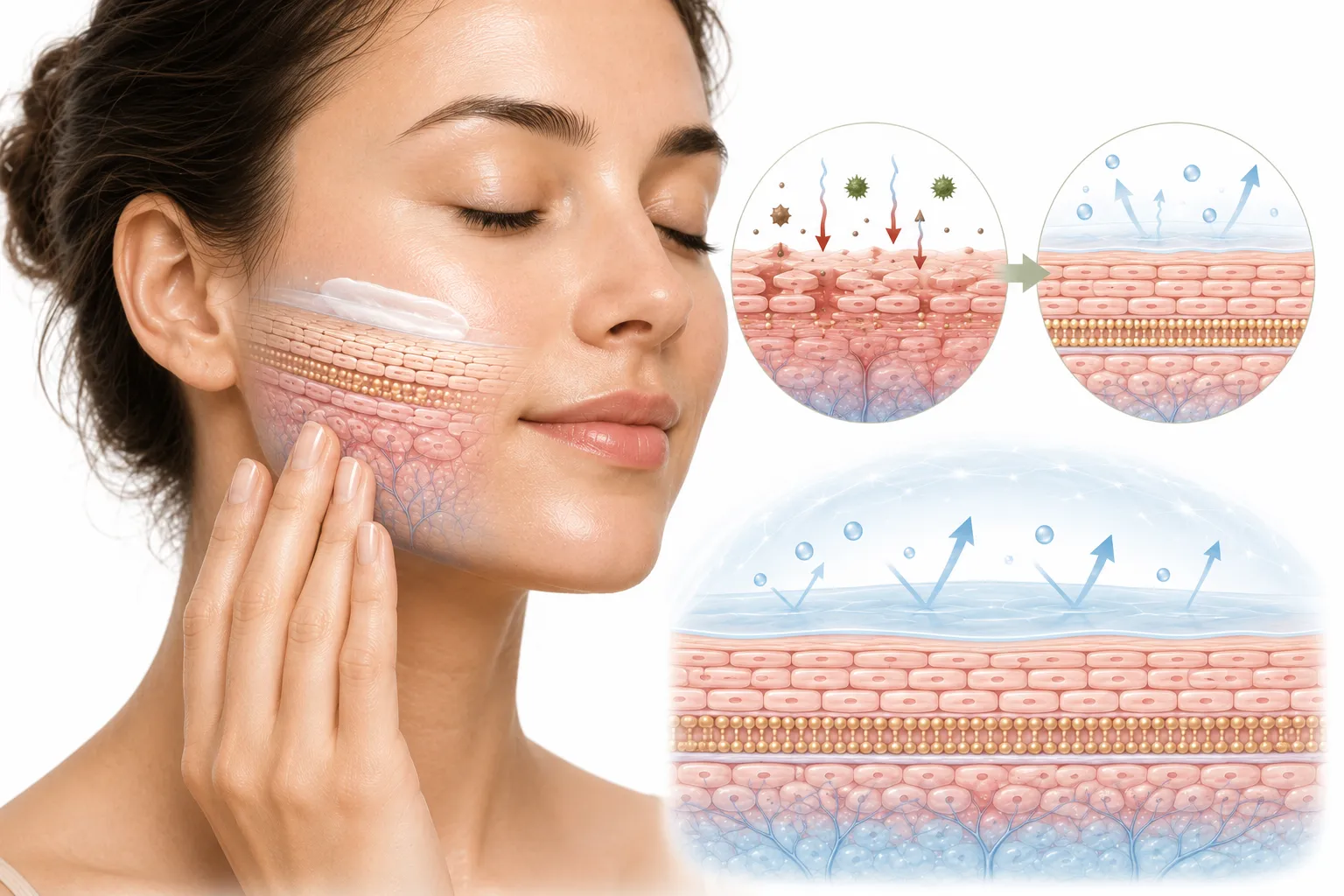
Barrier restoration isn't a quick fix - it's a process of rebuilding a structure that takes weeks to construct. The key ingredients are time and consistency, not any single miracle product.
Use this section to decide
Does this advice apply to me?
Find the concern or goal closest to yours, then use the fit signal to decide how much weight to give this guide.If your goal is
Can it be restored?Usually relevant- Fit signal
- Often useful
Yes
If your goal is
TimelineUse caution- Fit signal
- Limited evidence
4-6 weeks (significant improvement)
If your goal is
Key ingredientsUsually relevant- Fit signal
- Often useful
Ceramides, niacinamide, cholesterol
If your goal is
Essential stepDepends- Fit signal
- Possible fit
Stop all damaging products
Explanation
How it works
Phase 1: Stop all damage
Cease exfoliants, retinoids, harsh cleansers, and any products that cause stinging or burning.
Phase 2: Support repair
Use a gentle cleanser and a barrier-supporting moisturizer with ceramides, niacinamide, and panthenol.
Phase 3: Maintain and protect
After restoration, continue gentle care and protect the barrier with sunscreen and moisturizer.
Expected results
Results and timeframe
Be patient - significant improvement takes 4-6 weeks; full restoration may take months.
Practical use
How to use it
Gentle cleanser
Use a non-foaming, pH-balanced cleanser morning and night.
Hydrating toner or essence (optional)
Add a layer of hydration with a hyaluronic acid or glycerin-based product.
Barrier-repair moisturizer
Apply a moisturizer with ceramides, cholesterol, fatty acids, and niacinamide.
Sunscreen (daytime)
Protect the rebuilding barrier with a mineral or chemical SPF.
Safety
Side effects and cautions
- Expecting restoration to happen in days
Barrier restoration takes weeks to months; be patient and consistent.
- Using active ingredients during restoration
Acids and retinoids disrupt the rebuilding process.
- Skipping moisturizer or sunscreen
These are essential for protecting and supporting the rebuilding barrier.
Fit
Who should be careful
- Those looking for a quick fix
Worth noting
Small details that can change the answer
- Restoration Phases. Barrier restoration occurs in phases: immediate (stop damage), short-term (support repair), and long-term (maintain health).
- Lipid Replacement. Ceramides need to be replenished at the same ratios as naturally found in healthy skin (50% ceramides, 25% cholesterol, 15% fatty acids).
- Time to Restore. While surface improvement occurs in weeks, full functional restoration can take 3-6 months.
- Maintenance. Even after restoration, ongoing care is needed to maintain barrier health.
The skin barrier can be fully restored with the right approach.
Restoration involves stopping damage, supporting repair, and maintaining health.
Use barrier-specific ingredients: ceramides, niacinamide, cholesterol, fatty acids.
Consistency is more important than any single product.
Science
The science of barrier restoration
Barrier restoration is a biological process that requires the skin to produce new corneocytes and lipids. This is driven by the epidermal turnover cycle, which takes approximately 28 days in healthy skin. Restoration also requires the right balance of lipids - ceramides, cholesterol, and fatty acids - in specific ratios. This is why barrier-repair products often contain multiple lipid types in specific proportions.
- Lipid Lamellae
- The organized layers of lipids that form the "mortar" between corneocytes in a healthy barrier.
- Stratum Corneum Integrity
- The structural and functional soundness of the outermost skin layer.
Benefits
What a restored barrier gives you
A fully functional barrier transforms your skin in multiple ways.
- Reduced sensitivity and reactivity to products
- Better hydration and fewer dry patches
- Improved skin texture and appearance
- Increased resilience to environmental stressors
- Better performance from other skincare products
Ingredient Compatibility
Ingredients for barrier restoration
The primary lipid in the barrier; essential for rebuilding.
Look for ceramide NP, AP, and EOP.Increases ceramide production and reduces inflammation.
Use 2-5% concentrations.Soothing, moisturizing, and supports barrier function.
Found in many moisturizers and healing creams.One of the key barrier lipids; supports structure.
Often found alongside ceramides.Complete the lipid ratio for a healthy barrier.
Look for linoleic acid or oleic acid in formulations.Questions
Frequently asked questions
Can a severely damaged skin barrier be restored?
Yes, even severely damaged barriers can be restored with time and consistent care, though it may take longer.
What's the fastest way to restore the skin barrier?
There is no shortcut. The fastest approach is to stop all damaging products and use barrier-supporting skincare consistently.
How do I know if my barrier is fully restored?
Your skin feels comfortable, products no longer sting, and sensitivity has significantly decreased.
Can a compromised barrier heal while using prescription products?
Some prescription treatments can be used alongside barrier repair, but this should be discussed with your dermatologist.