Evidence
What the evidence shows
Understanding the type of hyperpigmentation you have is essential because different types respond to different treatments. PIH often fades with niacinamide, melasma may need hormonal management, and sunspots require sun protection and targeted treatments.
Did it appear after inflammation (acne, eczema)?
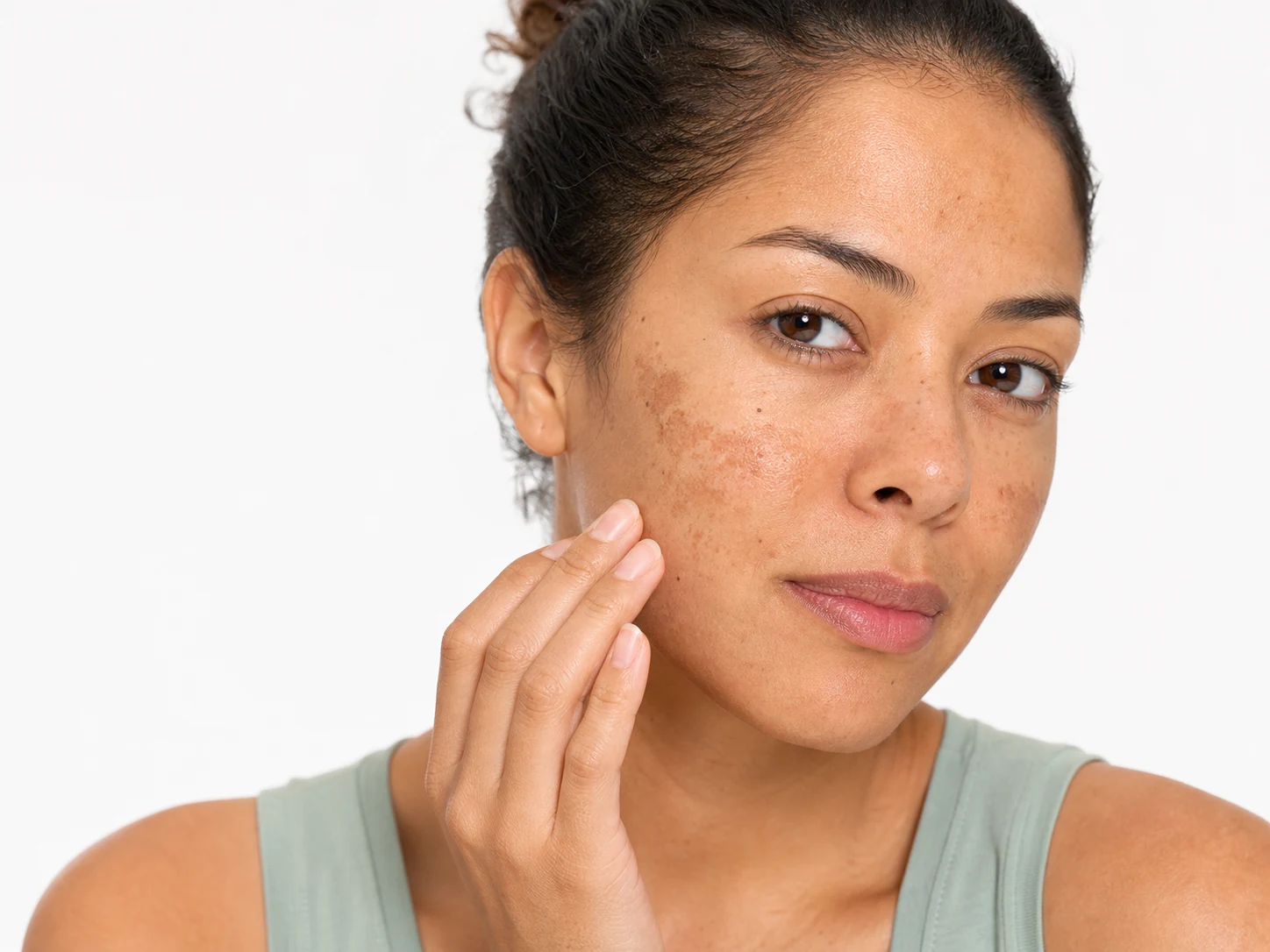
Likely PIH.Is it on your face in a symmetrical pattern?
Could be melasma.Is it on sun-exposed areas (face, hands)?
Could be sunspots.
Use this section to decide
Does this advice apply to me?
Find the concern or goal closest to yours, then use the fit signal to decide how much weight to give this guide.If your goal is
PIHUsually relevant- Fit signal
- Often useful
Inflammation, dark spots
If your goal is
MelasmaUse caution- Fit signal
- Limited evidence
Hormonal, facial patches
If your goal is
SunspotsUse caution- Fit signal
- Limited evidence
UV exposure, brown patches
If your goal is
Key TipUse caution- Fit signal
- Limited evidence
Identify type for treatment
Research notes already in this guide
- PIH is well-documented as a response to inflammation.
- Melasma is linked to hormonal changes and UV exposure.
- Sunspots are clearly caused by cumulative UV exposure.
Practical use
How to use it
Identify the type of hyperpigmentation you have
Look at the appearance, location, and history of your pigmentation.
Choose the right treatment
Different types require different approaches.
Always use sunscreen
Sun protection is essential for all types of hyperpigmentation.
Safety
Side effects and cautions
- Treating all hyperpigmentation the same way
Different types require different treatments.
- Confusing PIH with melasma
PIH is caused by inflammation, melasma by hormones.
- Not using sunscreen for all types
Sunscreen is essential for preventing and treating all types.
Fit
Who should be careful
- Those seeking a one-size-fits-all treatment for hyperpigmentation
Worth noting
Small details that can change the answer
- PIH Causes. Inflammation from acne, eczema, or injury.
- Melasma Causes. Hormonal changes (pregnancy, birth control).
- Sunspot Causes. Cumulative sun exposure over many years.
- Treatment Response. Types respond differently to treatments.
The three main types of hyperpigmentation are PIH, melasma, and sunspots.
PIH is caused by inflammation.
Melasma is triggered by hormonal changes.
Sunspots are caused by cumulative sun exposure.
Different types require different treatment approaches.
Definition
The three main types of hyperpigmentation
Hyperpigmentation is divided into three main types based on cause and appearance. Each type requires a specific treatment approach.
- PIH: Caused by inflammation, flat dark spots
- Melasma: Hormonal, larger facial patches
- Sunspots: UV exposure, round brown patches
- Treatment: Varies by type
Explanation
Comparing the three types
PIH is the most common type and is often temporary, fading with treatment. Melasma is more persistent and often requires a combination of treatments. Sunspots are also persistent but respond well to treatments that address pigmentation.
Benefits
Why knowing the type matters
Identifying the type of hyperpigmentation you have is essential for choosing the right treatment. It also helps set realistic expectations for how long treatment will take and what results to expect.
- Helps choose the right treatment
- Sets realistic expectations
- Avoids wasting time on ineffective treatments
- Helps understand the underlying cause
Questions
Frequently asked questions
What is the most common type of hyperpigmentation?
PIH is the most common, especially in people with darker skin tones.
Can you have more than one type of hyperpigmentation?
Yes, it's possible to have multiple types simultaneously.
Is melasma a type of hyperpigmentation?
Yes, melasma is a specific type of hyperpigmentation caused by hormonal changes.
Are sunspots the same as freckles?
No, freckles are genetic and fade in winter, while sunspots are caused by UV exposure and persist.
References
Sources
The notes below are drawn from the evidence already cited in this guide. They are not a complete bibliography.
- PIH is well-documented as a response to inflammation.
- Melasma is linked to hormonal changes and UV exposure.
- Sunspots are clearly caused by cumulative UV exposure.