Evidence
What the evidence shows
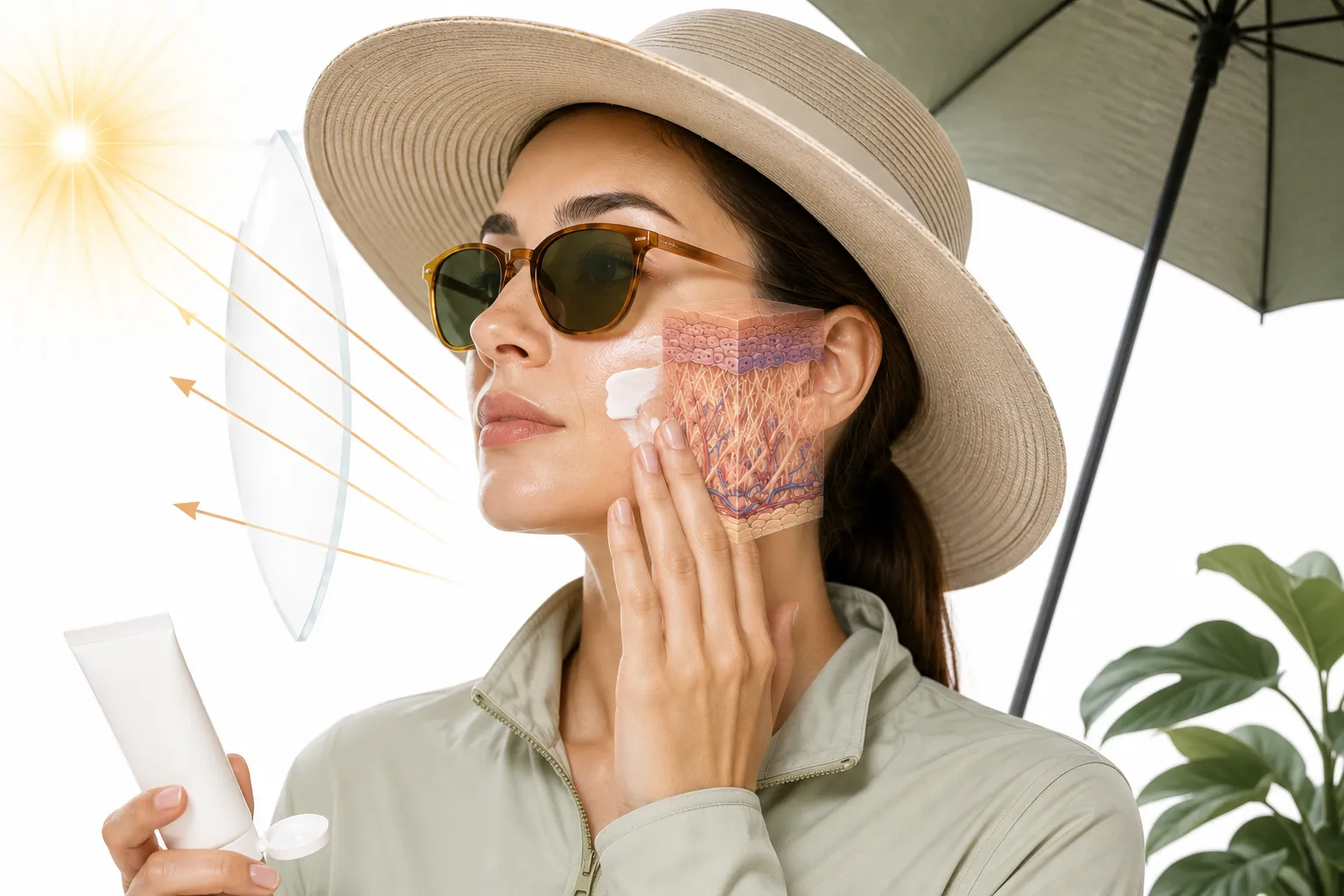
The most effective sun protection strategy uses multiple layers of defense because no single measure is 100% effective. Combining sunscreen with clothing, shade, and timing provides the best protection.
Use this section to decide
Does this advice apply to me?
Find the concern or goal closest to yours, then use the fit signal to decide how much weight to give this guide.If your goal is
SunscreenUsually relevant- Fit signal
- Often useful
When applied and reapplied correctly
If your goal is
Protective clothingUsually relevant- Fit signal
- Often useful
Continuous protection
If your goal is
Seeking shadeDepends- Fit signal
- Possible fit
Reduces direct exposure
If your goal is
Timing activitiesDepends- Fit signal
- Possible fit
Avoids peak UV hours
Research notes already in this guide
- Daily sunscreen use reduces melanoma risk by approximately 50%.
- Broad-spectrum sunscreen with SPF 30 blocks about 97% of UVB rays.
- Sun-protective clothing is as effective as sunscreen for covered areas.
- Regular sunscreen use prevents the accumulation of photodamage over time.
Practical use
How to use it
Choose the right sunscreen
Select a broad-spectrum SPF 30 or higher that you like using.
Apply and reapply properly
Apply generously and reapply every 2 hours when outdoors.
Build a complete sun protection habit
Incorporate protective clothing, shade-seeking, and UV-blocking accessories into your daily routine.
Safety
Side effects and cautions
- Using too little sunscreen
Use a full shot glass amount for your body and a nickel-sized amount for your face.
- Forgetting to reapply
Set a timer every 2 hours when you're outside.
- Relying only on sunscreen
Combine sunscreen with clothing, shade, and timing for complete protection.
Fit
Who should be careful
- No downside to prevention
Helpful context
What else is worth knowing
What's your sun protection priority?
Worth noting
Small details that can change the answer
- UVB vs UVA. UVB causes sunburn, while UVA penetrates deeper and causes aging and DNA damage.
- Cloud Cover. Up to 80% of UV radiation passes through clouds, so protection is needed on overcast days.
- Vitamin D Balance. Sun exposure for vitamin D should be short and balanced with protection.
- Cumulative Damage. Preventing sun damage is about reducing total lifetime UV exposure.
Preventing sun damage requires multiple strategies working together.
Sunscreen is essential but not sufficient on its own.
Protective clothing, shade, and timing reduce UV exposure.
Reapplication of sunscreen is just as important as initial application.
Consistency is more important than intensity for long-term protection.
Shopping Guide
What to look for in sun protection products
Protects against both UVA and UVB radiation.
Important for swimming or sweating.
Ingredients like vitamin C help neutralize free radicals.
Look for UPF 50+ for maximum protection.
Mineral sunscreen sits on the skin and reflects UV; chemical absorbs and converts UV to heat.
Dos Donts
Sun protection dos and don'ts
Do
Allows the product to absorb properly into the skin.
Protection degrades over time and with activities.
UV radiation is most intense from 10am to 4pm.
Provides consistent, reapplication-free protection.
Avoid
Sunscreen becomes less effective after its expiration date.
Makeup with SPF is rarely applied thickly enough for full protection.
Up to 80% of UV radiation penetrates clouds.
Questions
Frequently asked questions
Can I prevent sun damage after it's already occurred?
Yes, while you can't reverse all damage, you can prevent further accumulation and improve some visible signs with treatment.
How much sunscreen should I use?
Use a shot glass full for your entire body and a nickel-sized amount for your face and neck.
Does makeup with SPF provide enough protection?
Usually not. You need about 1/4 teaspoon of SPF product for your face, which is more than most people apply with makeup.
What's the best sunscreen for daily use?
The best sunscreen is the one you will use consistently. Find a formula you like in a texture that fits your skin type.
References
Sources
The notes below are drawn from the evidence already cited in this guide. They are not a complete bibliography.
- Daily sunscreen use reduces melanoma risk by approximately 50%.
- Broad-spectrum sunscreen with SPF 30 blocks about 97% of UVB rays.
- Sun-protective clothing is as effective as sunscreen for covered areas.
- Regular sunscreen use prevents the accumulation of photodamage over time.