Evidence
What the evidence shows
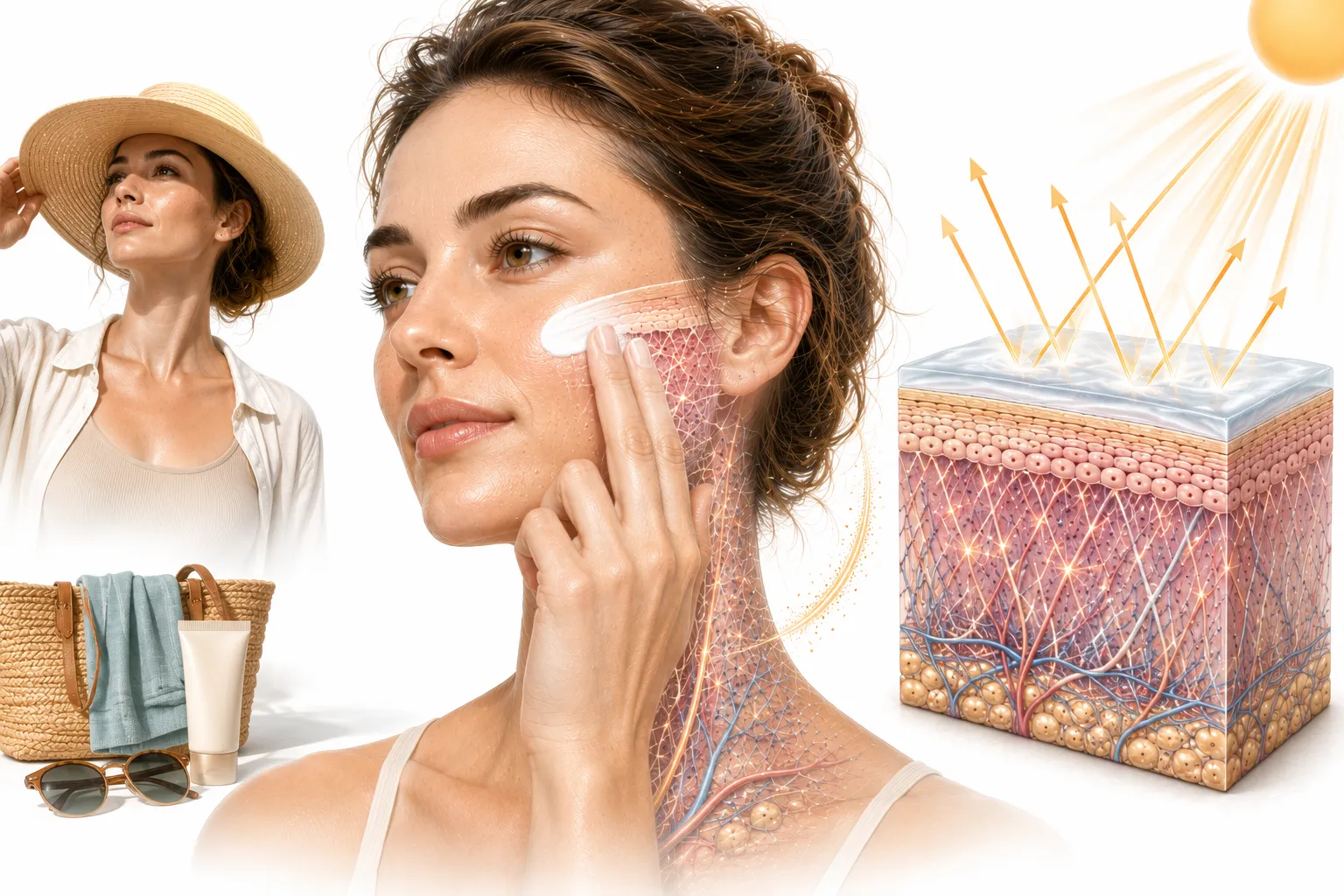
The best sunscreen for photodamaged skin not only blocks UV radiation but also supports the skin's repair process by including ingredients that calm inflammation and neutralize free radicals.
Use this section to decide
Does this advice apply to me?
Find the concern or goal closest to yours, then use the fit signal to decide how much weight to give this guide.If your goal is
Broad-spectrum protectionUsually relevant- Fit signal
- Often useful
Non-negotiable
If your goal is
SPF 30+Usually relevant- Fit signal
- Often useful
Essential for protection
If your goal is
AntioxidantsDepends- Fit signal
- Possible fit
Supports repair
If your goal is
Mineral formulaUse caution- Fit signal
- Limited evidence
Better for sensitivity
Research notes already in this guide
- Daily sunscreen use prevents further photodamage and allows repair to occur.
- Mineral sunscreens are generally less irritating for sensitive, photodamaged skin.
- Sunscreens with antioxidants provide enhanced protection beyond SPF alone.
- Consistent sunscreen use reduces the risk of skin cancer and photoaging.
Practical use
How to use it
Choose a sunscreen with broad-spectrum SPF 30 or higher
Consider a mineral formula if your skin is sensitive.
Apply the correct amount
Use 1/4 teaspoon for your face and neck.
Reapply regularly
Apply every 2 hours or after swimming or sweating.
Safety
Side effects and cautions
- Using too little sunscreen
Use 1/4 teaspoon for your face and a shot glass for your body.
- Only applying once
Sunscreen degrades over time and needs reapplication every 2 hours.
- Using a sunscreen without broad-spectrum protection
Photodamaged skin needs protection from both UVA and UVB rays.
Fit
Who should be careful
- Reversing existing damage alone
Helpful context
What else is worth knowing
Which sunscreen type is best for you?
Worth noting
Small details that can change the answer
- SPF Coverage. SPF 30 blocks about 97% of UVB rays, while SPF 50 blocks about 98%.
- UVA Protection. Broad-spectrum sunscreen protects against both UVA (aging) and UVB (burning) rays.
- Mineral vs Chemical. Mineral sunscreens (zinc oxide, titanium dioxide) are often less irritating for photodamaged skin.
- Antioxidant Additions. Sunscreens with antioxidants help neutralize free radicals, supporting skin repair.
Sun-damaged skin needs a sunscreen that provides broad-spectrum, SPF 30+ protection.
Mineral sunscreens are often gentler on photodamaged skin than chemical sunscreens.
Look for sunscreens with antioxidants and soothing ingredients.
Apply the correct amount and reapply regularly.
Consistent daily use is more important than SPF number.
Product Comparison
Mineral vs chemical sunscreen for photodamaged skin
Mineral sunscreen
Beginner friendlyBest for: Sensitive, irritated, or damaged skinGentle, less irritating, immediate protection
Consider: Can leave white cast, may be thickerChemical sunscreen
Beginner friendlyBest for: Normal skin not prone to sensitivityLightweight, less visible on skin, often blends better
Consider: May cause irritation in sensitive skin, requires 20-minute waitHybrid sunscreen
Beginner friendlyBest for: Most skin types seeking balanceCombines benefits of both types
Shopping Guide
What to look for in a sunscreen for sun-damaged skin
Essential for UVA and UVB protection for photodamaged skin.
SPF 50 is recommended for photodamaged skin.
Look for vitamin C, vitamin E, green tea extract, or resveratrol.
Niacinamide or panthenol can help calm photodamaged skin.
Important for outdoor activities.
Questions
Frequently asked questions
Can sunscreen reverse sun damage?
Sunscreen doesn't reverse existing damage, but it prevents further damage and allows the skin's natural repair processes to work.
Is higher SPF always better?
Beyond SPF 50, the additional protection is minimal. SPF 30-50 is generally sufficient with proper application.
Should I use a separate sunscreen or one in my moisturizer?
A dedicated sunscreen applied after moisturizer is usually more effective, as you're more likely to apply enough.
Can I use the same sunscreen for my face and body?
Yes, but facial sunscreens are often formulated to be less greasy and less likely to clog pores.
References
Sources
The notes below are drawn from the evidence already cited in this guide. They are not a complete bibliography.
- Daily sunscreen use prevents further photodamage and allows repair to occur.
- Mineral sunscreens are generally less irritating for sensitive, photodamaged skin.
- Sunscreens with antioxidants provide enhanced protection beyond SPF alone.
- Consistent sunscreen use reduces the risk of skin cancer and photoaging.