Evidence
What the evidence shows
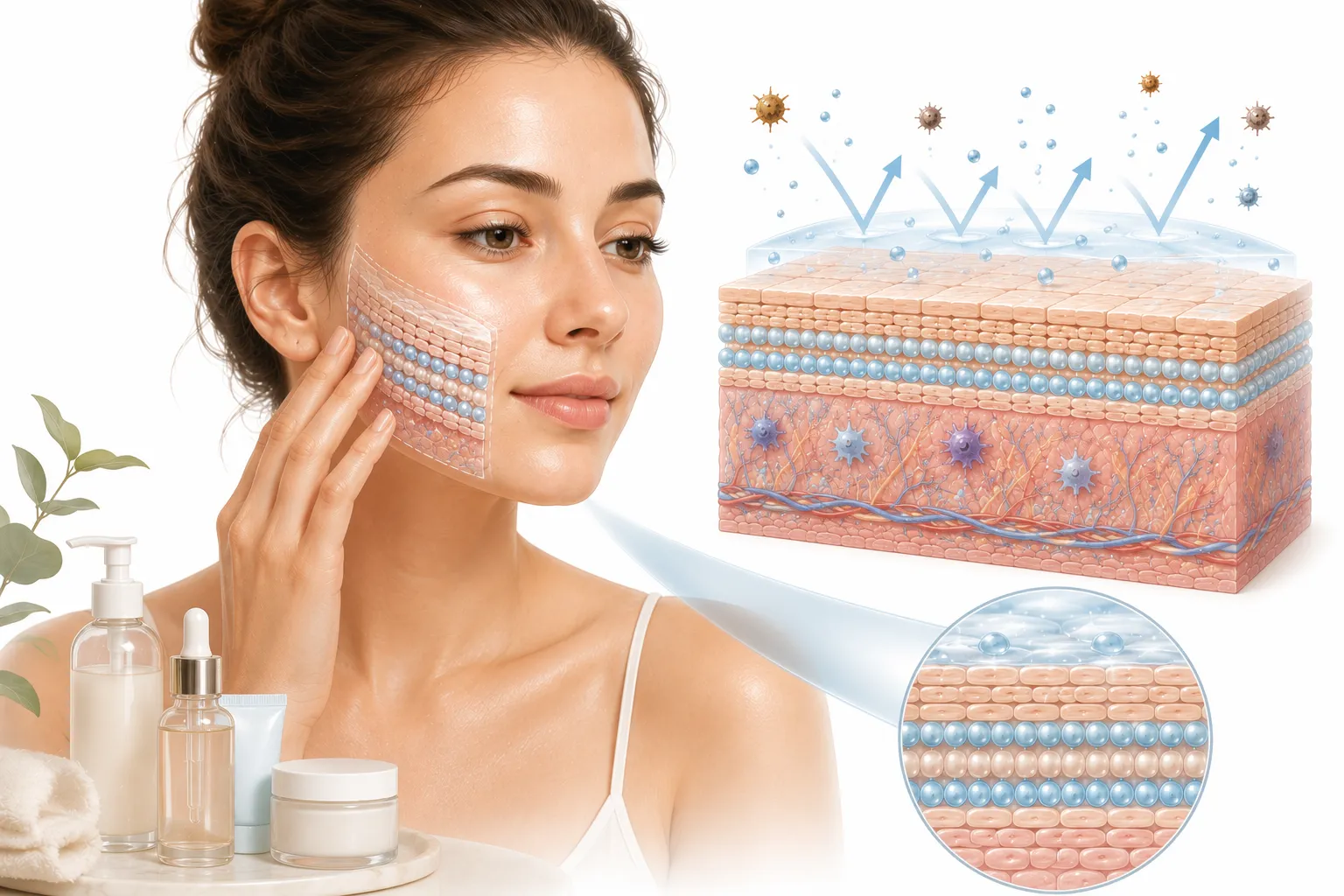
Strengthening the barrier is about cumulative support, not quick fixes. Consistent use of barrier-building ingredients over time makes the skin more resilient and less prone to reactivity.
Use this section to decide
Does this advice apply to me?
Find the concern or goal closest to yours, then use the fit signal to decide how much weight to give this guide.If your goal is
Less sensitivityUsually relevant- Fit signal
- Often useful
Reduced reactivity to products and environment
If your goal is
Better hydrationUsually relevant- Fit signal
- Often useful
Skin holds moisture more effectively
If your goal is
Healthier appearanceDepends- Fit signal
- Possible fit
Smoother, more even texture
If your goal is
Improved resilienceUsually relevant- Fit signal
- Often useful
Recovers faster from stressors
Expected results
Results and timeframe
Apply barrier-strengthening products to damp skin for better results.
Barrier strengthening takes 4-8 weeks of consistent care.
Practical use
How to use it
Choose barrier-supporting products
Look for cleansers and moisturizers with ceramides, cholesterol, and fatty acids.
Apply consistently to damp skin
Apply your barrier-strengthening products after cleansing, while skin is still damp.
Protect and support from within
Use SPF daily and support with a diet rich in healthy fats.
Safety
Side effects and cautions
- Using products that aren't formulated with barrier-supporting ingredients
Look specifically for ceramides, cholesterol, and fatty acids on the ingredient list.
- Applying barrier-strengthening products to dry skin
Apply to damp skin for better absorption and water retention.
- Expecting results in a few days
Barrier strengthening takes 4-8 weeks of consistent care.
Fit
Who should be careful
- Expecting overnight results
Worth noting
Small details that can change the answer
- Ceramide Role. Ceramides are essential for barrier strength - they provide the "mortar" between skin cells.
- Cholesterol. Cholesterol is a key component of the barrier and helps with repair.
- Fatty Acids. Fatty acids support barrier function and reduce water loss.
- Consistency. Barrier strengthening is cumulative - you need consistent care for results.
A strong barrier is built on ceramides, cholesterol, and fatty acids.
Consistent use of barrier-supporting products is more important than product strength.
Lifestyle factors (diet, sleep, stress) support barrier health.
Routine Flow
Barrier-strengthening daily routine
- 1Gentle, pH-balanced cleanser
Use lukewarm water; avoid harsh surfactants
- 2Barrier-supporting serum or toner
Apply to damp skin for better absorption
- 3Moisturizer with ceramides and lipids
Apply to damp skin to lock in hydration
- 4SPF (morning only)
Protect from UV damage
Explanation
Lifestyle factors for barrier strength
What you put on your skin is important, but what you do for your body also matters. A diet rich in healthy fats (omega-3s from fish, avocado, nuts) provides the building blocks for barrier lipids. Quality sleep allows the skin to repair itself. Stress management helps reduce cortisol's effect on barrier function.
Science
How barrier strengthening works
The skin barrier is constantly being built and broken down. Strengthening it involves slowing down the breakdown and accelerating the rebuilding. Barrier-supporting products provide the raw materials (lipids) that the skin uses to rebuild its structure. Over time, consistent supply of these materials supports a stronger, more resilient barrier.
- Ceramide
- The most abundant lipid in the barrier, essential for its strength.
- Lipid replenishment
- The process of providing barrier components to support its structure.
Questions
Frequently asked questions
How quickly can I strengthen my skin barrier?
Significant improvement typically takes 4-8 weeks of consistent care.
Which ingredient is most important for barrier strength?
Ceramides are the most abundant lipid in the barrier and essential for its structure.
Can I use active ingredients while strengthening my barrier?
It's best to pause active ingredients (retinol, acids) during the initial strengthening phase.
Does diet actually affect barrier strength?
Yes - healthy fats provide the building blocks for barrier lipids.