Evidence
What the evidence shows
Because so many visible skin concerns, sensitivity, dullness, breakouts, uneven texture, trace back to barrier function in some way, supporting the barrier is often a more efficient use of a skincare routine than chasing each concern individually.
Use this section to decide
Does this advice apply to me?
Find the concern or goal closest to yours, then use the fit signal to decide how much weight to give this guide.If your goal is
Moisture retentionPersonal response varies- Fit signal
Results and tolerance can vary, so introduce it carefully.
If your goal is
Irritant defensePersonal response varies- Fit signal
Results and tolerance can vary, so introduce it carefully.
If your goal is
Product tolerancePersonal response varies- Fit signal
Results and tolerance can vary, so introduce it carefully.
If your goal is
Overall comfortPersonal response varies- Fit signal
Results and tolerance can vary, so introduce it carefully.
Research notes already in this guide
- The skin barrier's role in moisture retention and irritant defense is well established in dermatological science.
- Barrier-focused skincare is widely recommended by dermatologists as a foundation for treating other skin concerns.
- Barrier repair ingredients like ceramides have strong supporting evidence for improving both barrier function and downstream skin issues.
Practical use
How to use it
Build a barrier-first routine
Include gentle cleansing and barrier-supporting moisturizing as a foundation before adding other actives.
Introduce actives thoughtfully
Add active ingredients gradually, watching for signs of barrier stress along the way.
Support proactively, not just reactively
Maintain barrier-supporting habits even when skin looks and feels fine.
Safety
Side effects and cautions
- Prioritizing active ingredients over barrier support
A healthy barrier often improves how well active ingredients are tolerated and how effective they end up being.
- Treating each skin concern separately without considering the barrier
Many concerns share a barrier-related root cause, so addressing barrier health can help multiple issues at once.
- Only thinking about the barrier once it is visibly damaged
Proactive barrier support helps prevent issues before they escalate.
Fit
Who should be careful
- N/A - this is foundational skin science
Worth noting
Small details that can change the answer
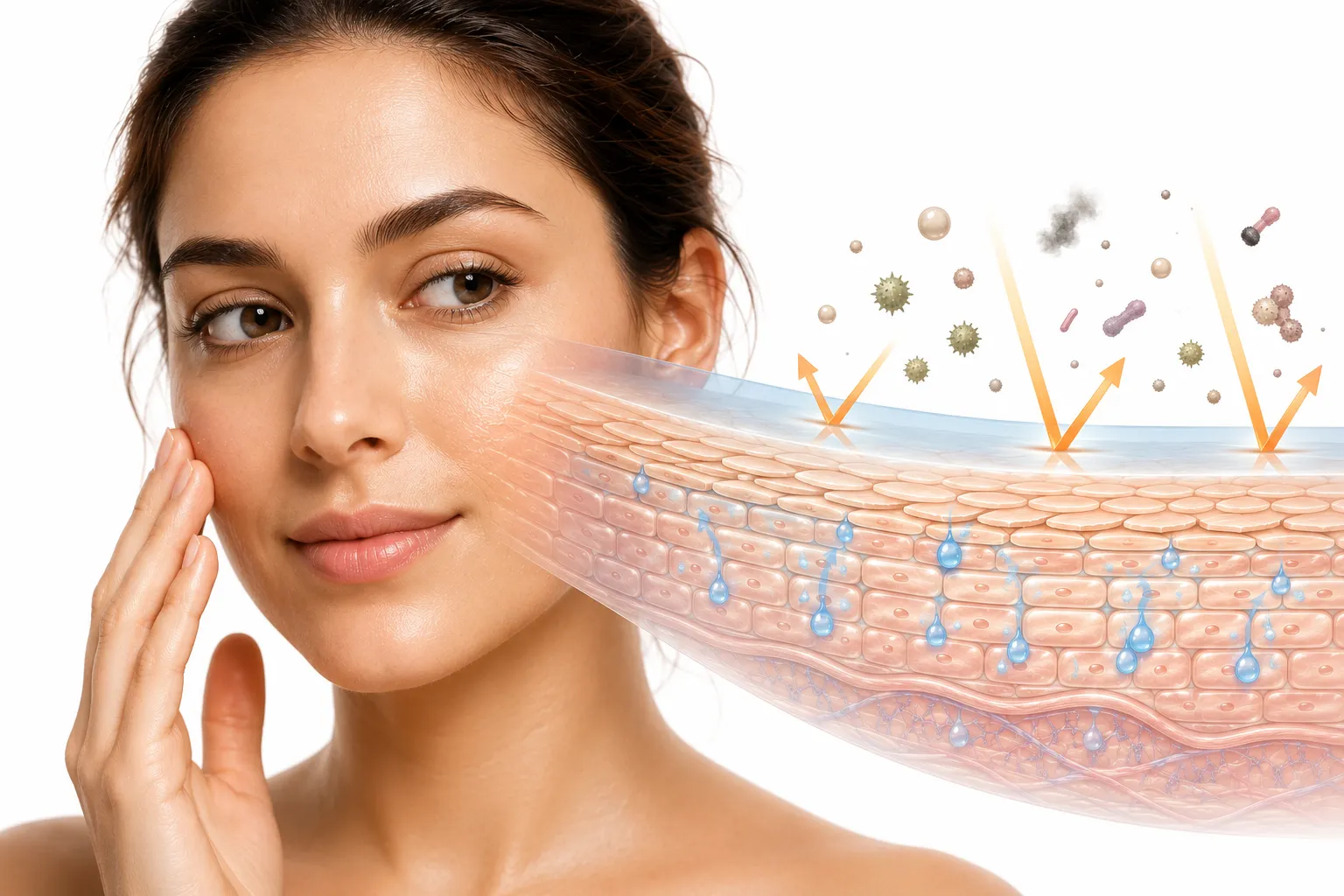
- Moisture. The barrier is the primary structure responsible for retaining water within the skin.
- Defense. A healthy barrier blocks irritants, allergens, and microbes from penetrating the skin's surface.
- Tolerance. Barrier health directly affects how well skin tolerates active ingredients and new products.
- Ripple effect. Barrier damage is associated with a wide range of downstream concerns, including sensitivity and breakouts.
The skin barrier is the skin's primary defense against water loss, irritants, and microbes.
A healthy barrier supports better product tolerance and overall skin comfort.
Barrier neglect contributes to a wide range of downstream concerns, not just one isolated issue.
Barrier-focused skincare is a foundation that supports the effectiveness of other treatments.
Proactively supporting the barrier is more effective than only addressing it after damage occurs.
Explanation
The barrier's core functions
What the barrier actually protects against.
The skin barrier regulates water loss, keeping skin hydrated, while simultaneously blocking irritants, allergens, and harmful microbes from entering. This dual function makes it central to both the comfort and the protective capacity of the skin as a whole.
Risks
What happens when the barrier is neglected
Barrier neglect does not stay contained to one issue; it tends to affect multiple aspects of skin health at once.
- Increased dryness and moisture loss
- Greater sensitivity and reactivity to products
- Higher likelihood of irritation-related breakouts
- Reduced ability to benefit from active ingredients
Questions
Frequently asked questions
What does the skin barrier actually protect against?
It protects against water loss and blocks irritants, allergens, and harmful microbes from penetrating the skin.
Does barrier health affect how well active ingredients work?
Yes, a healthy barrier generally improves both tolerance and effectiveness of active ingredients.
Can barrier health affect multiple skin concerns at once?
Yes, since many visible skin issues share a barrier-related root cause, supporting it can help several concerns simultaneously.
Should I prioritize the barrier before using active ingredients?
Building a barrier-supportive foundation first is generally recommended before introducing stronger active ingredients.
References
Sources
The notes below are drawn from the evidence already cited in this guide. They are not a complete bibliography.
- The skin barrier's role in moisture retention and irritant defense is well established in dermatological science.
- Barrier-focused skincare is widely recommended by dermatologists as a foundation for treating other skin concerns.
- Barrier repair ingredients like ceramides have strong supporting evidence for improving both barrier function and downstream skin issues.