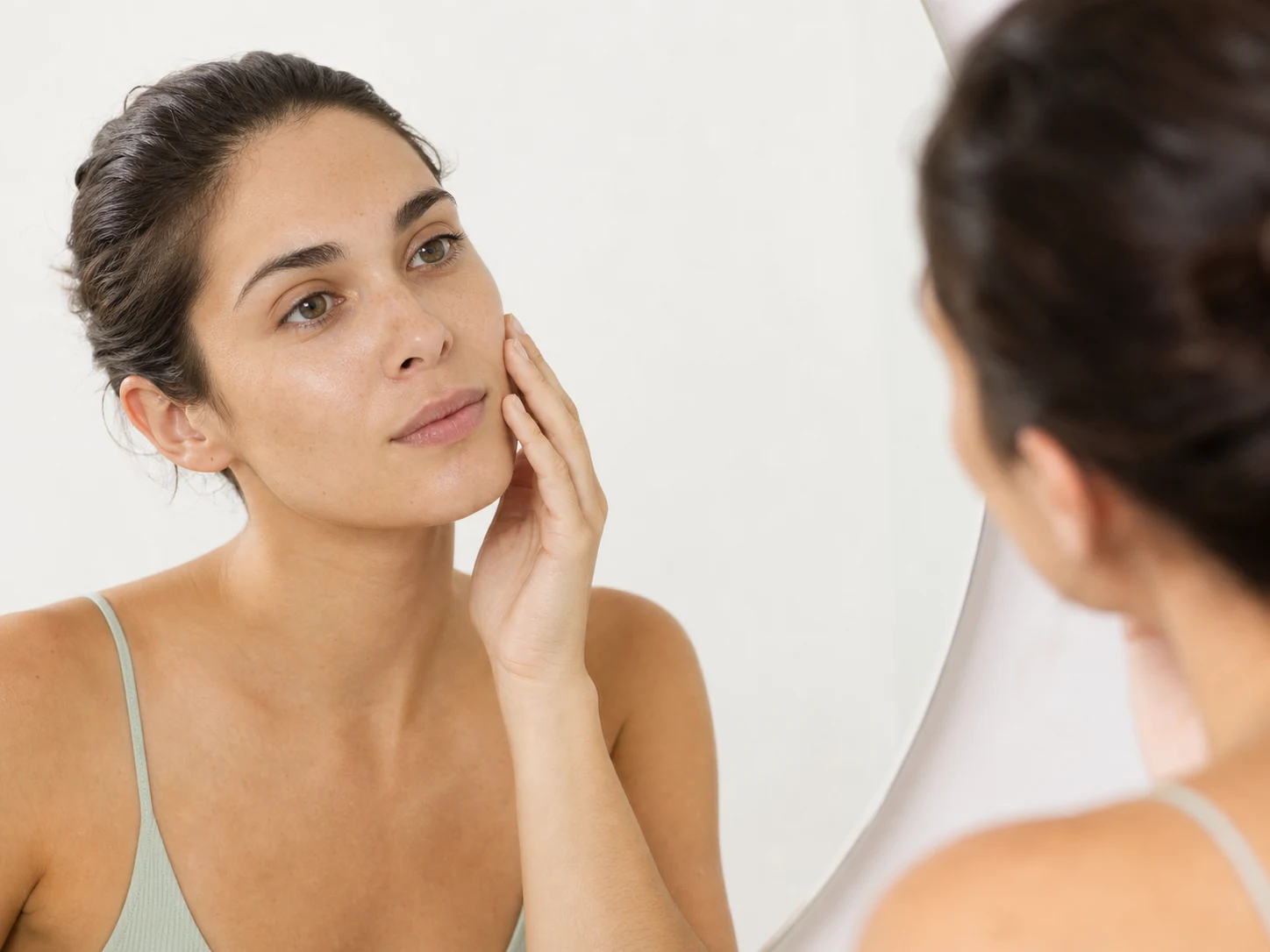
Evidence
What the evidence shows
A single bare-skin test is a useful starting point, but the more reliable confirmation comes from noticing the same balanced pattern repeat itself over several weeks, across different weather and routines.
Skin feels comfortable, no shine?
Likely normal skin.Noticeable shine across the whole face?
May point toward oily skin.Tightness or flaking?
May point toward dry skin.
Use this section to decide
Does this advice apply to me?
Find the concern or goal closest to yours, then use the fit signal to decide how much weight to give this guide.If your goal is
MethodUse caution- Fit signal
- Limited evidence
Bare-skin test
If your goal is
Wait timeUse caution- Fit signal
- Limited evidence
1-2 hours
If your goal is
Tracking periodUse caution- Fit signal
- Limited evidence
2-3 weeks
If your goal is
CostUsually relevant- Fit signal
- Often useful
Free
Expected results
Results and timeframe
Tracking behavior over two to three weeks gives a more accurate picture.
Practical use
How to use it
Do the bare-skin test
Cleanse, wait one to two hours, and observe how skin feels and looks.
Track over a few weeks
Note whether the same balanced pattern repeats itself consistently.
Confirm with product tolerance
Notice how skin responds when trying something new.
Safety
Side effects and cautions
- Testing skin type right after applying makeup or skincare products
Test on freshly cleansed, bare skin instead.
- Drawing conclusions from a single day's test
Track your skin's behavior over two to three weeks for a reliable read.
- Ignoring seasonal changes in skin behavior
Reassess periodically across different seasons.
Fit
Who should be careful
- Testing right after applying makeup or products
Worth noting
Small details that can change the answer
- Bare-skin test. Observing skin one to two hours after cleansing, without other products, is a commonly used way to assess skin type.
- Consistency. Tracking skin's behavior over two to three weeks gives a more reliable picture than a single observation.
- Seasonal shift. Skin type can present differently across seasons, so year-round observation is even more reliable.
- Product tolerance. Low reactivity to a range of new products is a practical, easy sign to track over time.
The bare-skin test is a simple, reliable starting point for checking skin type.
Normal skin typically feels comfortable without tightness or greasiness.
Low reactivity to new products is a useful, practical sign.
Seasonal changes can affect how skin type presents, so reassess periodically.
How to test your skin type at home
A simple, low-cost self-assessment method.
- Cleanse your face with a gentle cleanser
- Avoid applying moisturizer, sunscreen, or makeup for one to two hours
- Observe how skin feels: comfortable, tight, or greasy
- Check for shine concentrated in the T-zone or across the whole face
- Note any flaking, rough patches, or visible pores
What indicates normal skin during the test
- Skin feels comfortable, not tight or greasy
- No significant shine across the face
- No visible flaking or rough patches
- Pores appear small and not very prominent
Longer-term signs to track
- Skin feels similarly balanced across most days over a few weeks
- New products rarely cause stinging, redness, or breakouts
- Skin doesn't swing dramatically between oily and dry depending on the day
Common myths about testing skin type
Myth
A single blotting sheet test is enough to confirm skin type.
Reality
It's a useful data point, but tracking behavior over weeks is more reliable.
Myth
Skin type testing requires professional tools.
Reality
A simple bare-skin observation at home is generally sufficient for most people.
Questions
Frequently asked questions
What is the easiest way to test if my skin is normal?
Cleanse your face, wait one to two hours without applying anything else, then observe how it feels and looks.
How long should I observe my skin before concluding it's normal?
Two to three weeks of consistent observation gives a more reliable picture than a single day.
Can my skin type change from what I've always assumed?
Yes, skin type can shift over time due to age, hormones, or environment.
Do I need special tools to determine my skin type?
No, a simple at-home bare-skin observation is generally sufficient.