Evidence
What the evidence shows
Normal skin is well-defined with clear identification criteria.
Does your skin feel comfortable without products?
Yes, consistentlyIs your skin neither oily nor dry?
Yes, balancedDo products rarely cause reactions?
Yes, rarely
Use this section to decide
Does this advice apply to me?
Find the concern or goal closest to yours, then use the fit signal to decide how much weight to give this guide.If your goal is
Primary signUsually relevant- Fit signal
- Often useful
Balanced feel
If your goal is
Visible signsUsually relevant- Fit signal
- Often useful
Even texture, no extremes
If your goal is
Key needUsually relevant- Fit signal
- Often useful
Maintenance
If your goal is
Best testUse caution- Fit signal
- Limited evidence
Bare-face test
Research notes already in this guide
- The characteristics of normal skin are well-defined in dermatological literature.
- Clinical observation confirms the balanced features of normal skin.
- The distribution of skin types across populations has been extensively studied.
- Individual variation means the concept of normal skin is somewhat relative.
Practical use
How to use it
Confirm with a bare-face test
Wash your face with a gentle cleanser, wait one hour without applying products, and observe the balance of your skin.
Build a consistent, gentle routine
Use a gentle cleanser, a lightweight moisturizer, and daily SPF to maintain your skin's balance.
Monitor for changes
Normal skin can change with age, seasons, and environment. Stay attentive and adjust as needed.
Safety
Side effects and cautions
- Assuming normal skin needs no skincare
Normal skin still needs protection, particularly from sun damage, and basic care to maintain balance.
- Using harsh products because you think you can tolerate anything
Even normal skin can be damaged by harsh cleansers and over-exfoliation over time.
- Ignoring changes as you get older
Skin changes with age. What was normal in your 20s may become drier in your 40s. Adjust your routine accordingly.
Fit
Who should be careful
- Diagnosing skin conditions
Worth noting
Small details that can change the answer
- Sebum Production. Normal skin produces just enough sebum to protect the barrier without causing greasiness or congestion.
- Barrier Function. The moisture barrier in normal skin is intact and effective at keeping water in and irritants out.
- Pore Size. Normal skin has small to medium pores that aren't visibly enlarged or prominent.
- Sensitivity. Normal skin rarely reacts to products and generally tolerates a wide range of ingredients.
Normal skin is balanced, neither oily nor dry, with minimal sensitivity and healthy barrier function.
Key signs include balanced oil production, comfortable feel, minimal sensitivity, and even texture.
Normal skin still requires consistent care, including cleansing, moisturizing, and sun protection.
Normal skin isn't perfect - it can still develop issues, just less frequently than other types.
Maintaining normal skin long-term requires adapting your routine as your skin changes.
Definition
What exactly is normal skin?
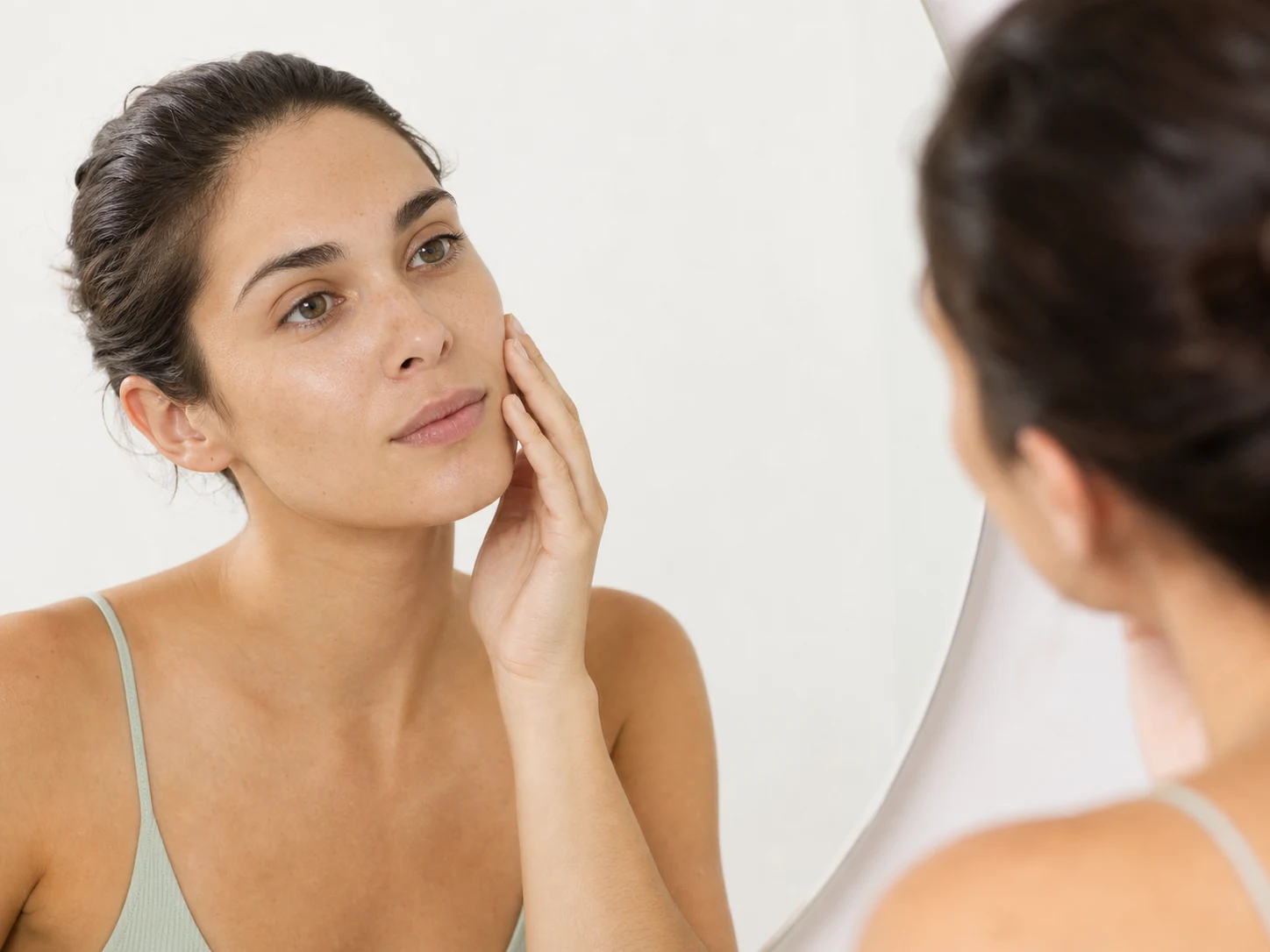
Normal skin is a skin type that falls in the middle of the spectrum - it's neither oily nor dry, doesn't have significant sensitivity or reactivity, and generally maintains a comfortable, balanced state without intervention. The skin appears even-toned and smooth, and pores are small to medium.
- Balanced sebum production - not too much, not too little
- Maintains hydration well without feeling tight or greasy
- Low sensitivity to products and environmental changes
- Small to medium pores that aren't visibly enlarged
- Even texture and healthy skin tone
- Rarely experiences breakouts or persistent dryness
Explanation
The 5 key signs of normal skin
Here are the most reliable indicators that you have normal skin.
Benefits
How to care for normal skin
Normal skin still needs consistent care to maintain its balance and prevent aging.
- Use a gentle cleanser once or twice daily to maintain balance
- Apply a lightweight moisturizer to support barrier function
- Protect with SPF daily to prevent sun damage
- Adjust your routine seasonally - slightly richer products in winter, lighter in summer
- Maintain consistent care rather than neglecting your skin
Questions
Frequently asked questions
Is normal skin the most common skin type?
It's less common than you might think. Many people have combination skin, which is oily in some areas and dry in others.
Can I develop normal skin if I don't have it?
Skin types are largely genetic, but well-considered skincare can help balance and manage what you have.
Does normal skin still need moisturizer?
Yes. Normal skin benefits from daily moisturization to support barrier function and prevent aging.
Is normal skin less likely to show signs of aging?
Not necessarily. Aging is influenced by genetics and sun exposure, not just skin type.
References
Sources
The notes below are drawn from the evidence already cited in this guide. They are not a complete bibliography.
- The characteristics of normal skin are well-defined in dermatological literature.
- Clinical observation confirms the balanced features of normal skin.
- The distribution of skin types across populations has been extensively studied.
- Individual variation means the concept of normal skin is somewhat relative.