Evidence
What the evidence shows
Flaking is the most obvious sign of dry skin, but dullness and fine surface lines usually show up first, well before any visible peeling begins.
Use this section to decide
Does this advice apply to me?
Find the concern or goal closest to yours, then use the fit signal to decide how much weight to give this guide.If your goal is
AppearanceUse caution- Fit signal
- Limited evidence
Dull, rough texture
If your goal is
FlakingDepends- Fit signal
- Possible fit
Common, especially cheeks
If your goal is
PoresUsually relevant- Fit signal
- Often useful
Fine, less visible
If your goal is
Confused withUse caution- Fit signal
- Limited evidence
Dehydrated skin
Explanation
How it works
Lower oil output
Sebaceous glands produce less oil than average.
Slower cell shedding
Surface cells build up unevenly instead of shedding smoothly.
Moisture escapes
Without enough oil to seal it in, water evaporates from the surface more easily.
Visible texture changes
The combination shows up as flaking, dullness, and fine lines.
Expected results
Results and timeframe
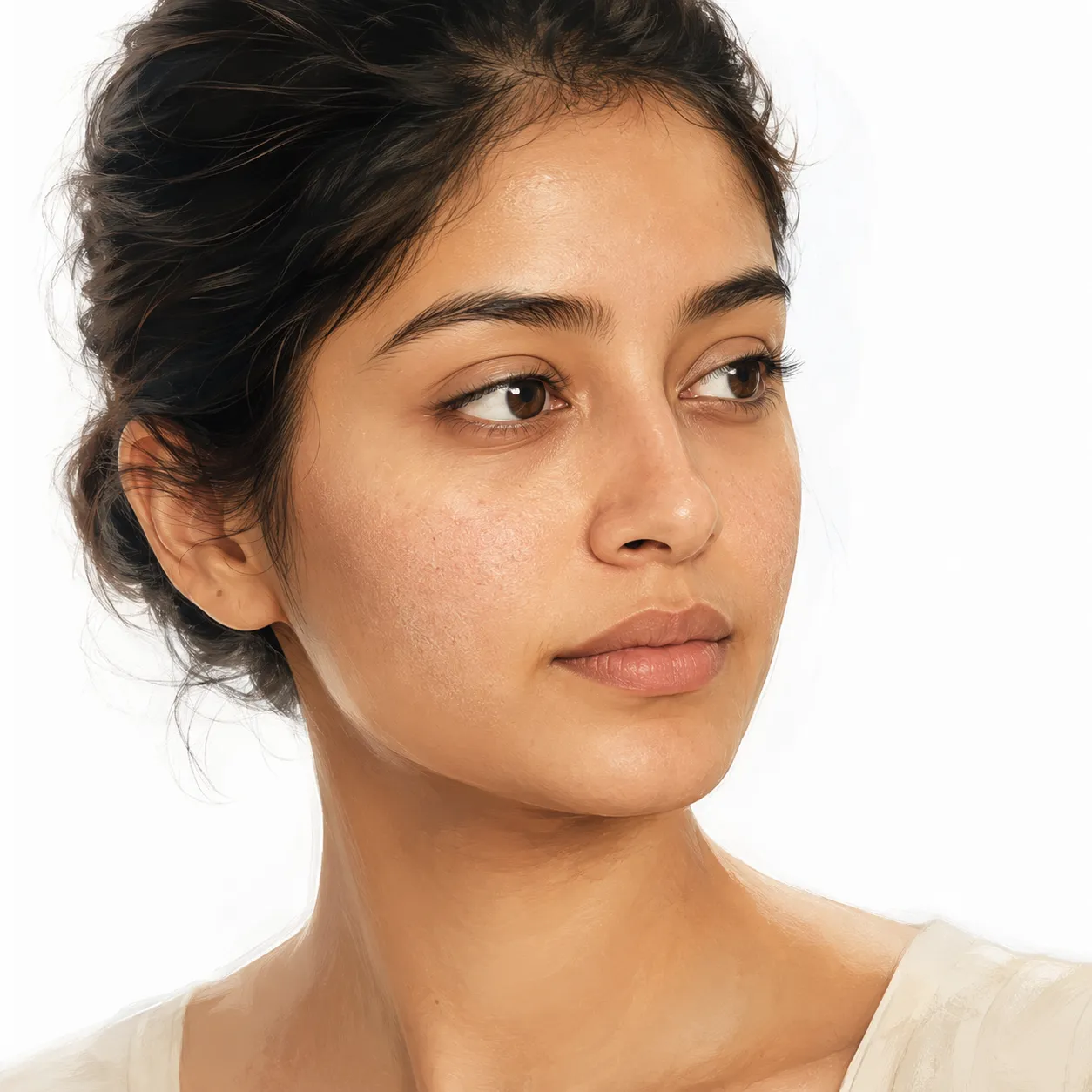
Dry skin usually looks dull, slightly rough, and shows visible flaking in areas like the cheeks and around the mouth.
Pores tend to be fine and less visible due to lower oil production.
Practical use
How to use it
Observe bare skin
Look at your skin a few hours after cleansing with nothing else applied.
Check texture and tightness
Note any rough patches, flaking, or a tight feeling, especially on the cheeks.
Track over time
See whether the signs persist across different seasons and routines, which points to a skin type rather than a passing condition.
Safety
Side effects and cautions
- Confusing dry skin with dehydrated skin
Dry skin is a lasting skin type; dehydration is temporary and can affect anyone.
- Judging skin type right after using rich products
Assess texture and appearance on freshly cleansed, product-free skin.
- Assuming flaking always means dryness
Some flaking can stem from over-exfoliation or irritation rather than a dry skin type.
Fit
Who should be careful
- Diagnosing skin conditions beyond simple dryness
Helpful context
What else is worth knowing
Checking your own skin
A few quick self-checks for common situations.
Worth noting
Small details that can change the answer
- Lower Sebum. Dry skin produces less natural oil, which affects both feel and appearance.
- Common Flake Zones. Flaking tends to show up first around the nose, cheeks, and mouth.
- Fine Lines. Surface lines often look more pronounced simply because the skin isn't as supple.
- Pore Size. Because oil production is lower, pores on dry skin are usually less visible.
Fine lines often appear more pronounced simply because the skin lacks its usual suppleness.
Dry skin is a lasting skin type, distinct from temporary dehydration.
Persistent redness, itching, or severe flaking may point to something beyond ordinary dryness and are worth a professional look.
Definition
What "dry skin" actually means
Dry skin is a skin type characterized by lower natural oil production, which affects the skin's ability to retain moisture at the surface. It's different from dehydration, which is a temporary lack of water that can affect any skin type.
- Lower natural sebum production
- Reduced ability to retain surface moisture
- A skin type, not a temporary condition
Explanation
Why dry skin looks the way it does
With less oil at the surface, dead skin cells don't shed as evenly, and light reflects differently off the skin, which produces the dull, slightly rough appearance most people associate with dryness.
Dos Donts
Spotting dry skin correctly
Do
Products can temporarily mask or exaggerate the signs.
A rough, papery feel is often more telling than looks alone.
Avoid
Even oily skin can feel temporarily tight after a strong cleanser.
Dehydration can affect any skin type and usually resolves with hydration.
Avoid
Signs that might mean something else
Could indicate a barrier issue or a skin condition rather than simple dryness
May warrant a professional evaluation rather than at-home identification
Questions
Frequently asked questions
Is dry skin the same as dehydrated skin?
No, dry skin is a lasting skin type from lower oil production, while dehydration is a temporary lack of water that can affect any skin type.
Does dry skin always flake?
Not always; dullness and tightness often appear before any visible flaking does.
Can oily areas still show signs of dryness?
Yes, combination skin can show dry patches in some areas and oiliness in others.
Should I see a dermatologist for dry skin?
If dryness is severe, persistent, or accompanied by redness and itching, a professional evaluation is worthwhile.