Evidence
What the evidence shows
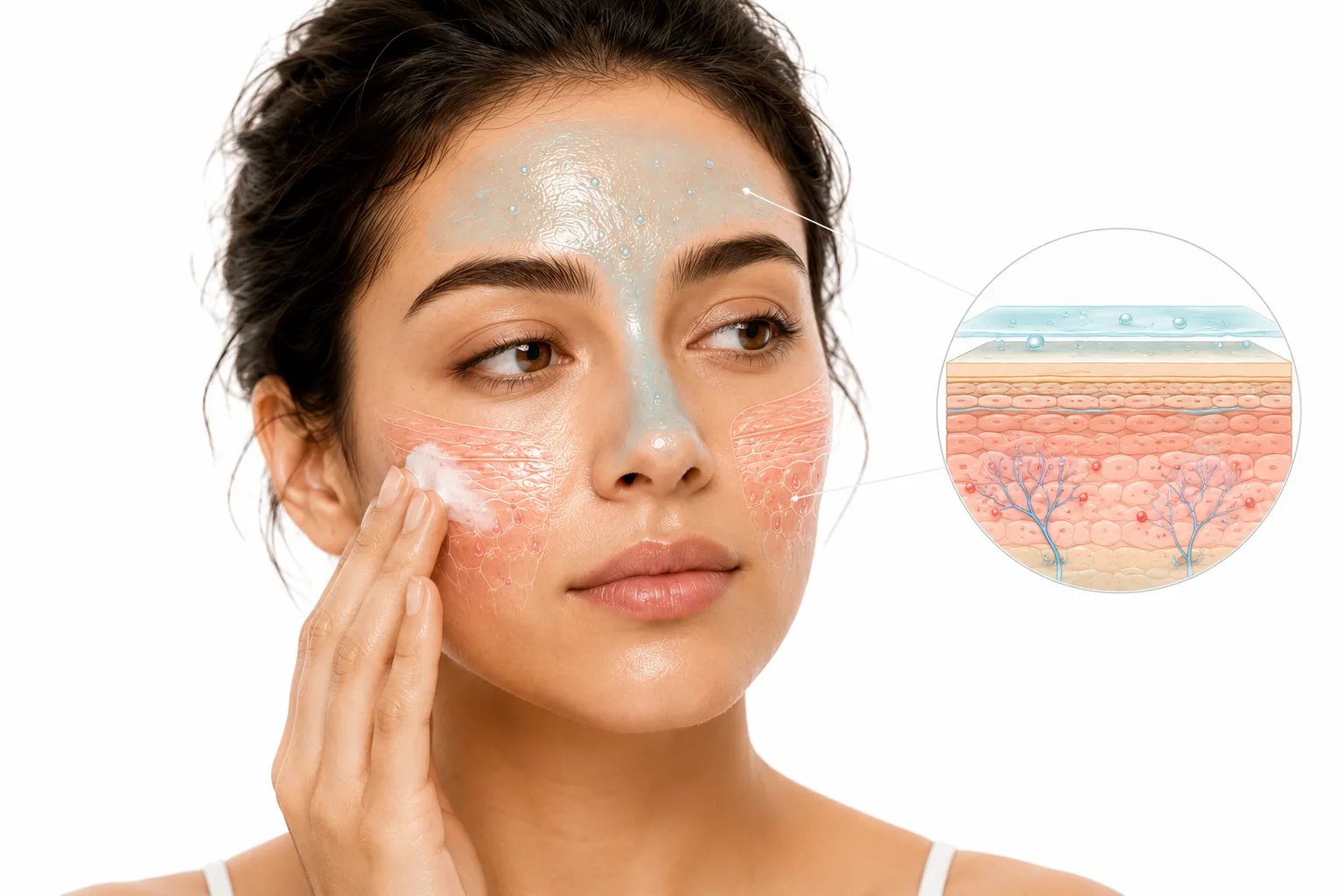
Sensitivity in combination skin often follows the same pattern as dryness - the cheeks and other dry areas are more likely to be sensitive, while the oily T-zone is typically more resilient.
Use this section to decide
Does this advice apply to me?
Find the concern or goal closest to yours, then use the fit signal to decide how much weight to give this guide.If your goal is
Can be sensitive?Use caution- Fit signal
- Limited evidence
Yes
If your goal is
Sensitive areasUse caution- Fit signal
- Limited evidence
Cheeks, eye area, jawline
If your goal is
Less sensitive areaUsually relevant- Fit signal
- Often useful
T-zone
If your goal is
Key to managementUsually relevant- Fit signal
- Often useful
Gentle products on sensitive areas, targeted treatments on T-zone
Explanation
How it works
Notice where reactions occur
Do products sting on your cheeks but not on your forehead? That's a pattern.
Identify your triggers
What products or ingredients cause reactions? Common triggers include fragrance, alcohol, and acids.
Observe your skin's response
Does your skin react with redness, stinging, or flaking to certain products or environmental factors?
Check for patterns
Is the sensitivity consistent with your dry areas? This confirms the pattern.
Practical use
How to use it
Identify your sensitive areas
Note where products cause stinging, redness, or flaking.
Use gentle products on sensitive areas
Choose fragrance-free, soothing products with ceramides and panthenol.
Apply active treatments selectively
Use oil-controlling products only on the T-zone; avoid the sensitive cheeks.
Safety
Side effects and cautions
- Using the same products on sensitive and non-sensitive areas
Sensitive areas need different, gentler products.
- Applying acne treatments to sensitive cheeks
Treat acne only in the T-zone; use soothing products on the cheeks.
- Ignoring the sensitivity pattern
Sensitivity in combination skin follows the dryness pattern - protect and soothe the cheeks.
Fit
Who should be careful
- Using a one-size-fits-all approach to skincare
Worth noting
Small details that can change the answer
- Sensitivity Pattern. Sensitivity in combination skin typically follows the dryness pattern - cheeks are most sensitive.
- Barrier Connection. The dry areas are more sensitive because they have a compromised barrier.
- T-Zone Resilience. The T-zone's oil layer provides more protection against irritation.
- Management. Sensitive areas need gentle, soothing products and careful product selection.
Combination skin can be sensitive, especially on the cheeks and eye area.
Sensitivity follows the dryness pattern - dry areas are more sensitive.
The T-zone is typically less sensitive due to its protective oil layer.
Use gentle, soothing products on sensitive areas.
Apply active treatments only to the T-zone, not the sensitive cheeks.
Definition
What is combination skin with sensitivity?
Combination skin with sensitivity is a mixed skin type where the T-zone is oily and the cheeks are normal or dry, with the added characteristic of sensitivity. This sensitivity typically occurs in the drier areas (cheeks, eye area, jawline) and can be triggered by products, environmental factors, or stress.
- T-zone: Oily, often less sensitive
- Cheeks: Dry or normal, often sensitive
- Eye area: Dry, often sensitive
- Jawline: Variable, may be sensitive
- Reactivity: Products may cause stinging, redness, or flaking in sensitive areas
Science
Why some areas of combination skin are more sensitive
Sensitivity in combination skin is linked to barrier function. The cheeks and other dry areas have a less robust barrier due to lower oil production. This compromised barrier allows irritants to penetrate more easily, triggering inflammatory responses that manifest as stinging, redness, and flaking. The T-zone, with its higher oil production, has a stronger barrier and is more resistant to irritation.
- Barrier Function
- The skin's ability to prevent water loss and block irritants, often compromised in sensitive areas.
- Transient Receptor Potential (TRP) Channels
- Proteins in skin cells that detect irritants and trigger inflammatory responses, more active in sensitive skin.
Benefits
How to manage sensitive areas in combination skin
Managing sensitivity alongside oiliness and dryness requires a thoughtful, targeted approach.
- Use gentle, fragrance-free products on sensitive areas
- Avoid products with potential irritants (alcohol, essential oils, drying sulfates)
- Apply active treatments only to the T-zone, not the sensitive cheeks
- Use barrier-supporting ingredients (ceramides, panthenol) on sensitive areas
- Patch test new products before applying them to sensitive areas
Dos Donts
Managing combination skin with sensitivity do's and don'ts
Do
Reduces the risk of irritation.
Prevents irritating the sensitive cheeks.
Strengthens the barrier and reduces reactivity.
Avoid
This will cause stinging and irritation.
These are common triggers for sensitivity.
This will worsen barrier compromise.
Questions
Frequently asked questions
Is sensitivity more common in combination skin?
Not necessarily, but when it occurs, it typically follows the dry pattern.
Can the T-zone be sensitive too?
Yes, but it's less common. The T-zone is usually more resilient.
How do I know if my cheeks are sensitive or just dry?
If products sting or cause redness on your cheeks, that's sensitivity. If they just feel tight or rough, it's dryness.
What ingredients should I avoid with sensitive combination skin?
Avoid fragrances, essential oils, drying alcohols, and strong exfoliants on sensitive areas.