Evidence
What the evidence shows
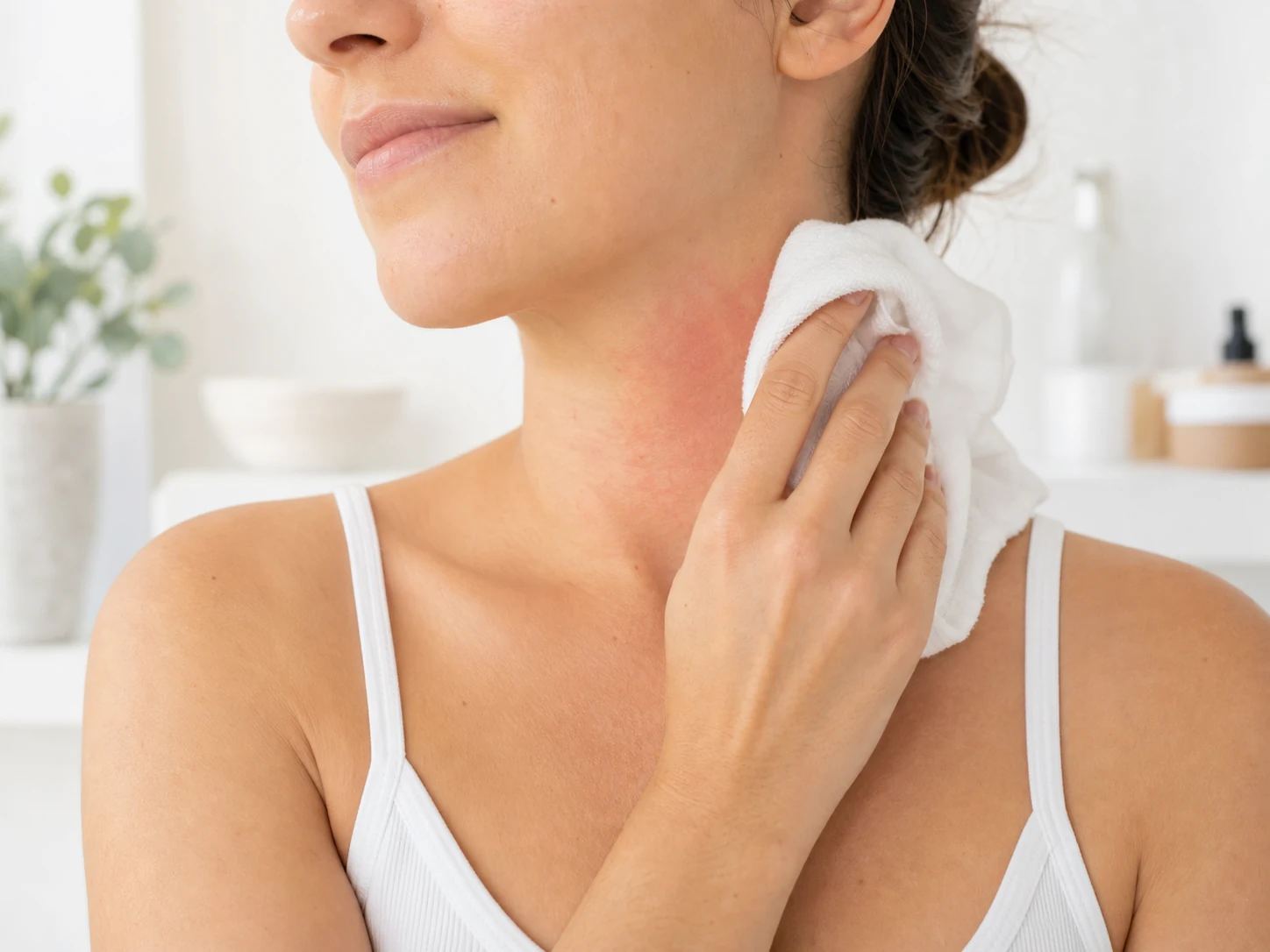
The cause of heat rash isn't the sweating itself - it's what happens when sweat can't escape. The same amount of sweat that would be harmless on a dry day can trigger heat rash in humid conditions where evaporation is slowed.
Use this section to decide
Does this advice apply to me?
Find the concern or goal closest to yours, then use the fit signal to decide how much weight to give this guide.If your goal is
Primary causeUsually relevant- Fit signal
- Often useful
Blocked sweat ducts
If your goal is
Contributing factorUse caution- Fit signal
- Limited evidence
Hot, humid conditions
If your goal is
Main triggerDepends- Fit signal
- Possible fit
Heavy sweating
If your goal is
PreventionUsually relevant- Fit signal
- Often useful
Keep skin cool and dry
Explanation
How it works
The step-by-step process of heat rash formation.
Duct blockage forms
Dead skin cells, bacteria, or sweat crystals block the opening of a sweat duct.
Sweat becomes trapped
Perspiration can't reach the surface and begins to accumulate.
Leakage into tissue
The pressure causes the trapped sweat to leak into surrounding skin tissue.
Inflammatory response
The trapped sweat irritates tissue, triggering redness, swelling, and itching.
Practical use
How to use it
Address the environment first
Move to a cooler, less humid environment to stop the cycle of excessive sweating.
Let the skin breathe
Remove tight, heavy clothing and allow air to circulate around the affected area.
Cool the skin gently
Apply cool compresses or take a cool shower to reduce inflammation and soothe irritation.
Safety
Side effects and cautions
- Assuming heat rash is caused by an allergy
Heat rash is a physical blockage, not an allergic reaction. Allergy treatments won't help.
- Thinking you can sweat out the blockage
More sweating only increases the problem by adding more fluid that can't escape.
- Applying heavy creams to "treat" the rash
Heavy creams can further block sweat ducts and make the condition worse.
Fit
Who should be careful
- Those seeking treatment without understanding the underlying cause
Worth noting
Small details that can change the answer
- Dead Skin Cells. Accumulated dead skin cells are the most common cause of sweat duct blockages.
- Bacterial Involvement. A type of bacteria called Staphylococcus epidermidis is often found in blockages.
- Sweat Composition. Sweat contains salt, which can crystallize and contribute to duct blockages.
- Skin Inflammation. The trapped sweat triggers an immune response that causes the redness and itching.
Heat rash is caused by blocked sweat ducts that trap perspiration beneath the skin.
The blockages typically form from dead skin cells, bacteria, or excessive sweat.
Hot, humid conditions dramatically increase the risk of developing heat rash.
The trapped sweat leaks into surrounding tissue and triggers an inflammatory response.
Treating the environment - cooling and drying the skin - is more effective than treating the rash itself.
Science
The role of the skin's microbiome in heat rash
Recent research has highlighted the role of the skin's microbiome in heat rash development. Bacteria that naturally inhabit the skin surface can contribute to duct blockages, particularly in environments where sweat and dead skin cells accumulate. The bacterium Staphylococcus epidermidis is frequently found in sweat duct blockages, suggesting that bacterial overgrowth may play a role in the condition. This doesn't mean heat rash is an infection, but rather that the normal skin ecosystem can contribute to the blockage.
- Cutibacterium acnes
- A common skin bacterium that can contribute to follicle and duct blockages when overgrown.
- Biofilm
- A community of bacteria that can form a protective layer on the skin's surface, potentially contributing to blockages.
Risks
Risk factors for developing heat rash
While anyone can get heat rash, certain factors increase your susceptibility.
- Living or working in hot, humid environments
- Engaging in intense physical activity that causes heavy sweating
- Having conditions that cause excessive sweating, like fever or hyperhidrosis
- Wearing heavy, non-breathable clothing that traps moisture
- Being an infant or young child with smaller, more easily blocked sweat ducts
- Having skin conditions that affect the outermost skin layer, like eczema
Explanation
Why humidity matters so much
Humidity is a critical factor in heat rash development. In dry conditions, sweat evaporates quickly from the skin's surface, carrying away heat and keeping the skin cool. But in humid conditions, the air is already saturated with moisture, so evaporation slows down dramatically. This keeps the skin's surface moist, allowing dead skin cells and bacteria to accumulate more easily at the sweat duct openings. The result is a perfect environment for blockage formation.
Questions
Frequently asked questions
Can heat rash be caused by the sun?
Not directly. Heat rash is caused by sweat duct blockages, not UV exposure. However, sun exposure can increase skin temperature and sweating, indirectly contributing to the condition.
Why do some people get heat rash more easily than others?
Individual differences in sweat duct size, skin cell turnover rate, and propensity to sweat can all affect susceptibility. Some people are simply more prone to blockages.
Can stress cause heat rash?
Stress can trigger sweating, which may contribute to heat rash in susceptible individuals. However, stress itself doesn't directly cause the duct blockages.
Is heat rash a sign of poor hygiene?
No. Heat rash is a physical condition that can affect anyone, regardless of hygiene. In fact, frequent washing can sometimes worsen the condition by irritating the skin further.