Evidence
What the evidence shows
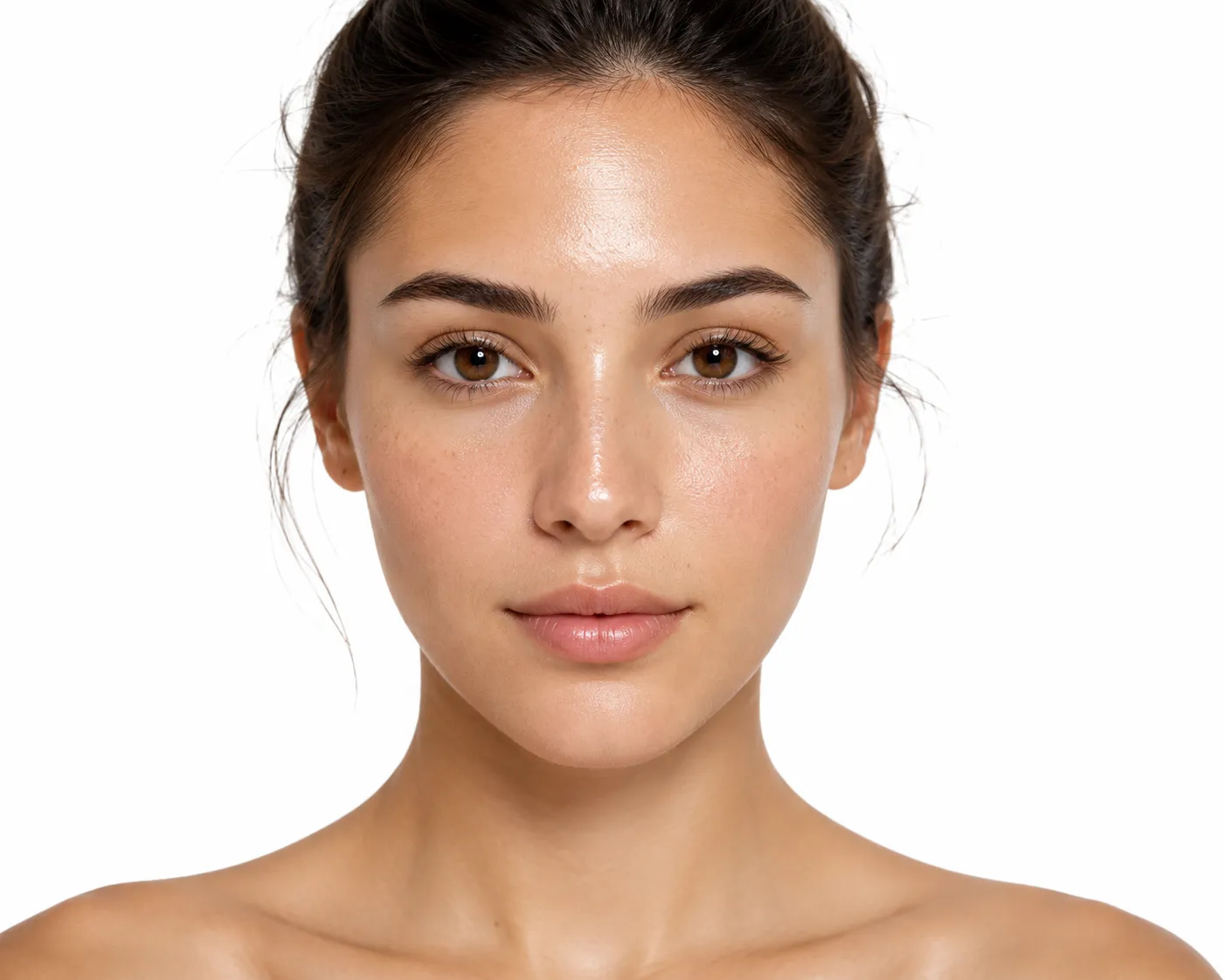
The visual contrast between the T-zone and cheeks is the most distinctive feature of combination skin. It's not subtle - once you see the pattern, it's hard to unsee it.
Use this section to decide
Does this advice apply to me?
Find the concern or goal closest to yours, then use the fit signal to decide how much weight to give this guide.If your goal is
T-ZoneUse caution- Fit signal
- Limited evidence
Shiny, visible pores
If your goal is
CheeksUse caution- Fit signal
- Limited evidence
Matte or dry, rough
If your goal is
ContrastUsually relevant- Fit signal
- Often useful
Clear visual difference
If your goal is
Key SignUsually relevant- Fit signal
- Often useful
Uneven texture and shine
Expected results
Results and timeframe
Pores are more visible and larger in the T-zone.
Observe your skin in different lighting and at different times of day.
Practical use
How to use it
Observe your skin in good lighting
Natural daylight is best for seeing the contrast between T-zone and cheeks.
Check at different times of day
Your skin may look different in the morning than at noon.
Take a photo for reference
A photo can help you see patterns you might miss in the mirror.
Safety
Side effects and cautions
- Mistaking shine for sweat or moisture
Oil shine has a different quality than sweat or hydration.
- Mistaking dry cheeks for just needing more moisturizer
It's part of a pattern, not an isolated issue.
- Assuming you have combination skin based on one observation
Observe your skin over several days for consistency.
Fit
Who should be careful
- People who are looking at their skin in poor lighting
Helpful context
What else is worth knowing
What combination skin looks like on the face
Shiny, visible pores, sometimes breakouts
Shiny, visible pores, often blackheads
Shiny, visible pores, sometimes breakouts
Matte or dry, rough or flaky, may be red
What experts look for in combination skin
Dr. Ava ShambanThe visual contrast between the T-zone and cheeks is the hallmark of combination skin.
Dr. Kenneth HoweCombination skin often looks different in different lighting and at different times of day.
Worth noting
Small details that can change the answer
- Shine Pattern. The shine in combination skin is typically limited to the T-zone, not the entire face.
- Pore Visibility. Pores in the T-zone are larger and more visible than on the cheeks.
- Texture Difference. The T-zone may feel smoother (or bumpier, depending on congestion), while the cheeks feel rougher.
- Color Difference. The cheeks may have more redness due to dryness or sensitivity.
Combination skin looks like a shiny T-zone and matte or dry cheeks.
The cheeks may appear flaky, rough, or red.
The visual contrast is the most distinctive feature.
Definition
The visual characteristics of combination skin
What to look for.
Combination skin is visually defined by contrast: shiny, pore-visible T-zone versus matte, sometimes flaky cheeks. This is the most distinctive feature of the skin type.
What to look for in the T-zone
- Visible shine or oiliness, especially by mid-day
- Larger, more visible pores on the nose and forehead
- Possible blackheads or whiteheads in the T-zone area
- Slightly uneven texture from congestion
What to look for on the cheeks
- Matte or dull appearance, not shiny like the T-zone
- Rough texture or slight flakiness, especially in dry conditions
- May appear red or irritated, especially in winter
- Feels tight or uncomfortable after washing
Signs you have combination skin
- Your T-zone is oily but your cheeks are normal or dry
- Your pores look larger on your nose than on your cheeks
- You get breakouts in your T-zone but not on your cheeks
- Your skin looks different in different lighting conditions
When to consider other skin types
- If your entire face is oily - you may have oily skin, not combination
- If your entire face is dry - you may have dry skin, not combination
- If your entire face is consistently the same - you likely have normal skin
- If you have severe flaking or irritation, consult a dermatologist
Questions
Frequently asked questions
Can I see combination skin in a photo?
Yes, the visual contrast is often visible in well-lit photos.
Does combination skin look different in summer and winter?
Yes, it may appear oilier in summer and drier in winter.
Why do the cheeks look redder than the T-zone?
Dry skin on the cheeks can appear red or irritated.
Should I compare my skin to photos of combination skin?
Photos can be helpful, but everyone's combination skin looks slightly different.