Evidence
What the evidence shows
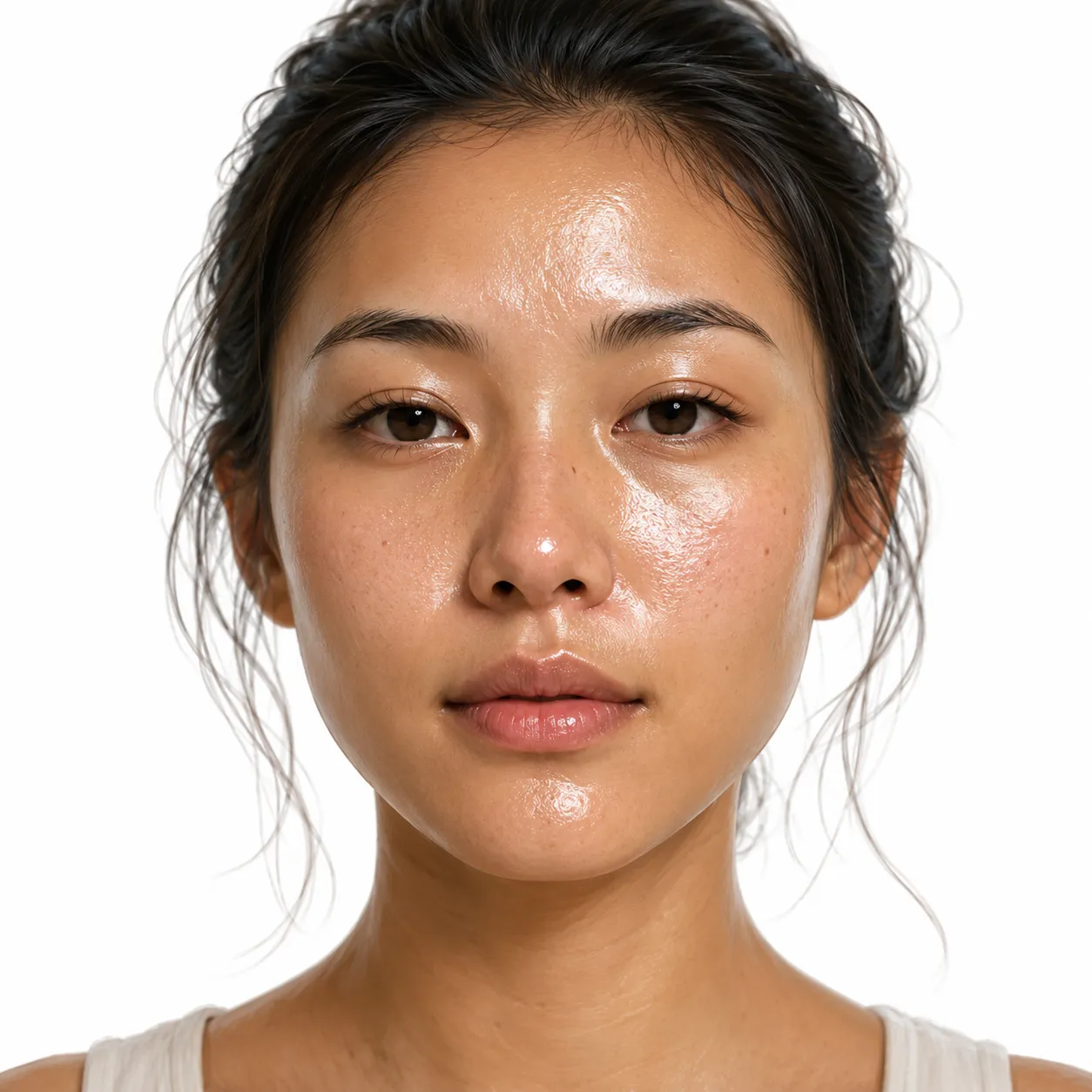
The clearest test for oily skin isn't how shiny it looks right now, but how quickly that shine returns after washing, since persistence is what separates a true oily skin type from occasional surface shine.
Use this section to decide
Does this advice apply to me?
Find the concern or goal closest to yours, then use the fit signal to decide how much weight to give this guide.If your goal is
ShineDepends- Fit signal
- Possible fit
Persistent, returns quickly
If your goal is
PoresDepends- Fit signal
- Possible fit
Larger, more visible
If your goal is
Common areaUse caution- Fit signal
- Limited evidence
T-zone
If your goal is
AgingUsually relevant- Fit signal
- Often useful
Fewer fine lines
Practical use
How to use it
Check your T-zone
Look for consistent shine and larger pores across the forehead, nose, and chin.
Time the shine
Note how many hours after cleansing the shine returns.
Track breakouts and blackheads
A higher tendency toward these is a common companion sign of oily skin.
Safety
Side effects and cautions
- Mistaking post-workout shine for oily skin
Check how quickly shine returns after cleansing on a normal day instead.
- Assuming oily skin is only a downside
Recognize that oily skin often ages with fewer visible fine lines.
- Skipping moisturizer to control oil
Use a lightweight, oil-free moisturizer, since skipping it can increase oil production.
Fit
Who should be careful
- Diagnosing acne severity or underlying causes
Helpful context
What else is worth knowing
Checking your own skin
A few quick self-checks for common situations.
Worth noting
Small details that can change the answer
- Overactive Glands. Oily skin comes from sebaceous glands producing more oil than average.
- T-zone Concentration. Shine and enlarged pores are usually most visible on the forehead, nose, and chin.
- Thicker Texture. Oily skin tends to be slightly thicker than dry or normal skin.
- Fewer Fine Lines. The extra oil often means oily skin shows fewer visible fine lines over time.
Oily skin typically shows a persistent shine, especially across the forehead, nose, and chin.
Pores tend to look larger due to increased oil and a slightly thicker skin texture.
The T-zone usually shows oiliness first because it has more sebaceous glands.
Oily skin often means fewer fine lines but a higher tendency toward blackheads and breakouts.
The clearest test is how quickly shine returns after cleansing, not how shiny skin looks in the moment.
Definition
What "oily skin" means
Oily skin describes a skin type where the sebaceous glands produce more oil than average, leading to a persistent surface shine and a higher tendency toward clogged pores.
- Above-average sebum production
- Persistent shine, especially in the T-zone
- More visible, larger-looking pores
Explanation
Why the T-zone shows it first
The forehead, nose, and chin have a higher concentration of sebaceous glands than the rest of the face, which is why oily skin's shine and enlarged pores tend to show up there before anywhere else.
Benefits
The upside of oily skin
Extra oil isn't purely a drawback, it comes with a few genuine advantages.
- Fewer visible fine lines over time
- A generally more resilient skin barrier
- Slower visible signs of aging in many cases
Risks
Common concerns linked to oily skin
The same oil that keeps skin resilient can also contribute to a few recurring issues.
- Higher tendency toward blackheads
- More frequent breakouts
- Makeup that can slide or fade faster during the day
Dos Donts
Confirming oily skin correctly
Do
True oily skin shows shine returning well before the end of the day.
This is where oily skin's traits are usually most visible.
Avoid
Temporary shine from heat or activity isn't the same as a true oily skin type.
Skipping moisturizer can actually trigger more oil production.
Questions
Frequently asked questions
Is shiny skin always oily skin?
Not necessarily; temporary shine from heat, humidity, or activity is different from a true oily skin type.
Does oily skin need a moisturizer?
Yes, a lightweight, oil-free moisturizer helps prevent the skin from overcompensating with even more oil.
Why are pores more visible on oily skin?
Extra oil and a slightly thicker texture make pores appear larger and more noticeable.
Does oily skin have any advantages?
Yes, it often shows fewer fine lines and tends to have a more resilient skin barrier.