Evidence
What the evidence shows
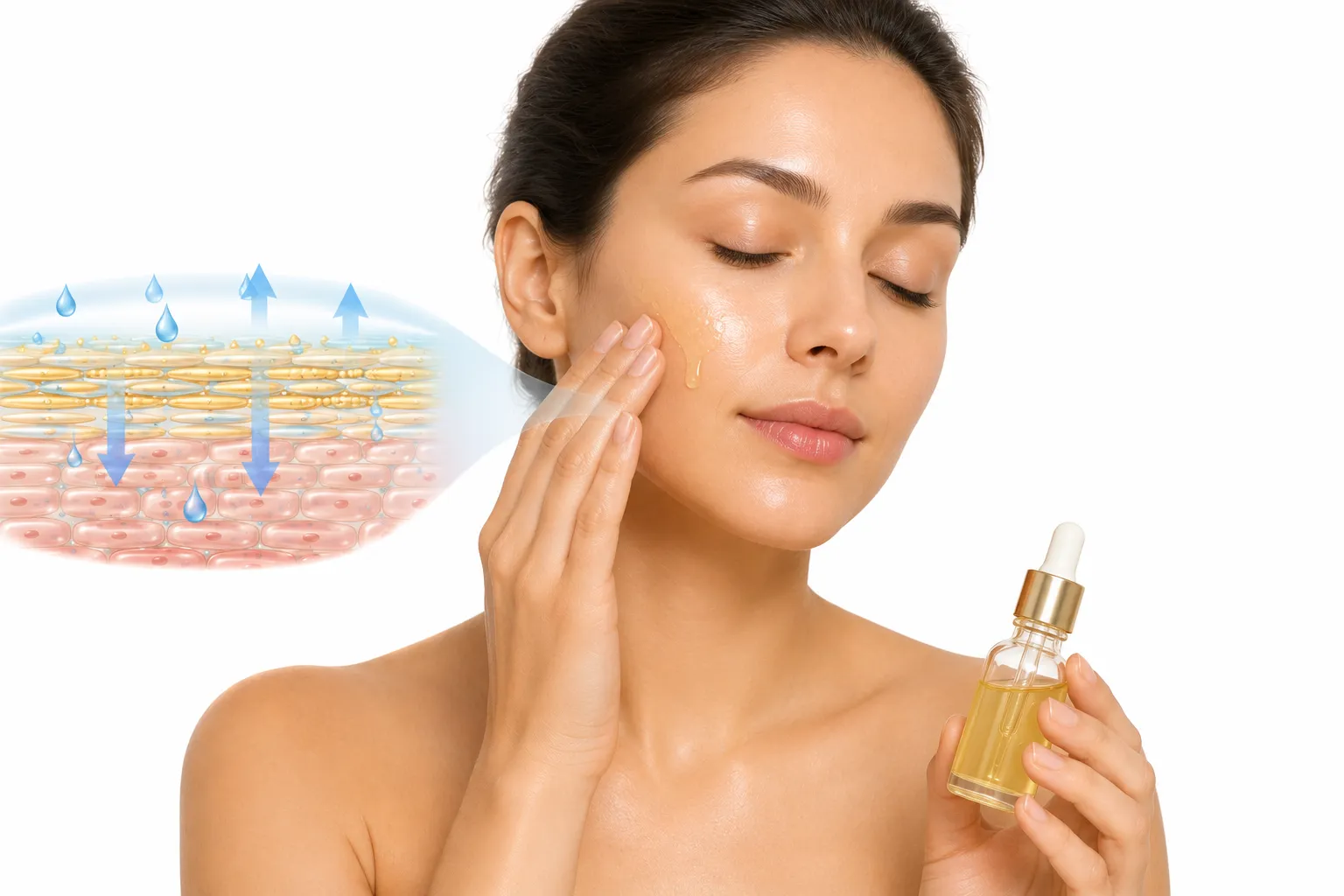
The best oils for barrier repair aren't just about adding moisture - they're about providing the fatty acids and lipids that your skin needs to rebuild its structure. Compatibility with your skin's natural lipids is key.
Use this section to decide
Does this advice apply to me?
Find the concern or goal closest to yours, then use the fit signal to decide how much weight to give this guide.If your goal is
Best overallUsually relevant- Fit signal
- Often useful
Squalane
If your goal is
Best for sensitive skinUsually relevant- Fit signal
- Often useful
Jojoba oil
If your goal is
Best for lipidsUsually relevant- Fit signal
- Often useful
Rosehip oil
If your goal is
AvoidDepends- Fit signal
- Possible fit
Coconut oil (comedogenic)
Practical use
How to use it
Cleanse gently
Use a non-foaming, pH-balanced cleanser.
Apply hydrating products (optional)
Hydrating serums or toners.
Apply barrier-repair moisturizer
Ceramide-rich moisturizer.
Apply oil (as a final step)
Seal in moisture with a few drops of oil.
Safety
Side effects and cautions
- Using an oil that's too heavy or pore-clogging
Choose non-comedogenic oils like squalane, jojoba, or rosehip.
- Applying oil to dry skin without hydrating first
Apply to damp skin or over a hydrating serum for better absorption.
- Expecting one oil to be a complete barrier solution
Use oils as part of a complete barrier-repair routine.
Fit
Who should be careful
- Very dry skin that needs heavier oils
Worth noting
Small details that can change the answer
- Squalane Compatibility. Squalane is a hydrogenated version of squalene, which is naturally found in human sebum.
- Linoleic Acid. Linoleic acid is an essential fatty acid that the body cannot produce - it must come from diet or skincare.
- Non-Comedogenic. Squalane, jojoba, and rosehip oil are all non-comedogenic.
- Barrier Support. Oils rich in fatty acids directly support barrier lipid replenishment.
Squalane is the top choice for barrier repair due to its compatibility with human sebum.
Jojoba oil is excellent for sensitive skin.
Rosehip oil provides essential fatty acids and vitamin A.
Choose non-comedogenic oils that won't clog pores.
Apply oils to damp skin as part of a complete barrier-repair routine.
Definition
What to look for in a barrier-repair oil
The best oils for barrier repair are those that provide essential fatty acids and are compatible with your skin.
- Rich in linoleic acid (omega-6 fatty acid) for barrier support
- Non-comedogenic to avoid clogging pores
- Compatible with the skin's natural lipids
- Free from artificial fragrances and irritants
- Can be used alone or as part of a barrier-repair formulation
Ingredient Comparison
Top oils for barrier repair compared
Squalane
bestBest for: Overall barrier supportHighly compatible with skin · Absorbs well · Non-comedogenic
Jojoba oil
bestBest for: Sensitive skinSimilar to human sebum · Soothing · Non-comedogenic
Rosehip oil
goodBest for: Lipid support and vitamin ARich in essential fatty acids · Contains vitamin A
Argan oil
goodBest for: Balanced fatty acids and vitamin EContains linoleic and oleic acid · Vitamin E for antioxidant protection
Mineral oil
okayBest for: Occlusive barrierVery effective at preventing water loss
Limitations: Doesn't provide fatty acids · Can feel heavyShea butter
okayBest for: Occlusive and barrier supportRich in fatty acids · Very moisturizing
Limitations: Can be heavy · May clog some poresScience
How oils support barrier repair
Oils support barrier repair by providing fatty acids that the skin needs to synthesize ceramides and other barrier lipids. Linoleic acid, an omega-6 fatty acid, is particularly important - it's a precursor for ceramide production and helps maintain barrier integrity. Oils rich in linoleic acid include rosehip, grapeseed, and evening primrose oils. Squalane and jojoba oil are valued for their compatibility with the skin's natural oils.
- Linoleic Acid
- An essential omega-6 fatty acid that's crucial for skin barrier function.
- Non-Comedogenic
- A formulation that's unlikely to clog pores or cause breakouts.
Benefits
How to use oils for barrier repair
Oils can be used in several ways to support barrier repair.
- Apply a few drops of oil directly to damp skin as a standalone treatment
- Mix a few drops of oil into your moisturizer for added barrier support
- Use oil as a final step to seal in moisture (for heavier oils)
- Apply oil to targeted dry areas for intensive repair
- Consider oil-based balms or ointments for severe barrier damage
Questions
Frequently asked questions
Is squalane better than rosehip oil for barrier repair?
Squalane is more compatible with the skin's natural oils, while rosehip oil provides essential fatty acids. Both are beneficial and can be used together.
Can I use coconut oil for barrier repair?
Coconut oil is comedogenic and can clog pores. It's not recommended for facial barrier repair, though it may be used on body skin.
Should I use oil before or after moisturizer?
For barrier repair, apply oil after moisturizer as a sealant.
Can oils replace moisturizers for barrier repair?
Not entirely - oils provide fatty acids but don't replace the humectants and ceramides in a moisturizer.