Evidence
What the evidence shows
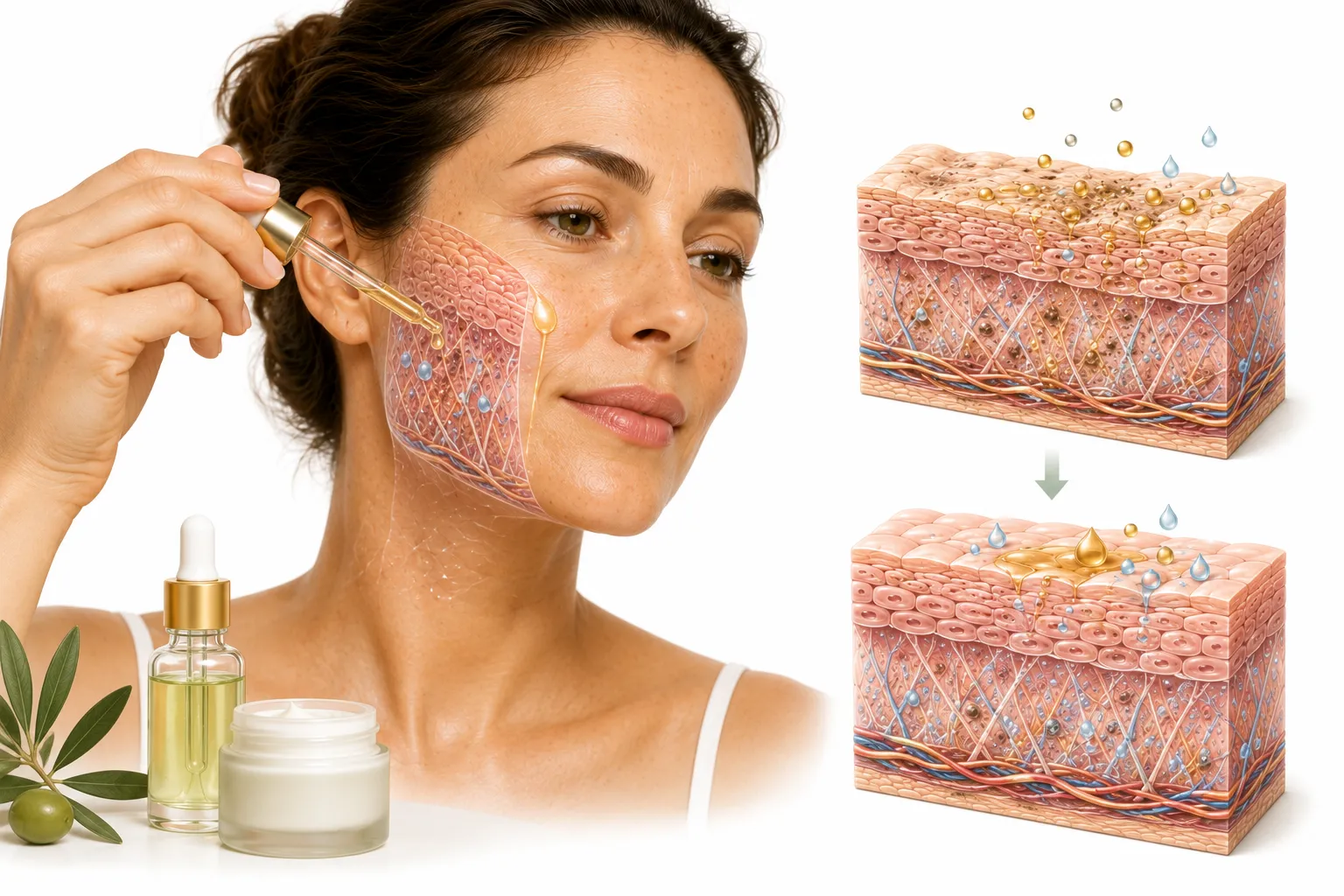
Facial oils are most effective for sun-damaged skin when they provide a combination of fatty acids for barrier repair and antioxidants to neutralize free radicals.
Use this section to decide
Does this advice apply to me?
Find the concern or goal closest to yours, then use the fit signal to decide how much weight to give this guide.If your goal is
Fatty acidsUsually relevant- Fit signal
- Often useful
Essential for barrier repair
If your goal is
AntioxidantsUsually relevant- Fit signal
- Often useful
Neutralizes free radicals
If your goal is
Non-comedogenicDepends- Fit signal
- Possible fit
Important for avoiding breakouts
If your goal is
AbsorptionDepends- Fit signal
- Possible fit
Better with smaller molecular weight oils
Research notes already in this guide
- Rosehip oil has been shown to improve scarring and photoaging due to its vitamin C content.
- Antioxidant-rich oils like marula help neutralize free radicals from UV exposure.
- Oils rich in fatty acids improve barrier function and reduce transepidermal water loss.
- Combining oils with other skincare ingredients enhances their effectiveness.
Practical use
How to use it
Cleanse
Use a gentle, non-stripping cleanser.
Apply serum or moisturizer
Apply your active treatment serums or moisturizer.
Apply facial oil
Apply a few drops of oil as the last step in your nighttime routine to seal in moisture.
Morning protection
Follow with sunscreen in the morning.
Safety
Side effects and cautions
- Using oil alone without other skincare
Oils work best with a full routine; they lock in other ingredients.
- Applying too much oil
A few drops are sufficient; too much can feel greasy.
- Using the wrong oil for your skin type
Some oils are better for dry skin, others for oily or combination.
Fit
Who should be careful
- Reversing deep photodamage alone
Helpful context
What else is worth knowing
Which oil is right for you?
Worth noting
Small details that can change the answer
- Rosehip Oil Value. Rosehip oil is rich in vitamin C and essential fatty acids that support collagen production and repair.
- Antioxidant Support. Oils with antioxidants like vitamin E help neutralize the free radicals that cause photodamage.
- Barrier Restoration. Plant oils rich in fatty acids help restore the lipid barrier that sun exposure disrupts.
- Absorption Rate. Oils with smaller molecular structures, like jojoba, absorb more easily into the skin.
Facial oils provide essential fatty acids and antioxidants that photodamaged skin needs.
Rosehip oil is excellent for collagen support and repair.
Marula oil provides powerful antioxidant protection.
Jojoba oil is soothing and resembles natural sebum.
Apply oils at night as the last step to seal in moisture.
Ingredient Comparison
Which oil is right for you?
Rosehip Oil
bestBest for: Collagen support, cell turnover, scarringRich in vitamin C and A · Supports skin regeneration
Marula Oil
bestBest for: Antioxidant protection, barrier repairHigh in omega fatty acids and antioxidants · Deeply nourishing
Jojoba Oil
bestBest for: Soothing, hydration, all skin typesMimics natural sebum · Hypoallergenic · Non-comedogenic
Argan Oil
goodBest for: Softening, protectingRich in vitamin E · Soothing
Questions
Frequently asked questions
Is oil suitable for oily, sun-damaged skin?
Yes, some oils like jojoba are non-comedogenic and can help balance oil production.
Can oil help with hyperpigmentation from sun damage?
Rosehip oil contains vitamin C, which can help fade pigmentation over time.
Should I use oil every night?
For most people, yes. Those with very oily skin may want to use it less frequently.
Can I use oil with retinol?
Yes, applying oil over retinol at night can help reduce irritation and improve skin tolerance.
References
Sources
The notes below are drawn from the evidence already cited in this guide. They are not a complete bibliography.
- Rosehip oil has been shown to improve scarring and photoaging due to its vitamin C content.
- Antioxidant-rich oils like marula help neutralize free radicals from UV exposure.
- Oils rich in fatty acids improve barrier function and reduce transepidermal water loss.
- Combining oils with other skincare ingredients enhances their effectiveness.