Evidence
What the evidence shows
The best sunscreen for combination skin doesn't just protect - it balances. It controls shine in the T-zone while maintaining hydration on the cheeks.
Use this section to decide
Does this advice apply to me?
Find the concern or goal closest to yours, then use the fit signal to decide how much weight to give this guide.If your goal is
Best typeUsually relevant- Fit signal
- Often useful
Mineral or lightweight chemical
If your goal is
Key featuresUsually relevant- Fit signal
- Often useful
Non-comedogenic, lightweight, natural finish
If your goal is
SPF minimumUse caution- Fit signal
- Limited evidence
SPF 30
If your goal is
ApplicationUse caution- Fit signal
- Limited evidence
Less on T-zone, consistent on cheeks
Practical use
How to use it
Choose a lightweight, non-comedogenic sunscreen
Mineral or lightweight chemical formulas work well for combination skin.
Apply evenly to all areas
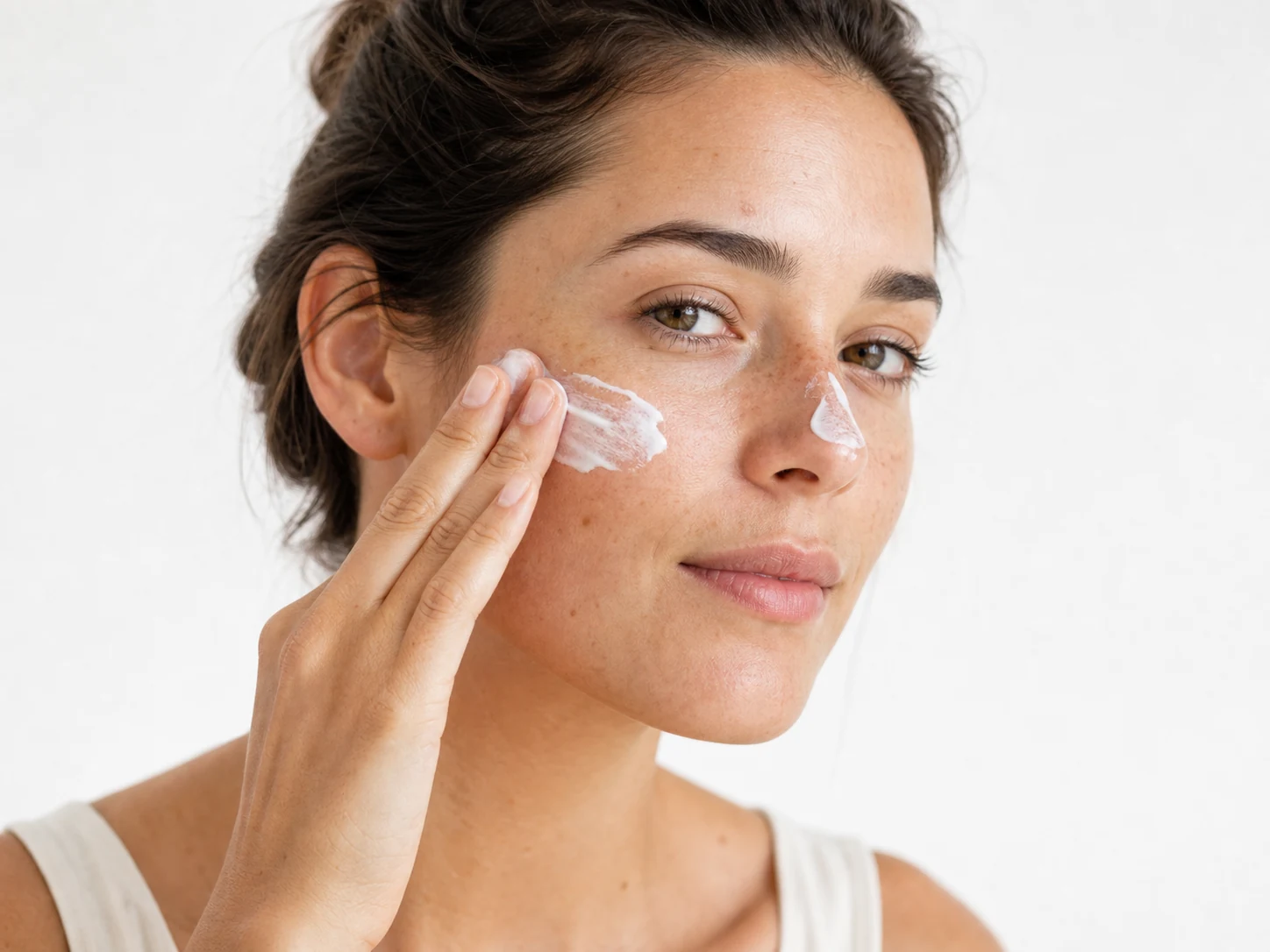
Use a pea-sized amount and distribute it evenly across your face.
Adjust application to your zones
Apply slightly less on the T-zone and a consistent amount on the cheeks.
Safety
Side effects and cautions
- Using a sunscreen that's too heavy or greasy
Choose lightweight, non-comedogenic formulas.
- Skipping sunscreen because it causes breakouts
Look for non-comedogenic mineral or lightweight chemical sunscreens.
- Not applying enough sunscreen
Use at least a pea-sized amount for the face.
Fit
Who should be careful
- Very dry skin that needs heavy moisturization in sunscreen
Worth noting
Small details that can change the answer
- Mineral Sunscreens. Sit on the skin's surface, less likely to irritate or clog pores.
- Chemical Sunscreens. Absorb UV rays, can be lighter but may irritate some.
- Non-Comedogenic. Essential for combination skin to avoid T-zone breakouts.
- SPF Minimum. SPF 30 is the minimum for daily use.
The best sunscreen for combination skin is lightweight, non-comedogenic, and has a natural finish.
Mineral sunscreens are excellent for combination skin.
Lightweight chemical sunscreens with gel or water bases are also good.
Apply sunscreen every day, regardless of the weather.
Adjust application - less on the T-zone, consistent on the cheeks.
Definition
What to look for in a sunscreen for combination skin
The ideal sunscreen for combination skin provides protection without disrupting the oil balance.
- Broad-spectrum SPF 30 or higher
- Non-comedogenic (won't clog pores)
- Lightweight, water-based or gel formula
- Natural or satin finish (not too matte or dewy)
- Mineral or chemical formula that suits your preference
- Fragrance-free and alcohol-free if possible
Product Comparison
Sunscreen types for combination skin
Mineral sunscreens
Beginner friendlyBest for: Sensitive combination skinLess irritating · Natural finish · Physical protection
Lightweight chemical sunscreens
Beginner friendlyBest for: All combination skin typesLightweight · Absorbs quickly · No white cast (with modern formulas)
Gel sunscreens
Beginner friendlyBest for: Oilier T-zonesVery lightweight · Non-greasy · Good for T-zone
Moisturizers with SPF
Beginner friendlyBest for: SimplicityCombines two steps · Convenient
Benefits
How to apply sunscreen for combination skin
Application technique can make a significant difference in how sunscreen works for combination skin.
- Apply sunscreen as the last step in your morning routine
- Use a pea-sized amount (for face) and apply evenly
- Apply slightly less on the T-zone if it tends to get shiny
- Apply the same amount on the cheeks
- Allow it to set for 2-3 minutes before applying makeup
Ingredient Comparison
Sunscreen ingredients for combination skin
Zinc oxide
goodBest for: Mineral protectionPhysical block · Gentle · Non-comedogenic
Titanium dioxide
goodBest for: Mineral protectionPhysical block · Gentle · Non-comedogenic
Avobenzone
goodBest for: Chemical UVA protectionEffective UVA protection · Lightweight
Octinoxate
okayBest for: Chemical UVB protectionEffective UVB protection · Lightweight
Heavy oils (in sunscreen base)
avoidBest for: Not recommendedNone for combination skin
Limitations: Can cause breakouts in T-zoneDos Donts
Sunscreen do's and don'ts for combination skin
Do
UV damage occurs year-round.
These areas need protection.
Sunscreen breaks down over time.
Avoid
It will likely cause issues in the T-zone.
UV rays penetrate clouds.
All areas need protection.
Questions
Frequently asked questions
Should I use mineral or chemical sunscreen for combination skin?
Both can work. Mineral sunscreens are less likely to irritate; chemical sunscreens are often lighter. Choose based on your preference and skin's response.
Can sunscreen make combination skin more oily?
Yes, if you choose a heavy or greasy formula. Choose lightweight, non-comedogenic options.
Is SPF 30 enough for combination skin?
SPF 30 is the minimum for daily use. SPF 50 is better if you'll be outdoors.
Can I use a moisturizer with SPF for combination skin?
Yes, this can be a convenient option, but ensure it's non-comedogenic and not too heavy.