Evidence
What the evidence shows
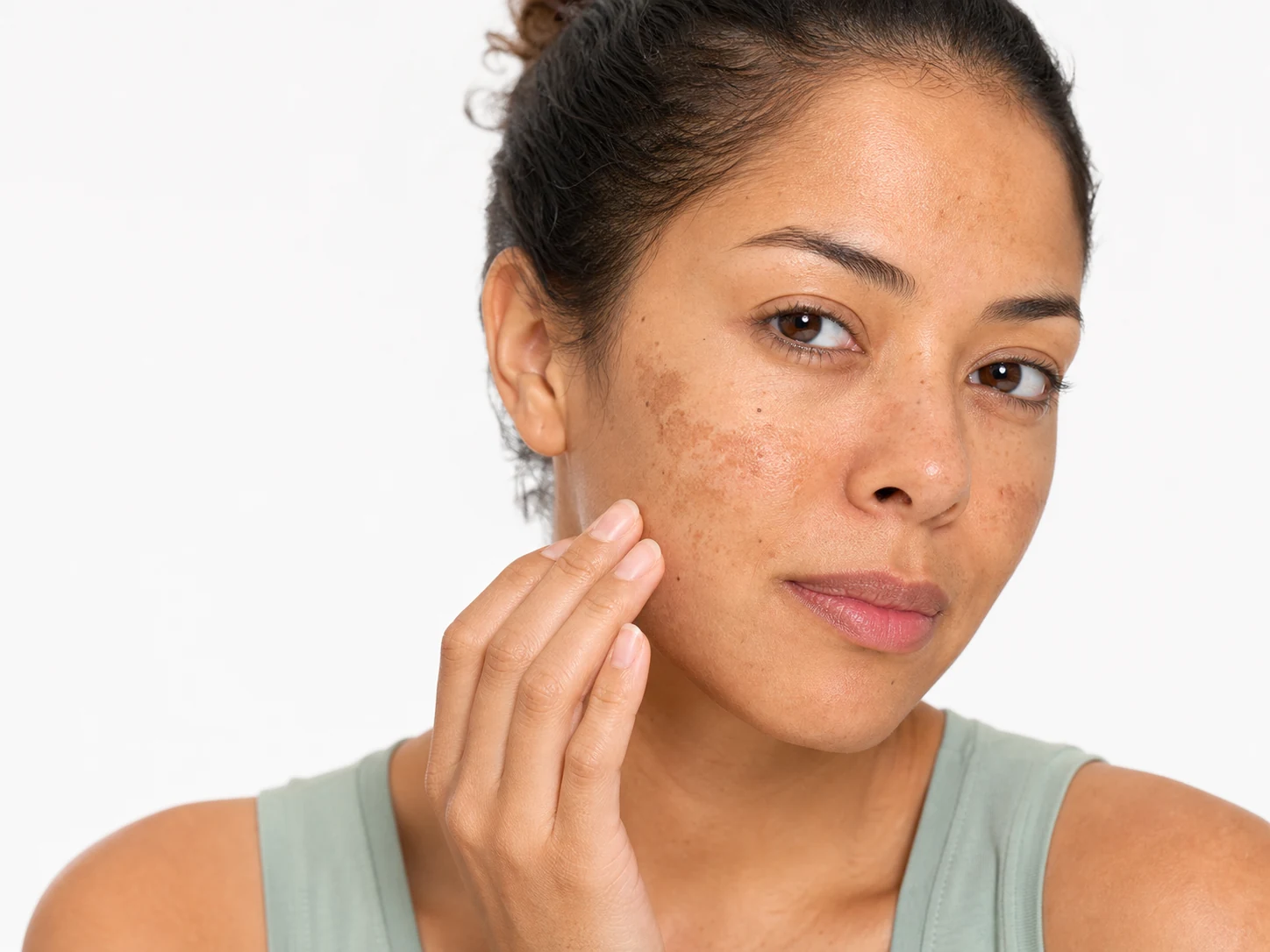
The most important distinction in hyperpigmentation treatment is the type: melasma, PIH, or sun spots. Each responds differently to different treatments.
Use this section to decide
Does this advice apply to me?
Find the concern or goal closest to yours, then use the fit signal to decide how much weight to give this guide.If your goal is
Hydroquinone for melasmaUsually relevant- Fit signal
- Often useful
Gold standard
If your goal is
Retinoids for PIHUsually relevant- Fit signal
- Often useful
Highly effective
If your goal is
Lasers for sun spotsUsually relevant- Fit signal
- Often useful
Excellent results
If your goal is
Sunscreen for allUsually relevant- Fit signal
- Often useful
Essential
Research notes already in this guide
- Hydroquinone is the most effective topical treatment for melasma.
- Retinoids are well-studied for PIH and aging-related pigmentation.
- Azelaic acid is effective for melasma with a better safety profile than hydroquinone.
- Vitamin C and niacinamide are supported by evidence for brightening.
- Combination therapy is more effective than monotherapy.
Practical use
How to use it
Identify your hyperpigmentation type
Melasma, PIH, or sun spots.
Choose appropriate treatments
Select based on your pigmentation type.
Always use sunscreen
Sun protection is essential for all types.
Consult a dermatologist
For severe or persistent hyperpigmentation.
Safety
Side effects and cautions
- Using the same treatment for all types of hyperpigmentation
Different types of pigmentation respond to different treatments.
- Skipping sunscreen
Sunscreen is essential for any hyperpigmentation treatment.
- Expecting overnight results
Hyperpigmentation treatments take weeks to months to show results.
Fit
Who should be careful
- Those seeking a one-size-fits-all answer
Helpful context
What else is worth knowing
Which treatment is right for you?
Worth noting
Small details that can change the answer
- Melasma Treatment. Hydroquinone and azelaic acid are first-line treatments for melasma.
- PIH Treatment. Retinoids and vitamin C are effective for post-inflammatory hyperpigmentation.
- Sun Spot Treatment. Lasers and chemical peels are effective for sun spots.
- Universal. Sunscreen is essential for all types of hyperpigmentation.
The best treatment depends on the type of hyperpigmentation.
Melasma: Hydroquinone, azelaic acid, sunscreen.
PIH: Retinoids, vitamin C, niacinamide.
Sun spots: Lasers, peels, exfoliating acids.
Sunscreen is essential for all types.
Definition
Types of hyperpigmentation and their treatments
Understanding the type of hyperpigmentation is key to choosing the right treatment.
- Melasma: Hormonal, triggered by sun and hormones. Best treatments: hydroquinone, azelaic acid, sunscreen.
- PIH: Inflammatory, caused by acne or injury. Best treatments: retinoids, vitamin C, niacinamide.
- Sun spots: UV-related, from sun exposure. Best treatments: lasers, chemical peels, exfoliating acids.
- General brightening: Vitamin C, niacinamide, retinoids.
Ingredient Comparison
Comparing hyperpigmentation treatment options
Hydroquinone
bestBest for: Melasma, severe hyperpigmentationMost effective topical pigment inhibitor
Limitations: Requires dermatologist supervision, not for long-term useTretinoin/Retinoids
bestBest for: PIH, aging-related pigmentationAccelerates cell turnover, well-studied
Limitations: Can cause irritation, requires patienceAzelaic Acid
bestBest for: Melasma, PIH with rednessGentle, anti-inflammatory, effective
Vitamin C
bestBest for: PIH, overall brighteningAntioxidant, brightening, gentle
Niacinamide
bestBest for: PIH, all types, sensitive skinGentle, versatile, well-tolerated
Decision Helper
Choosing the right treatment for your hyperpigmentation
Melasma (patchy, hormonal)
Hydroquinone, azelaic acid, strict sunscreenThese target melanin production and prevent UV triggers.
PIH (post-acne dark spots)
Retinoids, vitamin C, niacinamideThese accelerate cell turnover and brighten pigment.
Sun spots (UV-related)
Lasers, chemical peels, exfoliating acidsThese remove pigmented surface cells effectively.
General brightening
Vitamin C, niacinamide, retinoidsThese are versatile and gentle for overall skin improvement.
Questions
Frequently asked questions
What is the fastest treatment for hyperpigmentation?
Laser therapy and chemical peels can show results quickly, but topicals take longer.
Can hyperpigmentation be treated permanently?
It can be treated, but maintenance is often needed.
Is combination therapy better for hyperpigmentation?
Yes, combining different treatments often yields better results.
Do I need a prescription for hyperpigmentation treatment?
Some treatments like hydroquinone and tretinoin require a prescription.
References
Sources
The notes below are drawn from the evidence already cited in this guide. They are not a complete bibliography.
- Hydroquinone is the most effective topical treatment for melasma.
- Retinoids are well-studied for PIH and aging-related pigmentation.
- Azelaic acid is effective for melasma with a better safety profile than hydroquinone.
- Vitamin C and niacinamide are supported by evidence for brightening.
- Combination therapy is more effective than monotherapy.