Evidence
What the evidence shows
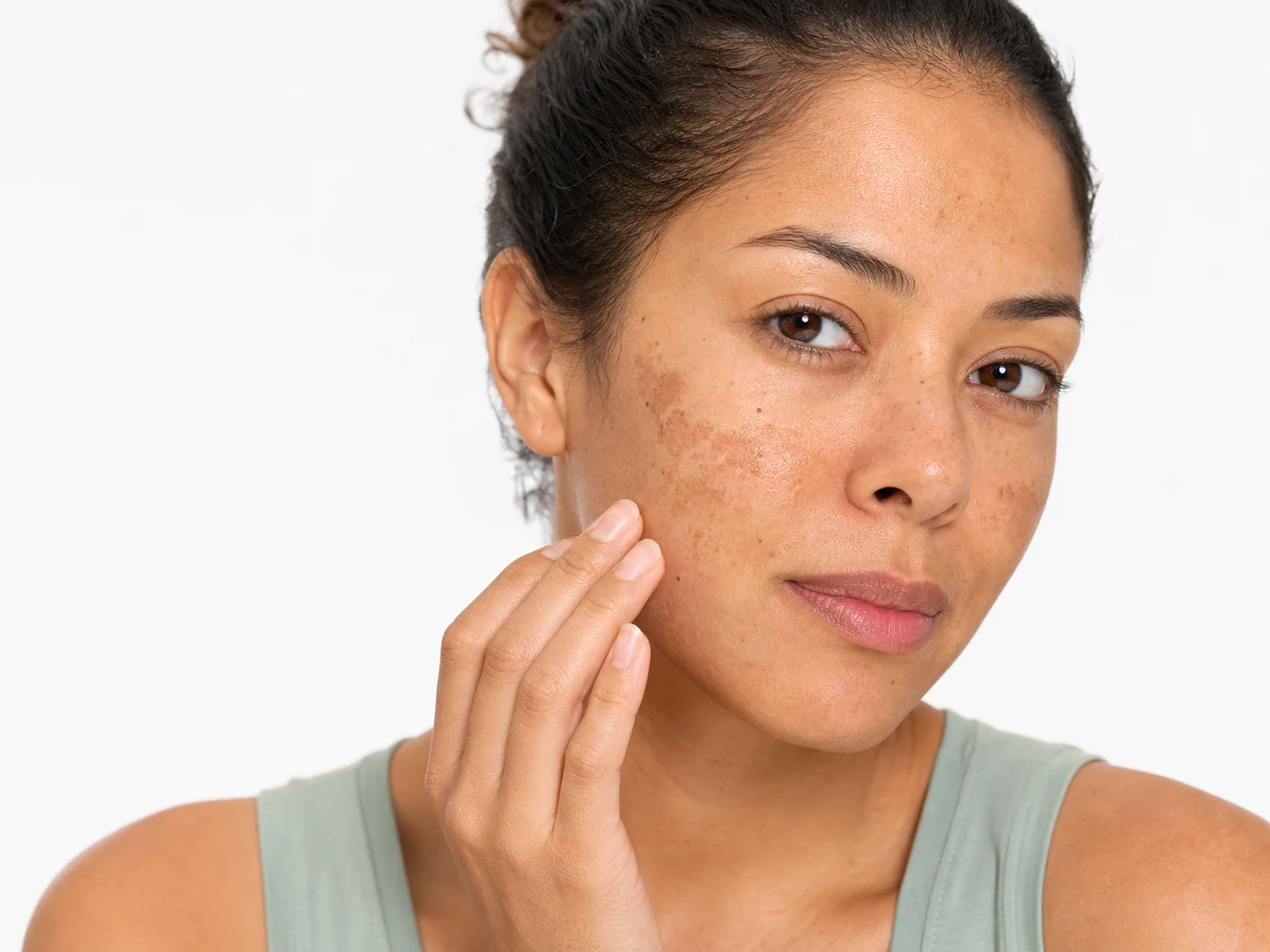
Hyperpigmentation can be triggered by multiple factors, but the common thread is the overactivation of melanocytes. The cause determines the type and the best treatment approach.
Sun exposure link
Sun exposure linkInflammation link
Inflammation linkHormonal link
Hormonal link
Use this section to decide
Does this advice apply to me?
Find the concern or goal closest to yours, then use the fit signal to decide how much weight to give this guide.If your goal is
Most CommonUsually relevant- Fit signal
- Often useful
Sun exposure
If your goal is
SecondUse caution- Fit signal
- Limited evidence
Inflammation (PIH)
If your goal is
ThirdUse caution- Fit signal
- Limited evidence
Hormonal (melasma)
If your goal is
Key PreventionUse caution- Fit signal
- Limited evidence
Sunscreen
Research notes already in this guide
- Sun exposure is the most well-established cause of hyperpigmentation.
- Research confirms the link between inflammation and PIH.
- Hormonal causes are well-documented in melasma cases.
Explanation
How it works
Trigger occurs
Sun exposure, inflammation, hormones, or injury activates melanocytes.
Melanin production increases
Melanocytes produce more melanin than necessary.
Melanin is transferred
The excess melanin is transferred to keratinocytes.
Dark patches appear
The excess melanin becomes visible as dark patches on the skin.
Practical use
How to use it
Identify the cause of your hyperpigmentation
Understanding the trigger is the first step to effective treatment.
Use sunscreen daily
Sun protection is essential regardless of the cause.
Treat the underlying condition
For PIH, control acne or inflammation. For melasma, manage hormones.
Safety
Side effects and cautions
- Thinking hyperpigmentation is caused by poor hygiene
It's caused by melanocyte activity, not cleanliness.
- Believing sun exposure only causes sunspots
UV radiation can worsen all types of hyperpigmentation.
- Assuming hyperpigmentation is permanent
With treatment, it can be significantly improved.
Fit
Who should be careful
- Those seeking a single cause for all hyperpigmentation
Worth noting
Small details that can change the answer
- Sun Exposure. UV radiation is the most common cause of hyperpigmentation.
- Inflammation. PIH is caused by inflammation from acne, eczema, or injury.
- Hormonal Changes. Melasma is often triggered by pregnancy or hormonal medications.
- Genetics. Genetics influence susceptibility to hyperpigmentation.
Sun exposure is the most common cause of hyperpigmentation.
Inflammation leads to post-inflammatory hyperpigmentation (PIH).
Hormonal changes can trigger melasma.
Genetics influence susceptibility.
Preventing new triggers is as important as treating existing pigmentation.
Definition
The main causes of hyperpigmentation
Hyperpigmentation can be caused by a variety of triggers, all of which result in overactive melanocytes. Understanding the cause is essential for effective treatment.
- Sun exposure: UV radiation stimulates melanin production
- Inflammation: Post-inflammatory hyperpigmentation (PIH)
- Hormones: Melasma from pregnancy or birth control
- Skin injury: Healing can leave dark marks
- Medications: Some drugs can trigger hyperpigmentation
Science
The cellular response to hyperpigmentation triggers
Melanocytes are activated by various signals. UV radiation triggers a signaling cascade that leads to increased melanin production. Inflammatory cytokines from acne or injury can also stimulate melanocytes. Hormonal changes can alter melanocyte activity through estrogen and progesterone receptors.
- Melanocyte
- A cell in the basal layer of the epidermis that produces melanin.
- Inflammatory Cytokines
- Signaling molecules released during inflammation that can stimulate melanocytes.
Questions
Frequently asked questions
Does sun exposure cause hyperpigmentation?
Yes, it's the most common cause.
Can acne cause hyperpigmentation?
Yes, acne inflammation often leads to PIH.
Can stress cause hyperpigmentation?
Stress can indirectly affect skin health and pigmentation.
Can certain medications cause hyperpigmentation?
Yes, some drugs can trigger pigmentation changes.
References
Sources
The notes below are drawn from the evidence already cited in this guide. They are not a complete bibliography.
- Sun exposure is the most well-established cause of hyperpigmentation.
- Research confirms the link between inflammation and PIH.
- Hormonal causes are well-documented in melasma cases.