Evidence
What the evidence shows
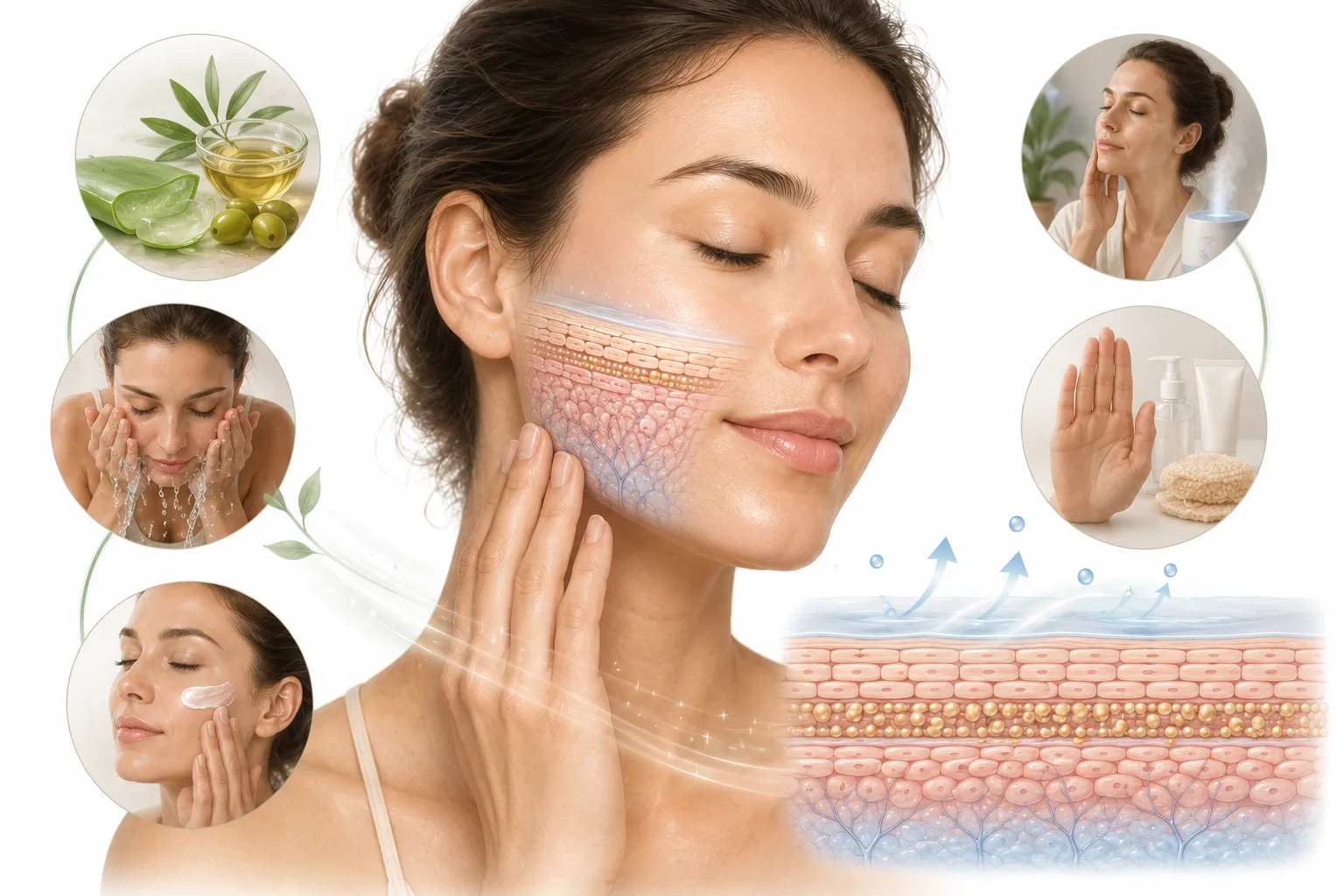
Natural barrier repair isn't about fancy ingredients - it's about providing the building blocks that the skin needs to rebuild its structure while creating conditions that don't interfere with the process.
Do you prefer simple, gentle skincare?
Yes → Natural approach aligns wellAre you willing to be patient for results?
Yes → Great, this takes timeDo you have severe barrier damage?
Yes → Consider professional guidance
Use this section to decide
Does this advice apply to me?
Find the concern or goal closest to yours, then use the fit signal to decide how much weight to give this guide.If your goal is
Key natural ingredientsUsually relevant- Fit signal
- Often useful
Oat, shea butter, squalane
If your goal is
First stepUse caution- Fit signal
- Limited evidence
Simplify and remove irritants
If your goal is
Lifestyle supportUsually relevant- Fit signal
- Often useful
Diet, sleep, stress
If your goal is
Recovery timeUse caution- Fit signal
- Limited evidence
2-4 weeks
Expected results
Results and timeframe
Barrier repair takes 2-4 weeks of consistent care.
Practical use
How to use it
Simplify your skincare
Strip back to a gentle cleanser and a barrier-supporting moisturizer.
Add barrier-repairing natural ingredients
Introduce plant oils, oat-based products, or ceramide-rich natural formulas.
Support from the inside
Eat a balanced diet with healthy fats and prioritize sleep and stress management.
Safety
Side effects and cautions
- Assuming "natural" means "can't irritate"
Natural ingredients can still cause reactions in sensitive skin. Patch test first.
- Using too many natural products at once
Introduce one product at a time to see how your skin responds.
- Neglecting to simplify before adding
Barrier repair starts with removing irritants, not just adding ingredients.
Fit
Who should be careful
- Expecting quick fixes
Worth noting
Small details that can change the answer
- Natural Composition. The barrier is naturally made of ceramides, cholesterol, and fatty acids.
- Oat Benefits. Colloidal oat is a natural ingredient that soothes and supports barrier function.
- Dietary Fat. Dietary fat supports skin barrier function and overall skin health.
- Sleep. The skin repairs itself primarily during sleep cycles.
Natural barrier repair focuses on providing the skin with the building blocks it needs to heal itself.
Simplify your routine and remove potential irritants first.
Natural ingredients like colloidal oat, shea butter, and squalane support barrier function.
Lifestyle factors like diet, sleep, and stress management are essential.
Ingredient Compatibility
Natural ingredients that support barrier repair
Soothes irritation and supports barrier function
Look for oat-based moisturizers or bath treatmentsRich in fatty acids that nourish the barrier
Use in thicker moisturizers for dry areasPlant-derived, matches skin's natural squalene
Apply as a facial oil after moisturizerNatural humectant and antibacterial
Use as a mask or in gentle cleansersDos Donts
Natural barrier repair: dos and don'ts
Do
Avoid
Clinical Guidance
Lifestyle factors for barrier health
- Incorporate healthy fats into your diet (avocado, nuts, olive oil)
- Stay hydrated to support skin moisture
- Prioritize 7-9 hours of quality sleep
- Manage stress to reduce cortisol's effect on skin
- Protect your skin from extreme temperatures and wind
Questions
Frequently asked questions
What natural ingredients are best for barrier repair?
Oat, shea butter, squalane, and honey are all excellent natural choices.
Can I use natural oils on a damaged barrier?
Yes, but not all oils are equal - choose oils that mimic the skin's natural lipids (like jojoba or squalane).
How long does natural barrier repair take?
With consistent care, 2-4 weeks can make a significant difference.
Is coconut oil good for barrier repair?
Some people find it beneficial, but others find it clogging. Patch test first.