Evidence
What the evidence shows
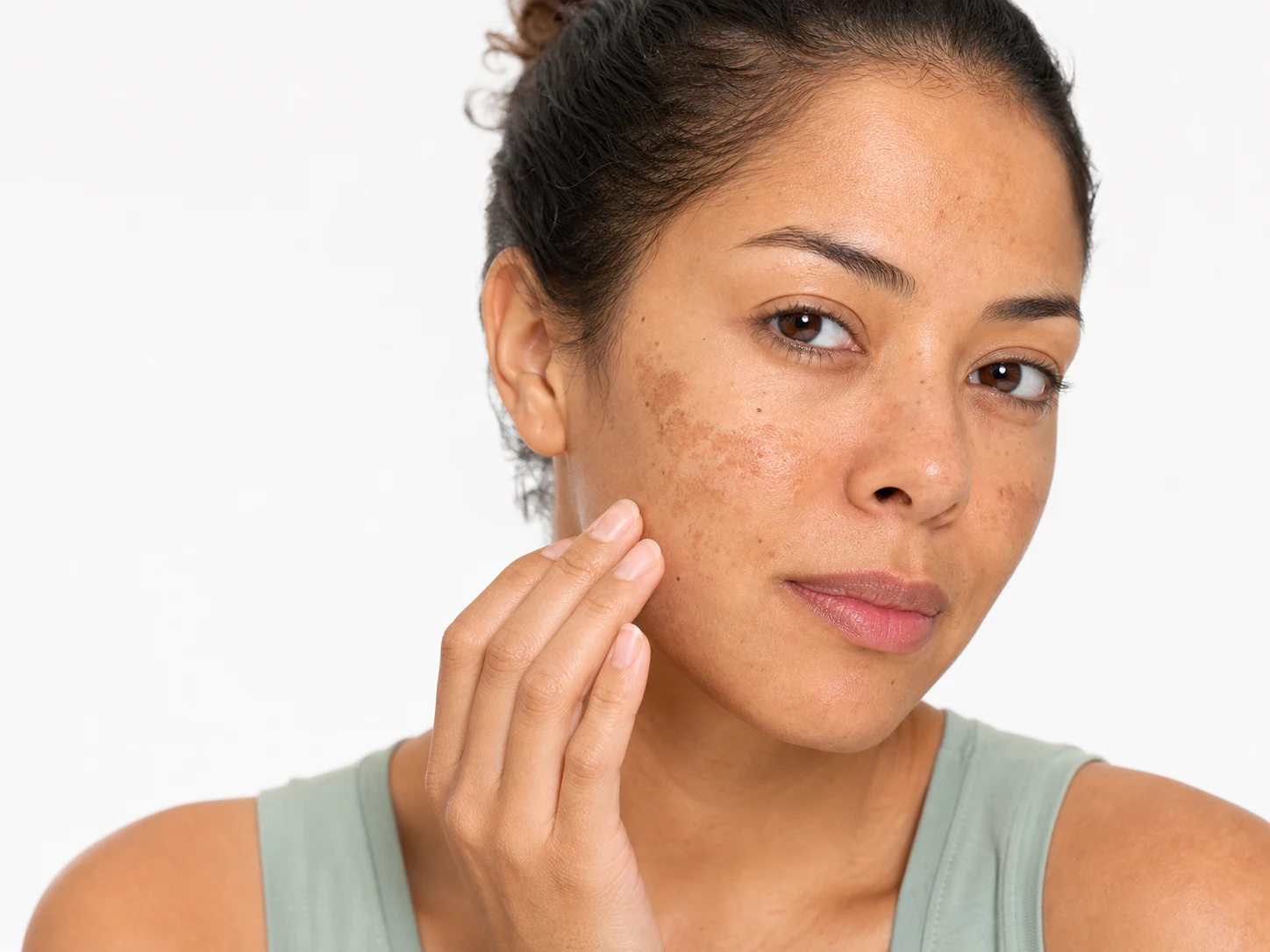
The appearance of hyperpigmentation - its shape, size, color, and location - can help identify the type and guide treatment.
Is it darker than surrounding skin?
This is the primary characteristic of hyperpigmentation.Is it flat or raised?
Hyperpigmentation is usually flat.Is it changing or asymmetrical?
See a dermatologist for changing spots.
Use this section to decide
Does this advice apply to me?
Find the concern or goal closest to yours, then use the fit signal to decide how much weight to give this guide.If your goal is
PIHUsually relevant- Fit signal
- Often useful
Flat, dark spots
If your goal is
SunspotsUse caution- Fit signal
- Limited evidence
Round, brown patches
If your goal is
MelasmaUse caution- Fit signal
- Limited evidence
Larger, facial patches
If your goal is
Key TipUse caution- Fit signal
- Limited evidence
See a dermatologist if unsure
Research notes already in this guide
- Dermatologists use visual examination to identify hyperpigmentation.
- They may use a Wood's lamp to assess pigmentation depth.
- A skin biopsy may be needed to rule out other conditions.
Practical use
How to use it
Examine your skin closely
Look at the color, shape, and location of dark spots.
Note any changes
Track if spots are getting larger, darker, or changing shape.
Consult a dermatologist
If you're unsure about a spot, see a professional.
Safety
Side effects and cautions
- Confusing hyperpigmentation with skin cancer
Most hyperpigmentation is harmless, but see a dermatologist for any changing or suspicious spots.
- Not recognizing PIH after acne
Dark spots after acne are a common form of hyperpigmentation.
- Assuming all dark spots are the same
Different types of hyperpigmentation need different treatments.
Fit
Who should be careful
- Those seeking a definitive diagnosis, which requires a dermatologist
Worth noting
Small details that can change the answer
- PIH Appearance. Flat, dark spots in areas of past inflammation.
- Sunspots. Round, brown patches on sun-exposed areas.
- Melasma. Larger, darker patches on the face, often symmetrical.
- Color Range. Hyperpigmentation can range from light brown to dark black.
Hyperpigmentation appears as dark patches, spots, or discoloration.
PIH looks like flat, dark spots in areas of past inflammation.
Sunspots are round, brown patches on sun-exposed areas.
Melasma appears as larger, darker patches on the face.
Different types of hyperpigmentation need different treatments.
Definition
Identifying different types of hyperpigmentation
Different types of hyperpigmentation have distinct visual characteristics. Recognizing these can help you identify the type and choose the right treatment approach.
- PIH: Flat, dark spots in areas of past inflammation
- Sunspots: Round, brown patches on sun-exposed areas
- Melasma: Larger, darker patches on the face, often symmetrical
- Freckles: Small, light brown spots that darken with sun exposure
Explanation
What to look for on different skin tones
Hyperpigmentation looks different on different skin tones. On lighter skin, it appears as darker brown spots. On darker skin, it appears as very dark brown or black spots, and the contrast can be more pronounced.
Benefits
Why recognizing hyperpigmentation matters
Recognizing hyperpigmentation is important for both treatment and skin health. It can help you choose the right treatments and distinguish it from other skin conditions, like skin cancer.
- Helps you choose the right treatment
- Allows you to distinguish it from skin cancer
- Helps you track progress over time
- Encourages you to seek professional advice when needed
Questions
Frequently asked questions
Can hyperpigmentation look like a mole?
It can, but moles are usually raised while hyperpigmentation is flat.
Does hyperpigmentation always look the same?
No, it can vary in color, size, and location.
Can hyperpigmentation appear suddenly?
It can, especially with hormonal changes or inflammation.
Is hyperpigmentation always dark?
It's darker than the surrounding skin but can range from light brown to black.
References
Sources
The notes below are drawn from the evidence already cited in this guide. They are not a complete bibliography.
- Dermatologists use visual examination to identify hyperpigmentation.
- They may use a Wood's lamp to assess pigmentation depth.
- A skin biopsy may be needed to rule out other conditions.