Evidence
What the evidence shows
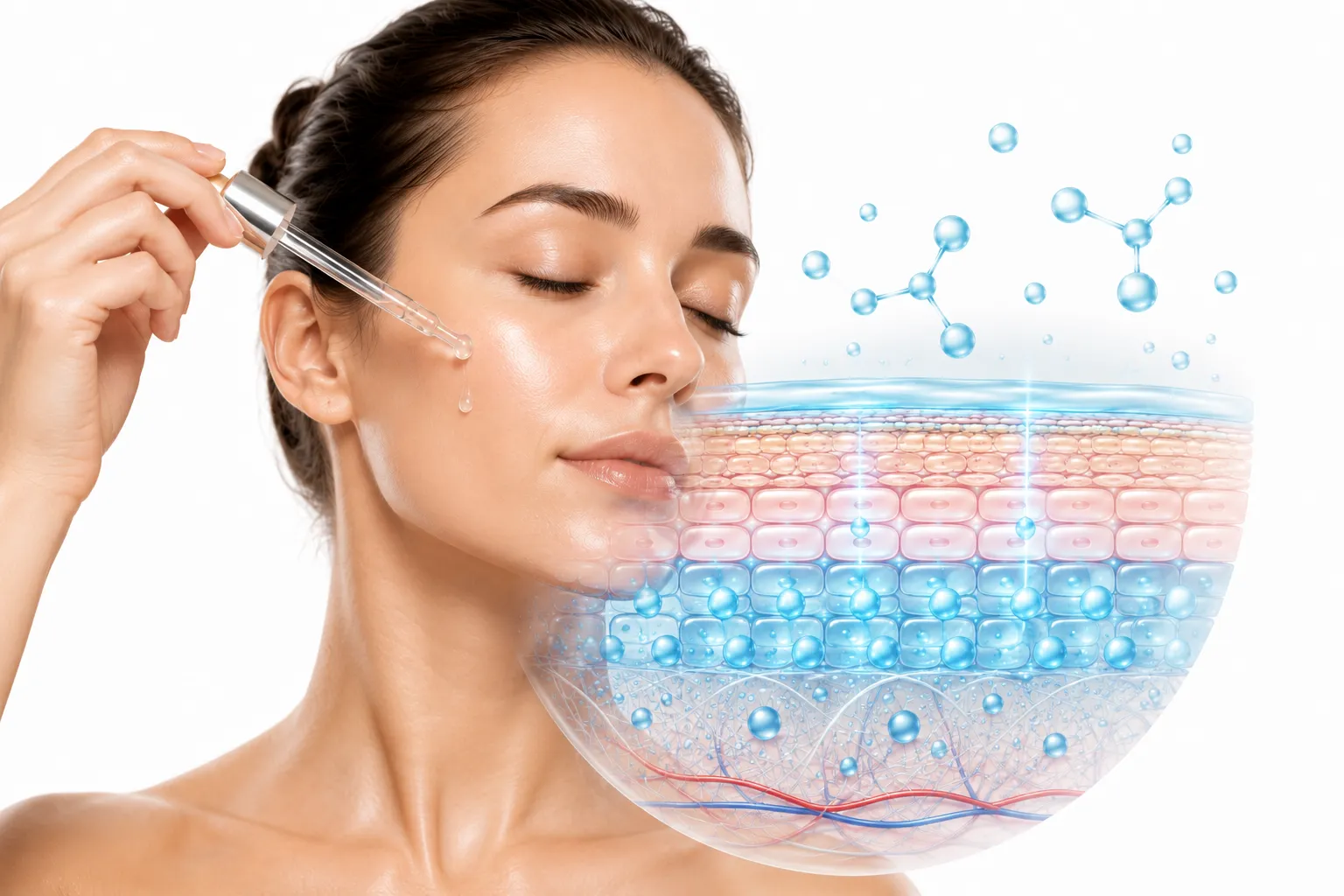
The best barrier-repair serums don't just add moisture - they stimulate your skin's own repair mechanisms, helping it produce the ceramides and lipids it needs to rebuild.
Use this section to decide
Does this advice apply to me?
Find the concern or goal closest to yours, then use the fit signal to decide how much weight to give this guide.If your goal is
Best serumUsually relevant- Fit signal
- Often useful
Niacinamide 2-5%
If your goal is
Second bestUsually relevant- Fit signal
- Often useful
Panthenol (B5)
If your goal is
Avoid during repairUse caution- Fit signal
- Limited evidence
Vitamin C, retinoids, acids
If your goal is
ApplicationUse caution- Fit signal
- Limited evidence
Apply to damp skin, morning and night
Practical use
How to use it
Cleanse gently
Use a non-foaming, pH-balanced cleanser.
Hydrating toner (optional)
Adds a layer of hydration.
Barrier-repair serum (niacinamide)
Apply a 2-5% niacinamide serum to damp skin.
Barrier-repair moisturizer
Apply a ceramide-rich moisturizer.
Sunscreen (AM only)
Apply mineral sunscreen if possible.
Safety
Side effects and cautions
- Using a vitamin C or retinol serum during barrier repair
These can irritate a compromised barrier and slow repair.
- Using a serum with fragrances or essential oils
These can irritate damaged skin and delay repair.
- Expecting overnight results
Barrier repair takes consistent effort over weeks.
Fit
Who should be careful
- Anyone who can't tolerate niacinamide (rare)
Worth noting
Small details that can change the answer
- Niacinamide's Role. Niacinamide stimulates the skin's own ceramide production for barrier repair.
- Anti-Inflammatory. Niacinamide reduces inflammation and redness in damaged skin.
- Panthenol Benefits. Panthenol (B5) is a humectant that attracts water and soothes irritation.
- Avoid Irritants. Avoid strong acids, retinoids, and high-concentration vitamin C during barrier repair.
Niacinamide (2-5%) is the best serum for barrier repair.
It stimulates ceramide production and reduces inflammation.
Panthenol (B5) and ceramide serums are also excellent options.
Avoid strong acids, retinoids, and high-concentration vitamin C.
Use the serum as part of a complete barrier-repair routine.
Definition
What to look for in a barrier-repair serum
The ideal barrier-repair serum supports the skin's natural repair processes without irritating.
- Contains niacinamide (2-5%) for ceramide stimulation
- Contains panthenol (vitamin B5) for soothing and hydration
- Contains ceramides (if in a serum format) for lipid support
- Fragrance-free, alcohol-free, and designed for sensitive skin
- Lightweight and easily absorbed
- No strong acids, retinoids, or high-concentration vitamin C
Ingredient Comparison
Serum ingredients for barrier repair compared
Niacinamide (2-5%)
bestBest for: Ceramide stimulation and anti-inflammatory supportBoosts natural ceramide production · Calms inflammation · Well-tolerated
Panthenol (vitamin B5)
goodBest for: Soothing and hydrationSoothes irritation · Attracts water · Supports barrier
Ceramide serums
goodBest for: Direct lipid supportProvides barrier lipids directly · Supports structure
Hyaluronic acid
goodBest for: Hydration without irritationAdds moisture · Very gentle
Vitamin C (L-ascorbic acid)
avoidBest for: Not recommended during repairAntioxidant benefits
Limitations: Can irritate compromised skin · Low pH may stingRetinoids
avoidBest for: Not recommended during repairSkin renewal
Limitations: Can cause irritation · Slows barrier repairScience
How niacinamide supports barrier repair
Niacinamide works by increasing the synthesis of ceramides in the skin. Ceramides are the primary lipids that form the "mortar" between skin cells in the barrier. By boosting ceramide production, niacinamide directly strengthens the barrier. Additionally, niacinamide has anti-inflammatory properties that reduce the redness and irritation associated with barrier damage, creating a calmer environment for repair.
- Ceramide Synthesis
- The production of barrier lipids that hold the skin together.
- Anti-Inflammatory
- The reduction of inflammation, which can slow barrier repair.
Benefits
How to use barrier-repair serums effectively
A barrier-repair serum works best as part of a comprehensive barrier-repair routine.
- Apply niacinamide serum to damp skin for better absorption
- Follow with a barrier-repair moisturizer to seal it in
- Avoid all exfoliating acids and retinoids during repair
- Use morning and night for consistent support
- Be patient - barrier repair takes weeks, not days
Questions
Frequently asked questions
Can I use niacinamide on a damaged barrier?
Yes, niacinamide is actually recommended for barrier repair.
What about hyaluronic acid for barrier repair?
Hyaluronic acid is good for hydration but doesn't directly stimulate barrier repair. Use it alongside niacinamide.
Should I use a serum or a moisturizer for barrier repair?
Both are important. Serums provide concentrated active ingredients; moisturizers provide lipids and seal in hydration.
How long does a barrier-repair serum take to work?
You may notice improvement in days, but full repair takes weeks of consistent use.